Recognizing shapes Extra Challenge Geometry Worksheets for 8-Year-Olds
3 filtered results
-
From - To
Dive into the exciting world of geometry with our "Recognizing Shapes Extra Challenge Geometry Worksheets for 8-Year-Olds"! These printables are crafted to sharpen your child's problem-solving skills while enhancing their knowledge of various shapes. Each worksheet offers engaging and thought-provoking exercises, designed to challenge young minds and foster a love for learning. From identifying and comparing shapes to understanding their properties, these worksheets ensure a comprehensive geometry experience. Boost your child's educational journey with Kids Academy’s high-quality worksheets, making learning fun and effective! Ideal for advanced young scholars eager to explore the intricacies of geometry.
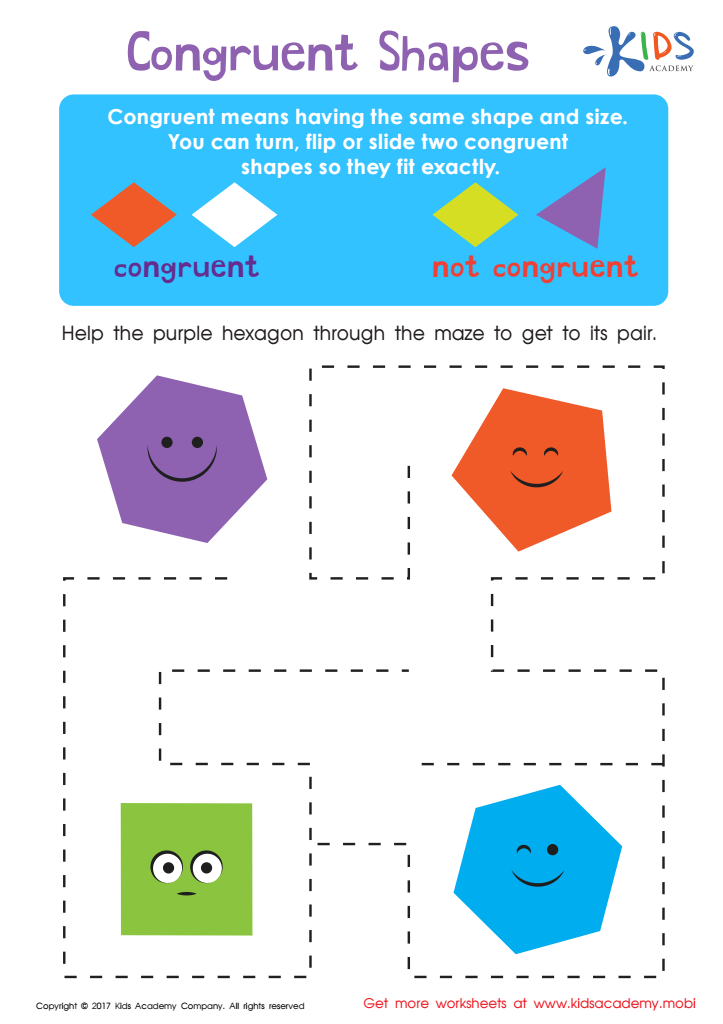
Congruent Shapes Worksheet
 Assign to My Students











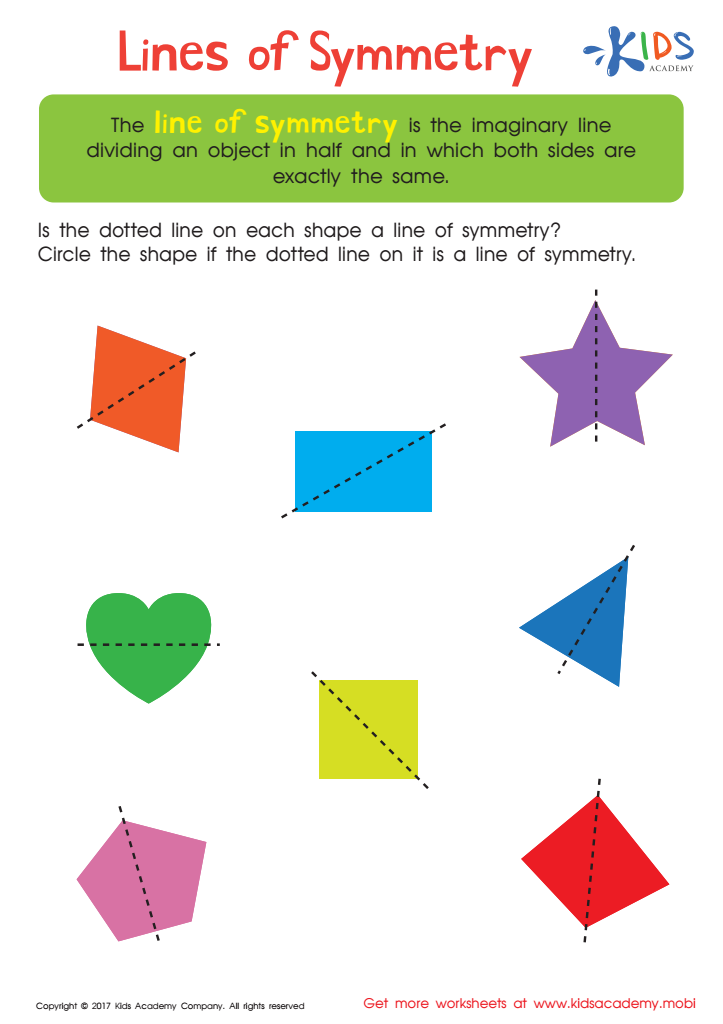
Lines of Symmetry Printable
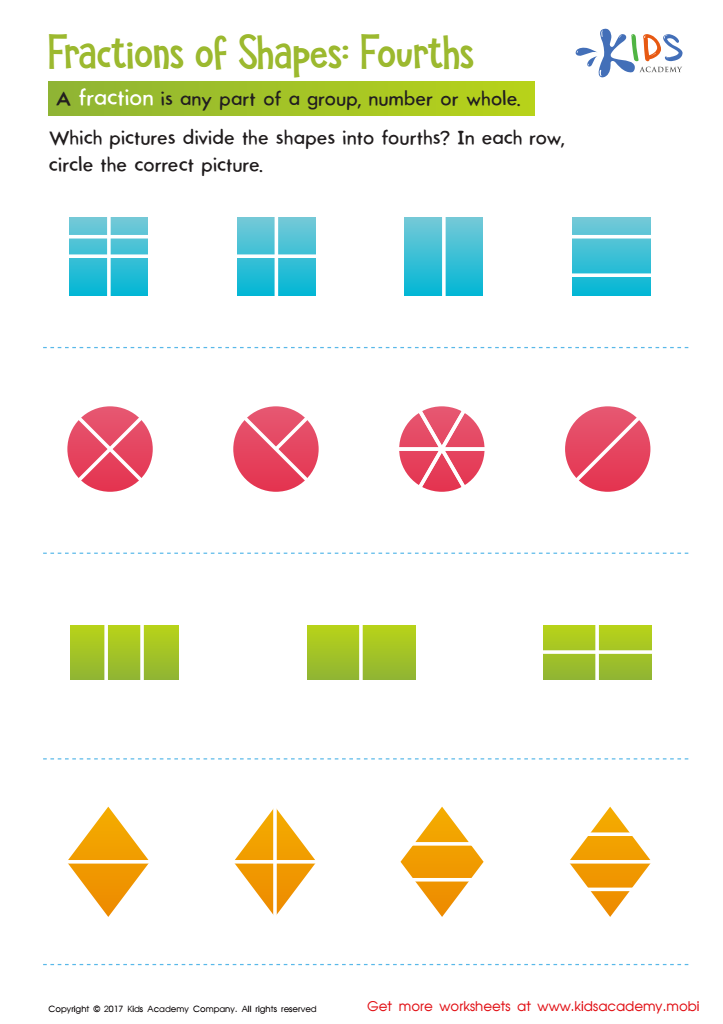
Fractions of Shapes Worksheet








Recognizing shapes is a foundational skill in geometry that serves as a crucial building block for children's mathematical development. Engaging 8-year-olds in extra challenge geometry activities, where they identify and work with shapes, is of great importance for several reasons.
Firstly, geometry helps children develop spatial awareness, an essential cognitive skill for understanding the relationships between objects, their positions, and dimensions. This proficiency not only strengthens mathematical ability but also enhances everyday problem-solving skills, such as navigating spaces and understanding maps.
Secondly, learning about shapes also underpins critical thinking and analytical skills. As children tackle more complex geometric challenges, they learn to classify, compare, and create different shapes, fostering logical reasoning and attention to detail. These competencies extend beyond math, improving performance in science, art, and even reading, as recognizing patterns and structures is universally beneficial.
Lastly, introducing higher-level geometry at a young age boosts confidence in mathematics. Children who experience challenge and success in their learning environments tend to develop a positive attitude toward subjects perceived as difficult. This early positive interaction with geometry can inspire a lifelong interest in STEM (Science, Technology, Engineering, Mathematics) fields, which are crucial for future academic and career opportunities.
Thus, for parents and teachers, promoting shape recognition and extra challenge geometry ensures that children not only excel in math but also become well-rounded, critical thinkers ready to tackle diverse real-world problems.








