Understanding fractions Extra Challenge Geometry Worksheets for 8-Year-Olds
6 filtered results
-
From - To
Take your child's understanding of fractions to the next level with our "Understanding Fractions Extra Challenge Geometry Worksheets for 8-Year-Olds." Specially designed to enhance critical thinking and problem-solving skills, these worksheets offer engaging, hands-on activities that make learning fractions fun. Perfect for young math enthusiasts, each worksheet incorporates geometry concepts to create a comprehensive learning experience. As children delve into shapes, sizes, and fractional parts, they develop a stronger grasp of both fractions and geometry. Help your 8-year-old excel in math with these exciting and educational worksheets, ideal for advanced learners and those seeking extra practice.
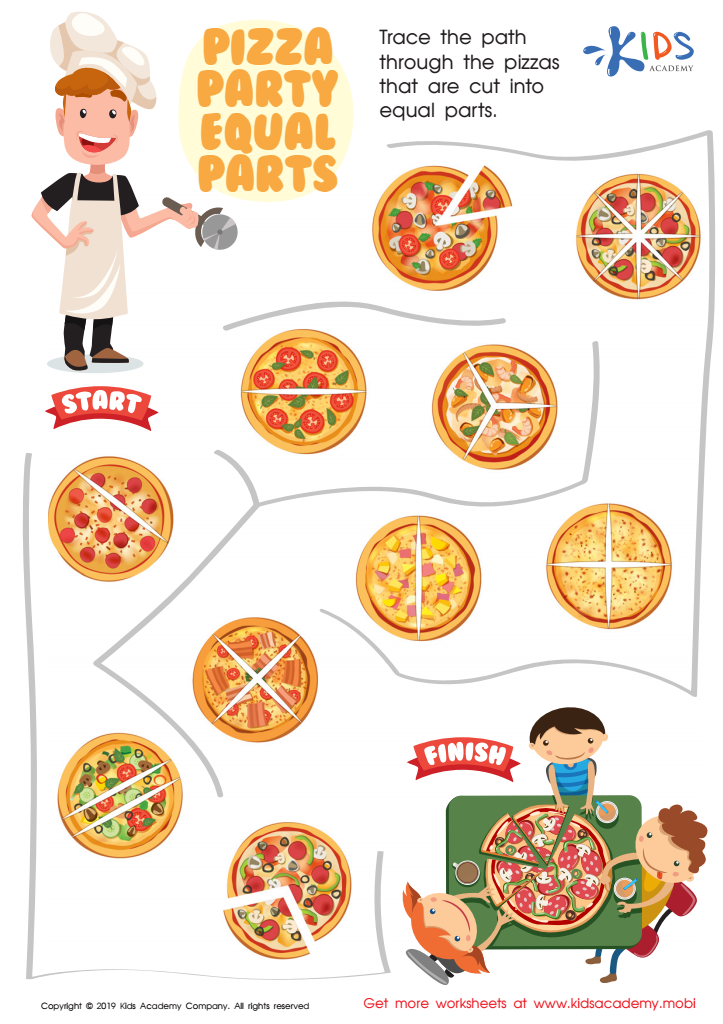
Pizza Party Equal Parts Worksheet
 Assign to My Students











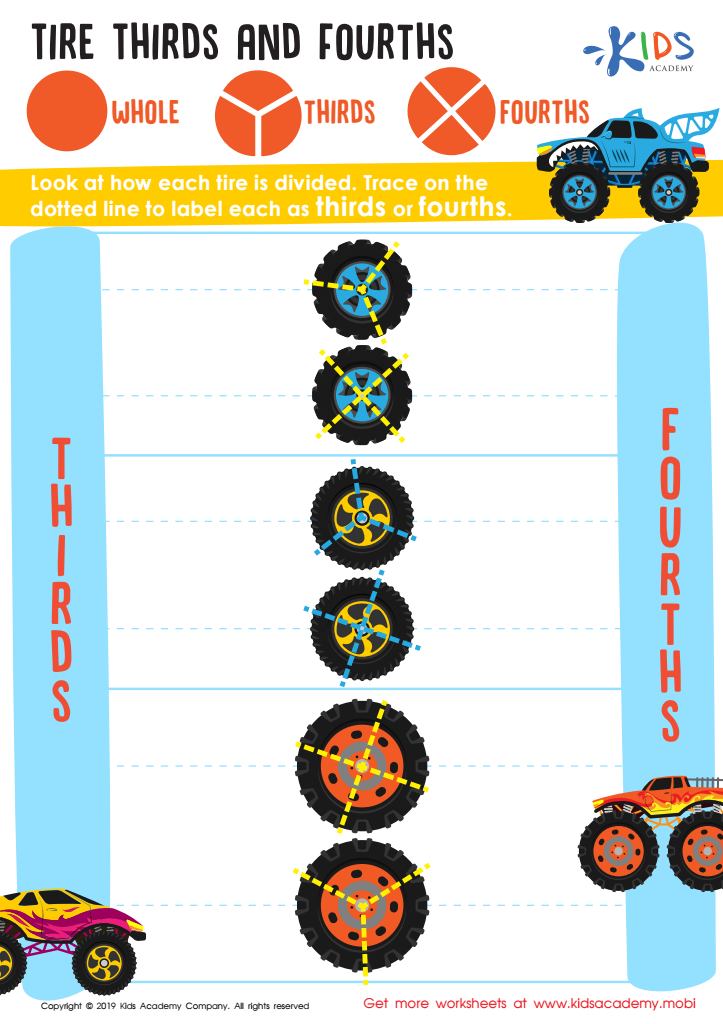
Tire Thirds and Fourths Worksheet
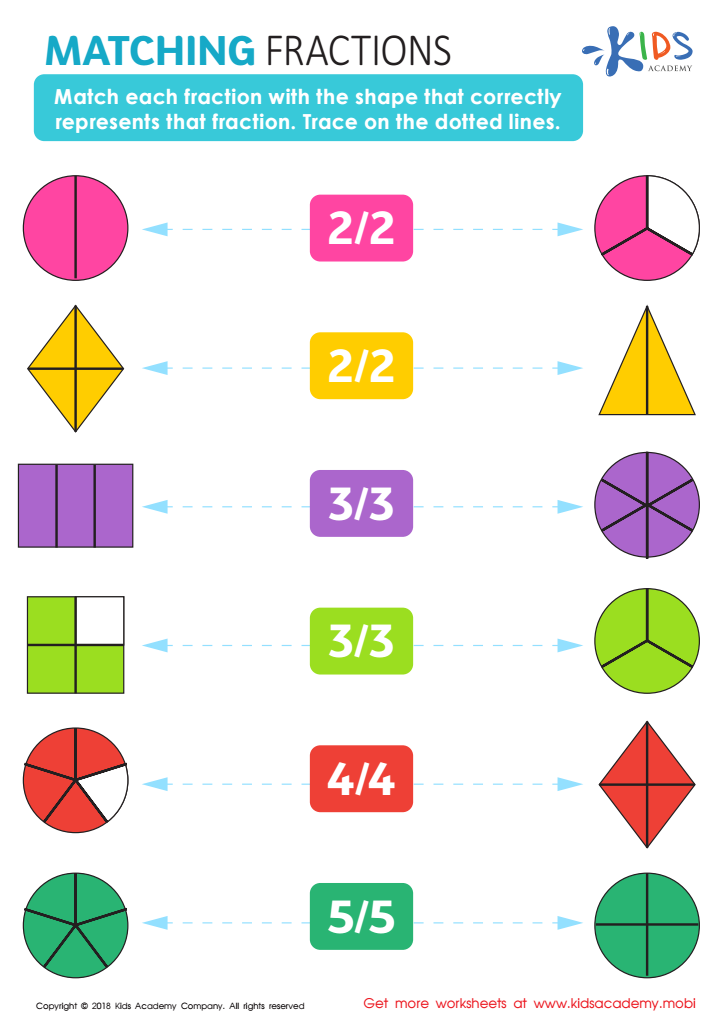
Matching Fractions Worksheet
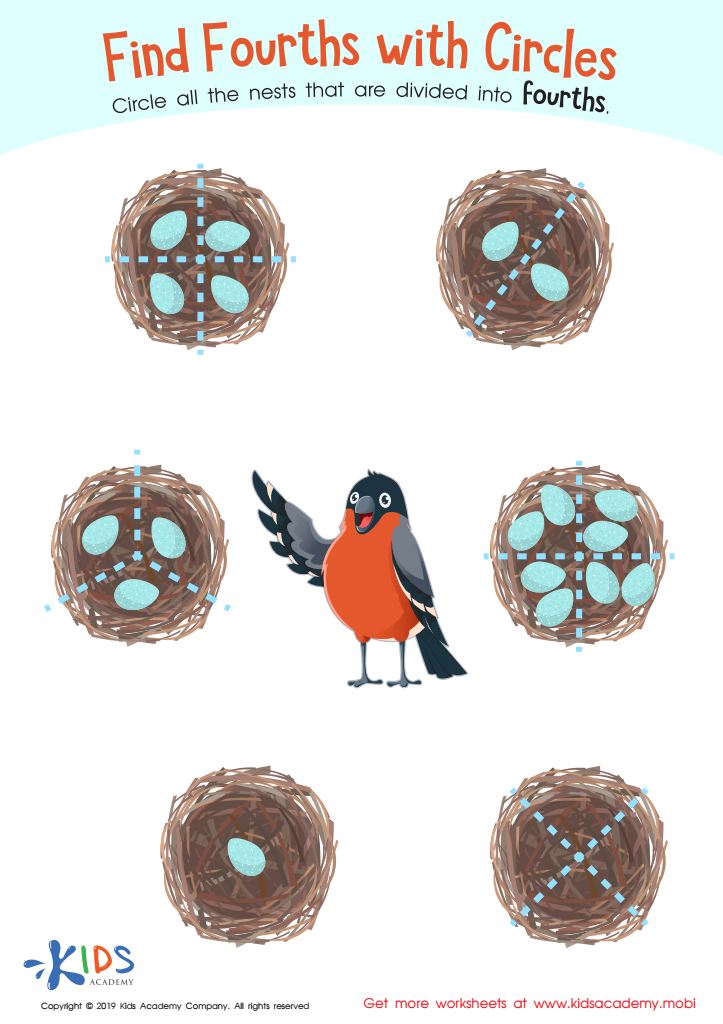
Find Fourths Circles Worksheet
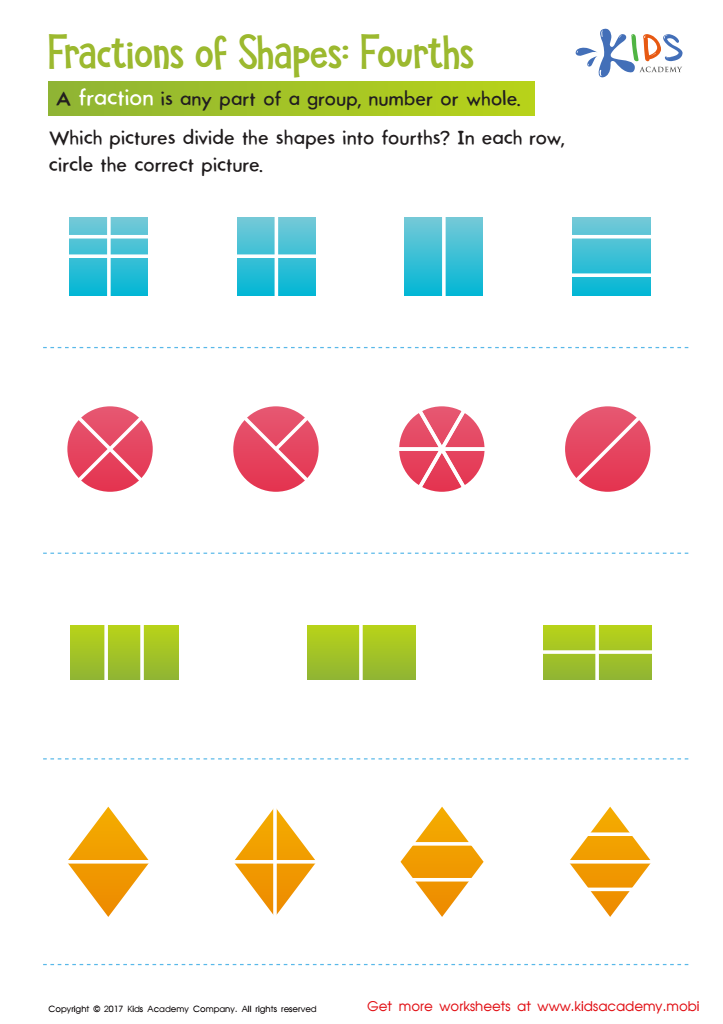
Fractions of Shapes Worksheet
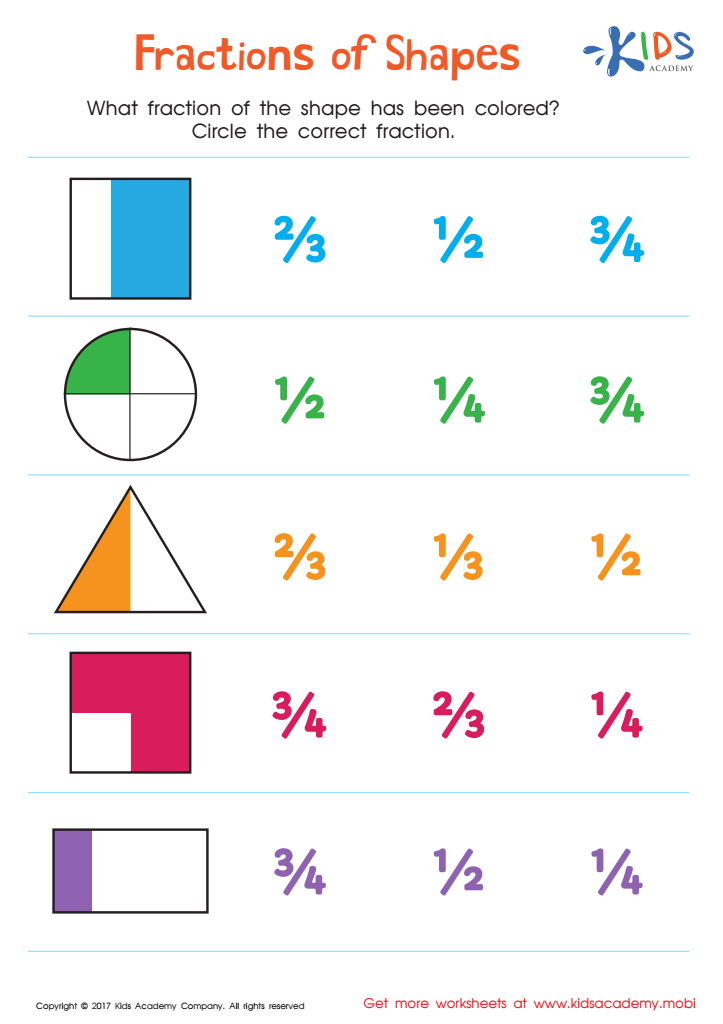
Fractions of Shapes: Math Concept Worksheet








Understanding fractions and combining this with the challenge of geometry is crucial in fostering mathematical skills for 8-year-olds for several reasons. Firstly, grasping these concepts at a young age creates a solid foundation for more advanced math topics that students will encounter in later grades. By integrating fractions and geometry, children learn to see math as a cohesive subject rather than isolated concepts, enhancing their overall comprehension.
Secondly, fractions and geometry can help develop critical thinking and problem-solving skills. When children break down shapes to understand their fractional parts, they are exercising their analytical abilities and improving their spatial reasoning, which is essential in numerous real-life situations and academic subjects including science and engineering.
Furthermore, engaging with these concepts in an "extra challenge" context bolsters resilience and a positive mindset towards facing difficult tasks. This can instill a sense of achievement and confidence. Parents and teachers who prioritize this area show children that effort and practice lead to mastery, setting them up for a lifetime of learning and curiosity.
Lastly, a solid understanding of these topics nurtures a child's ability to apply mathematical reasoning in everyday situations, such as dividing a pizza into equal parts or understanding proportions in cooking. This pragmatic approach underscores the relevance and usefulness of math in daily life.