Fine Motor Skills Extra Challenge Math Worksheets for 8-Year-Olds
5 filtered results
Difficulty Level
Grade
Age
-
From - To
Subject
Activity
Standards
Discover our "Fine Motor Skills Extra Challenge Math Worksheets" specially designed for 8-year-olds! These engaging worksheets not only enhance mathematical skills but also promote fine motor development, crucial for young learners. Packed with creative activities, from complex dot-to-dots to detailed math puzzles, our worksheets offer a dual challenge that motivates children to excel. Perfect for building dexterity and improving hand-eye coordination, these resources provide an exciting way to solidify math concepts. Whether used in the classroom or for extra practice at home, our math worksheets ensure a balanced blend of education and fun for your child’s growth.
Favorites
With answer key
Interactive
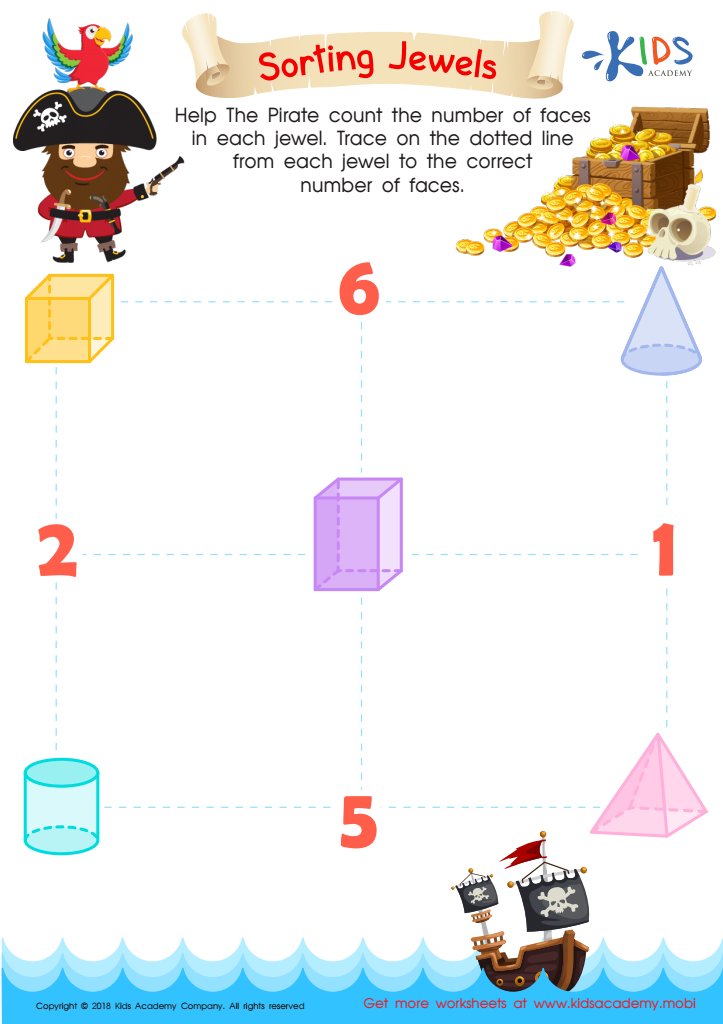
Sorting Jewels Worksheet
Help your kids explore their pirate fantasies with this tracing sheet. Ask them to count the number of faces in each jewel and then trace the dotted line to the correct number. How many faces does a rectangle have? What about a triangle and a cone? This fun worksheet is a great way to teach your kids the basics of identifying the number of faces on shapes.
 Assign to My Students
Sorting Jewels Worksheet
Worksheet
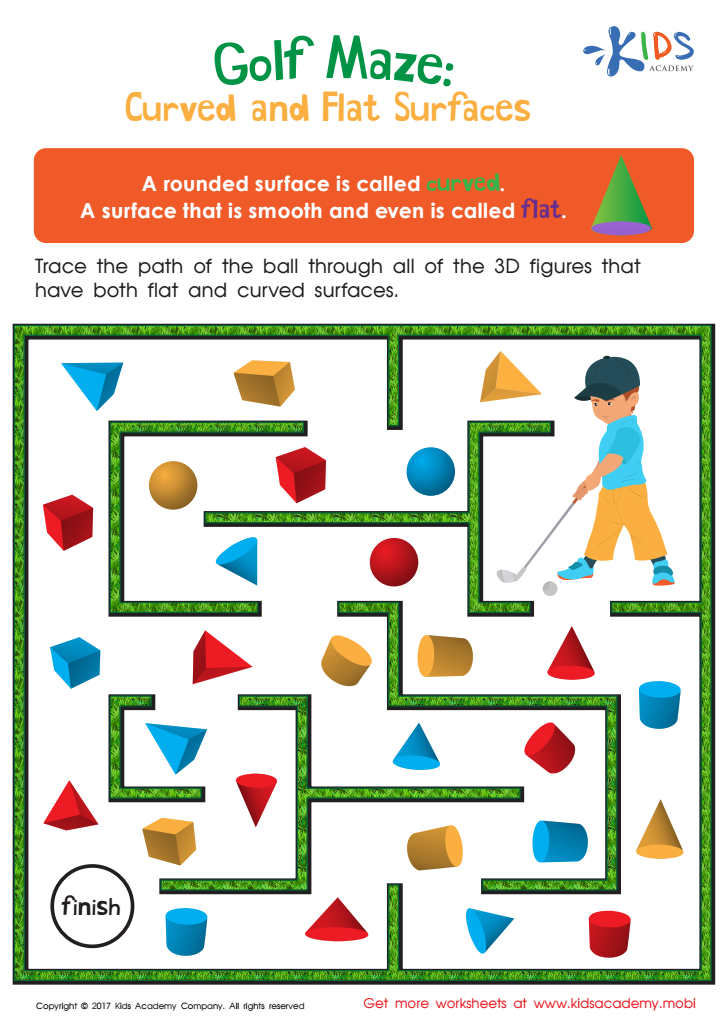
Golf Maze: Curved and Flat Surfaces Worksheet
Give your child a fun and educational challenge with this geometry maze! Your child will navigate 3D shapes to find objects with flat and curved surfaces, while learning important math concepts.
Golf Maze: Curved and Flat Surfaces Worksheet
Worksheet
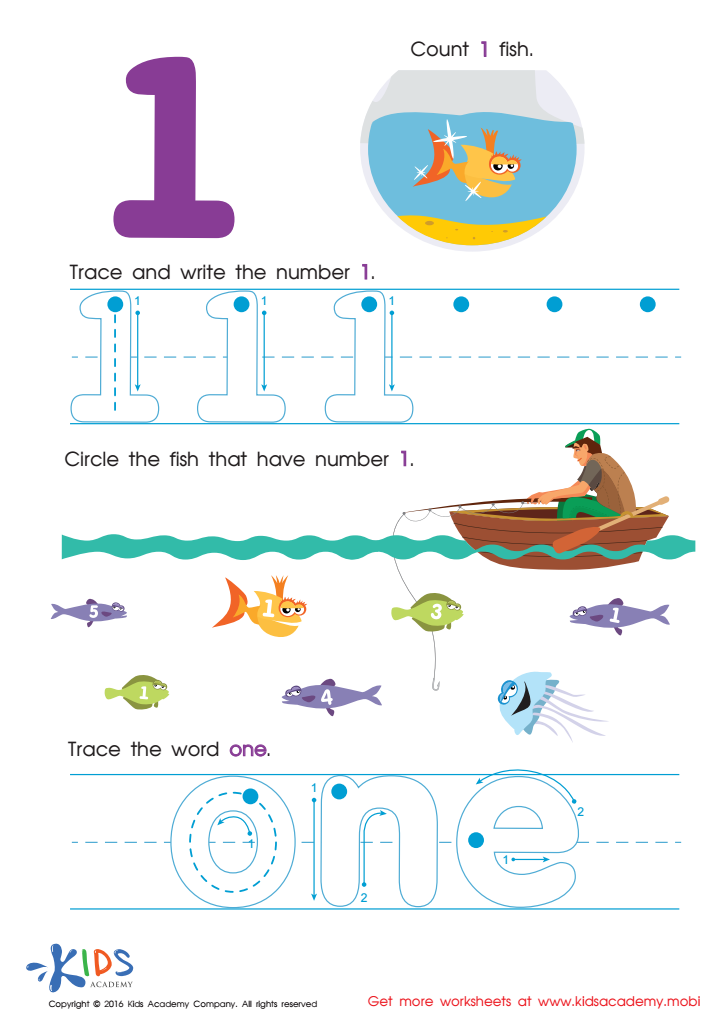
Learning to Write 1 Worksheet
Learning to write numbers can be easy and fun! Get this new number worksheet to help your child excel. Practice counting, tracing and writing the number “one”, then circle the fish with “1” on them. Revise spelling and have fun! Get more tracing numbers worksheets at Kids Academy and enjoy the learning process.
Learning to Write 1 Worksheet
Worksheet
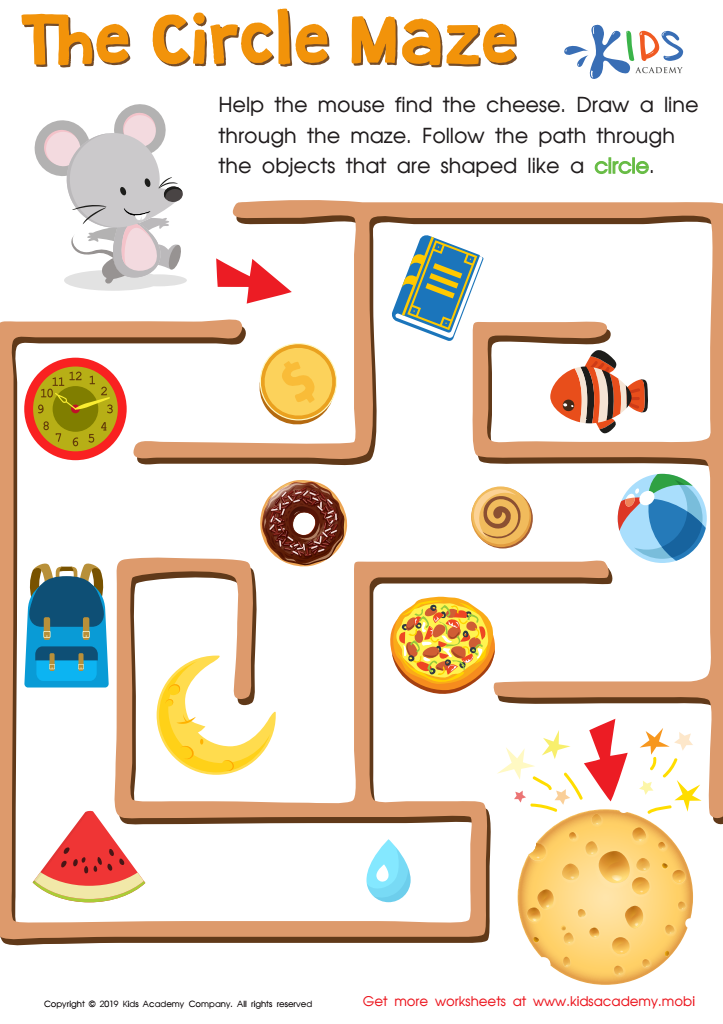
The Circle Maze Worksheet
Kids can have fun learning shapes with this maze worksheet. They can help the mouse find its cheese by tracing the path of a circle through the maze. This printable is great for classroom learning or as an activity at home.
The Circle Maze Worksheet
Worksheet
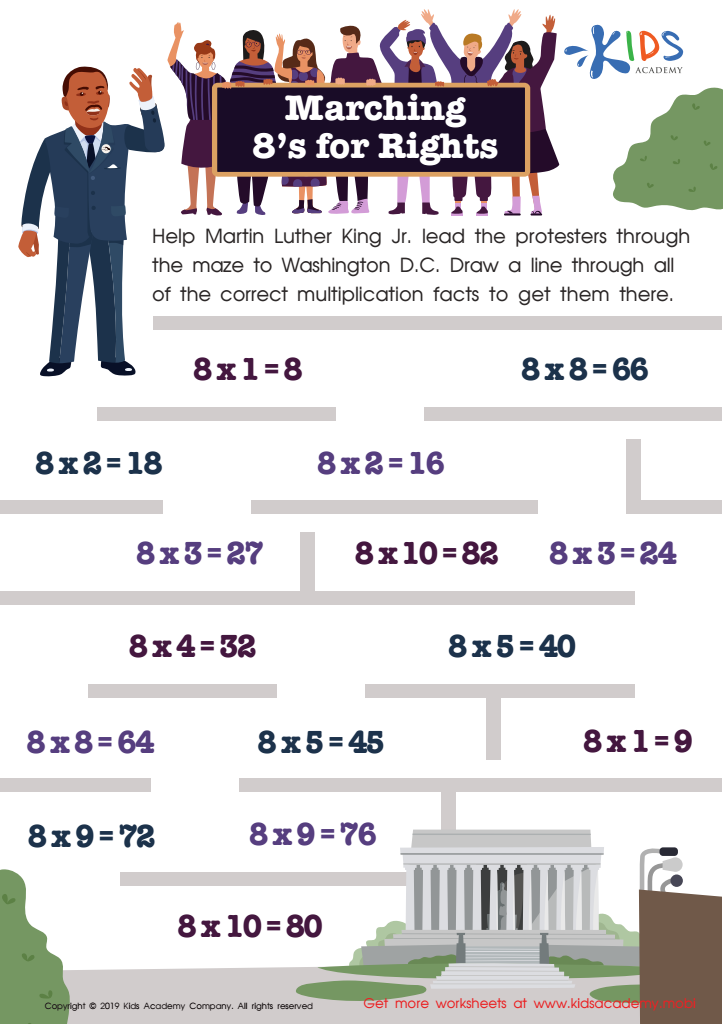
Marching 8’s for Rights Worksheet
Encourage your students to explore MLK's history! This worksheet provides the perfect opportunity. Help them understand his contributions by having them "march" MLK from the starting point to Washington D.C. Have them draw a line through the correct multiplication facts to get there. It's an enjoyable way for kindergartners to learn about a key part of history.
Marching 8’s for Rights Worksheet
Worksheet
Join Kids Academy for Free
Who is primarily going to use this learning content?







Fine motor skills refer to the ability to use the small muscles in the hands and fingers to perform tasks with precision and control. At around 8 years old, children's fine motor skills are still developing, and evaluating students with extra challenge math problems is particularly beneficial at this stage. These skills are crucial for performing daily activities such as writing, using scissors, eating, and dressing. An integrated approach that includes challenging math problems encourages cognitive development while refining fine motor abilities.
Firstly, fine motor skills are foundational for academic success. For example, gripping a pencil properly and forming numbers and letters smoothly without fatigue directly affects a child's ability to complete math worksheets. Addressing fine motor skills alongside math challenges helps children practice neatness, accuracy, and endurance.
Secondly, math problems that include physical components like drawing shapes or using manipulatives help bridge concrete and abstract thinking. This enhances children's numerical understanding and problem-solving skills. Parents and teachers who incorporate these activities help children develop strong hand-eye coordination, spatial awareness, and the ability to think critically.
In summary, focusing on fine motor skills while tackling complex math tasks ensures children develop comprehensive skills necessary for both academic success and everyday functionality, laying the groundwork for future learning and practical task management.