Alphabet Recognition Extra Challenge Tracing Letters Worksheets
3 filtered results
Difficulty Level
Grade
Age
-
From - To
Subject
Activity
Standards
Enhance your child's alphabet recognition skills with our "Alphabet Recognition Extra Challenge Tracing Letters Worksheets." Designed for early learners, these engaging worksheets provide additional tracing exercises that promote proficiency in identifying and writing letters. Each worksheet features a fun and interactive approach, encouraging children to connect letters with images while improving fine motor skills. Perfect for at-home practice or classroom activities, these worksheets aim to reinforce learning through repetition and creativity. Help your child build a strong foundation in literacy with our thoughtfully crafted tracing sheets, ensuring they master both uppercase and lowercase letters with confidence and ease. Start the learning journey today!
Favorites
With answer key
Interactive
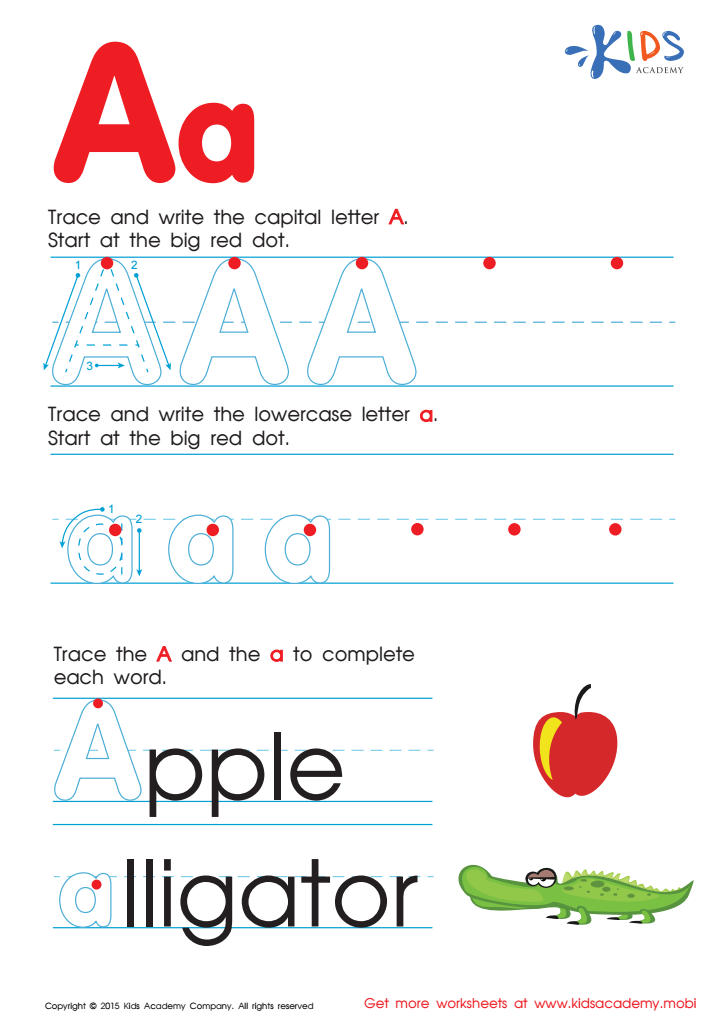
Letter A Tracing Page
Trace and write the letter "A"! Start with the big red dot, then do the capital and lowercase versions. Then write it again with two words - apple and alligator. Download more tracing worksheets at Kids Academy.
 Assign to My Students
Letter A Tracing Page
Worksheet
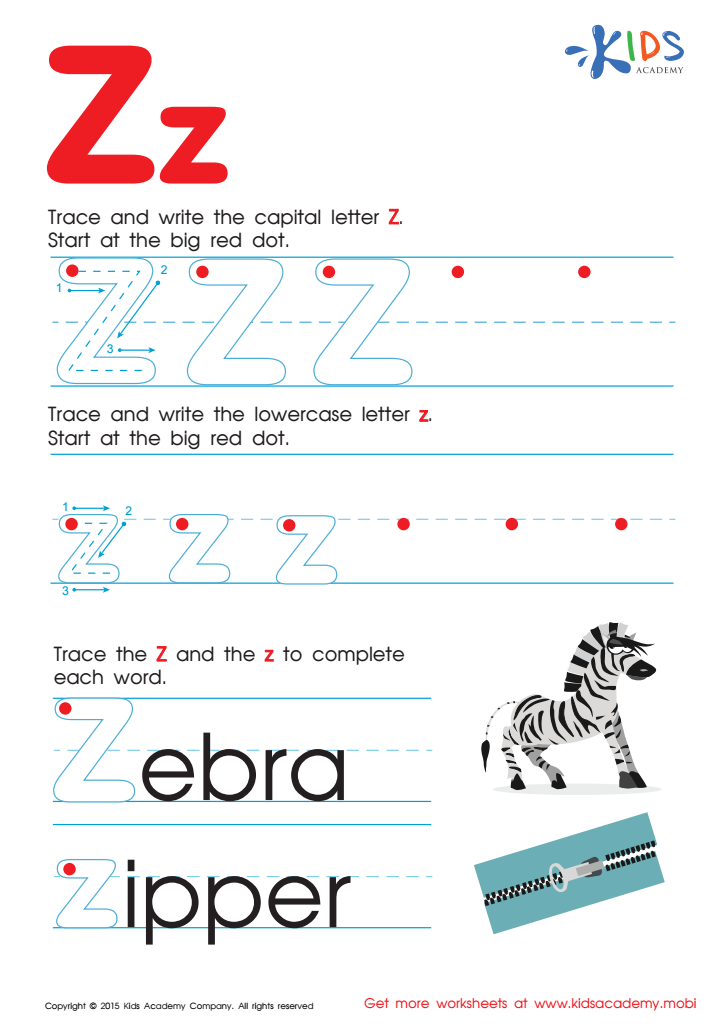
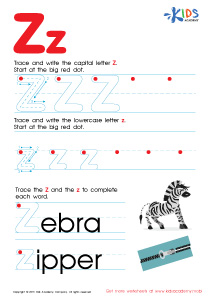
Letter Z Tracing Page
Trace and write capital "Z" and lowercase "z". Complete words "zebra" and "zipper". Be attentive and have fun! (80 words)
Letter Z Tracing Page
Worksheet
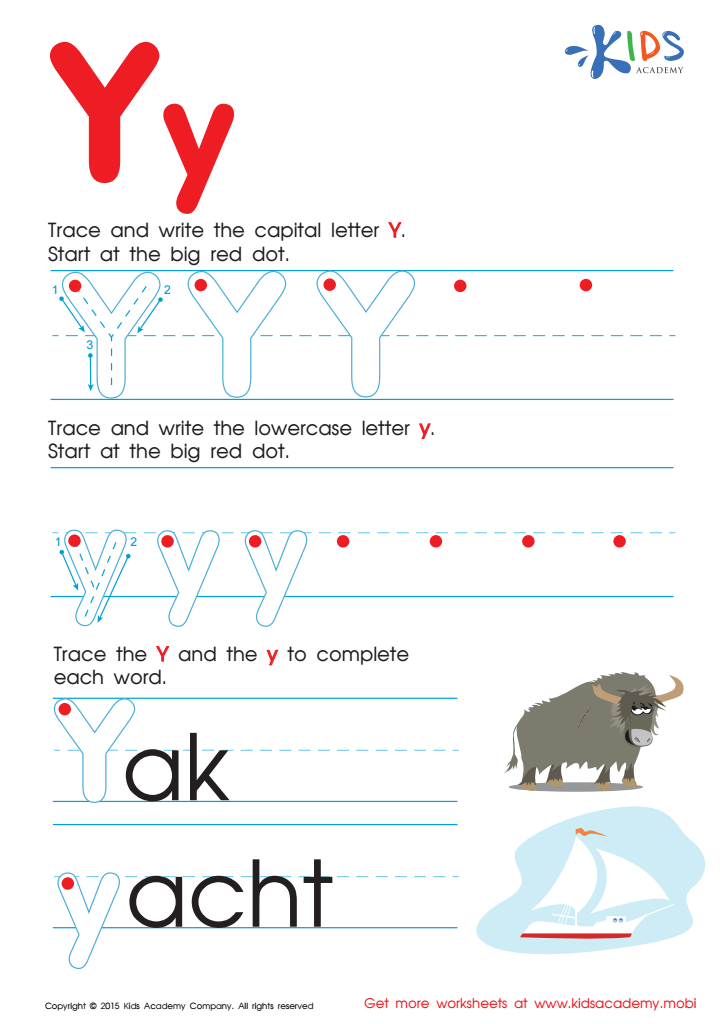
Letter Y Tracing Page
Trace the capital letter "Y" on the red dot, then trace and write the lowercase letter. Complete the words to help the Yak walk and the yacht swim. More worksheets at Kids Academy.
Letter Y Tracing Page
Worksheet
Join Kids Academy for Free
Who is primarily going to use this learning content?








Alphabet recognition and tracing letters are fundamental skills in early childhood education, laying a crucial foundation for literacy development. Parents and teachers should prioritize these activities because they cultivate essential abilities such as fine motor skills, hand-eye coordination, and cognitive awareness of letter shapes and sounds.
By engaging in tracing letters, children enhance their muscle memory, which boosts their confidence when they begin to write independently. This physical activity complements their understanding of the alphabet, as associating letters with sounds paves the way for reading proficiency. Tracing letters can also be a fun and interactive activity, motivating young learners through visual and tactile exploration, which caters to diverse learning styles.
Moreover, strong alphabet recognition is linked to better academic outcomes in reading and writing. When children can recognize and write letters accurately, they experience fewer frustrations during learning tasks, fostering a positive attitude toward reading. By emphasizing these skills early on, parents and teachers are investing in a child's future academic success, laying the groundwork for effective communication, creativity, and critical thinking. In essence, incorporating Alphabet Recognition Extra Challenge activities is not just about learning letters; it's about nurturing lifelong learners.