
Alphabet Recognition Extra Challenge English for Beginners Worksheets
3 filtered results
Difficulty Level
Grade
Age
-
From - To
Subject
Activity
Standards
Explore our "Alphabet Recognition Extra Challenge English for Beginners Worksheets"! These engaging and fun worksheets are designed to enhance alphabet recognition skills in young learners. Perfect for ESL students, each worksheet focuses on identifying and distinguishing between uppercase and lowercase letters, boosting their English vocabulary while developing essential reading foundations. Beautifully illustrated and thoughtfully crafted, these printables support children in their language learning journey, making the process enjoyable and effective. Ideal for both classroom use and at-home practice, these worksheets provide a comprehensive and interactive approach to mastering the alphabet. Download now and watch confidence grow!
Favorites
With answer key
Interactive
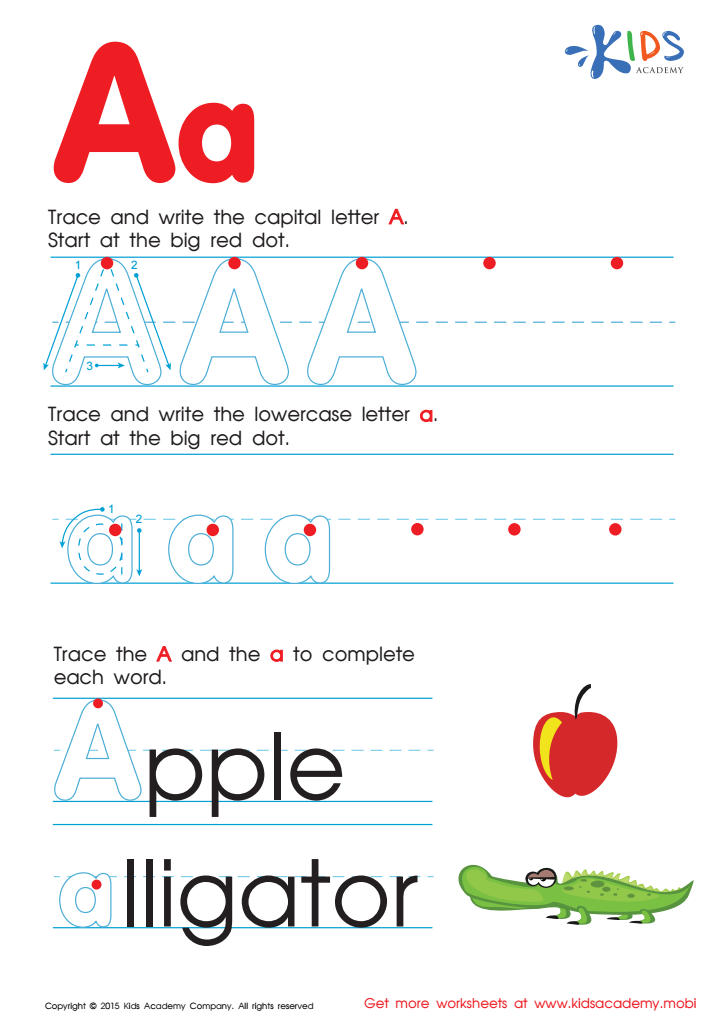
Letter A Tracing Page
Trace and write the letter "A"! Start with the big red dot, then do the capital and lowercase versions. Then write it again with two words - apple and alligator. Download more tracing worksheets at Kids Academy.
 Assign to My Students
Letter A Tracing Page
Worksheet
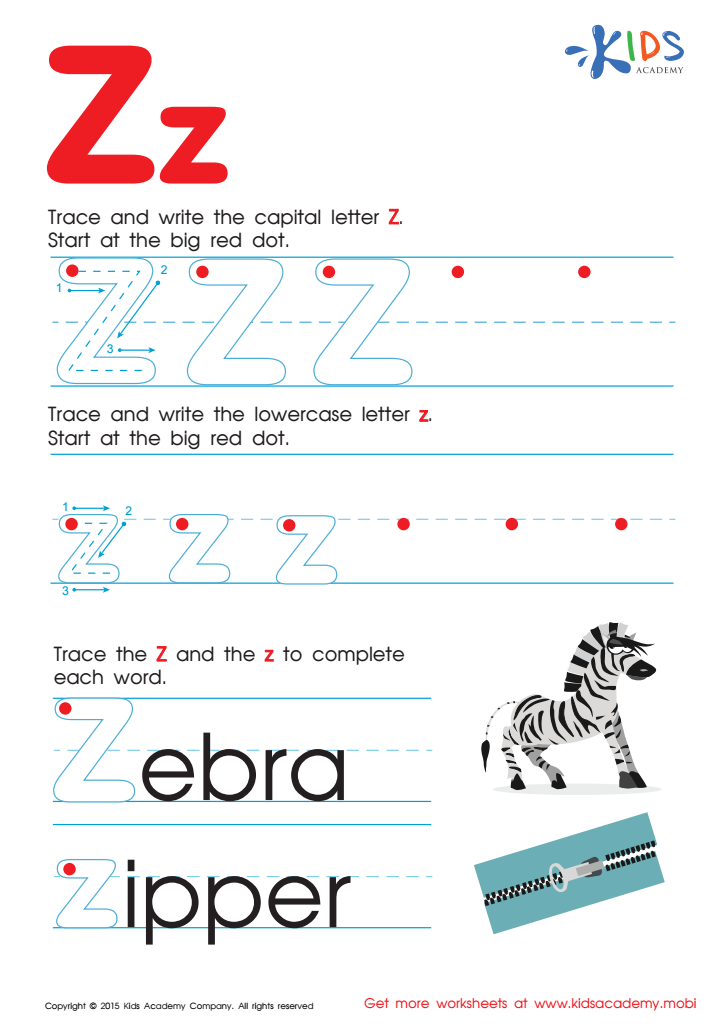
Letter Z Tracing Page
Trace and write capital "Z" and lowercase "z". Complete words "zebra" and "zipper". Be attentive and have fun! (80 words)
Letter Z Tracing Page
Worksheet
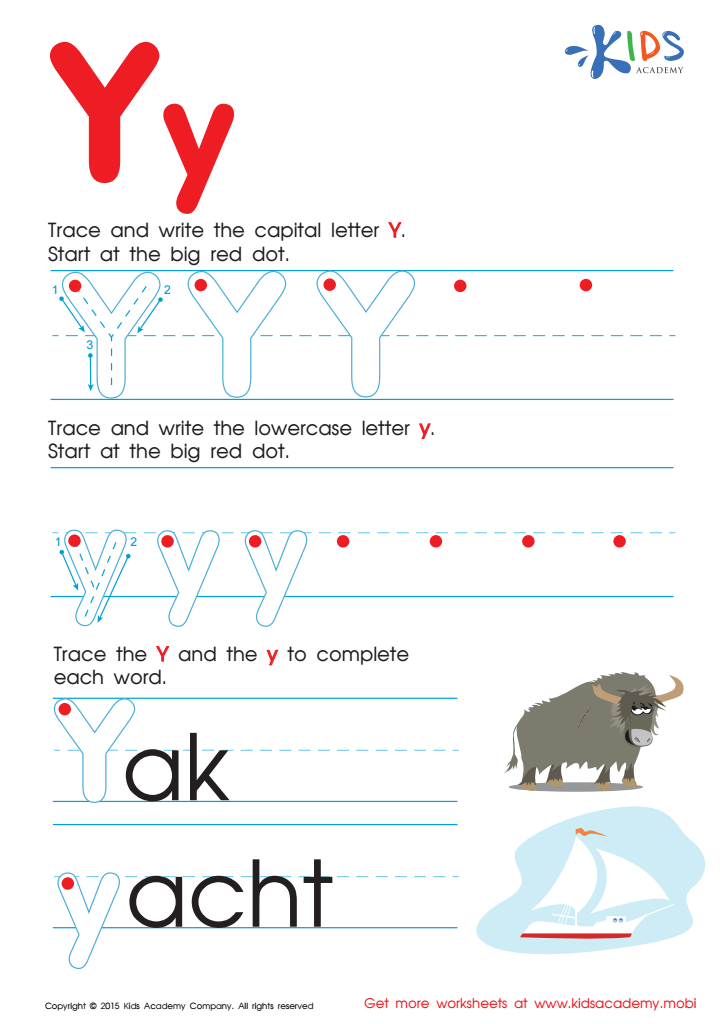
Letter Y Tracing Page
Trace the capital letter "Y" on the red dot, then trace and write the lowercase letter. Complete the words to help the Yak walk and the yacht swim. More worksheets at Kids Academy.
Letter Y Tracing Page
Worksheet
Join Kids Academy for Free
Who is primarily going to use this learning content?




Alphabet Recognition Extra Challenge English for Beginners is a vital resource that parents and teachers should prioritize for several reasons. First and foremost, strong alphabet recognition skills form the foundation of literacy. When young learners can quickly identify letters and their corresponding sounds, they are better equipped to decode words, which is an essential skill in reading.
Moreover, the extra challenge aspect of this resource provides opportunities for differentiation. This means that children of various skill levels can engage with the material at their own pace, fostering both confidence and competence. For advanced learners, it keeps them engaged and motivated, while beginners receive the reinforcement they need.
Additionally, incorporating such resources when teaching English as a second language (ESL) can greatly enhance comprehension and fluency. Early mastery of the alphabet helps ESL students to better grasp the language structure, pronunciation, and vocabulary.
Lastly, involving parents in this aspect of education at home can create a supportive learning environment, reinforcing what is taught in the classroom. It emphasizes the importance of a combined effort between home and school to bolster a child’s educational journey. Thus, Alphabet Recognition Extra Challenge English for Beginners is fundamental in equipping children with the early literacy skills necessary for their future academic success.








