Alphabet Recognition Extra Challenge Kindergarten ABC Letters Worksheets
3 filtered results
Difficulty Level
Grade
Age
-
From - To
Subject
Activity
Standards
Explore our "Alphabet Recognition Extra Challenge Kindergarten ABC Letters Worksheets" designed to enhance young learners' letter identification skills! These engaging worksheets offer kindergarteners a fun and challenging way to practice recognizing uppercase and lowercase letters. Each activity is crafted to reinforce alphabet knowledge through playful exercises, including tracing, matching, and puzzles, making learning enjoyable. Perfect for home or classroom use, these resources cater to diverse learning styles and ensure children build a strong foundation in literacy. Download our printable sheets today and watch your students gain confidence as they master the ABCs! Help them unlock the magic of reading with interactive letter exploration.
Favorites
With answer key
Interactive
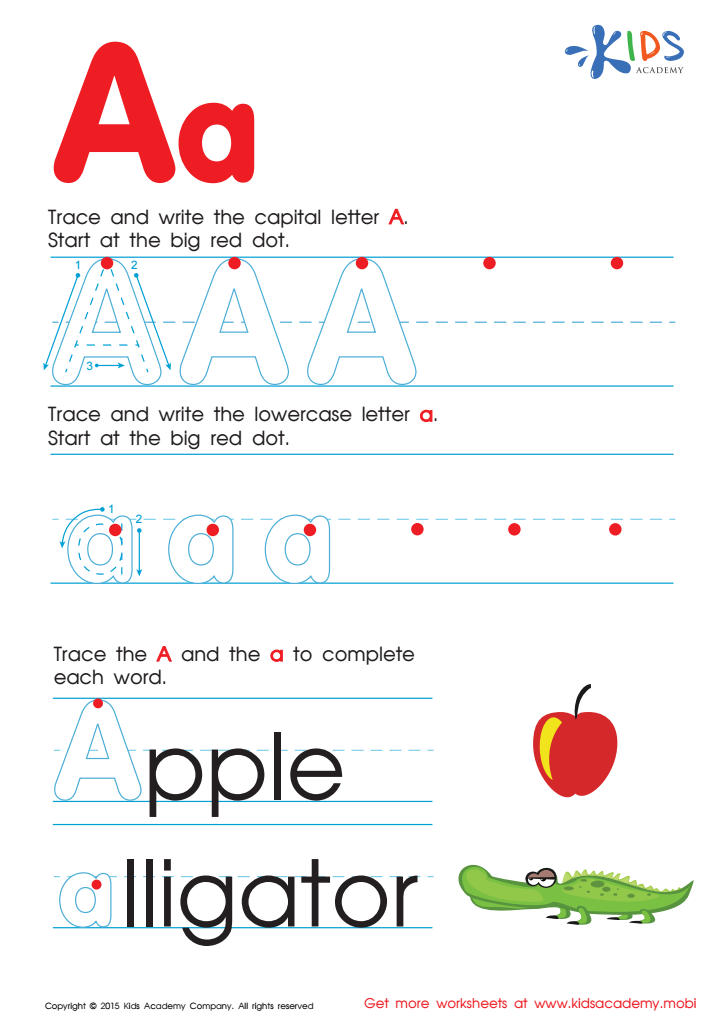
Letter A Tracing Page
Trace and write the letter "A"! Start with the big red dot, then do the capital and lowercase versions. Then write it again with two words - apple and alligator. Download more tracing worksheets at Kids Academy.
 Assign to My Students
Letter A Tracing Page
Worksheet

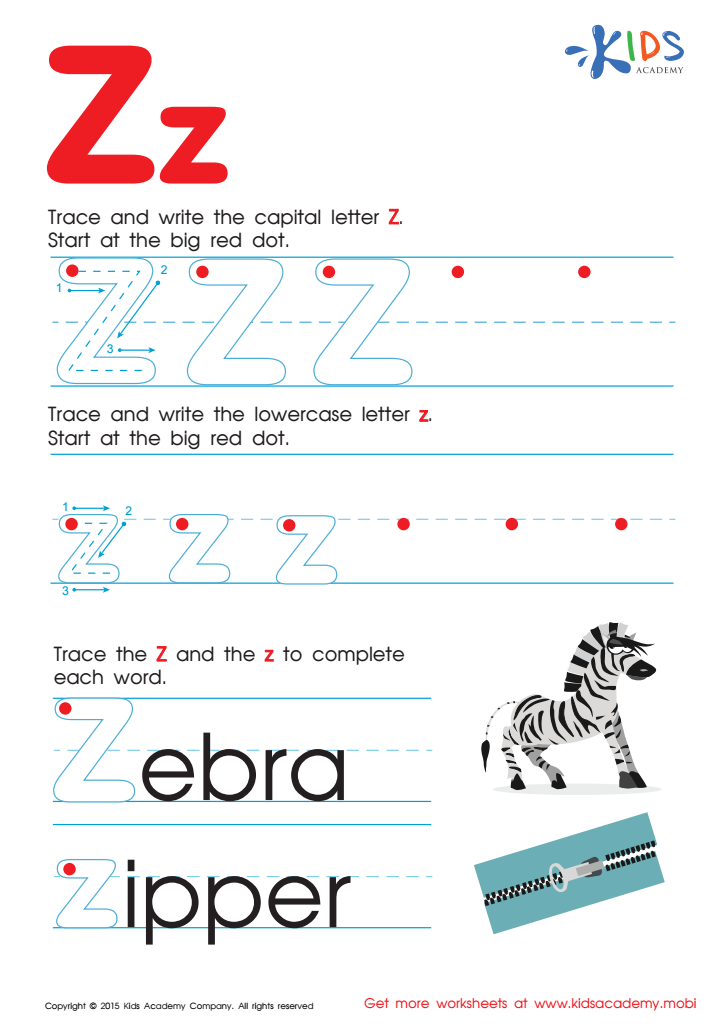
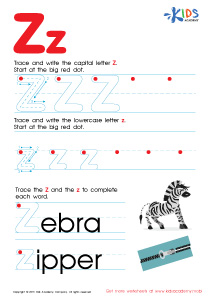
Letter Z Tracing Page
Trace and write capital "Z" and lowercase "z". Complete words "zebra" and "zipper". Be attentive and have fun! (80 words)
Letter Z Tracing Page
Worksheet
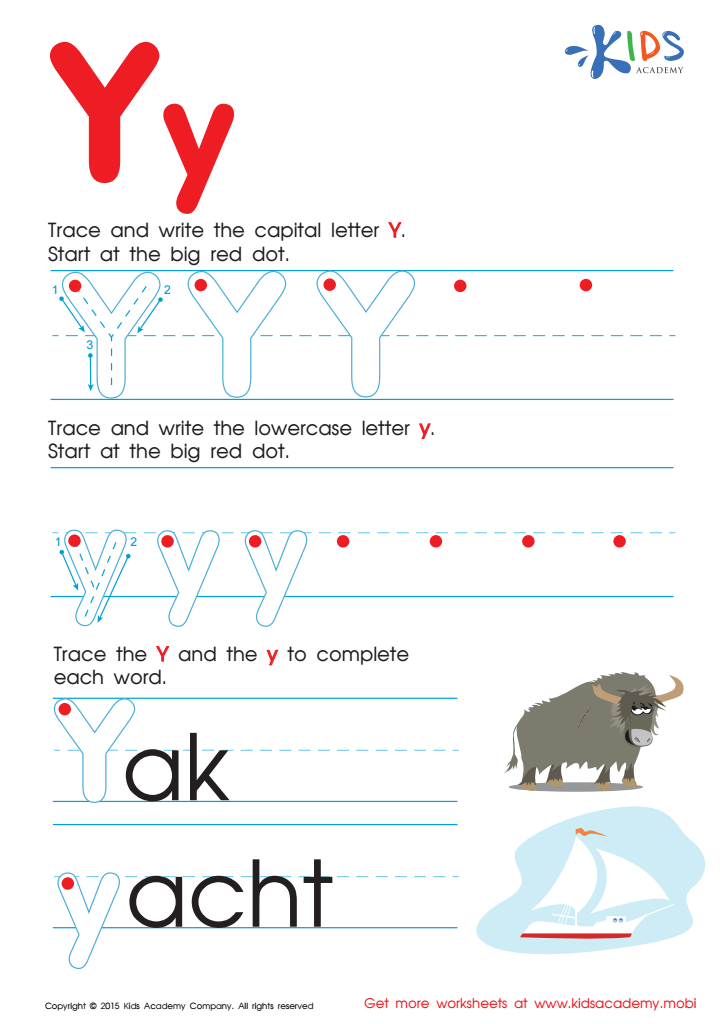
Letter Y Tracing Page
Trace the capital letter "Y" on the red dot, then trace and write the lowercase letter. Complete the words to help the Yak walk and the yacht swim. More worksheets at Kids Academy.
Letter Y Tracing Page
Worksheet
Join Kids Academy for Free
Who is primarily going to use this learning content?








Alphabet recognition is a foundational skill that plays a critical role in a child's literacy development. Parents and teachers should care about initiatives like the "Alphabet Recognition Extra Challenge" for kindergarten students, as they help foster essential pre-reading skills. Mastery of ABC letters not only enhances children's ability to decode words but also supports their overall academic success.
The program's extra challenge aspect encourages children to engage more deeply with letters, identifying them in various contexts, which helps in cementing their understanding. This extended practice allows students to build confidence in their knowledge of letters and sounds, setting them up for successful reading experiences in the future.
Moreover, this initiative promotes cognitive development by engaging children in fun and interactive learning activities, making letter recognition a playful endeavor rather than a chore. It also supports differentiated learning, acknowledging that children may progress at different rates and providing tailored challenges to suit each learner's needs.
By investing in alphabet recognition skills, parents and teachers lay the groundwork for lifelong literacy, empowering children to express themselves effectively and facilitating their ability to navigate a world filled with written communication. Therefore, implementing programs like the Alphabet Recognition Extra Challenge is essential for that strong start in literacy education.