Alphabet Recognition Extra Challenge Kindergarten Tracing Letters Worksheets
3 filtered results
-
From - To
Enhance your kindergarten students' alphabet recognition skills with our "Alphabet Recognition Extra Challenge" tracing letters worksheets! Designed to make learning fun and engaging, these worksheets encourage young learners to practice tracing both uppercase and lowercase letters, solidifying their understanding of the alphabet. With various activities that progressively challenge their abilities, children will develop fine motor skills while reinforcing letter recognition. Ideal for classroom or at-home use, these worksheets promote early literacy in an enjoyable way. Equip your students with essential skills for future reading success and bring excitement to their learning journey with our interactive tracing letter resources!
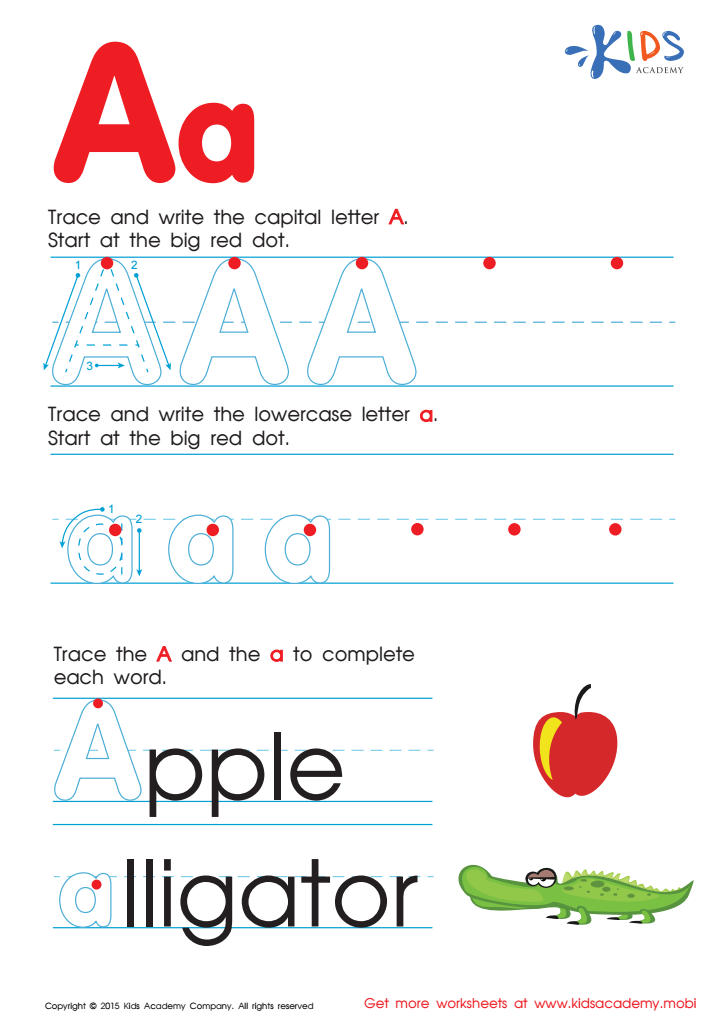
Letter A Tracing Page
 Assign to My Students
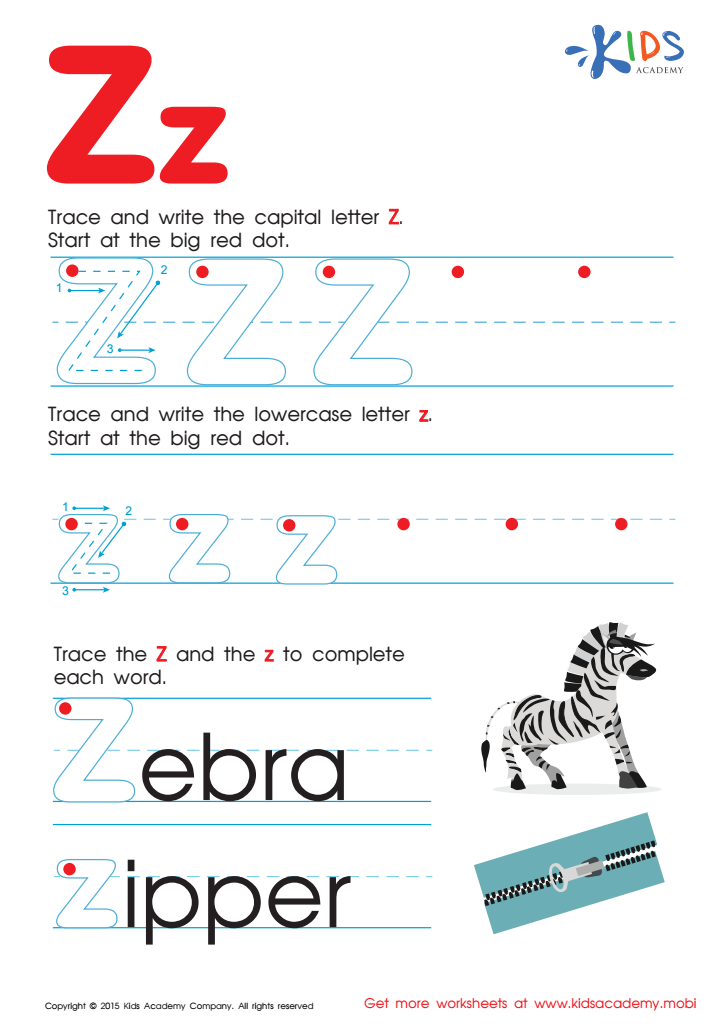
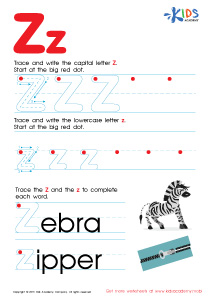
Letter Z Tracing Page
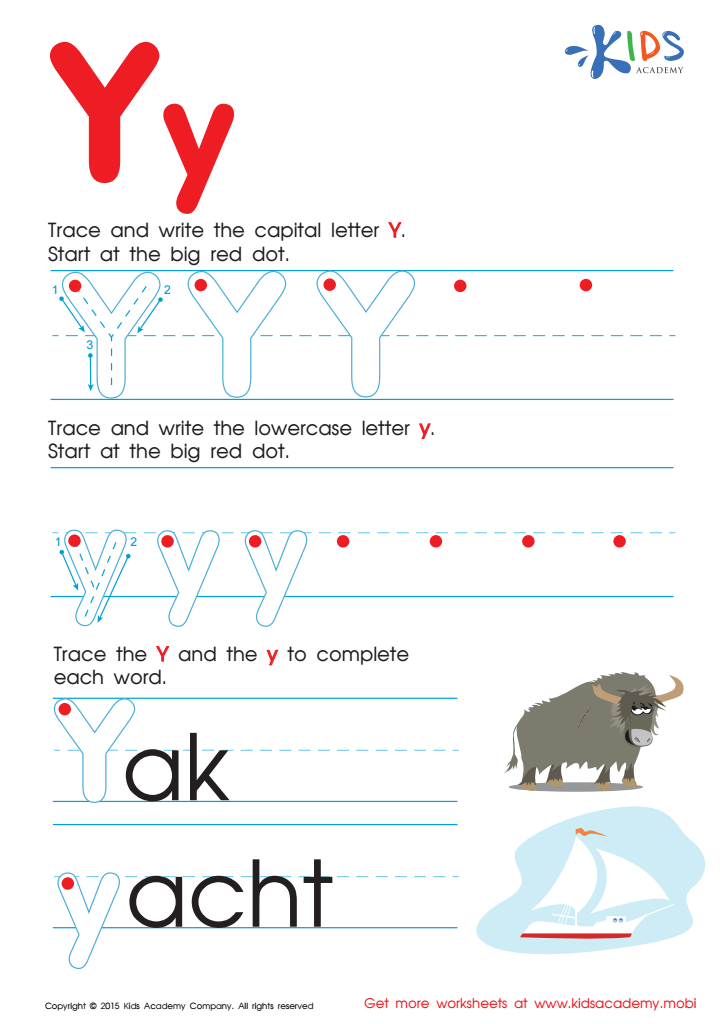
Letter Y Tracing Page





Alphabet recognition is a foundational skill for early literacy, making it crucial for both parents and teachers to care about activities like the Alphabet Recognition Extra Challenge in kindergarten tracing letters. Mastery of the alphabet serves as a gateway to reading and writing, which are essential for academic success. When children can recognize and trace letters, they simultaneously develop fine motor skills, hand-eye coordination, and cognitive connections between letter shapes and sounds.
Engaging in letter tracing activities not only aids in letter recognition but also helps in phonemic awareness, allowing early readers to understand that letters represent sounds. This recognition fosters confidence in children, as they become familiar with the letters they will encounter in books and classroom activities.
Moreover, when parents and teachers encourage these activities, they create a positive learning environment that emphasizes the importance of literacy. This support goes beyond the classroom; it instills a lifelong love of reading and writing. Ultimately, investing time in Alphabet Recognition Extra Challenge exercises cultivates a strong foundation in literacy that will benefit students throughout their educational journey and beyond.