Handwriting practice Extra Challenge Kindergarten English for Beginners Worksheets
5 filtered results
-
From - To
Introducing our "Handwriting Practice Extra Challenge Kindergarten English for Beginners Worksheets"! Designed to support young learners, these engaging and fun worksheets are perfect for enhancing handwriting skills while learning the basics of English. Each worksheet provides extra challenges, ensuring your kindergartener stays motivated and interested. With a focus on proper letter formation and neatness, these printable worksheets foster confidence and mastery in young students. Ideal for beginners, these resources are essential for parents and teachers aiming to provide a solid foundation in both handwriting and English language skills. Give your kindergartener the extra boost they need to excel!
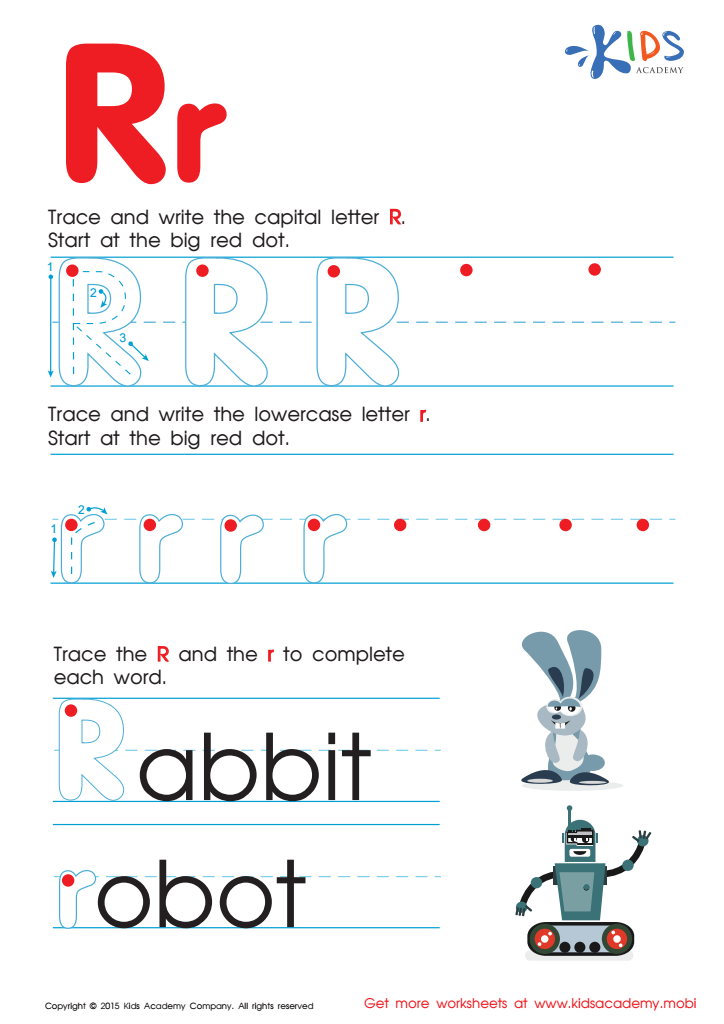
Letter R Tracing Page
 Assign to My Students
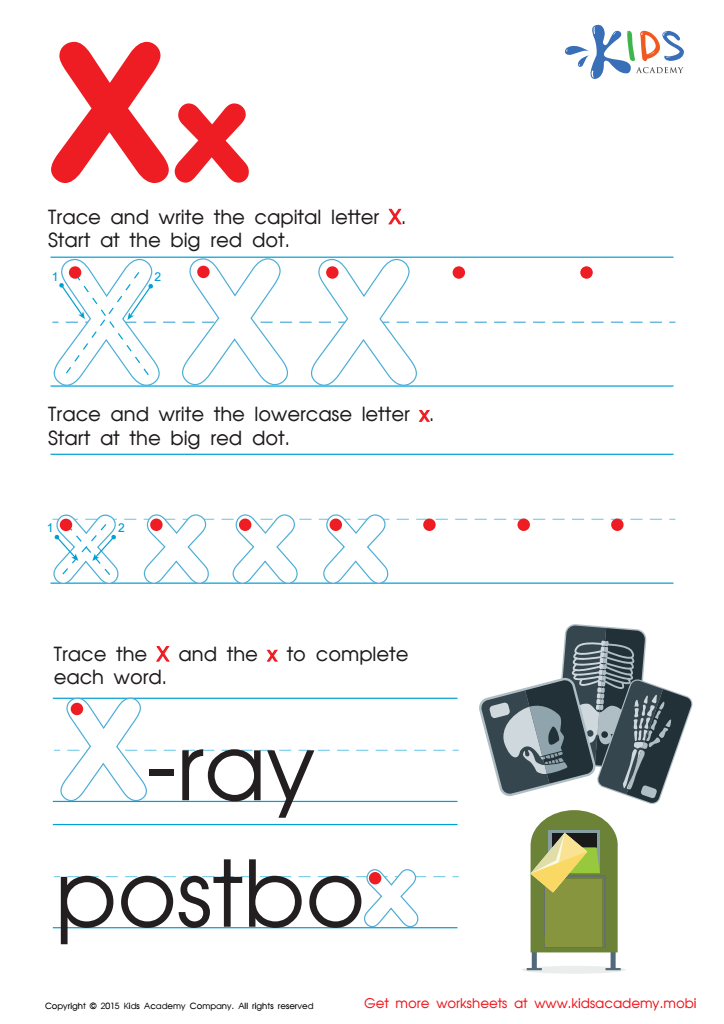
Letter X Tracing Page
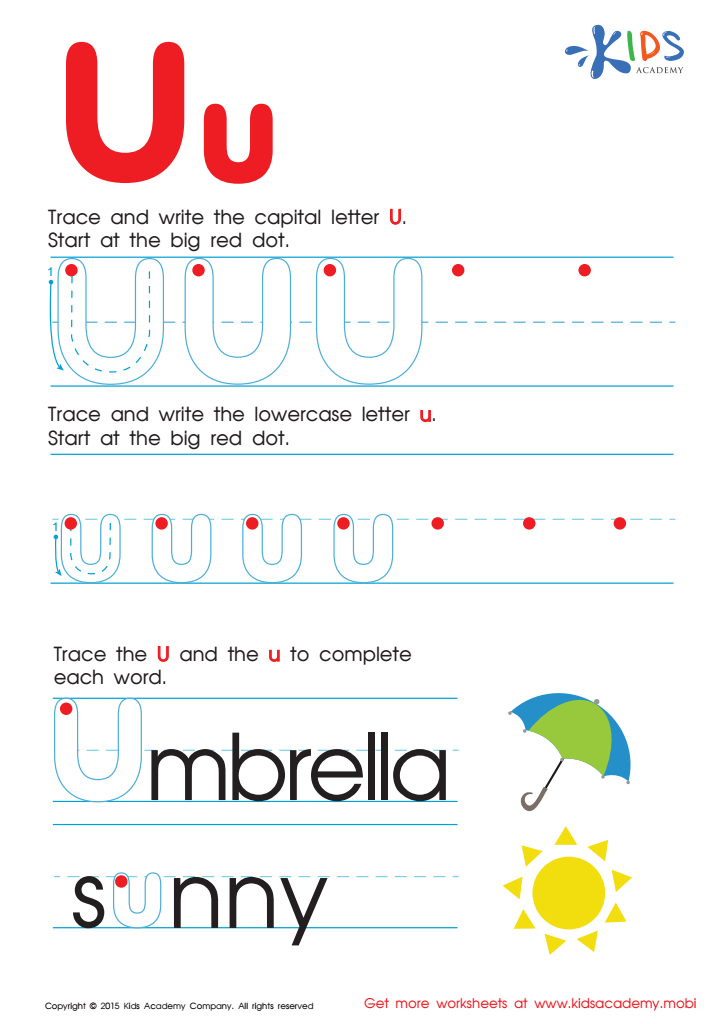
Letter U Tracing Page
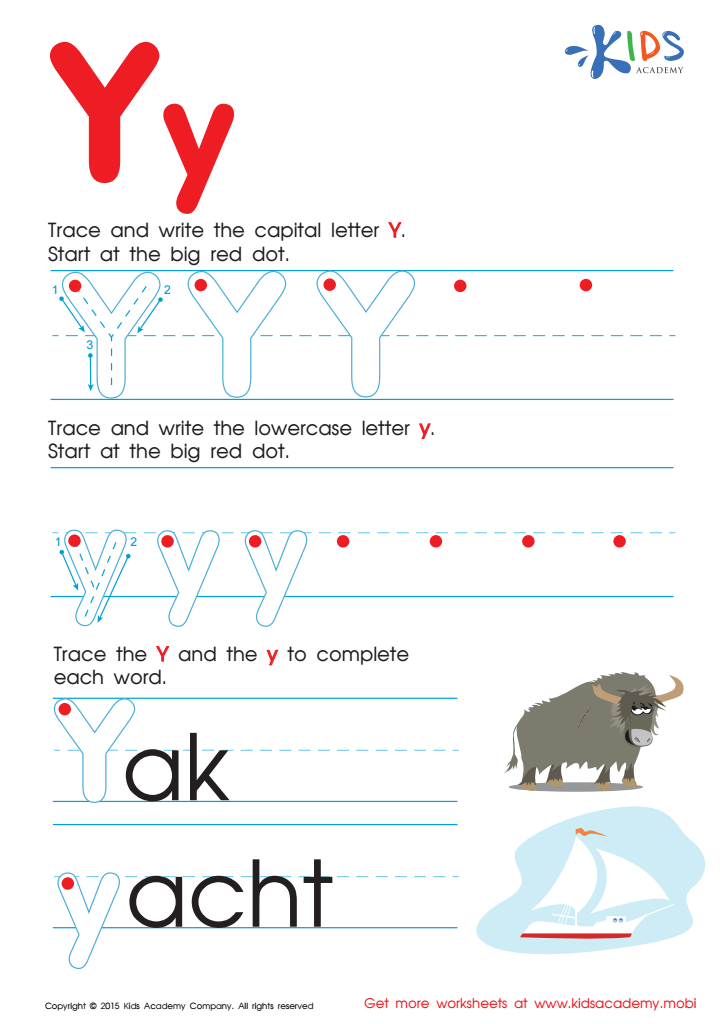
Letter Y Tracing Page
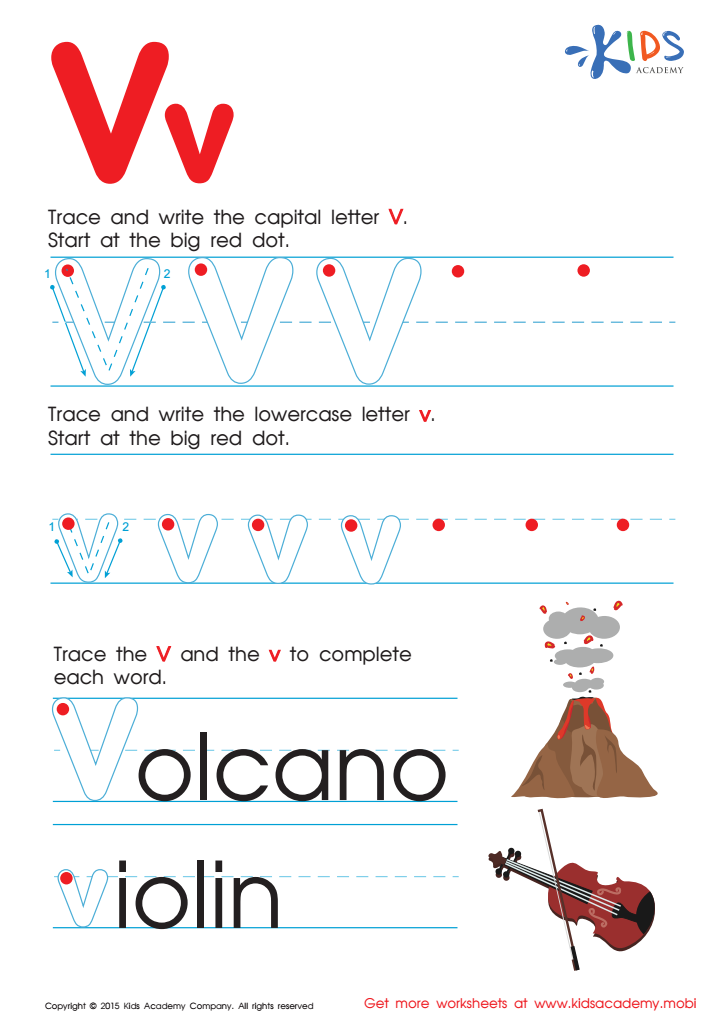
Letter V Tracing Page



Handwriting practice is critical for Kindergarten students, particularly those in the early stages of learning English. Both parents and teachers should prioritize this for several compelling reasons. First, handwriting practice helps develop fine motor skills, strengthening the small muscles in the hands and fingers necessary for precise movements. This essential development translates not just to writing, but also to tasks like buttoning clothes or using eating utensils.
Furthermore, handwriting is closely connected to literacy. As children learn to write letters and simple words, they enhance their understanding of letter shapes and structures, reinforcing their reading skills. The process of writing also engages the brain differently than typing on a keyboard, promoting better memory retention and cognitive development.
For English beginners, handwriting practice aids in familiarizing children with the alphabet and phonetic patterns unique to the language, making subsequent reading and spelling tasks less daunting. It provides a tangible way for young learners to see and understand language structure, thereby boosting their confidence and communication skills.
Additionally, good handwriting creates a sense of achievement and encourages children to express themselves more clearly and accurately. Therefore, engaging in regular handwriting practice affords children crucial developmental benefits that support their overall academic journey and future learning endeavors.