Discover our "Logical Thinking Extra Challenge Kindergarten Worksheets" designed to engage young minds in critical thinking and problem-solving. These thoughtfully crafted worksheets encourage children to explore patterns, categorize objects, and enhance their reasoning skills through fun and interactive activities. Tailored for kindergarteners, our extra challenge set builds confidence and sharpens cognitive abilities while promoting a love for learning. Perfect for both classroom and home use, these worksheets will keep your students engaged and excited about logic! Help your child master foundational skills that pave the way for future academic success with our exciting and inspiring printable resources.

Check out this FREE Kindergarten "Logical thinking" Trial Lesson!

What Is Chess?

Favorites
With answer key
Interactive
  • Kindergarten
  • Logical thinking
  • Extra Challenge
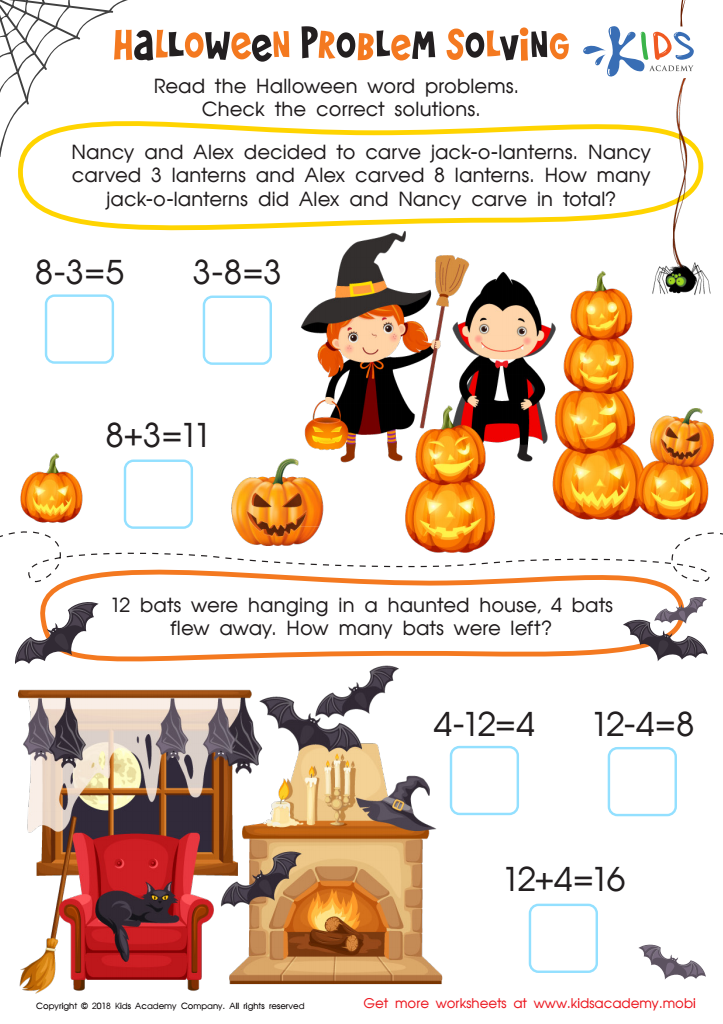
Halloween Problem Solving Worksheet

Halloween Problem Solving Worksheet

Halloween math is here! Get your spooky word problems and frightfully cute images with this free PDF worksheet. Read the problems with your little one and focus on the numbers and key phrases. Then match the equation to its solution to complete the page. Calling all ghosts and goblins - have some math fun this Halloween!
Halloween Problem Solving Worksheet
Worksheet
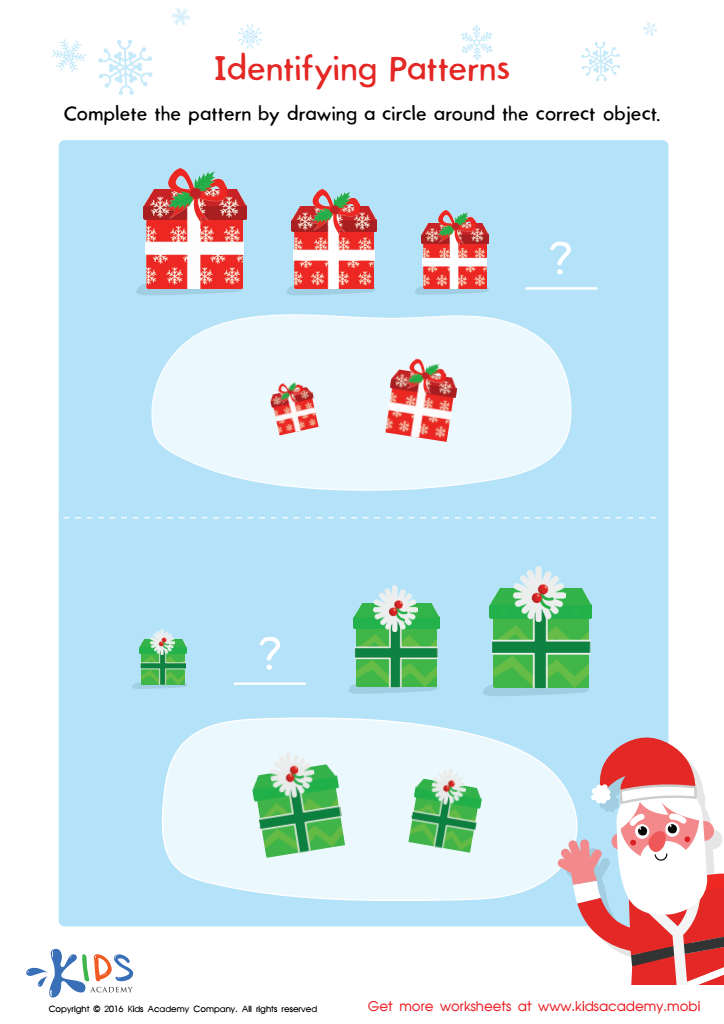
Identifying patterns worksheet pdf

Identifying Patterns Worksheet

Kids can have fun as they learn with this festive worksheet! They'll practice early math skills while identifying patterns with colorful Christmas presents. Have your child get ready for the holidays by finding out which box comes next in the pattern!
Identifying Patterns Worksheet
Worksheet
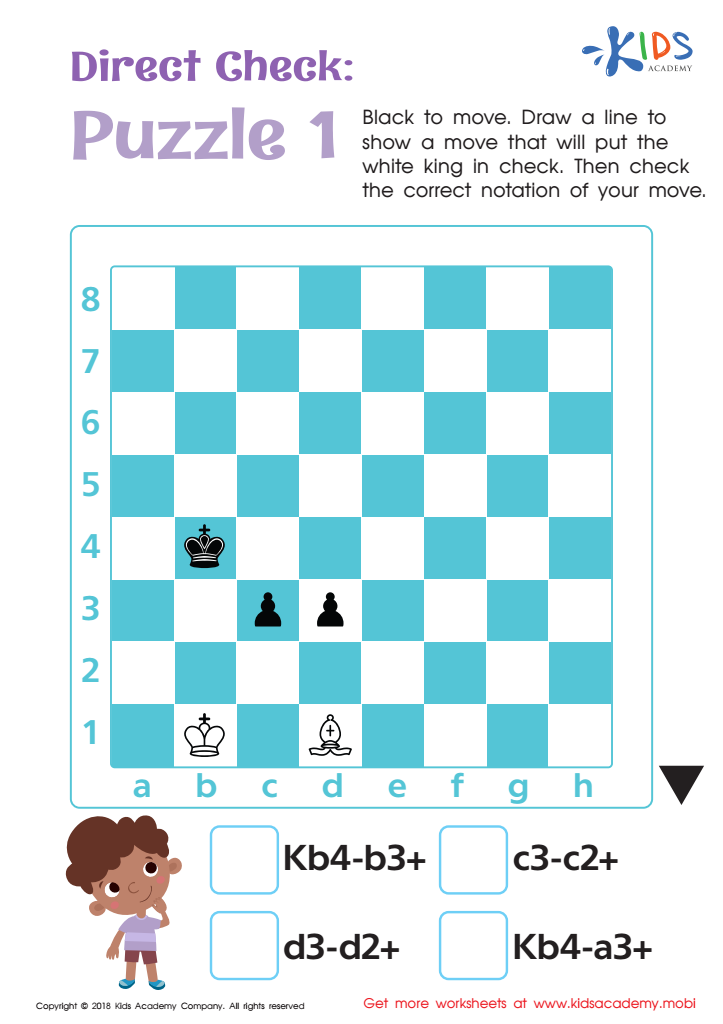
Direct Check: Puzzle 1 Worksheet

Direct Check: Puzzle 1 Worksheet

Your child can test their chess knowledge with this worksheet. If they've been taking lessons or playing regularly, they'll enjoy connecting the dots to put the white king in checkmate, then checking the correct notation. Challenge their chess skills!
Direct Check: Puzzle 1 Worksheet
Worksheet
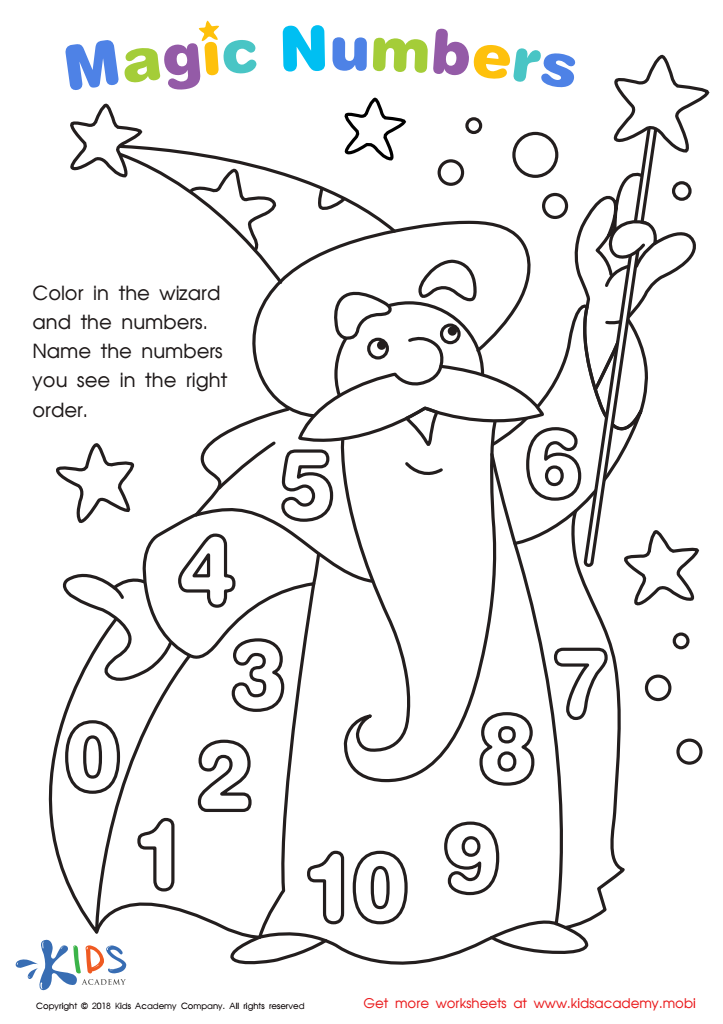
Magic Numbers Worksheet

Magic Numbers Worksheet

Does your child have an interest in magic? Here's something they'll love - a coloring sheet featuring a wizard! Ask them to name the numbers from smallest to highest, then let them pick colors to color in the wizard and the numbers. It's sure to excite them!
Download (PDF)
Assign to My Students
Magic Numbers Worksheet
Worksheet
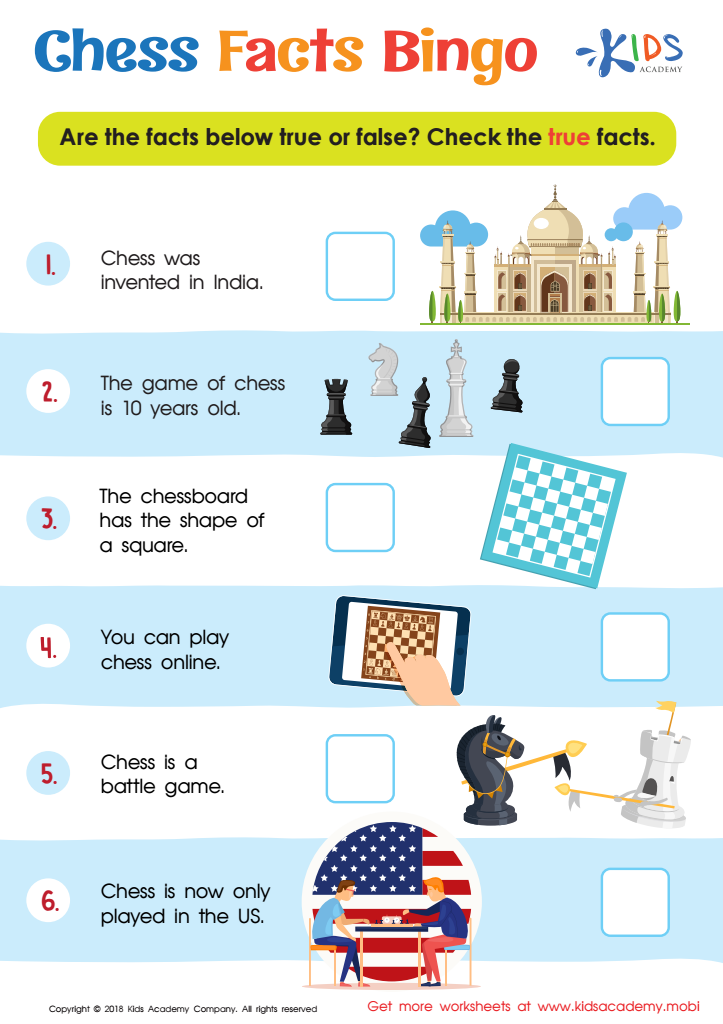
Chess Facts Bingo Worksheet

Chess Facts Bingo Worksheet

Help your child assess their knowledge of chess with our simple worksheet. It contains six questions; read them to your child and ask them if the statements are true or false. Once they check the boxes for the true statements, you'll have a better understanding of their understanding of the game.
Chess Facts Bingo Worksheet
Worksheet
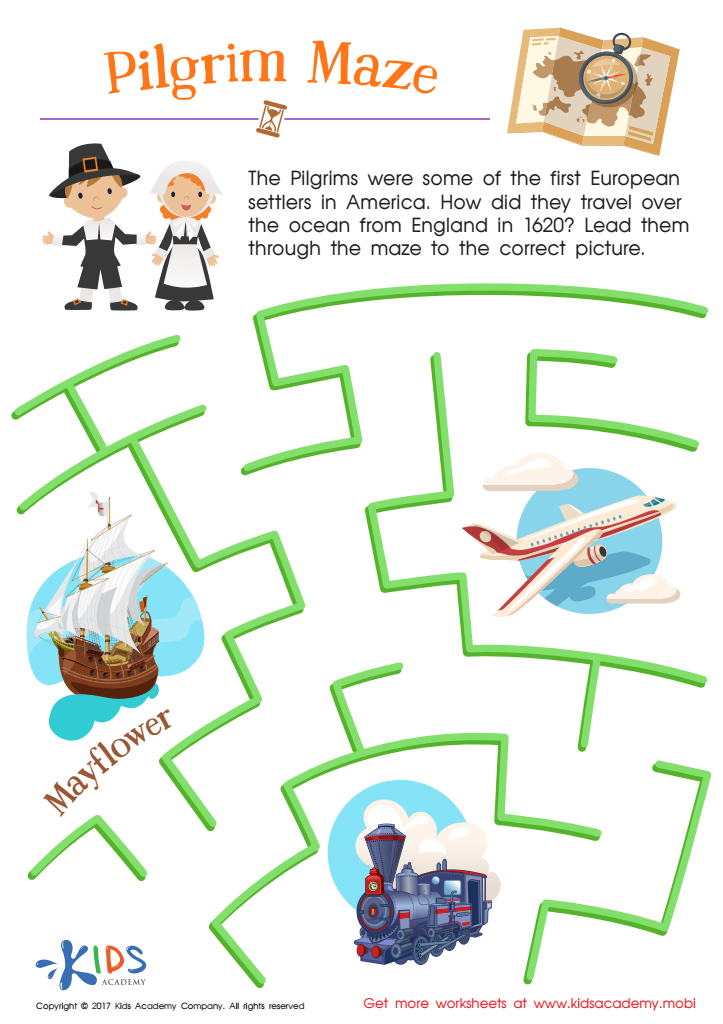
Pilgrim Printable Maze

Pilgrim Maze Worksheet

This worksheet is perfect for teaching kids about an important moment in American History! Your child will have a blast solving the maze to recall that the Mayflower brought the pilgrims to the New World in 1620. It reinforces American history facts and develops visual motor and problem solving skills. It also uses modern pictures to make kids think about the right answer. Get this challenging pilgrim printable maze or a full collection of history worksheets for your little learner!
Pilgrim Maze Worksheet
Worksheet
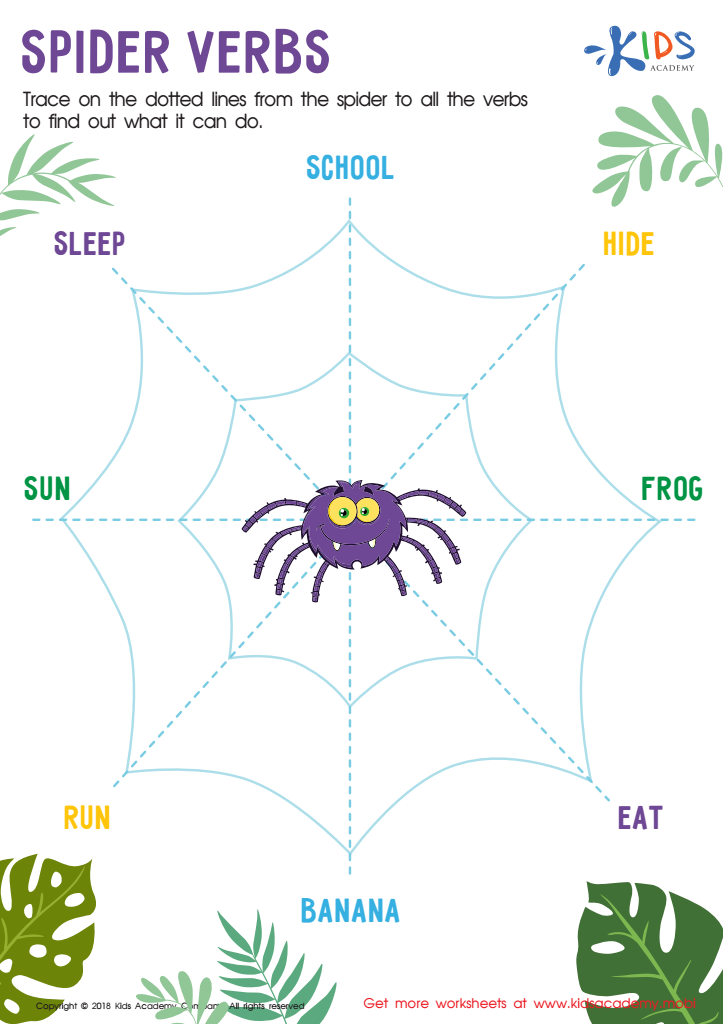
Spider Verbs Worksheet

Spider Verbs Worksheet

Verbs are action words. Examples: run, play, talk. Show your child this tracing sheet for them to learn about verbs. Ask them to trace the dotted lines from the spider to the words that are verbs. These words are what the spider can do.
Spider Verbs Worksheet
Worksheet


Parents and teachers should prioritize logical thinking in kindergarten because it lays the essential foundation for problem-solving skills that learners will use throughout their lives. At this age, children are naturally curious and eager to explore their environment. Engaging them in logical thinking activities encourages inquiry-based learning, where they learn to ask questions, identify patterns, and connect ideas.

Moreover, developing logical thinking enhances cognitive abilities, such as reasoning and critical thinking, which are crucial for academic success in later years. Kindergartners who participate in logical thinking challenges learn to assess situations, make decisions, and predict outcomes, fostering independence and confidence in their capabilities.

In addition, these skills contribute to improved social interactions. Children learn to navigate rules, collaborate with peers, and understand different perspectives—essential skills for emotional intelligence and teamwork.

Introducing engaging logical thinking activities also stimulates creativity, as children experiment with different solutions and think outside the box. By fostering a stimulating environment, educators and parents can cultivate a love for learning while equipping children with valuable skills that will benefit their education and future career paths. Engaging in logical thinking at an early stage not only prepares children for upcoming academic challenges but also supports their overall development.