Phonics recognition Extra Challenge Kindergarten Worksheets
3 filtered results
-
From - To
Enhance your kindergarten classroom with our "Phonics Recognition Extra Challenge Worksheets"! Specifically designed for advanced learners, these printable worksheets provide engaging and interactive activities that reinforce phonics skills. Perfect for developing early reading proficiency, each worksheet challenges students to recognize letters, sounds, and words through fun exercises. Designed with colorful illustrations, they capture children's attention while promoting essential literacy skills. From sound matching to letter identification, these worksheets are ideal for both individual practice and group activities. Encourage a love for reading in your students with our creative and effective phonics challenges that cater to their growing capabilities!
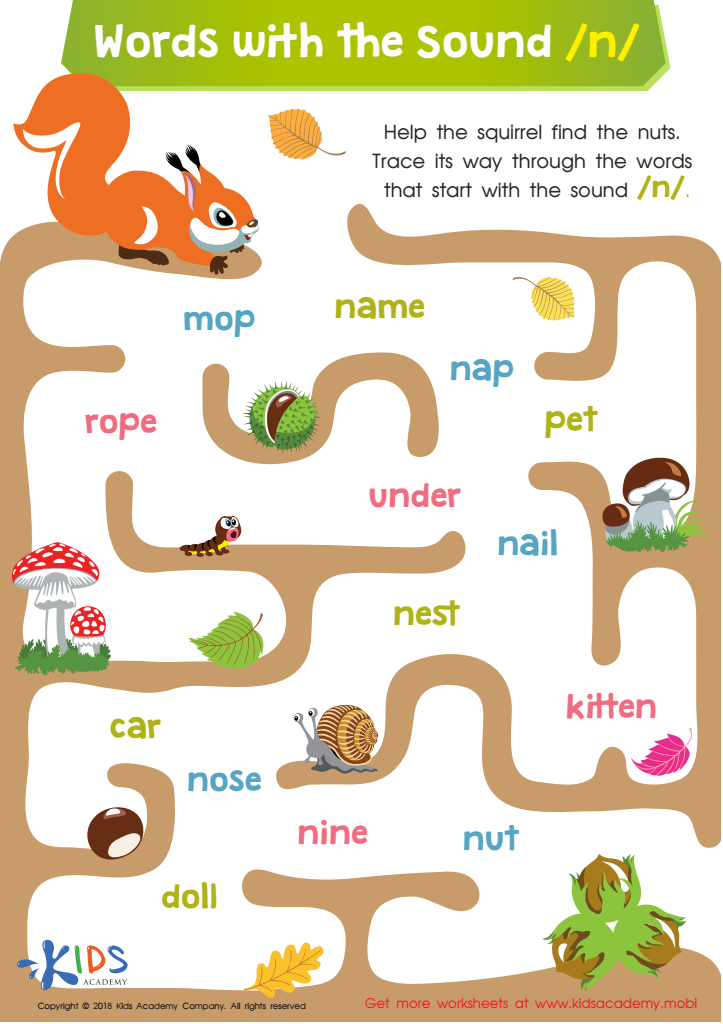
Words with Sound N Reading Worksheet
 Assign to My Students
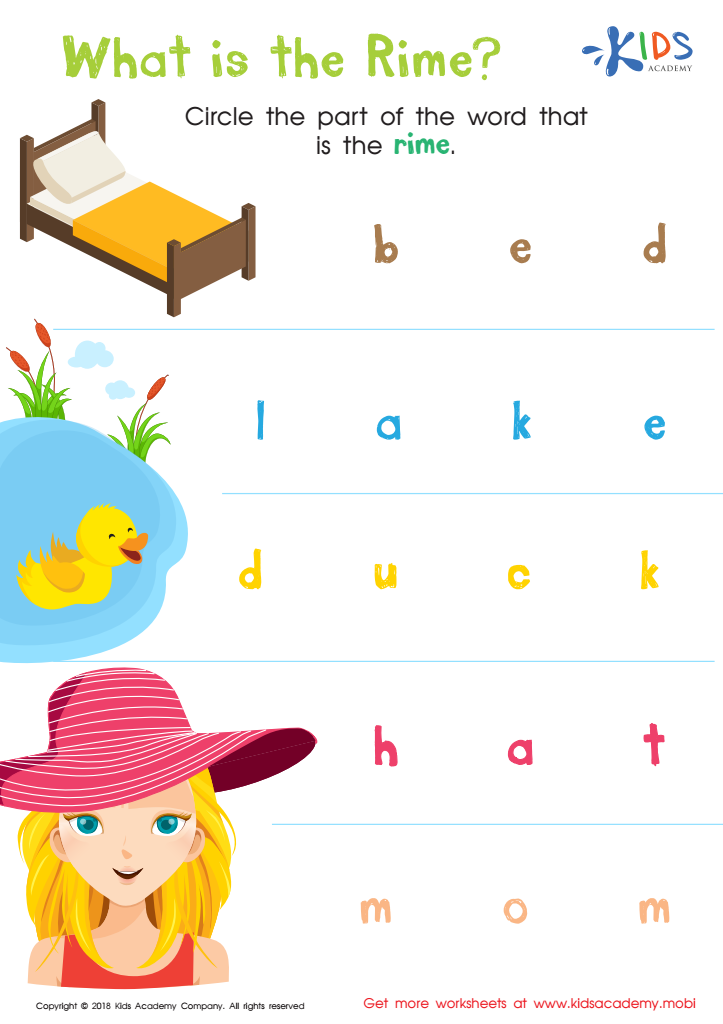
What Is the Rime? Worksheet
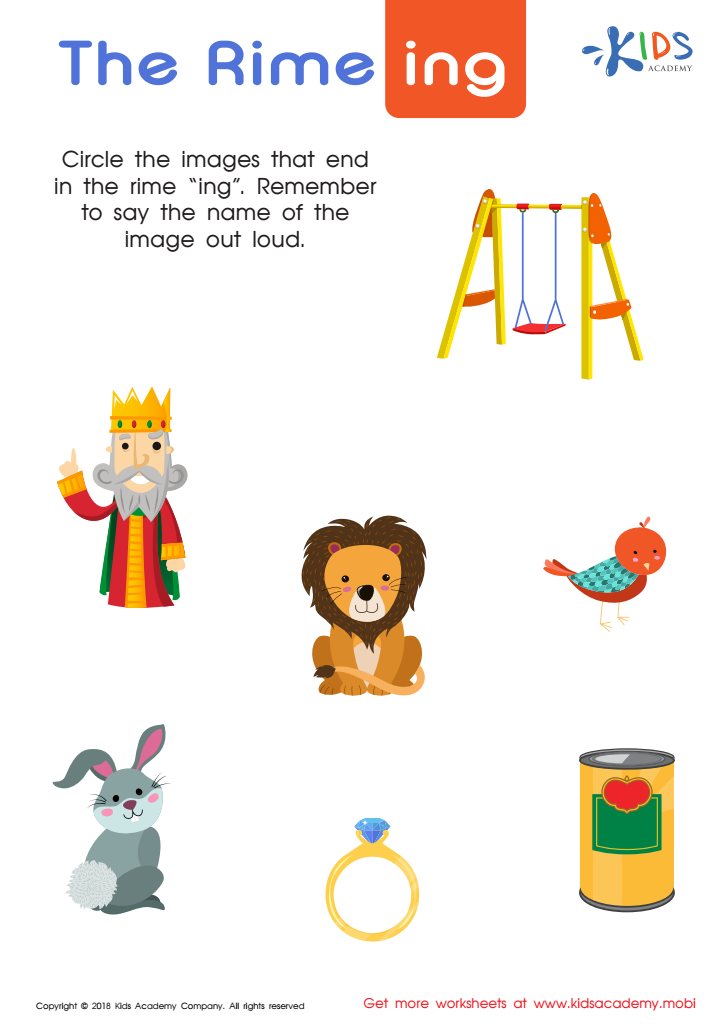
The Rime "ing" Worksheet








Phonics recognition is essential in kindergarten as it lays the foundation for a child's reading and writing skills. Understanding the relationship between letters and sounds enables young learners to decode words, which is crucial for developing fluency and comprehension. When parents and teachers emphasize phonics, they foster confidence and independence in early readers.
In the context of an "Extra Challenge" program, phonics recognition becomes even more valuable. It encourages advanced learners to deepen their understanding of language, enhancing their ability to tackle more complex texts. Engaging these students with challenges that expand their phonics skills can also spark a love for reading, as they discover the joy of mastering language.
Moreover, phonics instruction should be a collaborative effort between home and school. When parents are involved, they can reinforce what their children learn in the classroom, creating a consistent learning environment. This partnership is particularly important in kindergarten, where children thrive on encouragement and positive reinforcement.
Ultimately, prioritizing phonics recognition at this stage sets children on a successful educational trajectory, equipping them with the essential skills they need for future academic achievements. It’s a crucial step in fostering critical thinking and fostering a lifelong love of learning.