Understanding plurals Extra Challenge Kindergarten Grammar Worksheets
3 filtered results
-
From - To
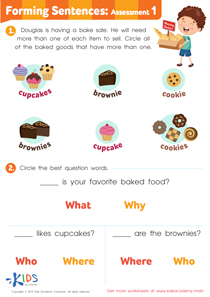
Welcome to our "Understanding Plurals Extra Challenge Kindergarten Grammar Worksheets"! These engaging and interactive worksheets are designed to help young learners grasp the concept of plurals in a fun and enjoyable way. Perfect for reinforcing classroom lessons, our resources feature lively illustrations and thought-provoking exercises that challenge children to transform singular nouns into their plural forms. With a variety of activities, including fill-in-the-blank, matching games, and creative writing prompts, these worksheets promote critical thinking and early literacy skills. Start your child’s journey toward mastering grammar with our thoughtfully crafted extra challenge worksheets that promise to inspire and educate!
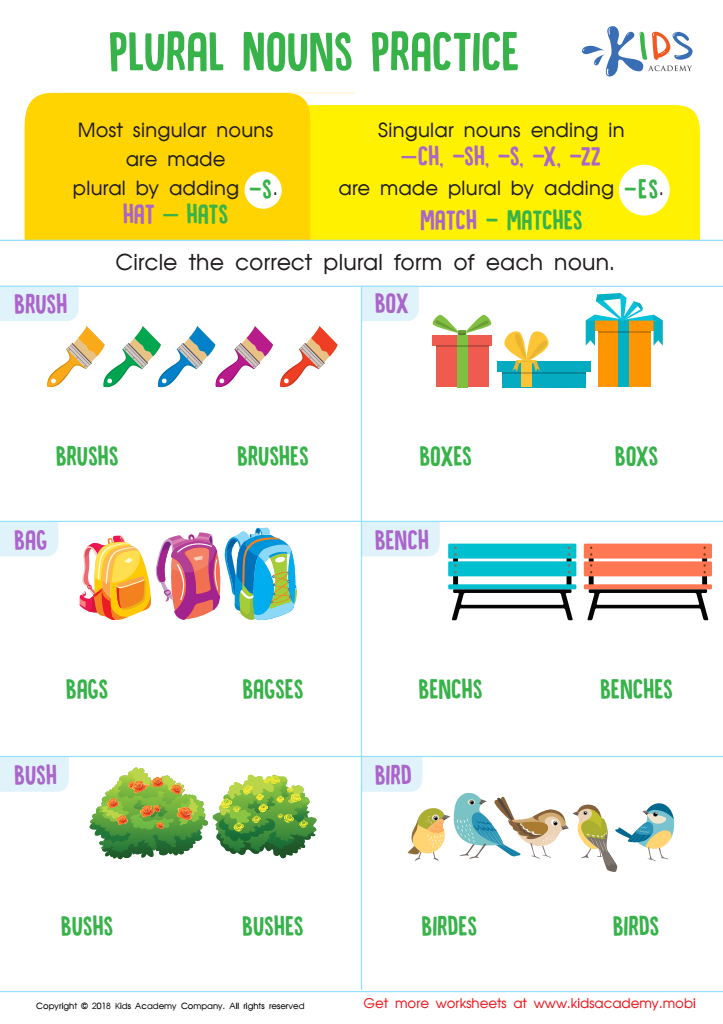
Plural Nouns Practice Worksheet
 Assign to My Students
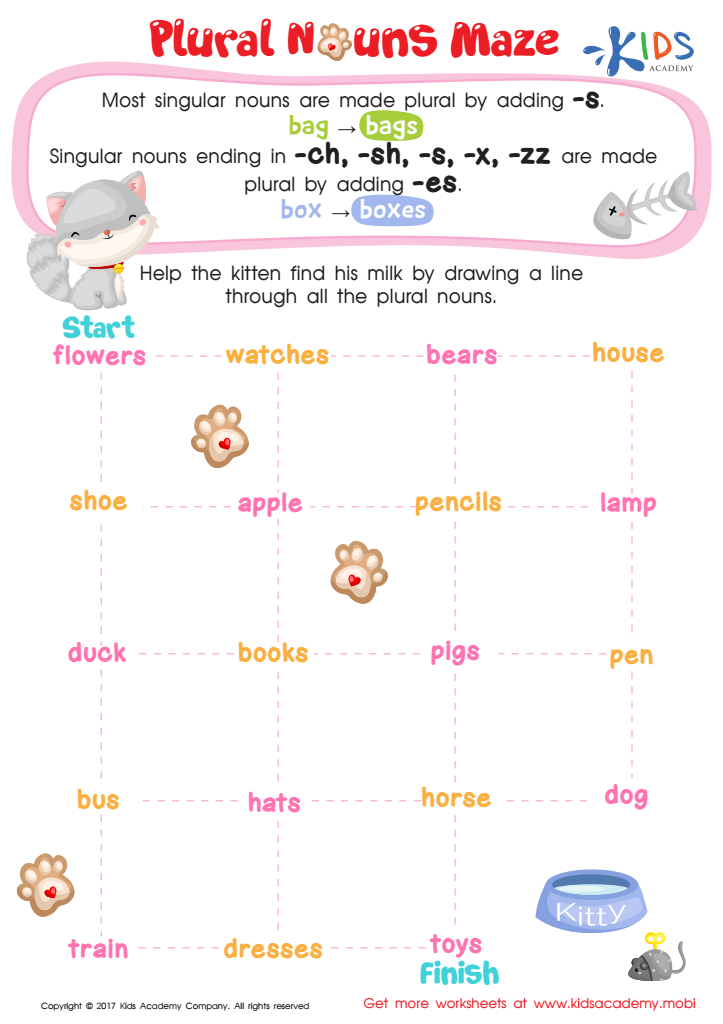
Plural Nouns Maze Worksheet
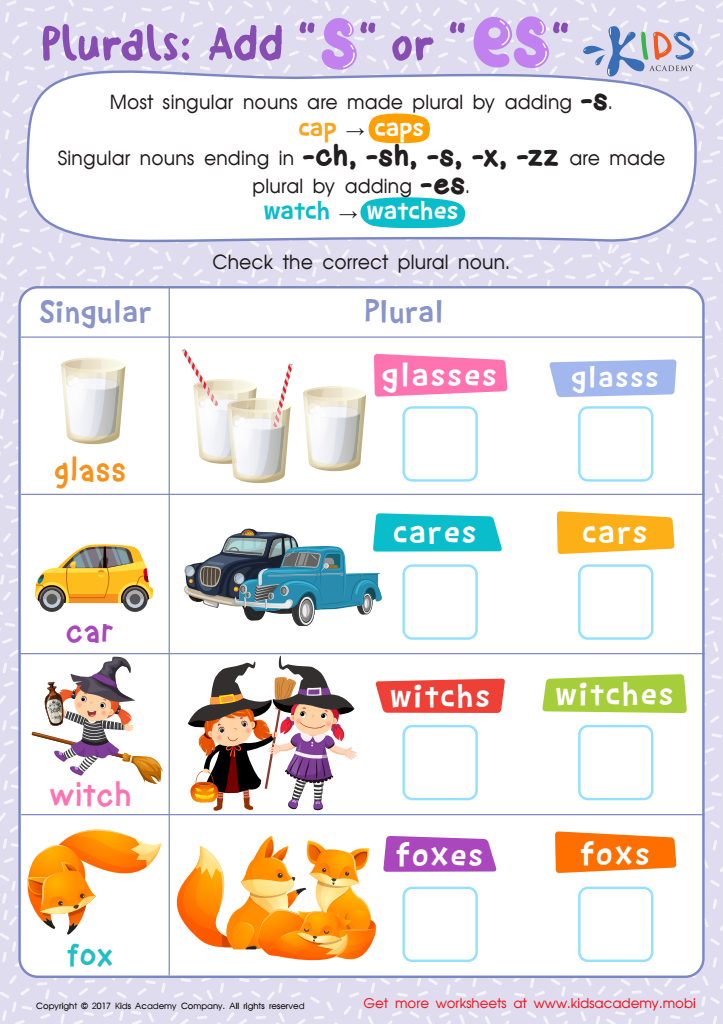
Plurals: "–es" or "–es"? Worksheet





.jpg)
Understanding plurals is essential for young learners, especially in kindergarten, as it lays the foundation for effective communication and language development. When parents and teachers emphasize the significance of plurals, children begin to grasp the concept of quantity, which is vital not just in language, but in subjects like mathematics and science too.
Grammatical understanding promotes literacy skills, enabling children to read with comprehension and write with clarity. For instance, recognizing the difference between "cat" and "cats" helps kids understand that language can convey more complex ideas about groups or quantities. This awareness fosters confidence in their ability to express themselves and improves their overall vocabulary.
Moreover, learning plurals can be fun and engaging. Activities like rhyming games or storytelling allow children to practice plurals in enjoyable ways. When they connect grammar with real-life experiences, such as counting toys or pets, they deepen their understanding.
By focusing on this aspect of language, parents and teachers help children develop crucial communication skills, laying the groundwork for academic achievement and effective interpersonal relationships. Ultimately, a strong grasp of plurals enriches a child's language experience, nurturing them into proficient communicators for their future.