Understanding plurals Extra Challenge Kindergarten Writing Worksheets
3 filtered results
-
From - To
Elevate your child's writing skills with our "Understanding Plurals Extra Challenge Kindergarten Writing Worksheets!" Specially crafted for young learners, these engaging resources help kindergartners grasp the concept of singular and plural words while having fun. Through colorful illustrations and interactive tasks, children will identify, write, and correct plurals, boosting foundational grammar skills. Perfect for both home and classroom use, these worksheets align with early literacy goals, ensuring your child is prepared for future academic success. Encourage your little one to master plurals with these extra-challenging, educational, and delightful worksheets today!
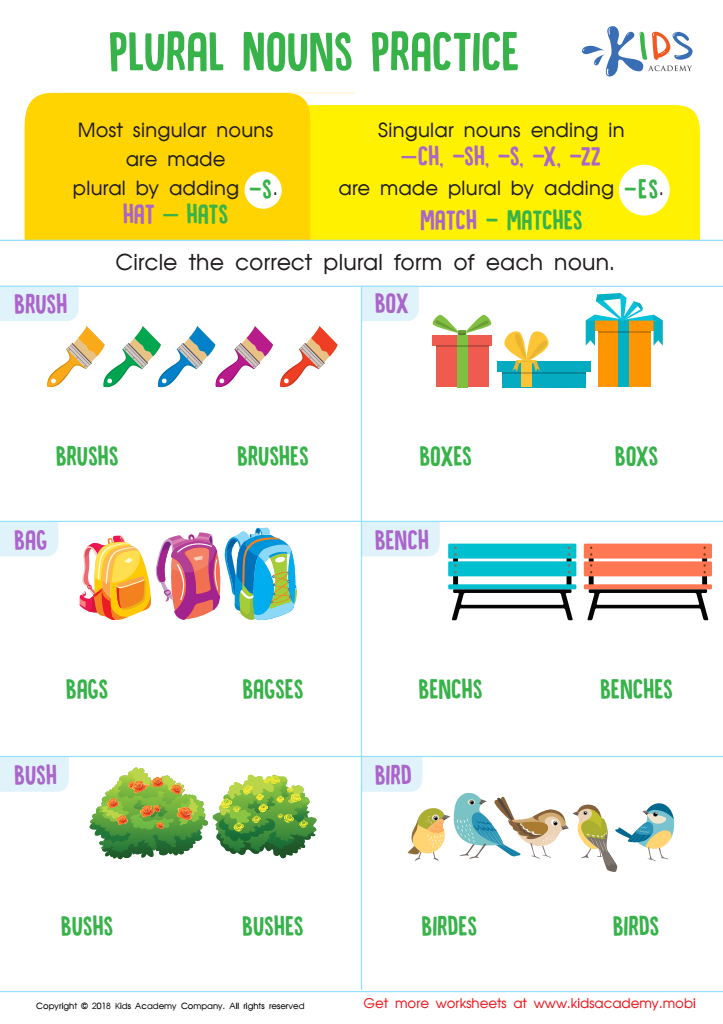
Plural Nouns Practice Worksheet
 Assign to My Students
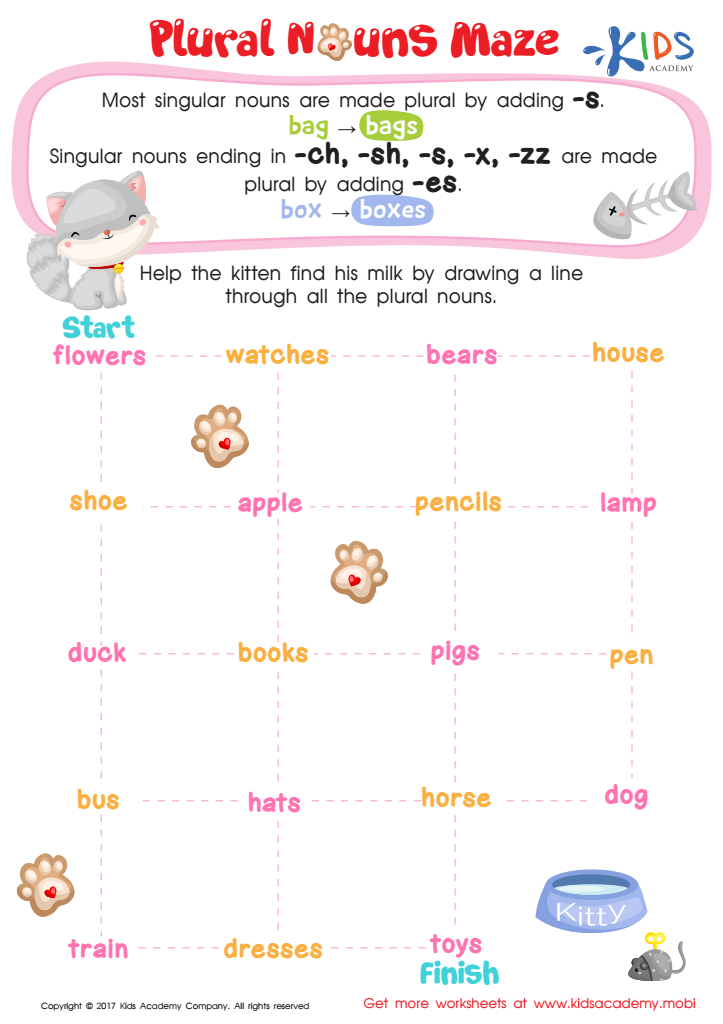
Plural Nouns Maze Worksheet
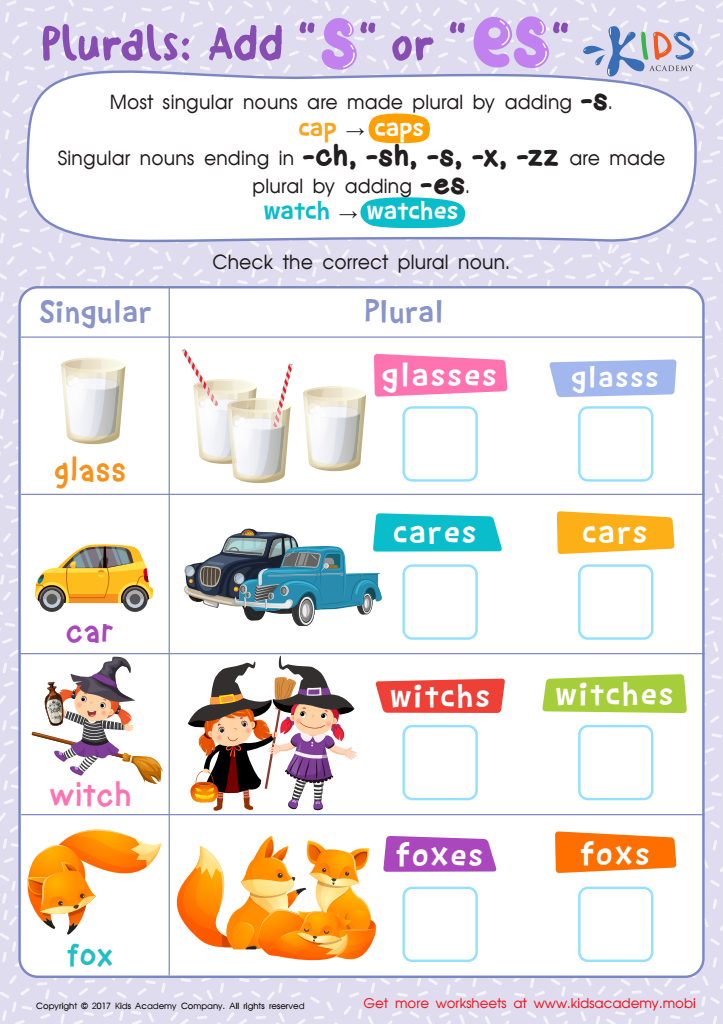
Plurals: "–es" or "–es"? Worksheet




.jpg)



Understanding plurals is a foundational language skill that is crucial for kindergarten students to grasp. Plurals help children expand their vocabulary, improve their reading comprehension, and communicate more effectively. For parents and teachers, investing time in teaching plurals can significantly influence a child's linguistic development.
First, learning plurals boosts vocabulary. When children recognize that adding "-s" or "-es" can transform a word to mean more than one (e.g., "cat" to "cats"), they can describe the world around them more accurately. Learning irregular plurals (like "foot" to "feet") also helps them understand that not all language rules are straightforward.
Second, understanding plurals enhances reading abilities. Recognizing plural forms in books enables children to comprehend stories better, fostering a love of reading. This foundational knowledge prepares them for more complex grammar and writing in later grades.
Lastly, mastering plurals enhances communication. Whether talking or writing, children can convey ideas more precisely by using the correct forms, reducing misunderstandings.
In conclusion, focusing on teaching plurals in kindergarten isn't just about grammar; it's enabling children to explore, understand, and interact with their environment in a more nuanced and sophisticated way. This early investment yields lifelong benefits in language proficiency, reading, and communication skills.