Number Matching Extra Challenge Worksheets
4 filtered results
-
From - To
Enhance your child's numerical skills with our "Number Matching Extra Challenge Worksheets"! Designed for young learners, these engaging worksheets promote number recognition and critical thinking. Each exercise features fun and interactive elements that go beyond basic matching, encouraging students to think strategically as they pair numbers with corresponding images. Ideal for classroom or home use, these worksheets support visual learning and reinforce essential math concepts. As kids work through increasingly challenging tasks, they'll build confidence and proficiency in number recognition. Download our worksheets today and watch your child's mathematical abilities flourish while having fun! Perfect for students seeking an extra challenge!
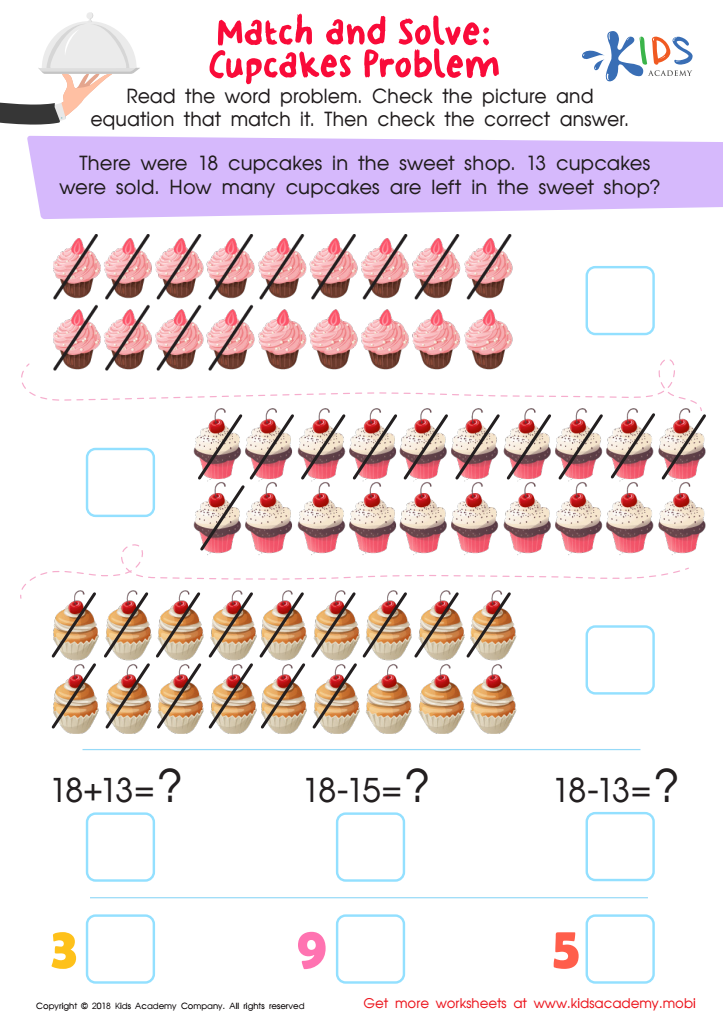
Match and Solve: Cupcakes Problem Worksheet
 Assign to My Students
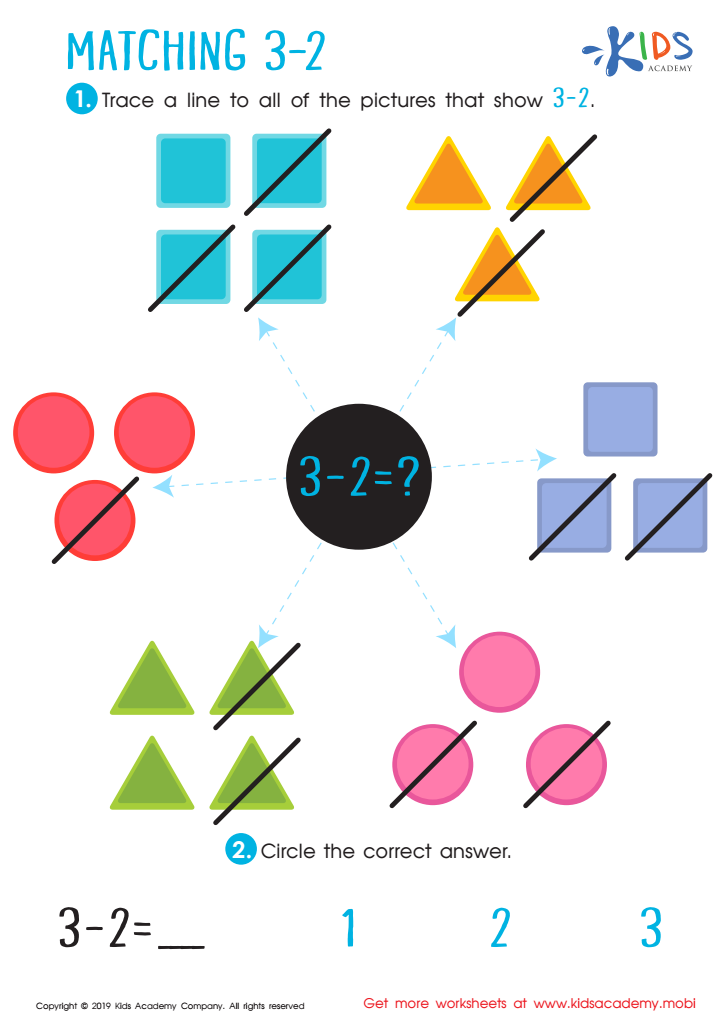
Matching 3-2 Worksheet
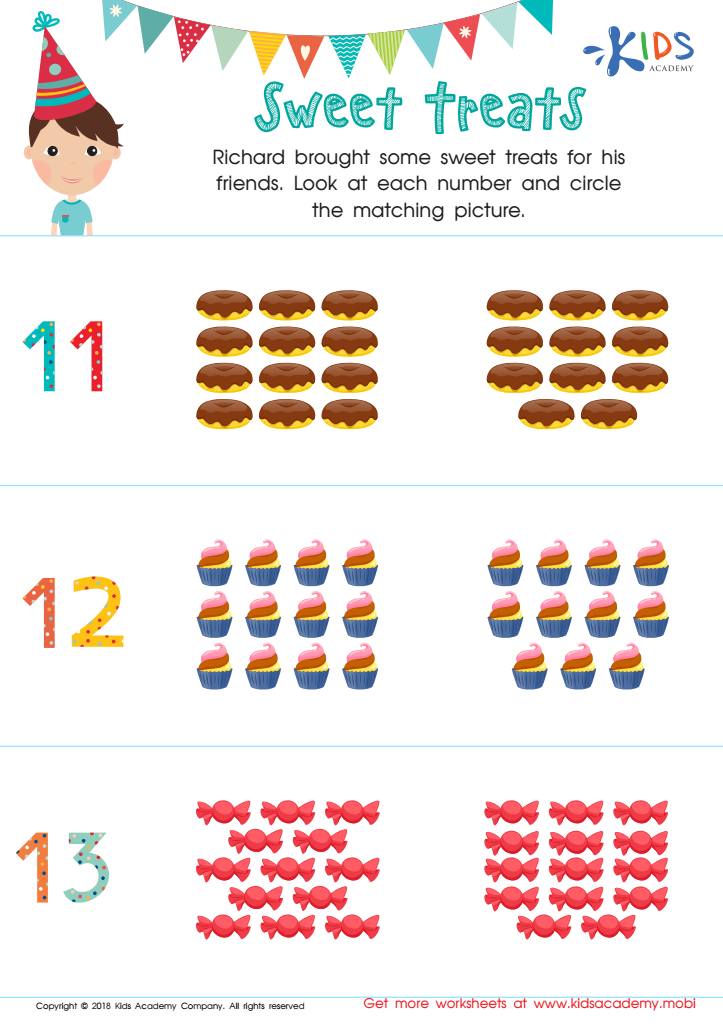
Kindergarten Math Worksheet Matching Numbers
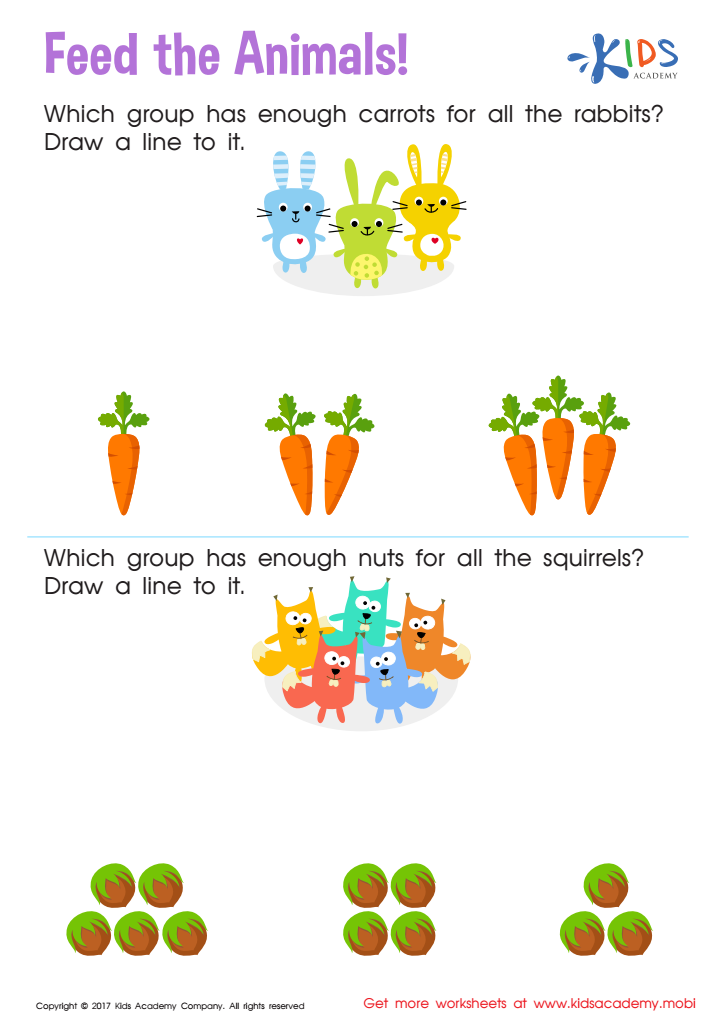
Count and Match: Feed the Animals Worksheet





.jpg)


Number Matching Extra Challenge is an excellent educational tool that enhances early math skills, a cornerstone of children's cognitive development. Parents and teachers should care about this activity because it promotes critical thinking and problem-solving abilities in young learners. By engaging students in number matching games, they not only grasp numerical concepts better but also develop essential skills like pattern recognition and logical reasoning.
Additionally, the interactive nature of number matching encourages collaborative learning and communication among peers, fostering a supportive learning environment. This social interaction can help reduce math anxiety, making children more comfortable with numbers as they grow.
Moreover, number matching activities cater to various learning styles, ensuring that all students can benefit from these exercises, regardless of their pace or ability level. This inclusivity helps build a strong foundation for future math learning, critical for academic success.
Ultimately, by promoting Number Matching Extra Challenge in early grade settings, parents and teachers are investing in children's long-term academic growth and self-esteem. This emphasis on early math skills lays the groundwork for confident and capable learners who can tackle more complex mathematical concepts in the future.








