Understanding fractions Extra Challenge Fractions of Shapes Worksheets
7 filtered results
-
From - To
Discover our "Understanding Fractions Extra Challenge: Fractions of Shapes Worksheets," designed to enhance students' grasp of fractions through engaging visual exercises. These worksheets provide a variety of challenging scenarios where learners identify, compare, and manipulate fractions within various shapes. Ideal for reinforcing fraction concepts, our resources promote critical thinking and problem-solving skills. Whether used in the classroom or at home, these worksheets cater to different learning styles and ensure students gain confidence in their mathematical abilities. Dive into the world of fractions with our innovative and interactive materials, making math fun and accessible for every young learner!
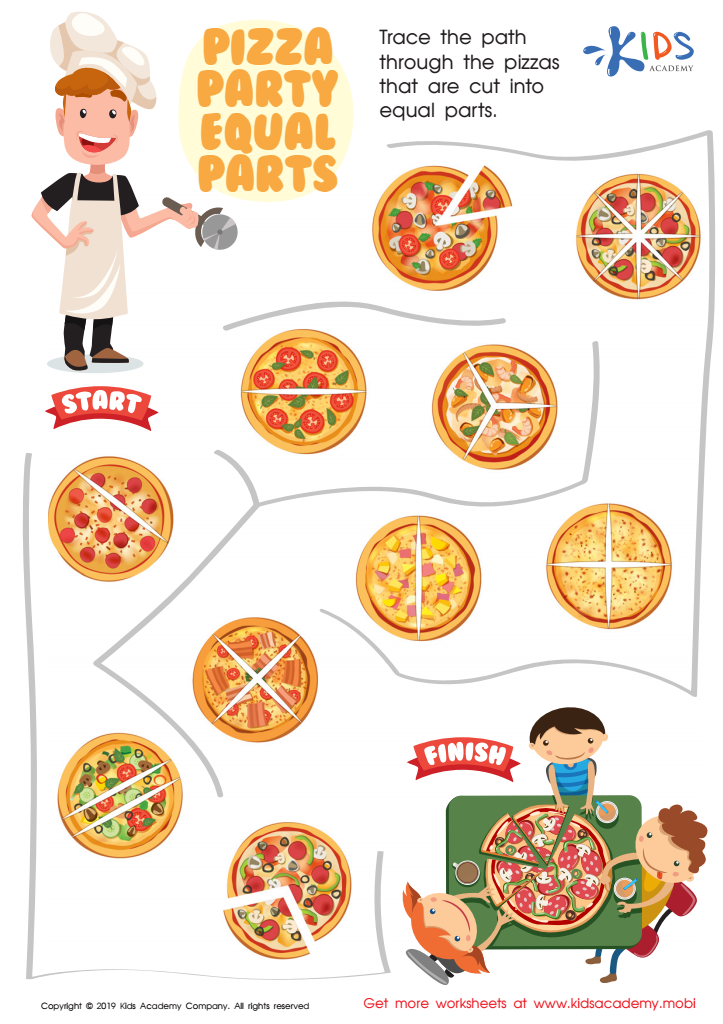
Pizza Party Equal Parts Worksheet
 Assign to My Students
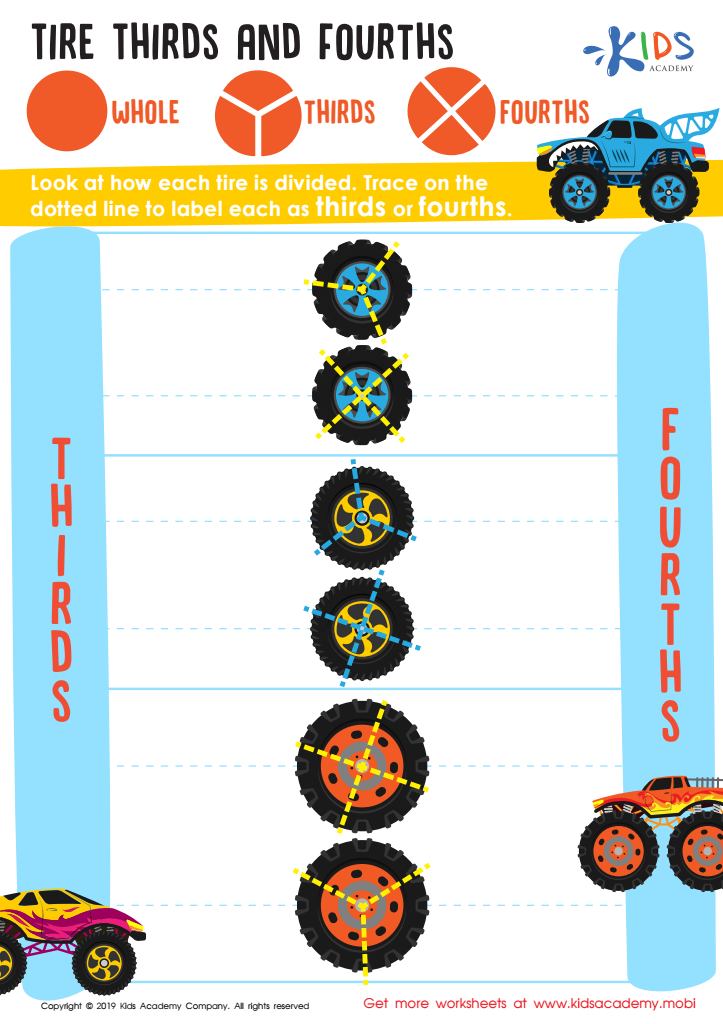
Tire Thirds and Fourths Worksheet
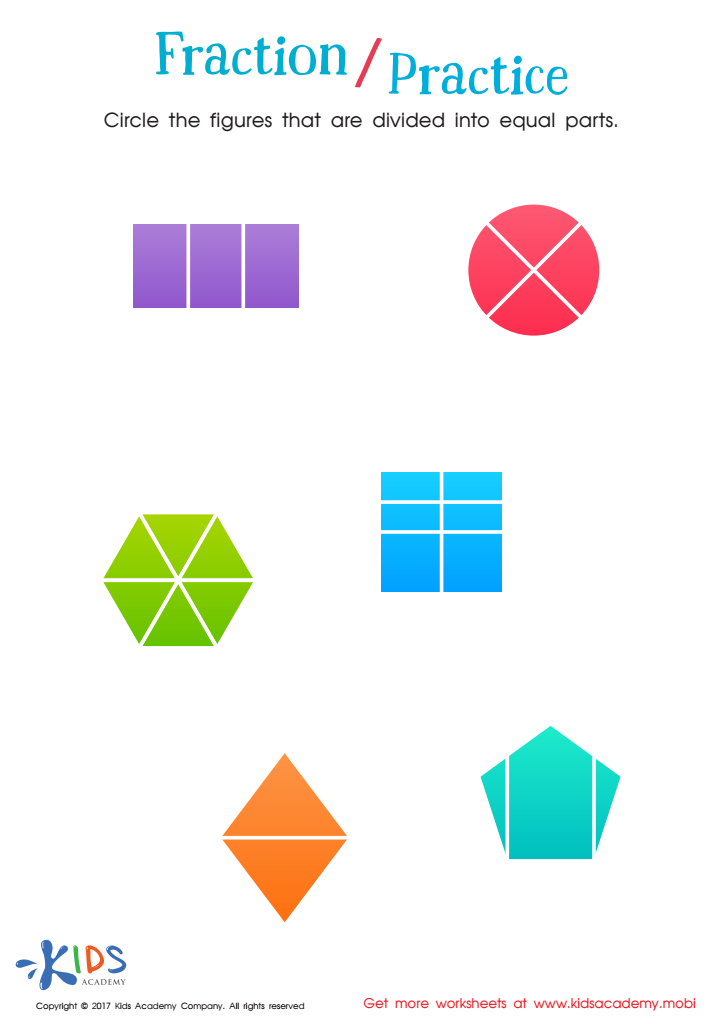
Fractions: Shapes Worksheet
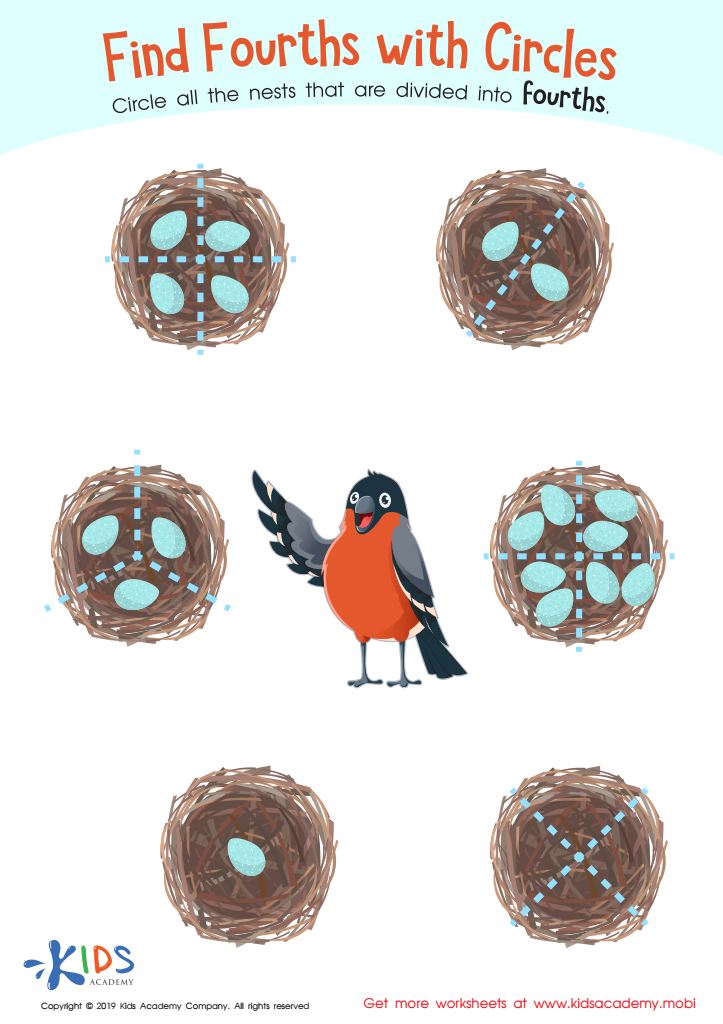
Find Fourths Circles Worksheet
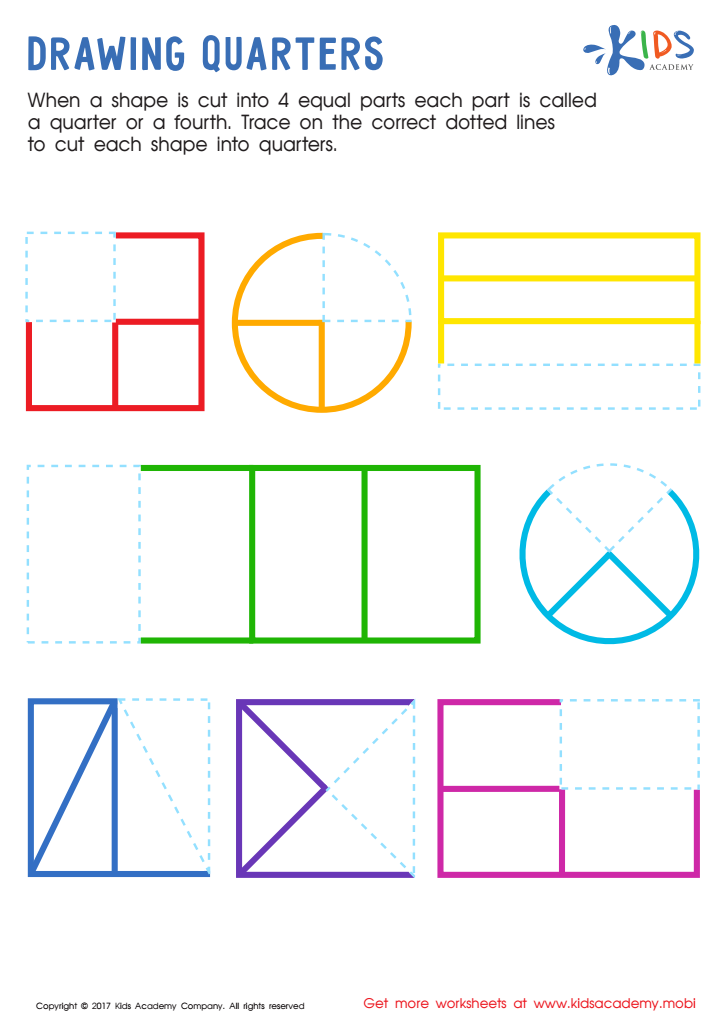
Drawing Quarters Worksheet
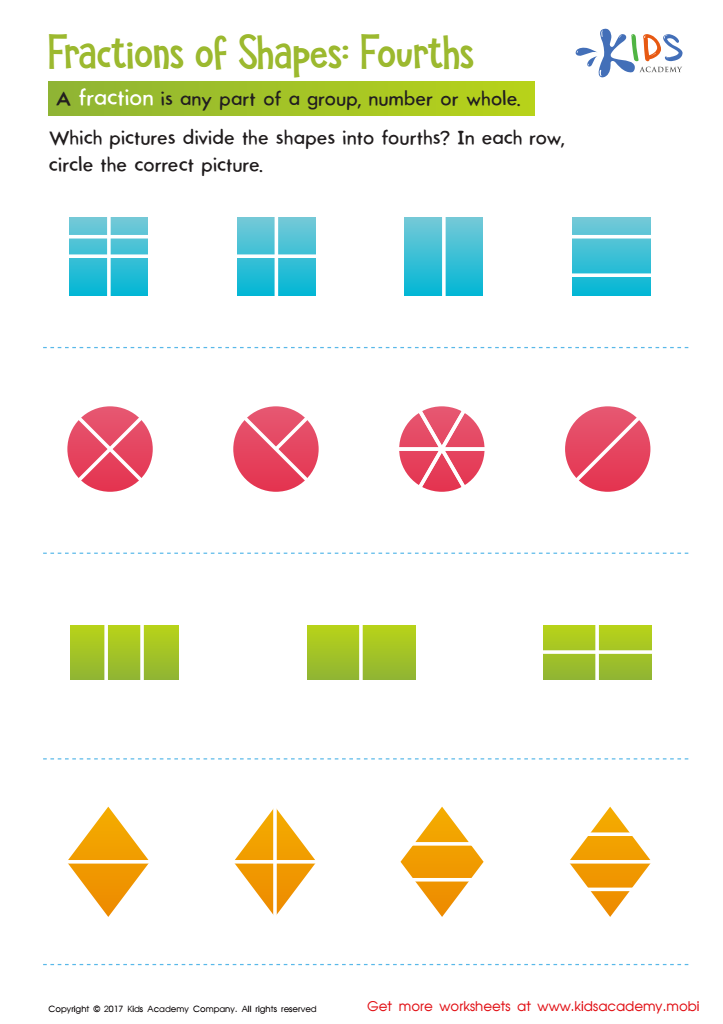
Fractions of Shapes Worksheet
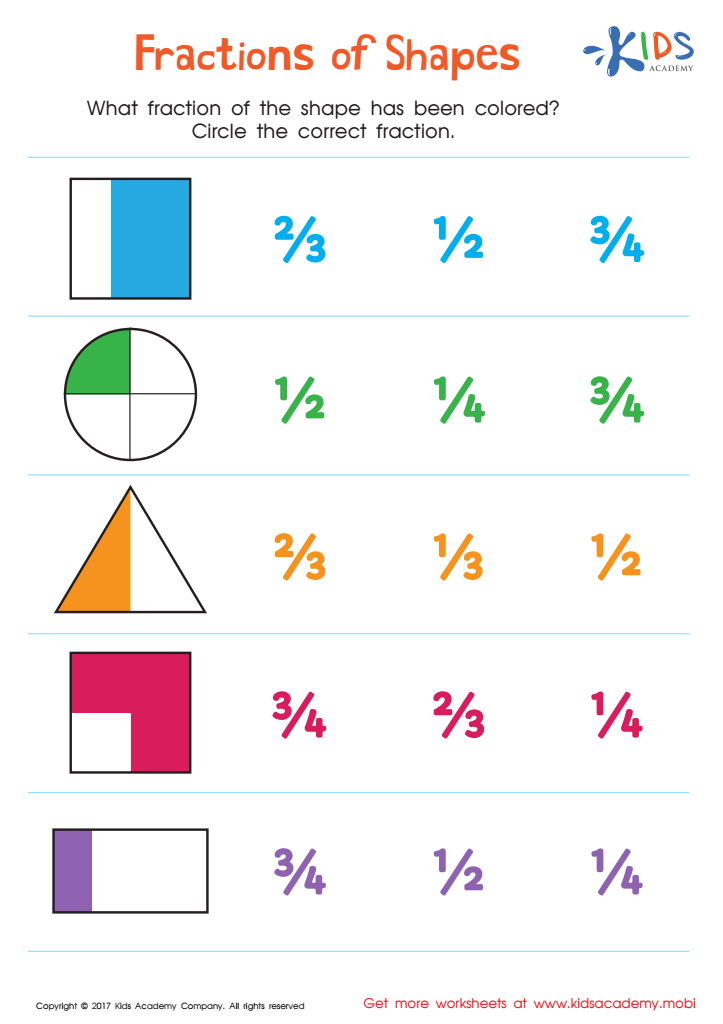
Fractions of Shapes: Math Concept Worksheet








Understanding fractions, especially through engaging methods like using shapes, is essential for both parents and teachers in early education. Fractions are foundational mathematical concepts that help children develop critical thinking and problem-solving skills. By teaching fractions through shapes, educators can strengthen a child’s visual and spatial reasoning, making abstract concepts more tangible and relatable.
When parents and teachers relate fractions to everyday life—like sharing a pizza or dividing a cake—they provide context that enhances comprehension. This approach not only makes learning enjoyable but also encourages children to recognize the relevance of fractions in real-world situations.
Moreover, mastering fractions early on sets the stage for future math concepts, such as ratios, proportions, and geometry. It builds confidence in young learners, fostering a positive attitude toward mathematics. Understanding fractions also supports the development of important cognitive skills, such as critical analysis and logical reasoning.
By prioritizing the understanding of fractions through shapes and hands-on activities, adults can cultivate a rich, supportive learning environment that empowers children to explore mathematics with curiosity and confidence. Overall, fostering this mathematical understanding at a young age lays the groundwork for success in later educational endeavors.