Logical Reasoning Extra Challenge Geometry Worksheets
3 filtered results
-
From - To
Enhance your child's critical thinking and problem-solving abilities with our "Logical Reasoning Extra Challenge Geometry Worksheets" designed for advanced learners. Tailored for young math enthusiasts, these worksheets elevate geometric understanding through intricate puzzles and thought-provoking questions. They emphasize visual-spatial skills, logical patterns, and analytical reasoning, making math both fun and intellectually stimulating. Each worksheet guides students step-by-step, ensuring they grasp complex concepts with ease. By integrating challenging geometry exercises, we aim to fuel curiosity and boost confidence in tackling advanced mathematical problems. Perfect for classroom enrichment, homeschooling, or extra practice for eager learners eager to excel.
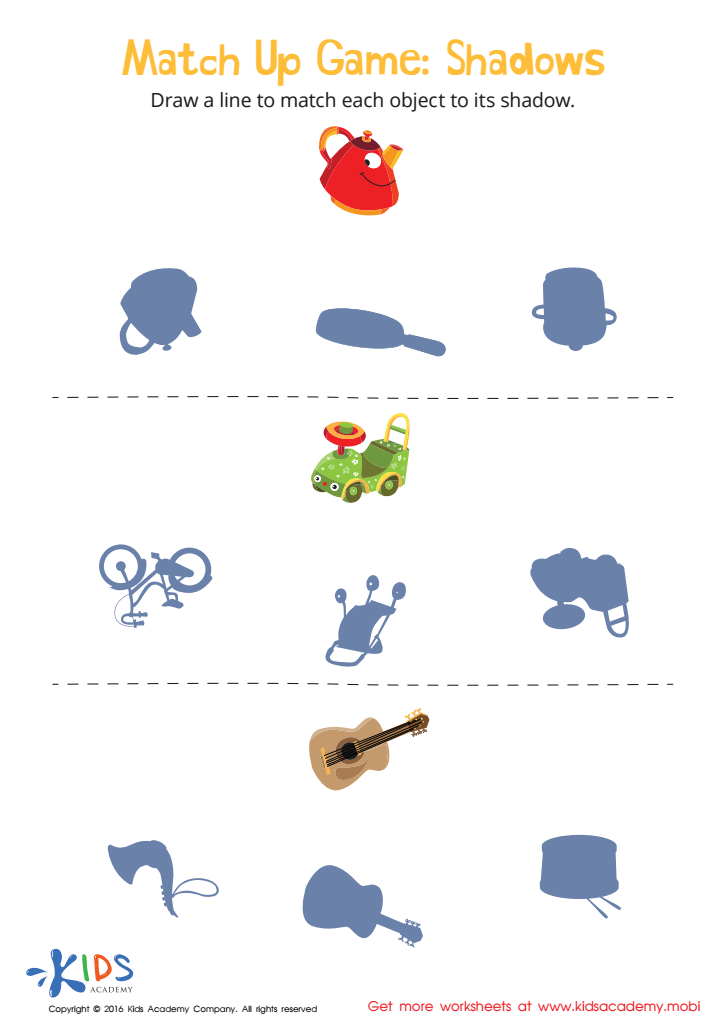
 Assign to My Students











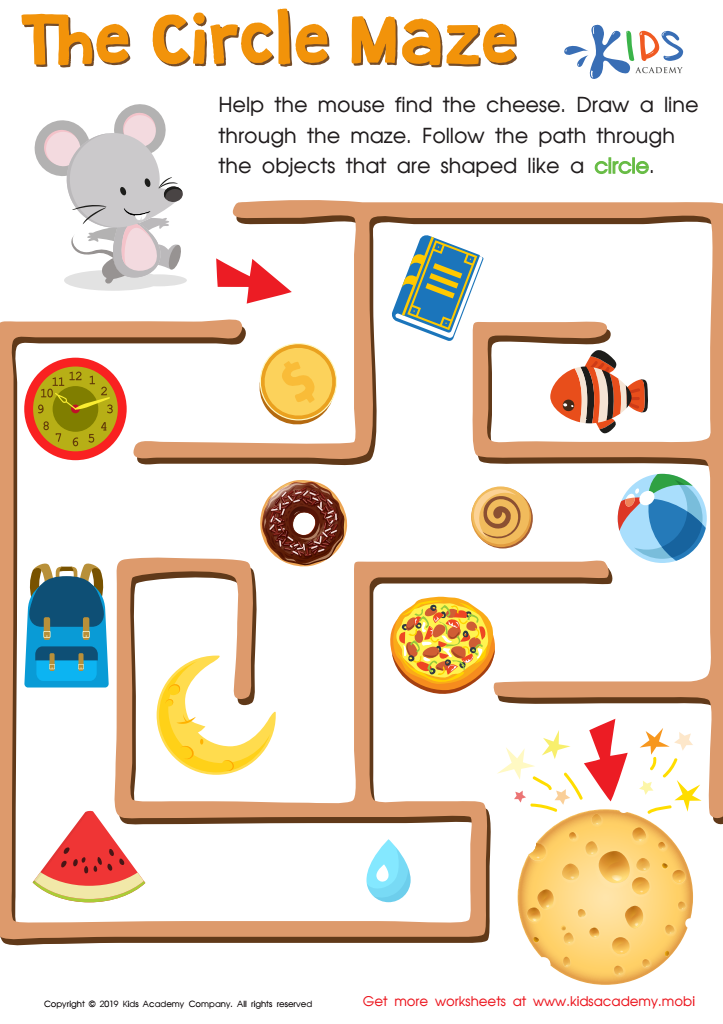
The Circle Maze Worksheet
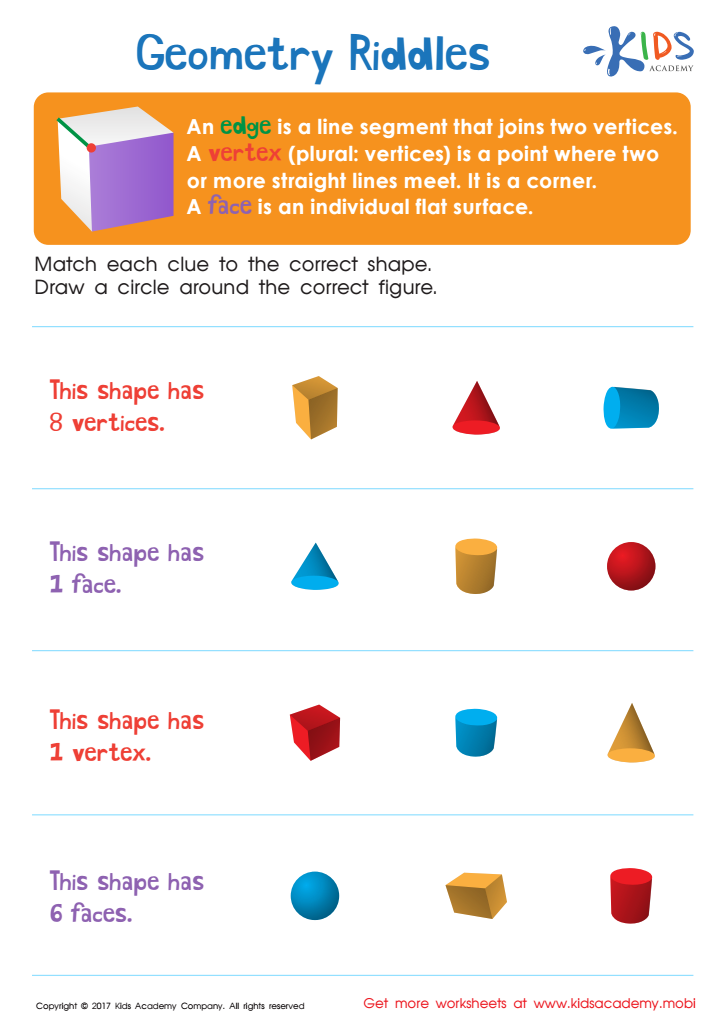
Geometry Riddles Printable








Logical reasoning and geometric skills are both foundational elements in a child's cognitive development, and therefore merit significant attention from parents and teachers. Engaging students in extra challenges in these areas is crucial for a number of reasons.
Firstly, logical reasoning strengthens critical thinking. It involves analyzing problems, recognizing patterns, and developing solutions, all of which are skills necessary for real-world problem-solving. When children practice logical reasoning through geometry, they learn to approach complex problems with confidence and clarity.
Secondly, geometry, a fundamental branch of mathematics, enhances spatial awareness and visualization skills. Through tasks such as identifying shapes, estimating sizes, and understanding the properties of space, students develop an intuitive sense of the physical world around them. This is particularly important as it translates into daily activities and future academic subjects, including science, technology, engineering, and mathematics (STEM).
Moreover, logical reasoning and geometry challenges can be incredibly engaging for students, sparking curiosity and enjoyment in learning. They also provide opportunities for students to experience success outside of standard curriculum, boosting their motivation and self-esteem. When students see their progress, they are inspired to tackle new challenges, fostering a lifelong love for learning.
Ultimately, these skills help shape well-rounded individuals who are equipped for academic, professional, and personal success. Investing time and effort into logical reasoning and geometry is an investment in children's future.