Fine Motor Skills Extra Challenge Preschool Tracing Letters Worksheets
7 filtered results
Difficulty Level
Grade
Age
-
From - To
Subject
Activity
Standards
Boost your child’s fine motor skills with our Extra Challenge Preschool Tracing Letters Worksheets! Designed for young learners, these engaging worksheets provide an innovative way for preschoolers to practice their letter tracing. Each activity helps improve hand-eye coordination, pencil grip, and control, essential for writing. Tailored for skill advancement, our worksheets feature various letters that encourage children to take on an extra challenge while staying motivated. Perfect for teachers and parents looking to enhance their child's early literacy skills, these printable worksheets offer fun and educational practices to prepare them for future writing success. Start tracing today and watch their skills flourish!
Favorites
With answer key
Interactive

Letter A Tracing Page
Trace and write the letter "A"! Start with the big red dot, then do the capital and lowercase versions. Then write it again with two words - apple and alligator. Download more tracing worksheets at Kids Academy.
 Assign to My Students
Letter A Tracing Page
Worksheet
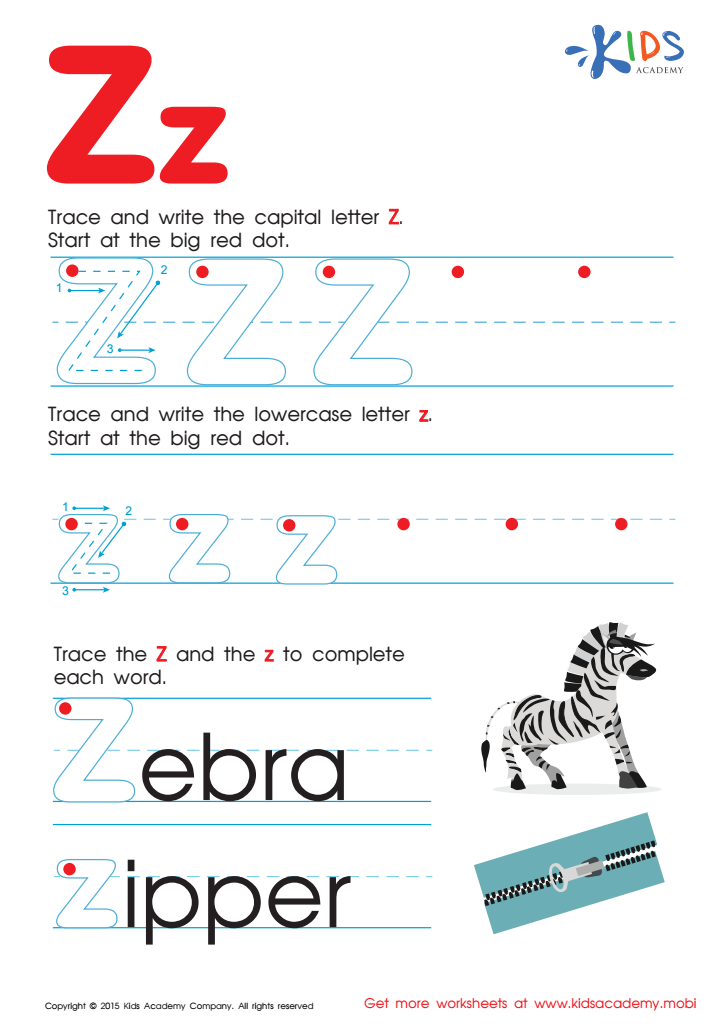
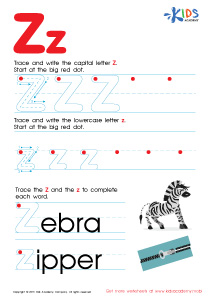
Letter Z Tracing Page
Trace and write capital "Z" and lowercase "z". Complete words "zebra" and "zipper". Be attentive and have fun! (80 words)
Letter Z Tracing Page
Worksheet
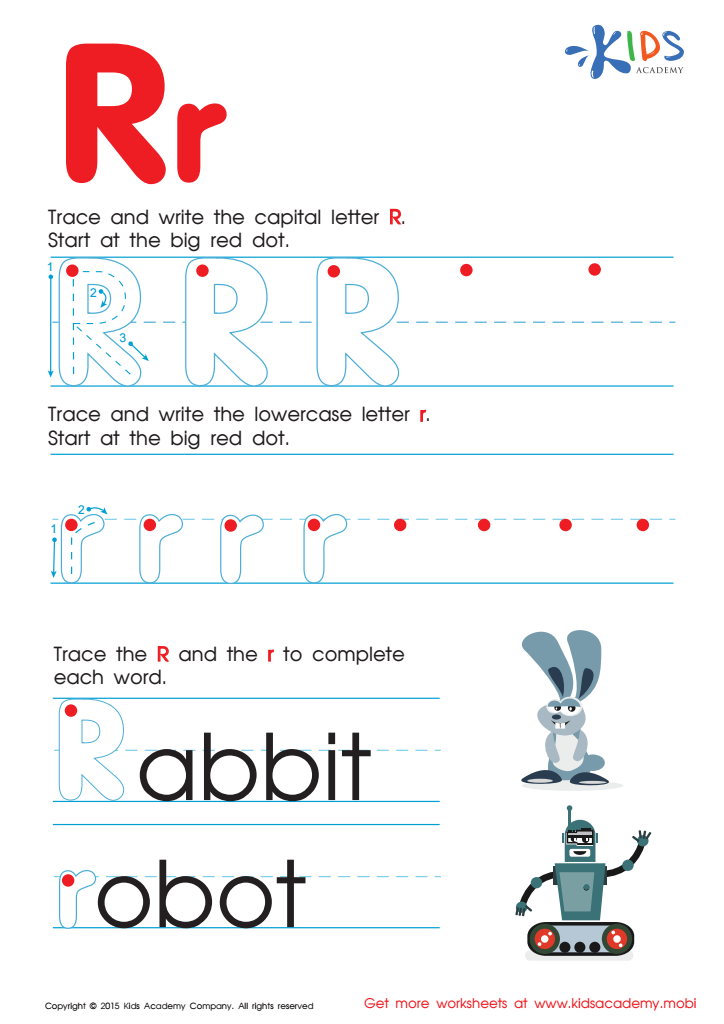
Letter R Tracing Page
Trace and write the letter "R" with this worksheet for kindergarten. Start with the uppercase, then move on to the lowercase. Write the letters several times for practice. Then help complete the words for the rabbit and robot, spelling carefully. More ABC worksheets can be found at Kids Academy.
Letter R Tracing Page
Worksheet
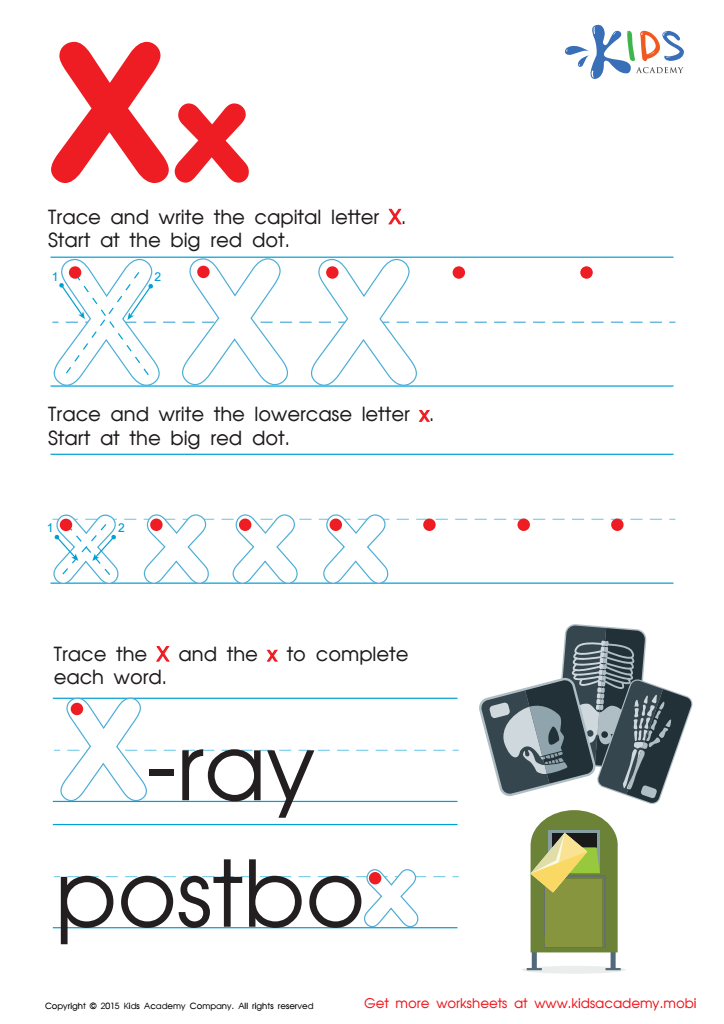
Letter X Tracing Page
Trace the uppercase letter "X" to learn, then write it yourself and practice. Then do the same with the lowercase "x" before completing the words "X-ray" and "postbox". Enjoy our alphabet printables!
Letter X Tracing Page
Worksheet
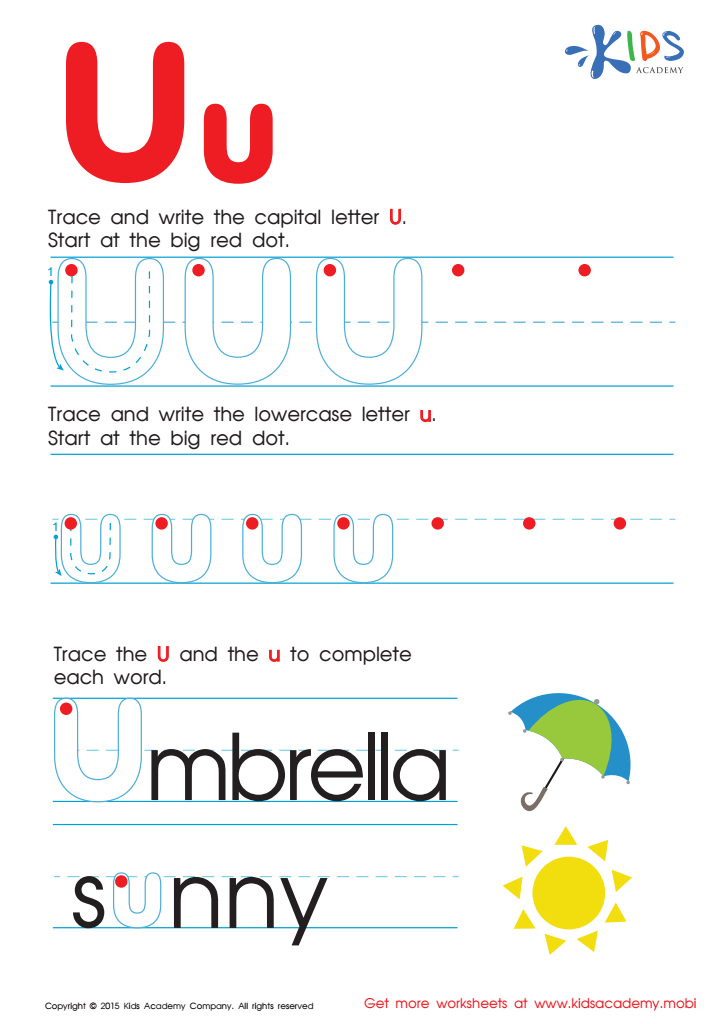
Letter U Tracing Page
Ready to trace and write the letter "U"? Use our worksheet and practice tracing both uppercase and lowercase letters. Complete the words "umbrella" and "sunny" with a capital "U". Check our full collection of alphabet printables for more activities.
Letter U Tracing Page
Worksheet
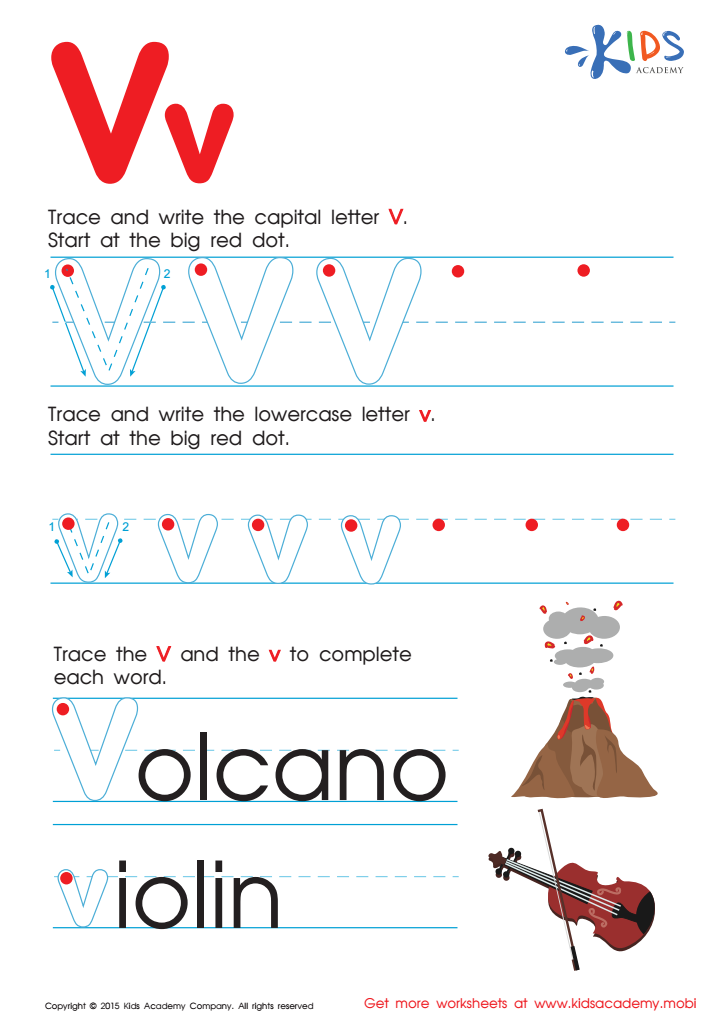
Letter V Tracing Page
Trace the uppercase and lowercase letter "V" with our kindergarten tracing worksheet. Begin at the red dot and follow the lines. Write it several times. Complete the words "Volcano" and "violin". Get more alphabet activities at Kids Academy.
Letter V Tracing Page
Worksheet
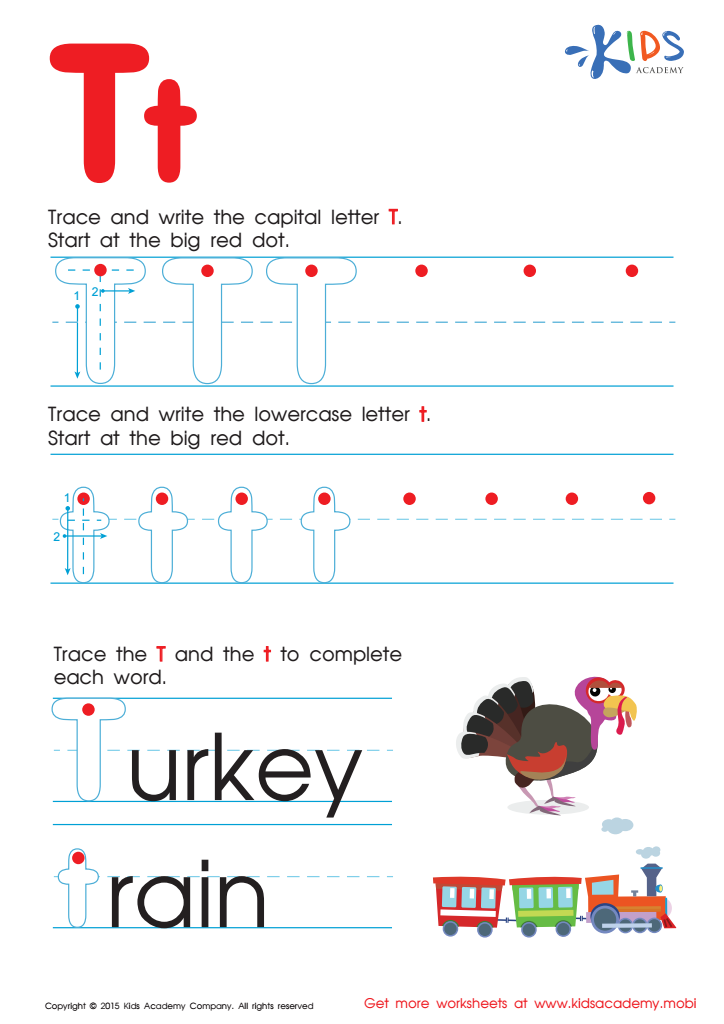
Letter T Tracing Page
Trace letters, complete words, draw pictures and see your kids having fun!
Kids Academy offers alphabet tracing worksheets to learn to write letters. Start with the big red dot, trace the letter, then write it. Practice uppercase and lowercase. Have fun completing words with a Turkey or a rain-train and draw pictures. Get more printable worksheets to make learning enjoyable.
Letter T Tracing Page
Worksheet
Join Kids Academy for Free
Who is primarily going to use this learning content?




Fine motor skills are crucial for children's development, particularly in preschool, where activities such as tracing letters play a significant role. These skills involve the small muscles in the hands and fingers, allowing children to perform tasks like gripping, writing, and manipulating objects.
Engaging preschoolers in tracing letters provides multiple benefits. Firstly, it enhances hand-eye coordination, as children learn to control their movements in relation to visual cues. This coordination is foundational for writing, drawing, and other educational activities. Secondly, tracing helps improve grip strength and dexterity, preparing them for future tasks such as cutting with scissors or buttoning shirts.
Furthermore, tracing letters aids in letter recognition and phonetic understanding, making the transition to reading and writing smoother. By combining fine motor practice with literacy skills, children gain confidence in their abilities, promoting intrinsic motivation to learn.
For parents and teachers, prioritizing fine motor skills through letter tracing is a proactive approach to fostering overall cognitive and physical development. It equips children with essential skills that lay the groundwork for future academic success and daily life tasks, ultimately shaping them into capable learners. Supporting this development can enhance a child's readiness for school and lifelong learning.