Shape Recognition Extra Challenge Grade 2 Worksheets
3 filtered results
-
From - To
Elevate your second grader's geometry skills with our "Shape Recognition Extra Challenge Grade 2 Worksheets". These expertly designed worksheets go beyond the basics to challenge young minds and foster a deeper understanding of geometric concepts. Ideal for advancing students, each activity combines fun and education, prompting kids to identify, categorize, and analyze various shapes. Perfect for the classroom or at-home learning, these printable worksheets encourage critical thinking and spatial awareness. With our unique and engaging exercises, your child will master shape recognition while building a solid foundation for more complex mathematical concepts. Boost their confidence and skills today!
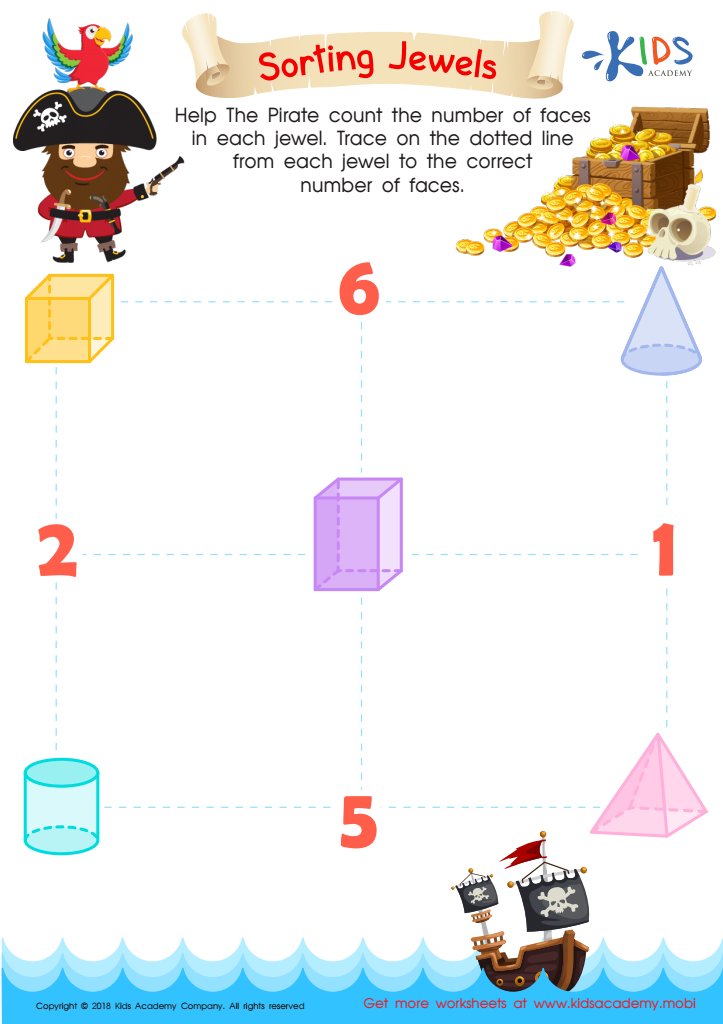
Sorting Jewels Worksheet
 Assign to My Students
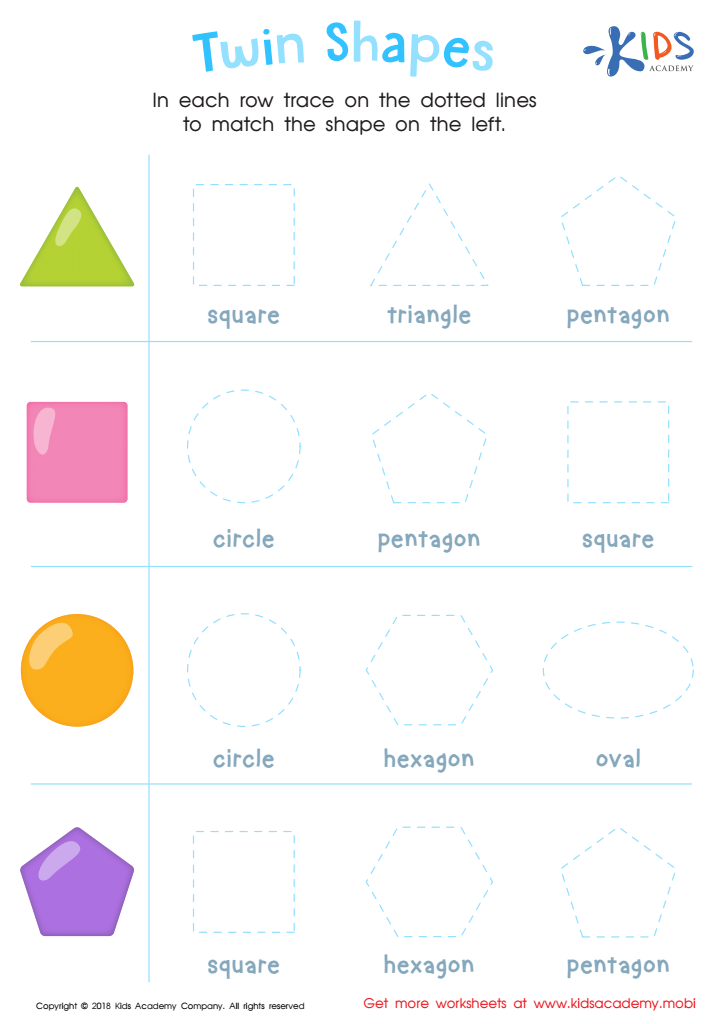
Twin Shapes Dot-to-Dot Worksheet
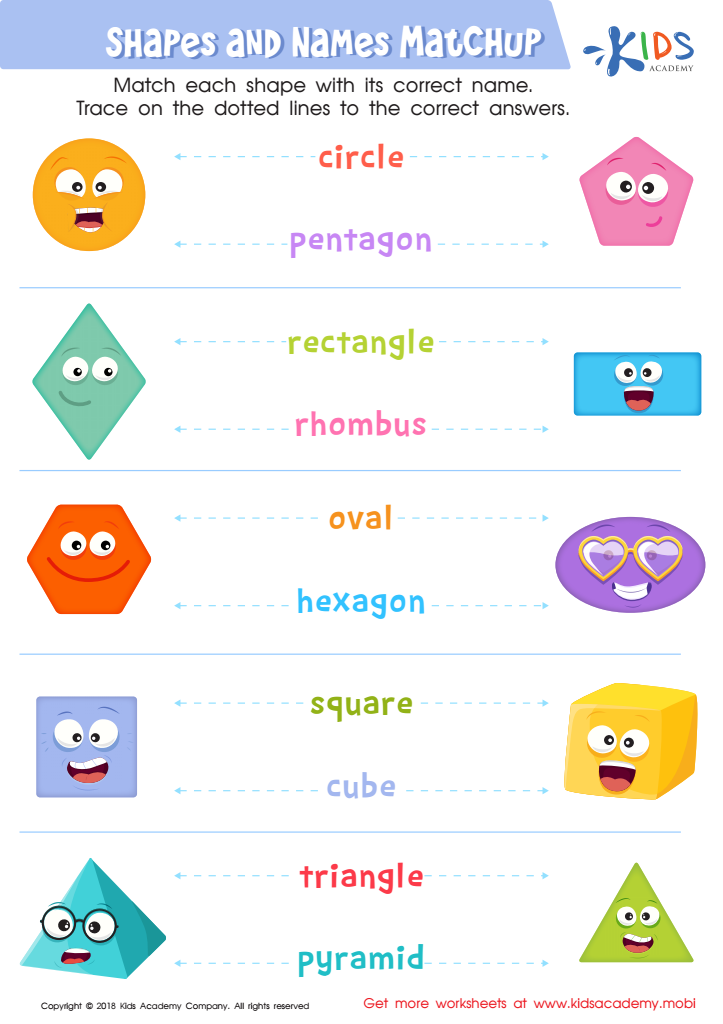
Shapes and Names Matchup Worksheet








Shape Recognition Extra Challenge activities are vital for Grade 2 students as they enhance critical cognitive and developmental skills. Firstly, understanding shapes helps young learners improve their spatial awareness. This skill is crucial not just for success in mathematics, but also in daily activities like navigating spaces and understanding maps. Shapes form the building blocks of geometry, which is an essential component of later mathematical education involving more complex concepts.
Parents and teachers should also value these activities for the enhancement of visual memory and pattern recognition. Recognizing shapes helps students notice patterns in various contexts, boosting their ability to organize and analyze information systematically. Furthermore, engaging in shape recognition challenges promotes problem-solving abilities and critical thinking. When students stretch their limits by tackling more complex problems, such as identifying shapes within composite figures or relating shapes to daily objects, they develop resilience and a growth mindset.
Moreover, these activities can be made enjoyable and engaging, thus fostering a love for learning. Shape recognition often involves playful learning with puzzles, drawing, and hands-on activities, which can stimulate curiosity and creativity. By investing in these foundational skills early on, parents and teachers pave the way for future academic success and a well-rounded intellectual development for their children.