Understanding fractions Extra Challenge Grade 2 Fractions of Shapes Worksheets
5 filtered results
-
From - To
Explore our "Understanding Fractions Extra Challenge Grade 2 Fractions of Shapes Worksheets!" Designed to enhance students’ comprehension of fractions, these engaging worksheets help young learners visualize and understand the concept of parts of a whole through various shapes. Students will tackle exciting challenges, like identifying and coloring specific fractions, which will build their confidence and mathematical skills. Our resources are perfect for reinforcing classroom learning and offering additional practice at home. Ideal for teachers and parents, these worksheets foster critical thinking and problem-solving abilities while making learning about fractions fun and interactive. Dive into the world of fractions today!
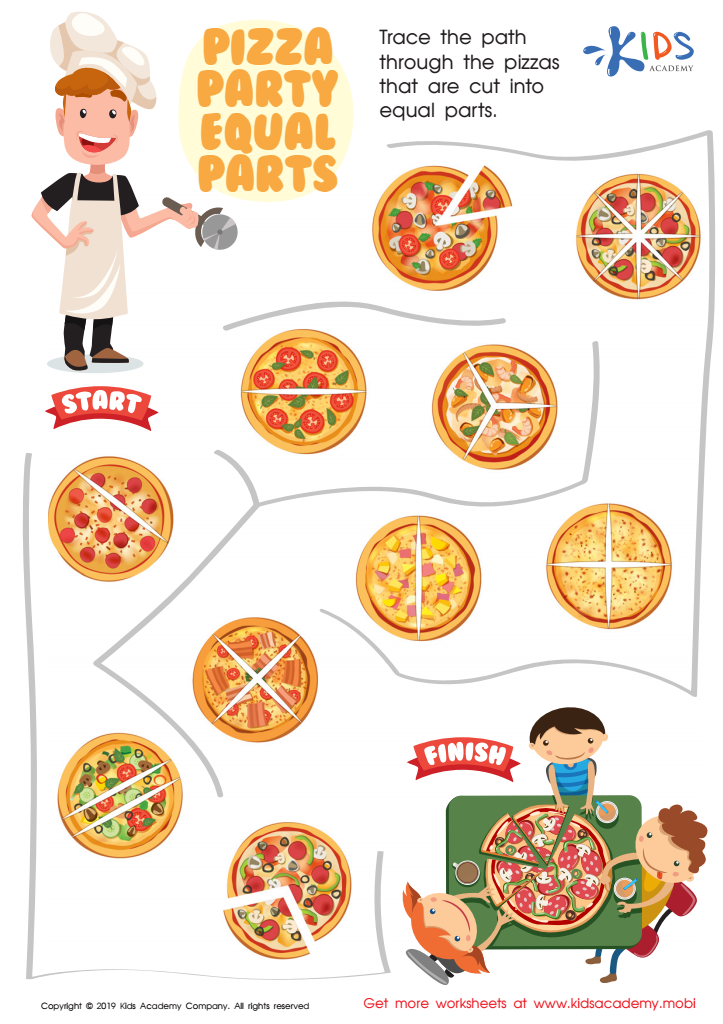
Pizza Party Equal Parts Worksheet
 Assign to My Students
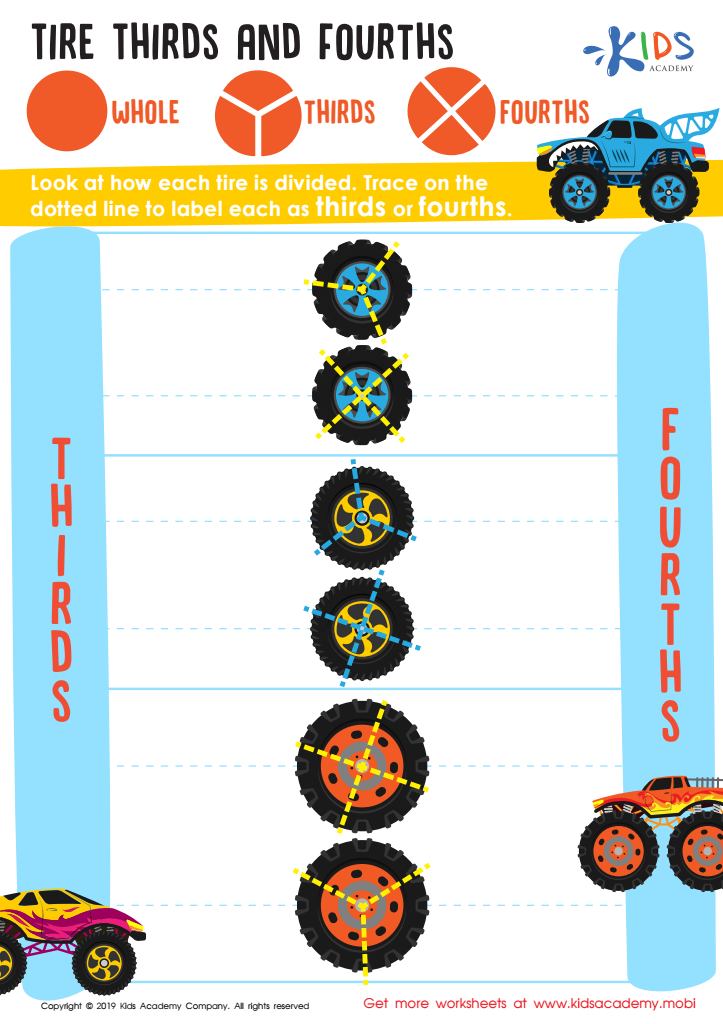
Tire Thirds and Fourths Worksheet
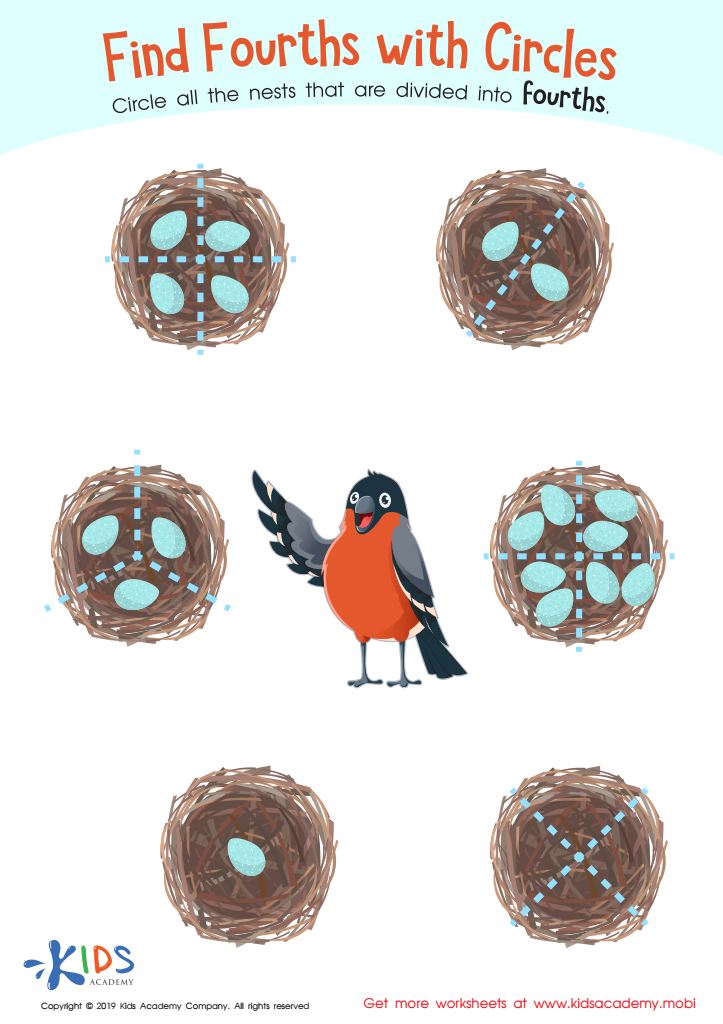
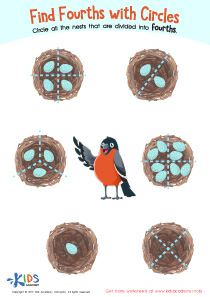
Find Fourths Circles Worksheet
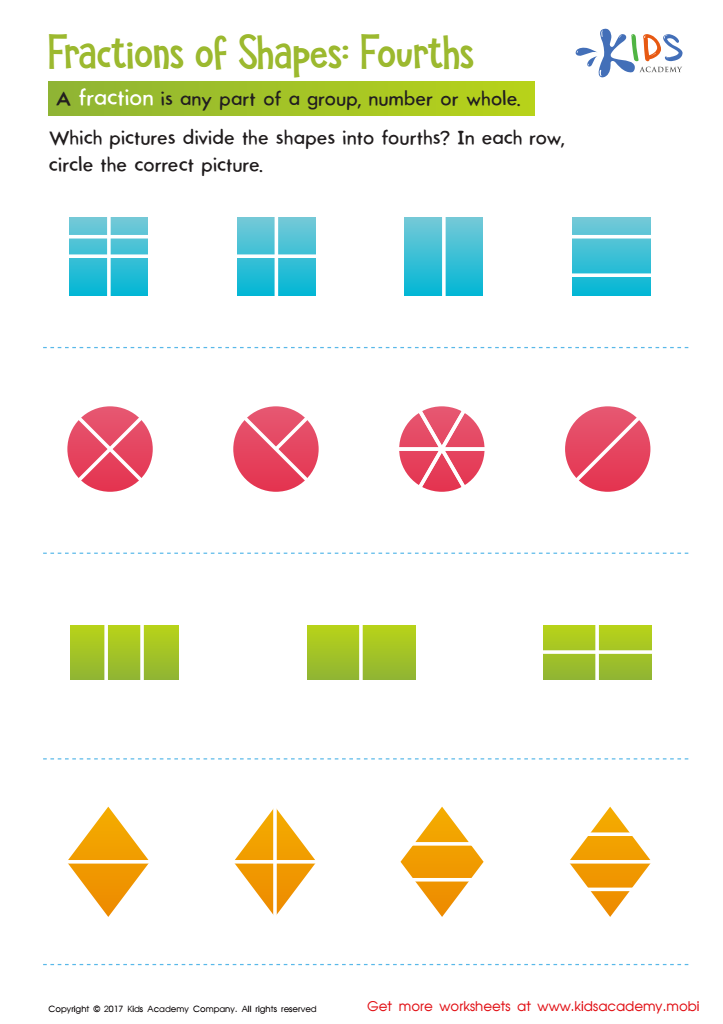
Fractions of Shapes Worksheet
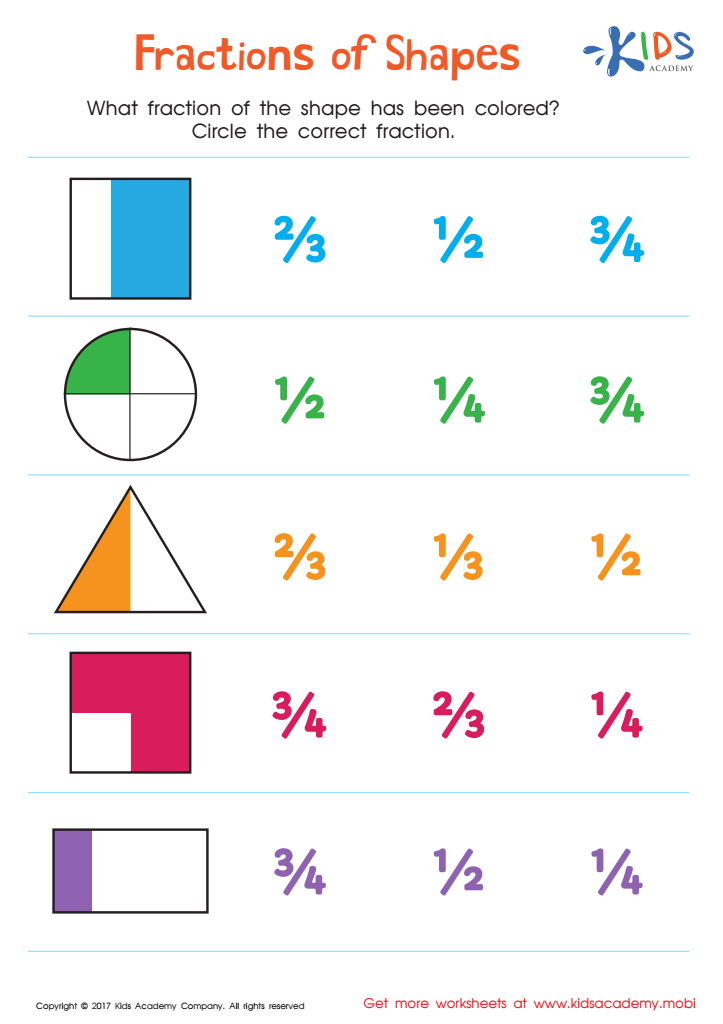
Fractions of Shapes: Math Concept Worksheet





Understanding fractions, especially in the context of shapes, is crucial for second graders as it lays the foundation for more complex math concepts. For parents and teachers, developing a solid grasp of fractions helps children recognize parts of a whole, which is essential not only in mathematics but also in everyday life. When students understand fractions of shapes, they learn to identify and compare different portions, enhancing their critical thinking and problem-solving skills.
Additionally, comprehension of fractions supports skills necessary for measurement, data interpretation, and later, operations such as addition and subtraction of fractions. This mathematical fluency will also enable children to engage in higher-level math as they advance in their education.
Furthermore, explaining and visualizing fractions through shapes makes learning interactive and fun, fostering a positive attitude towards math. It encourages creativity as students relate their learning to real-world scenarios, such as cooking or sharing food, thus making fractions more relatable.
Involving parents in this learning journey enhances the child's motivation and shows them the practical relevance of their skills, creating a strong partnership aimed at education. By emphasizing the importance of understanding fractions, parents and teachers can empower students to embrace future mathematical challenges with confidence.