Shape Recognition Extra Challenge Grade 2 Geometry Worksheets
3 filtered results
-
From - To
Enhance your second graders' geometric skills with our "Shape Recognition Extra Challenge" worksheets! Designed for students striving for mastery in geometry, these engaging activities help reinforce shape identification and properties. Through various interactive exercises, children will explore different shapes, their characteristics, and real-world applications. The thoughtfully crafted worksheets cater to diverse learning styles, ensuring every student can progress at their own pace. Perfect for reinforcing classroom lessons or for at-home practice, these shape recognition challenges make learning fun and effective. Download and watch your young mathematicians excel in geometry while building confidence and critical thinking skills. Get started today!
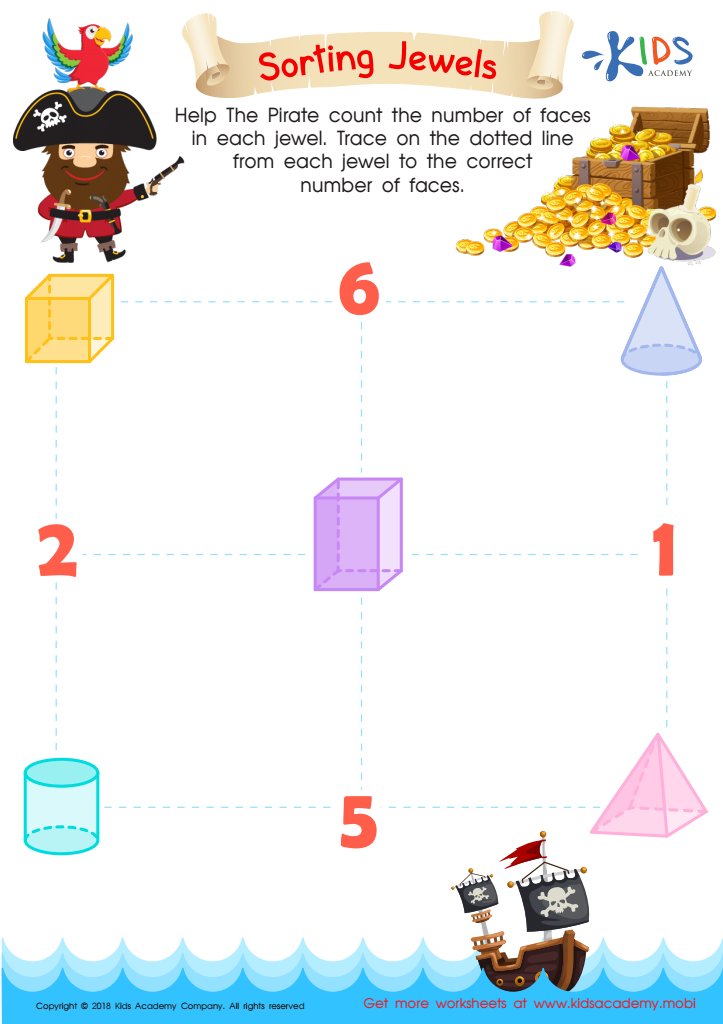
Sorting Jewels Worksheet
 Assign to My Students
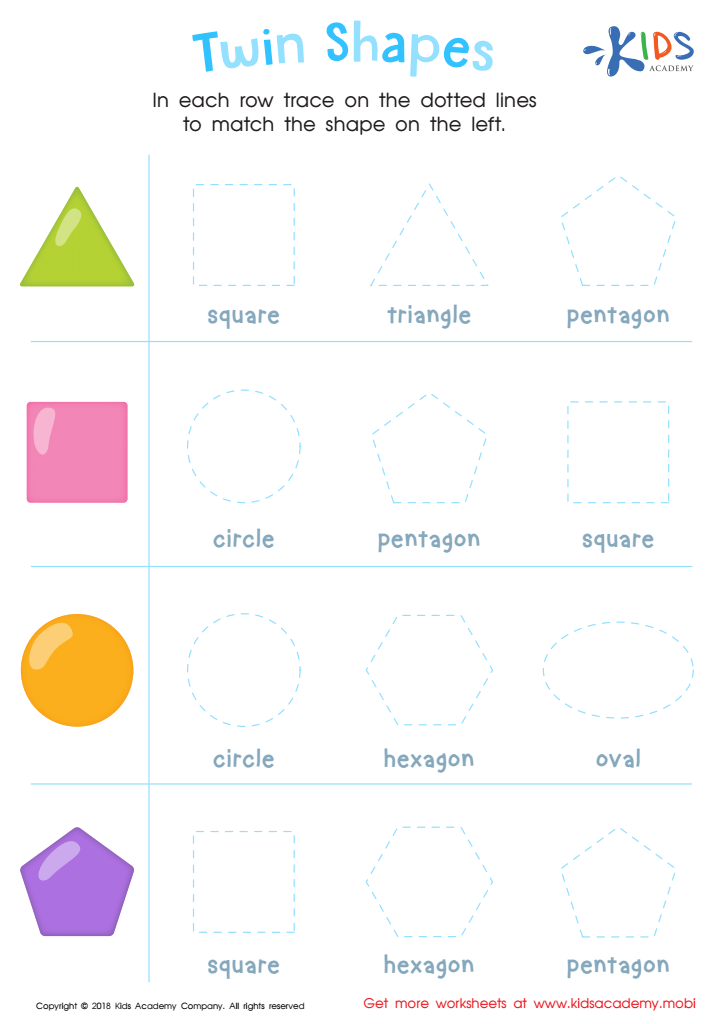
Twin Shapes Dot-to-Dot Worksheet
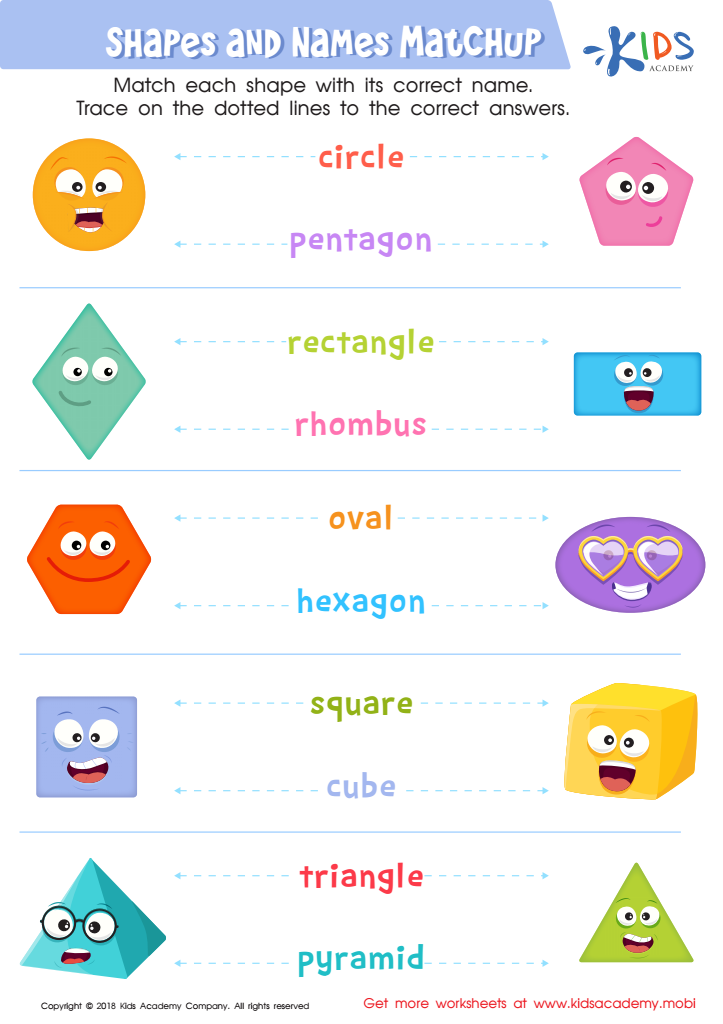
Shapes and Names Matchup Worksheet








Shape recognition is a foundational skill in early mathematics education, particularly in Grade 2 geometry. Parents and teachers should prioritize this Extra Challenge for several reasons. First, shape recognition enhances spatial awareness, helping children understand their environment and the objects within it. This skill is crucial for real-life applications, such as navigating spaces and crafting, where understanding shapes improves creativity and problem-solving abilities.
Additionally, mastering shape recognition supports cognitive development. Recognizing and classifying shapes develops critical thinking and analytical skills, which are essential in mathematics and other subjects. Engaging in shape-related activities encourages children to think about characteristics, similarities, and differences; this lays the groundwork for more complex concepts in algebra and geometry in later grades.
Moreover, shape recognition is linked to increased confidence in math. When students successfully identify and manipulate shapes, they gain a sense of accomplishment, driving their motivation to tackle more challenging tasks.
Finally, shape recognition can foster collaborative learning. Group activities involving shapes encourage communication and teamwork, essential soft skills in both academic and social settings. In essence, by supporting shape recognition, parents and teachers empower children to build a strong mathematical foundation, enhancing their overall academic success and confidence.