Understanding fractions Extra Challenge Grade 2 Math Worksheets
5 filtered results
Difficulty Level
Grade
Age
-
From - To
Subject
Activity
Standards
Elevate your second-grader’s math skills with our "Understanding Fractions Extra Challenge" worksheets! These expertly designed printable resources deepen comprehension by presenting fun, engaging, and challenging tasks tailored to young learners. Students will explore halves, thirds, quarters, and more while solidifying fundamental fraction concepts through diverse exercises. Beyond standard practice, the extra challenges foster critical thinking, ensuring mastery and boosting confidence. Perfect for classroom use or additional practice at home, these worksheets facilitate playful learning with colorful visuals and practical problems. Equip your child with the tools to excel in math; download our premium fraction worksheets today!
Favorites
With answer key
Interactive
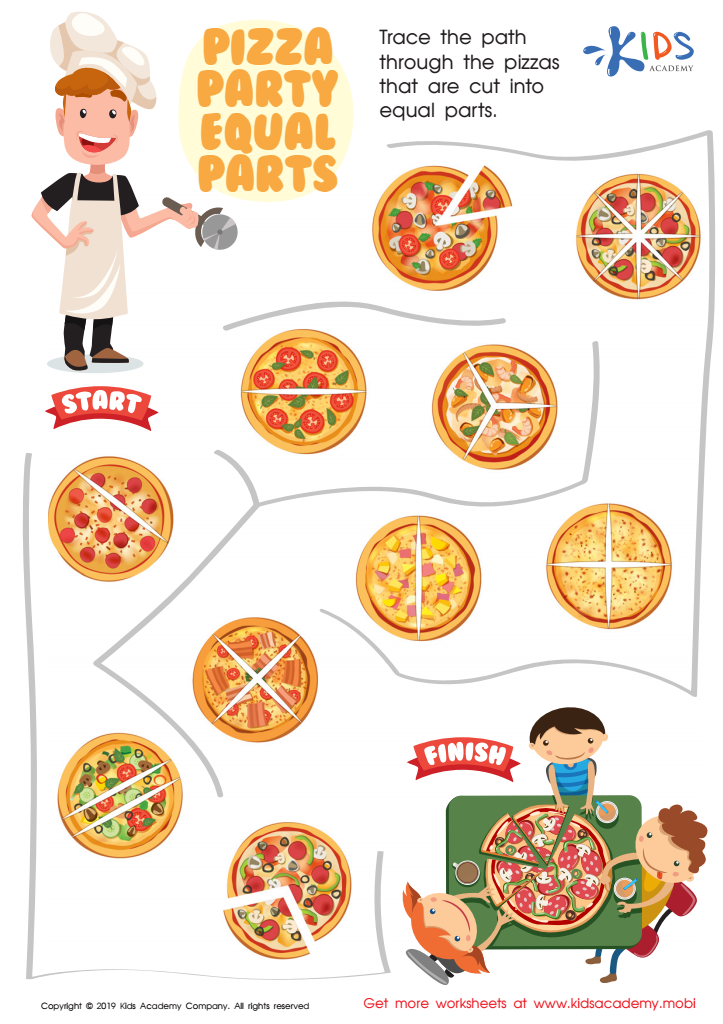
Pizza Party Equal Parts Worksheet
Love pizza? This printout is a great way to help kids learn about equal parts! Kids must identify pizzas cut into equal parts, then trace the path through the pizzas. It's an exciting maze - and a great way to help kids learn! Get the traceable pdf today and let the fun begin!
 Assign to My Students
Pizza Party Equal Parts Worksheet
Worksheet
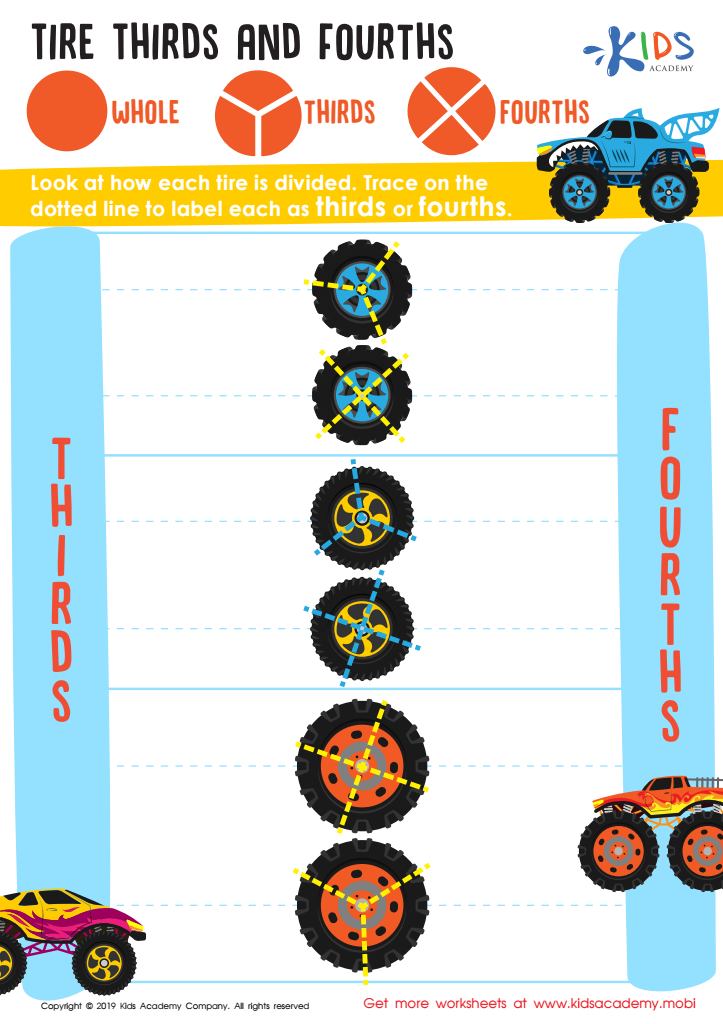
Tire Thirds and Fourths Worksheet
Learning geometry is key in your child's education. Have them identify and name shapes cut into 2, 3 and 4 parts. Test their knowledge with this worksheet - trace the dotted line to label each as third or fourth. Encourage them to keep learning!
Tire Thirds and Fourths Worksheet
Worksheet
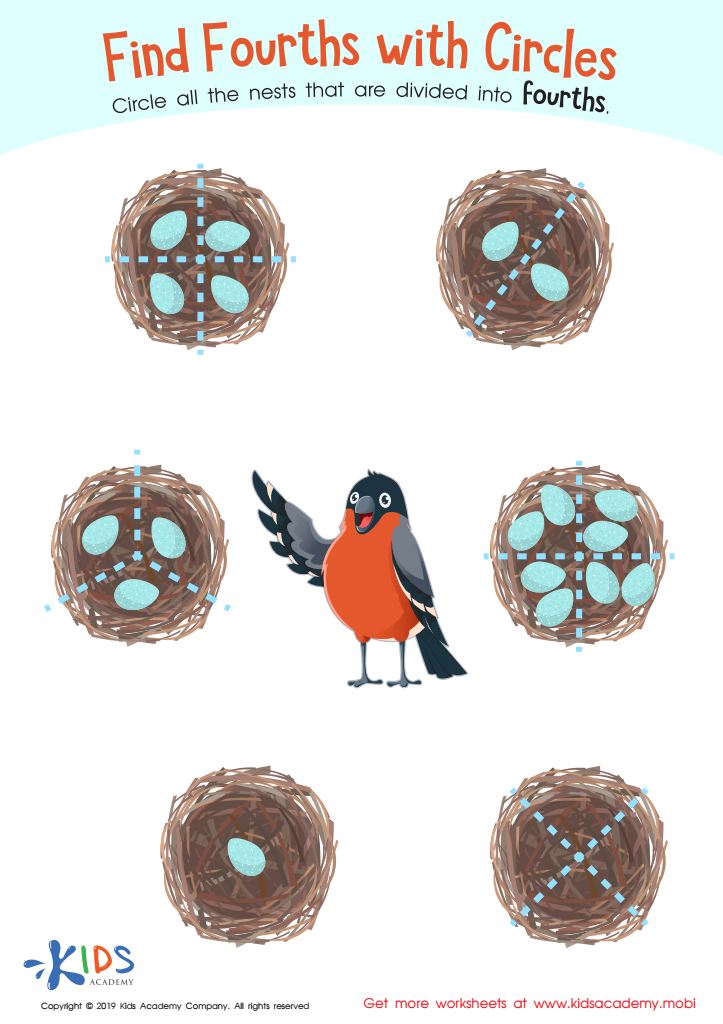
Find Fourths Circles Worksheet
Finding fractions with this Find Fourths with Circles worksheet can be fun! Your child will see a picture of circles divided into different fractions and circle the nests divided into fourths. With the help of their cheery bird friend, they can look for nests with four equal parts and be successful in finding the correct nest.
Find Fourths Circles Worksheet
Worksheet
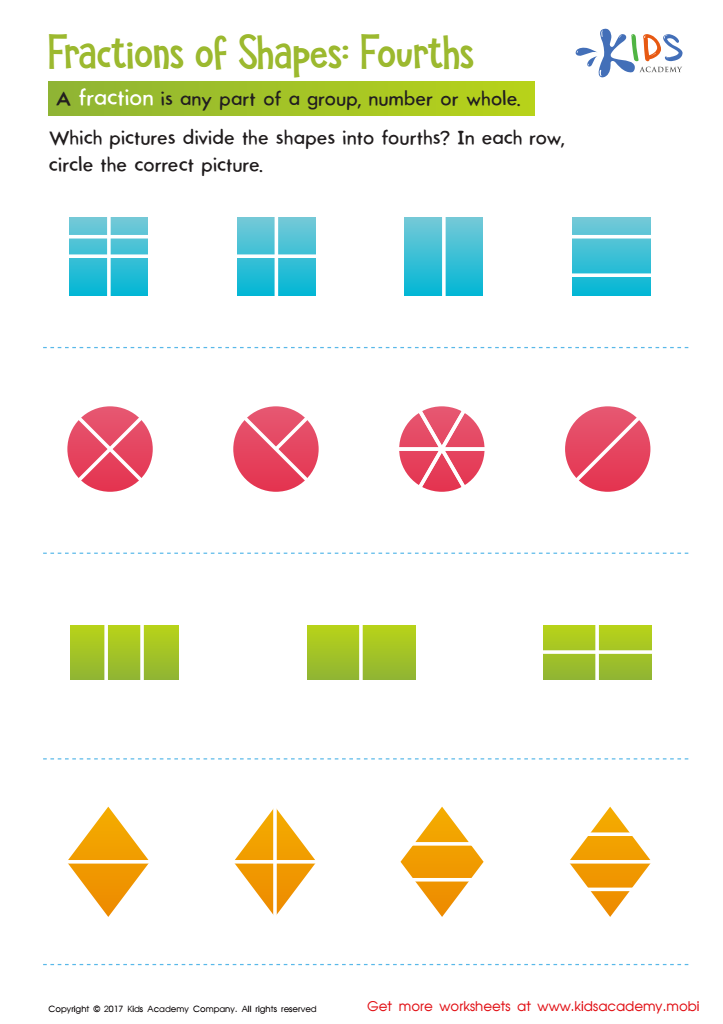
Fractions of Shapes Worksheet
It will also show them how fractions are represented in everyday shapes.
Fractions of Shapes Worksheet
Worksheet
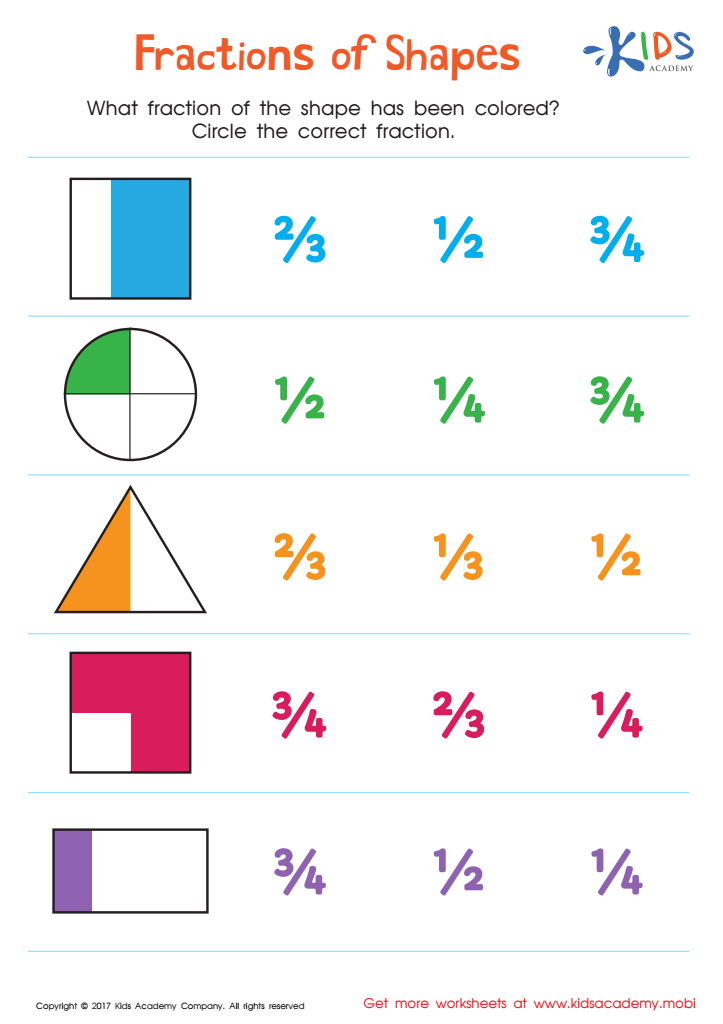
Fractions of Shapes: Math Concept Worksheet
Fractions can be tricky, but with pictures to illustrate them, they become much easier to understand. Our fractions of shapes worksheet is a great way to help children visualize fractions and gain a better understanding of them.
Fractions of Shapes: Math Concept Worksheet
Worksheet
Join Kids Academy for Free
Who is primarily going to use this learning content?







Understanding fractions is a fundamental aspect of early mathematics education that lays the groundwork for future academic success. While it may seem advanced for a second-grade level, introducing the concept through extra challenges helps solidify a child's numerical comprehension and critical thinking skills. For parents and teachers, focusing on fractions at this stage is crucial because it caters to several developmental and educational goals.
First, learning about fractions introduces students to the idea of part-whole relationships, which are essential for understanding more complex math concepts as they progress in their education. This early exposure allows students to grasp fractions intuitively before they face more abstract representations in higher grades.
Second, fractions play a significant role in everyday life, from cooking and time management to understanding divisions of space and resources. Ensuring that children are comfortable with these concepts can help them succeed both academically and in practical daily tasks.
Moreover, engaging with extra challenges in fractions can enhance problem-solving skills and mathematical reasoning. Activities promoting fraction understanding encourage students to think critically and approach problems from different angles. By fostering a solid conceptual foundation in fractions now, parents and teachers can help ensure that children develop a positive attitude toward math and a robust ability to tackle more complex math challenges in the future.