Handwriting practice Extra Challenge Grade 3 Letter Recognition Worksheets
5 filtered results
-
From - To
Boost your third grader's writing and literacy skills with our Handwriting Practice Extra Challenge worksheets for letter recognition! Designed specifically for young learners, these engaging worksheets provide a fun and effective way to reinforce their understanding of the alphabet. Each printable activity emphasizes letter formation, helping students refine their handwriting technique while enhancing their ability to recognize and differentiate letters. Our extra challenge worksheets cater to advanced learners, pushing them to grow in confidence and proficiency. Ideal for classroom use or at-home practice, these resources support the development of crucial foundational skills that set the stage for future academic success. Explore our collection today!
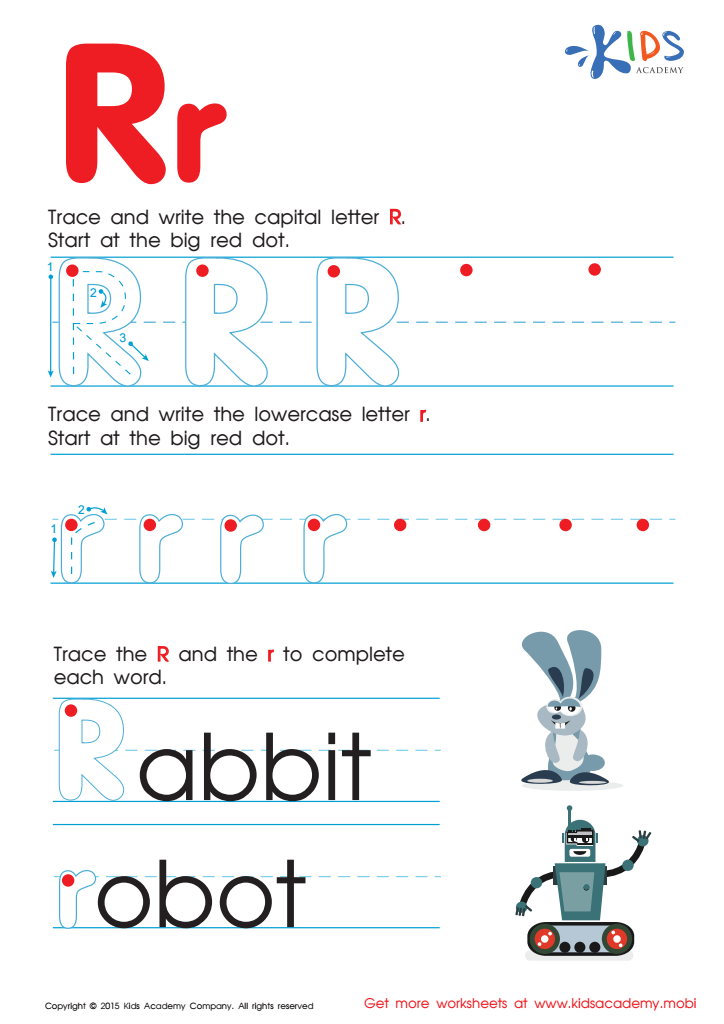
Letter R Tracing Page
 Assign to My Students
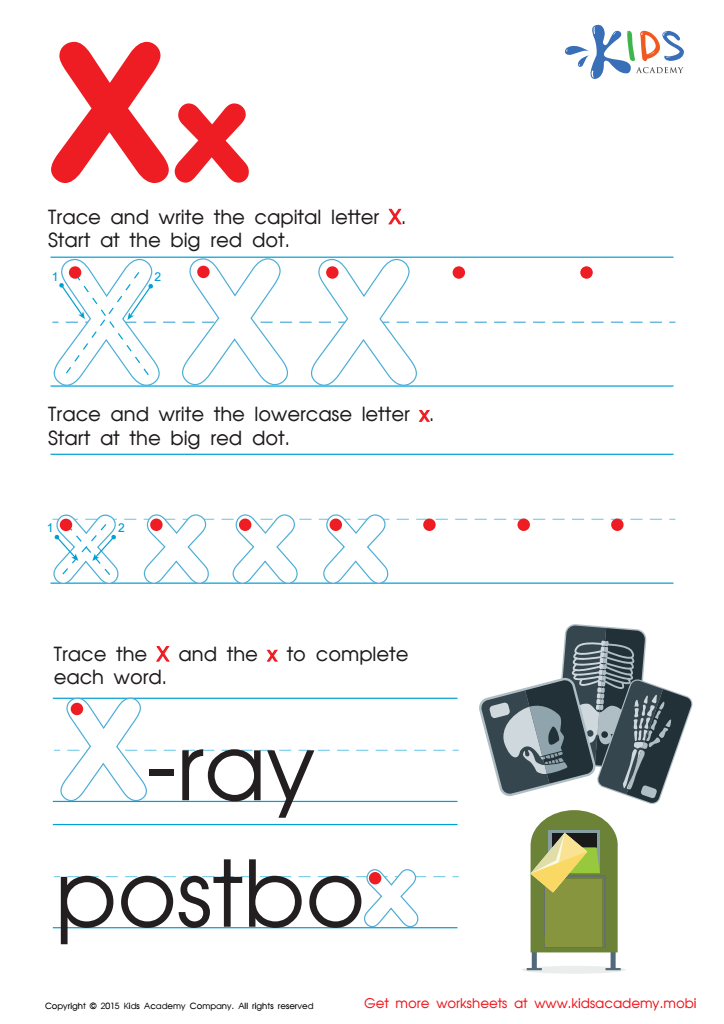
Letter X Tracing Page
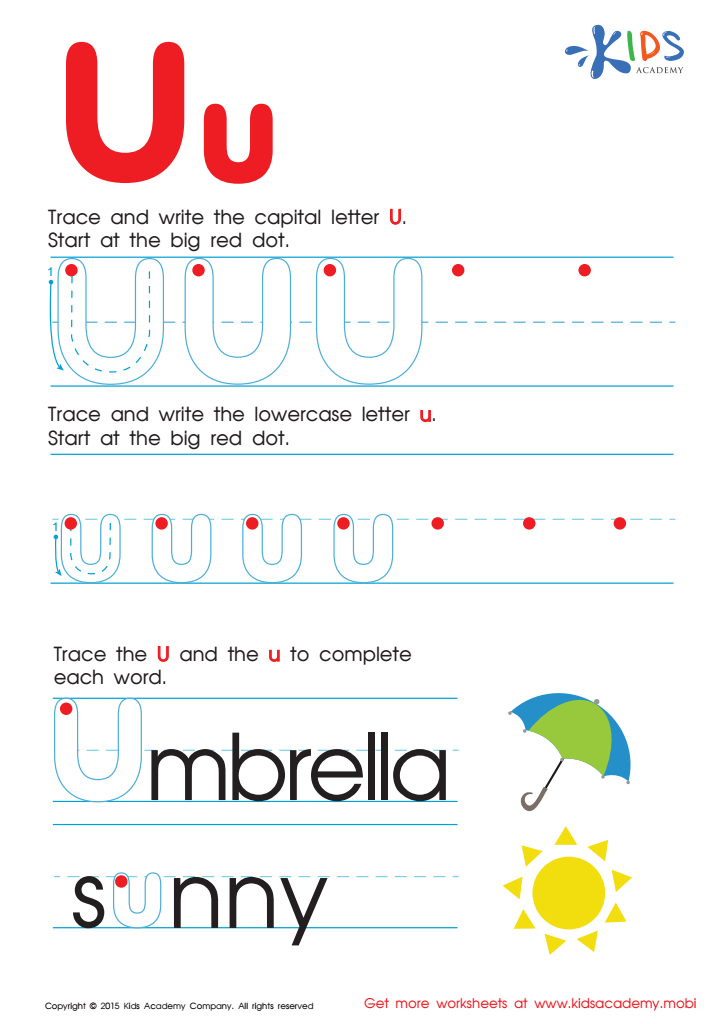
Letter U Tracing Page
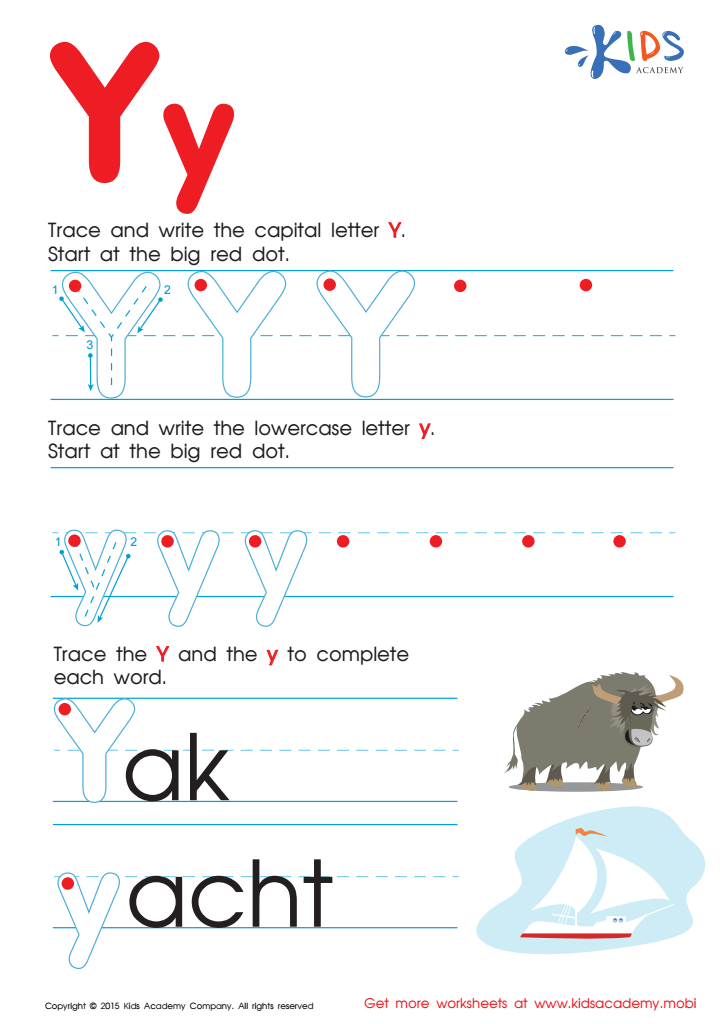
Letter Y Tracing Page
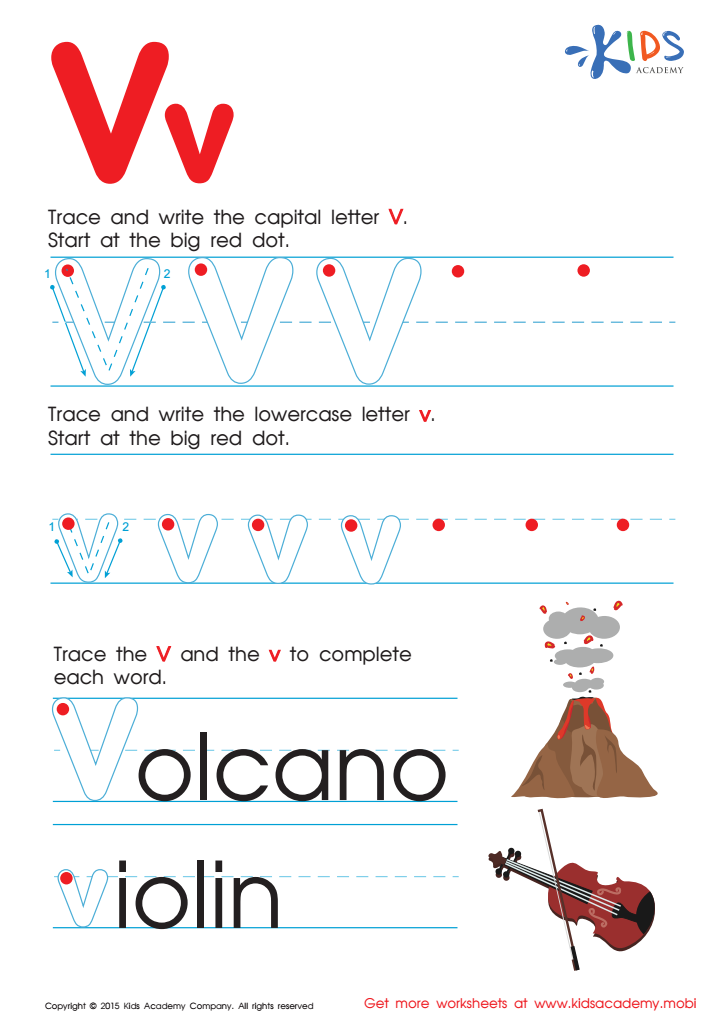
Letter V Tracing Page





Handwriting practice, particularly in the context of letter recognition, is crucial for third graders as it plays a foundational role in their literacy development. For parents and teachers, fostering strong handwriting skills helps children improve their overall writing abilities, fluency, and comprehension.
Firstly, handwriting enhances motor skills and hand-eye coordination, providing children with the muscle memory needed to form letters correctly. This physical aspect of writing aids in reinforcing letter recognition, leading to quicker reading progress.
Additionally, as students become proficient in handwriting, they are likely to feel more confident in their writing abilities. Confidence translates into a willingness to express ideas more freely, leading to better academic performance across subjects.
Moreover, handwriting has been shown to enhance cognitive processes connected to language, improving memory retention and deeper understanding of phonics and spelling patterns. This holistic development is vital not only in Grade 3 but also lays the groundwork for future educational success.
Thus, prioritizing handwriting practice and letter recognition ensures children are equipped with essential skills for effective communication, emotional expression, and academic achievements, ultimately benefiting both their present learning and future opportunities.