Addition Practice Extra Challenge Grade 3 Worksheets
5 filtered results
-
From - To
Enhance your child's math skills with our "Addition Practice Extra Challenge Grade 3 Worksheets"! Designed for 3rd graders seeking an extra challenge, these printable worksheets make addition fun and engaging. Each sheet features a variety of problems that boost computational fluency and encourage logical thinking. Perfect for classroom use or extra practice at home, our addition worksheets aim to build confidence and improve problem-solving capabilities. With visually appealing designs and progressive levels of difficulty, your child will master addition in no time. Download now from Kids Academy and turn learning sessions into fruitful, enjoyable experiences!
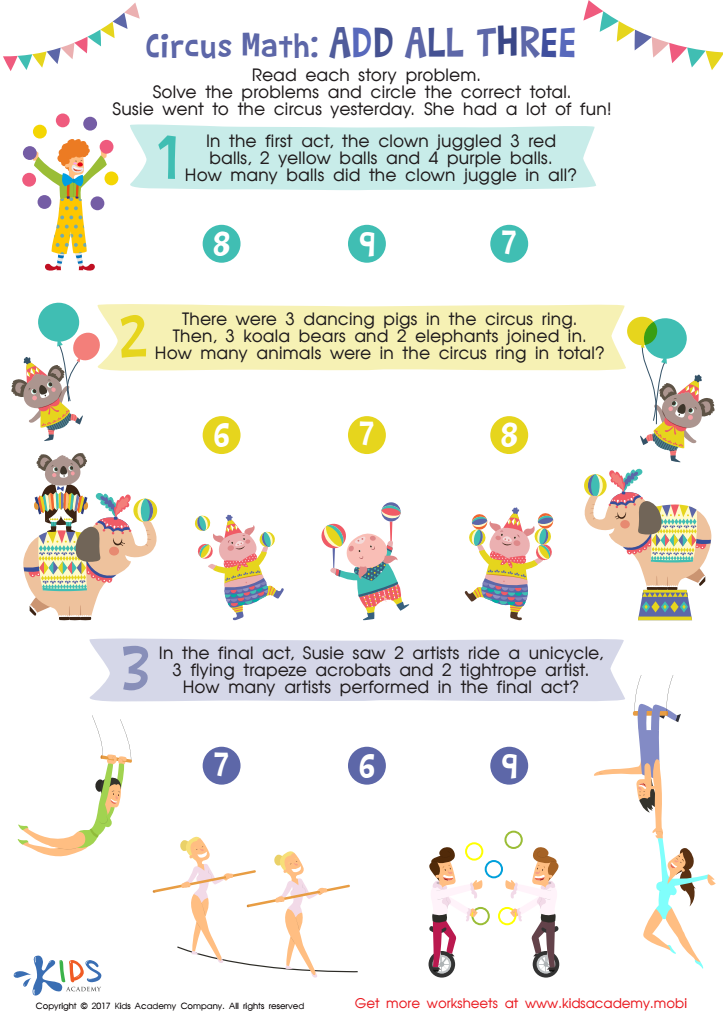
Circus Math Printable
 Assign to My Students
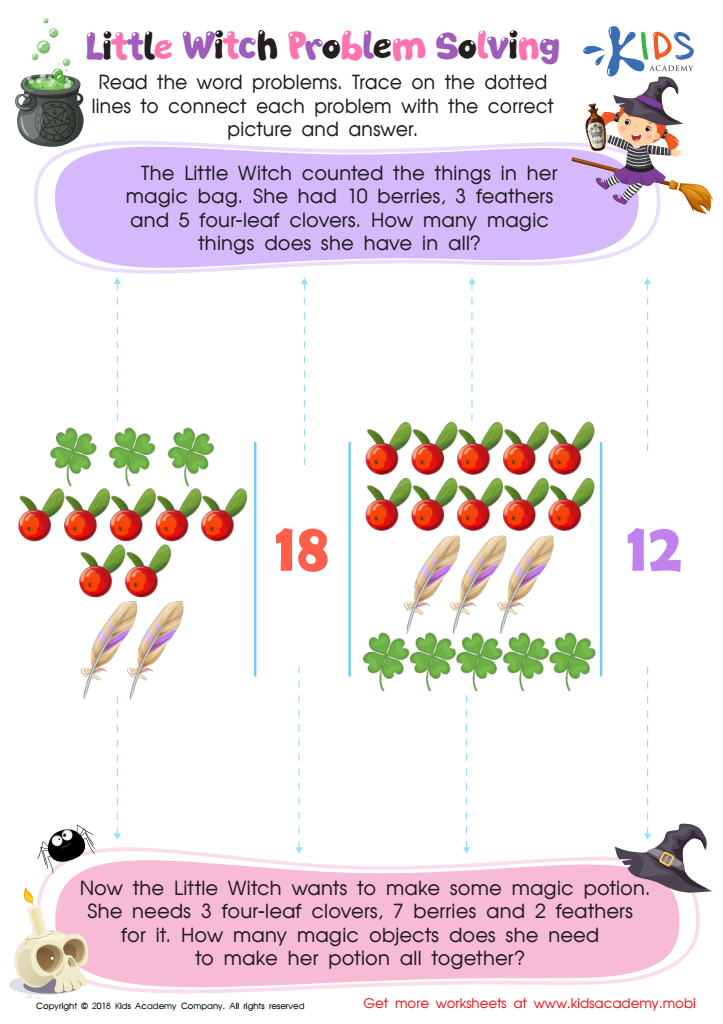
Little Witch Problem Solving Worksheet
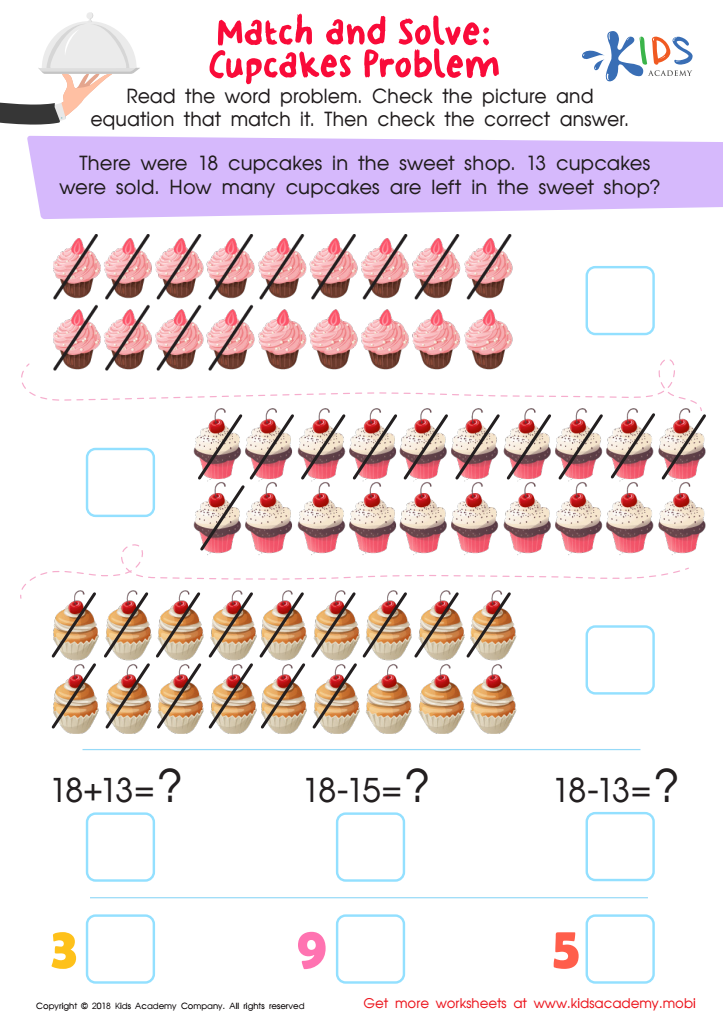
Match and Solve: Cupcakes Problem Worksheet
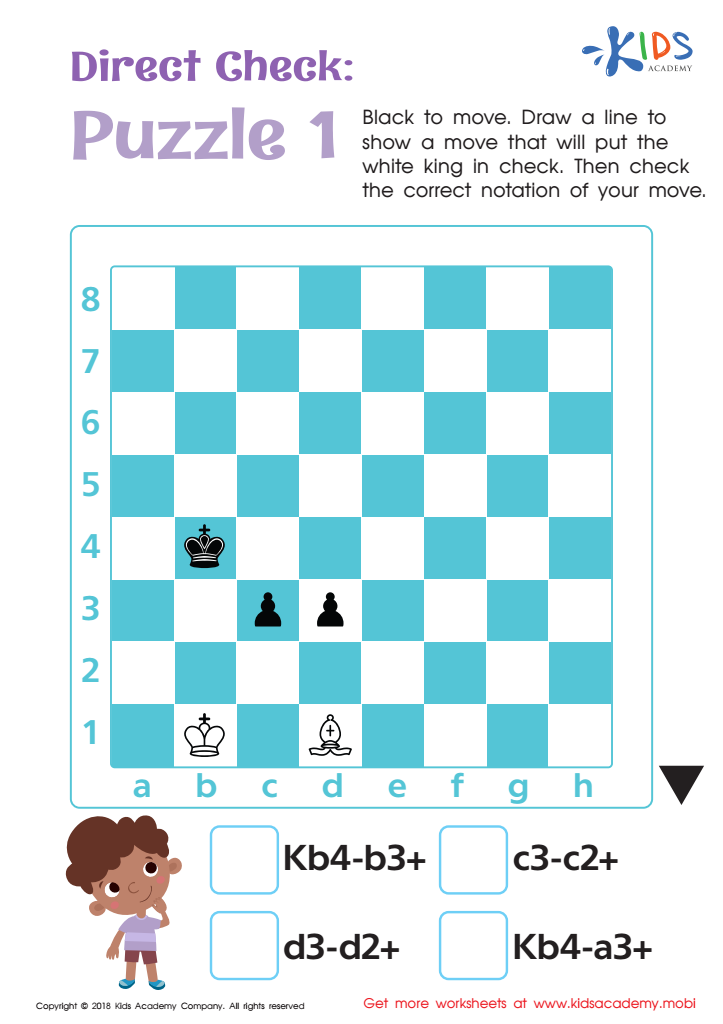
Direct Check: Puzzle 1 Worksheet
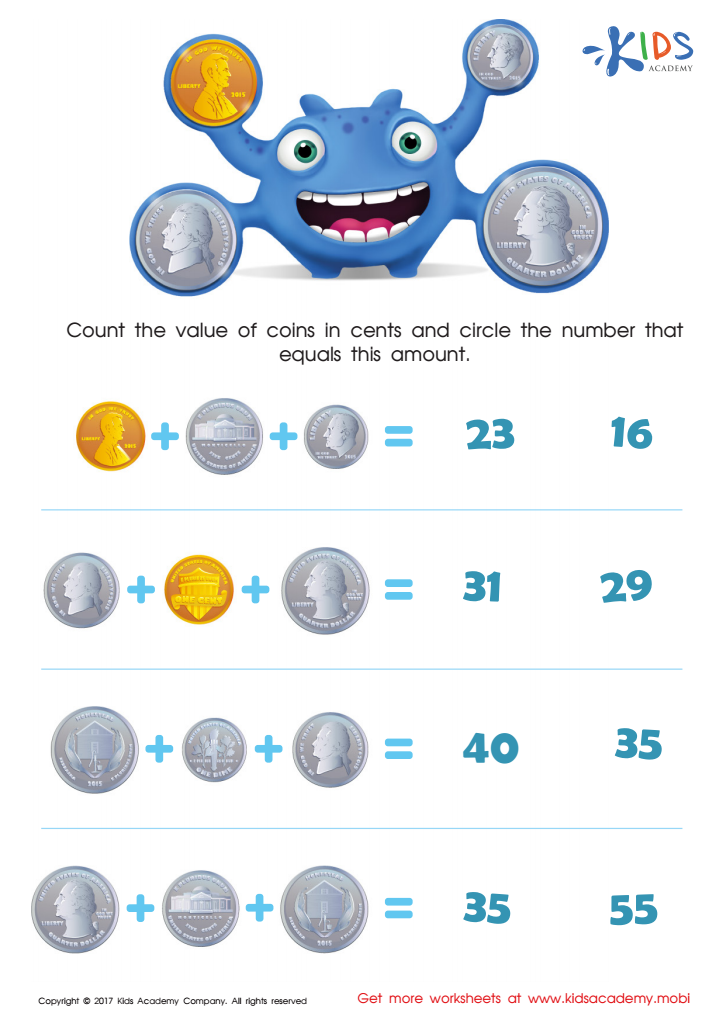
Counting the Coins Money Worksheet






Parents and teachers should care about "Addition Practice Extra Challenge Grade 3" because it strengthens foundational math skills crucial for young learners. Grade 3 is a pivotal stage where students transition from basic arithmetic to more complex mathematical concepts. Consistent practice with addition enhances computational fluency, making it easier for children to tackle advanced operations such as multiplication, division, and fractions.
Moreover, developing strong addition skills fosters problem-solving abilities and critical thinking. By engaging in extra challenges, students encounter varied problem formats that encourage strategic approaches and logical reasoning, which are vital skills across all academic subjects.
Additionally, successful mastery of addition bolsters a child's confidence in their math abilities. Positive experiences in mathematics during early grades set the tone for future learning attitudes and reduce math-related anxiety. Parents and teachers invest in a child's academic future and overall self-esteem by supporting extra practice.
Lastly, making practice fun and challenging helps maintain student interest and motivation. Through interactive and advanced exercises, students are more likely to stay engaged and develop a love for learning, ensuring a holistic educational growth that encompasses both intellectual and emotional dimensions. This approach ultimately prepares them for lifelong learning and academic success.