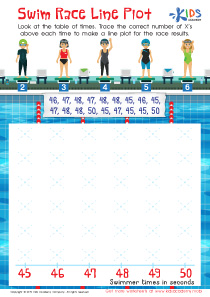
Number Recognition Extra Challenge Grade 3 Math Worksheets
5 filtered results
Difficulty Level
Grade
Age
-
From - To
Subject
Activity
Standards
Enhance your third grader's math skills with our Number Recognition Extra Challenge Grade 3 Math Worksheets! Designed specifically for young learners, these worksheets provide an engaging way to master number identification and enhance overall number sense. Each worksheet is packed with exciting activities that reinforce number recognition, from fill-in-the-blank exercises to creative matching games. Ideal for home practice or classroom use, these extra challenge worksheets are perfect for advancing students who are ready to go beyond the basics. Foster a solid mathematical foundation in your child while making learning fun and enjoyable with these printable resources. Discover the joy of numbers today!
Favorites
With answer key
Interactive
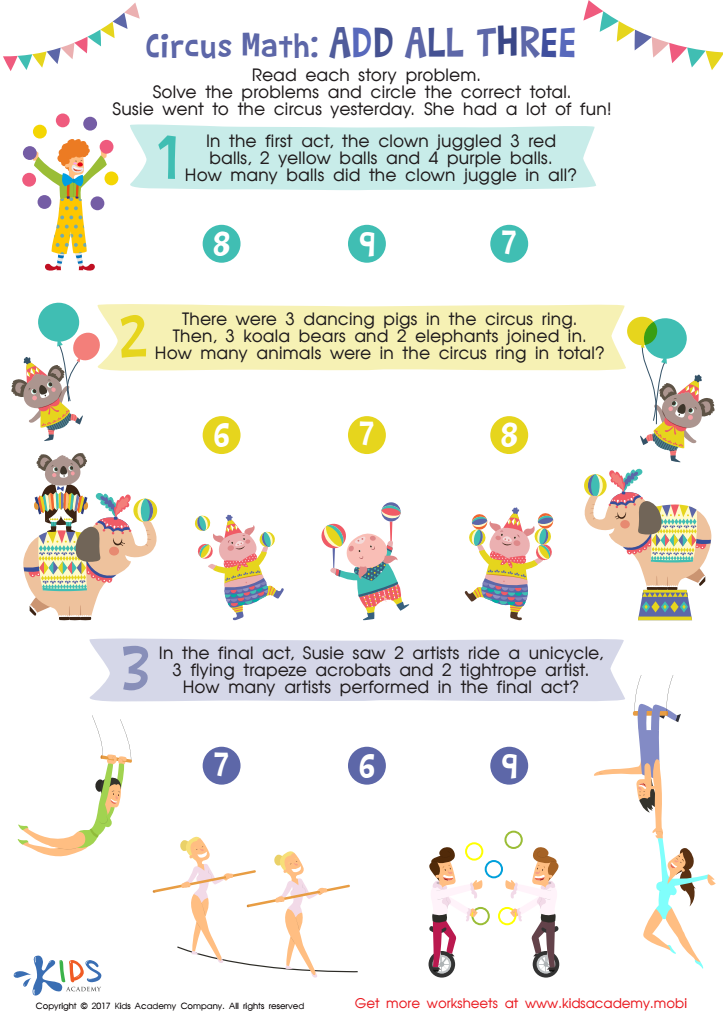
Circus Math Printable
Let's take the kids to the circus and combine literacy and numeracy skills! Our circus math printable worksheet will encourage creativity and higher-order thinking by connecting addition to real-life examples. Kids will learn to love math while they explore the fun, real-life applications of math. Ignite their passion today!
 Assign to My Students
Circus Math Printable
Worksheet
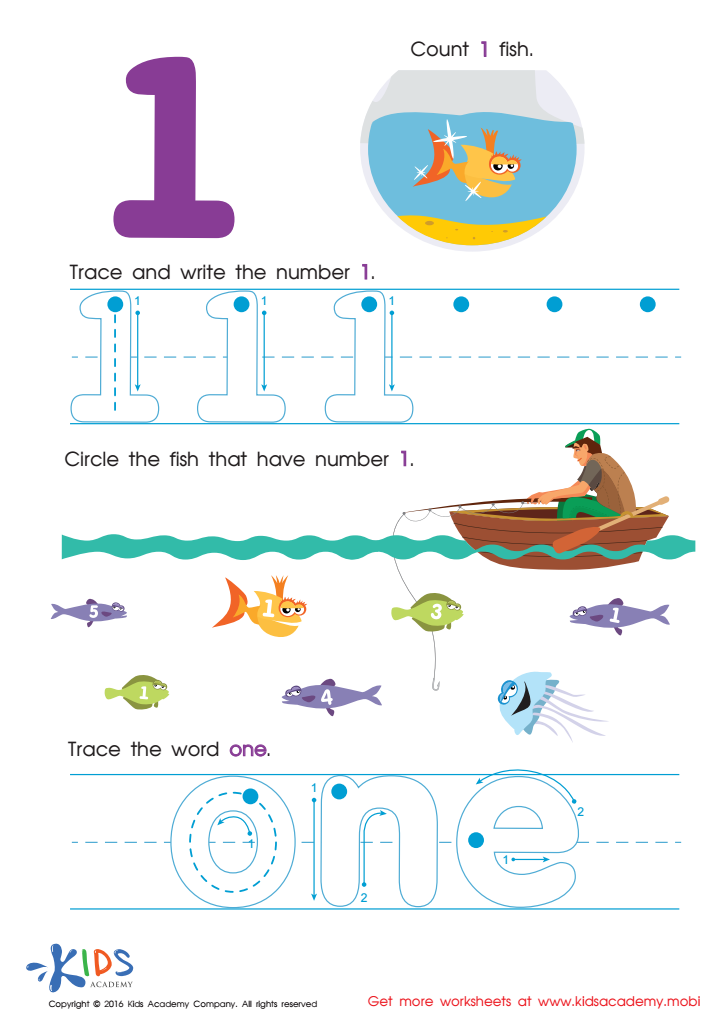
Learning to Write 1 Worksheet
Learning to write numbers can be easy and fun! Get this new number worksheet to help your child excel. Practice counting, tracing and writing the number “one”, then circle the fish with “1” on them. Revise spelling and have fun! Get more tracing numbers worksheets at Kids Academy and enjoy the learning process.
Learning to Write 1 Worksheet
Worksheet
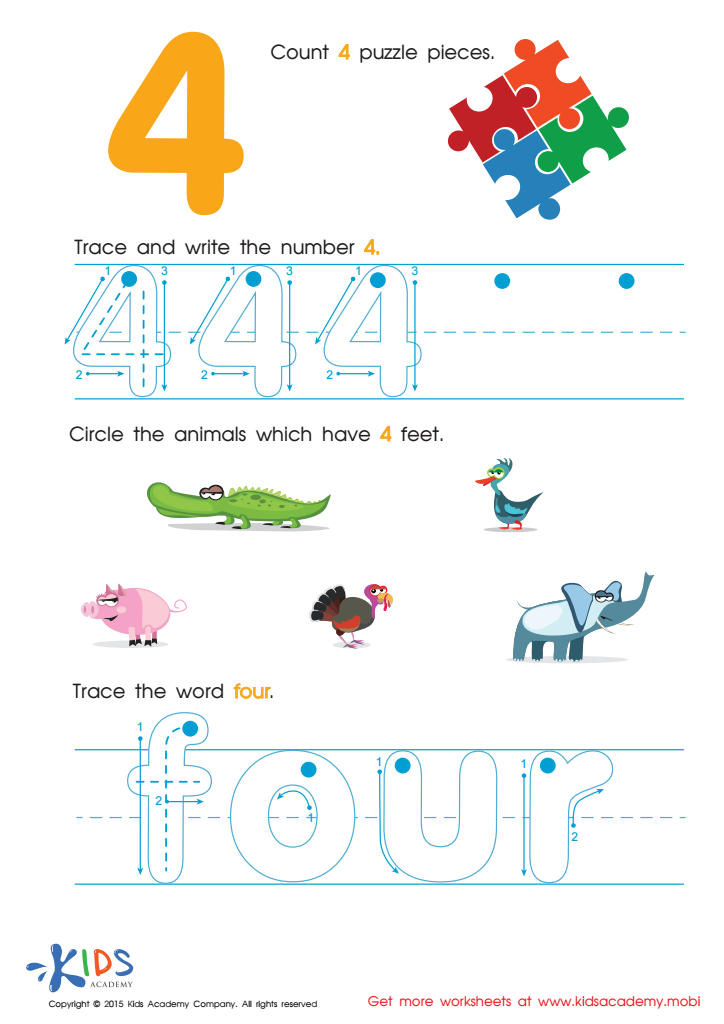
Teaching Children to Write Number 4 Worksheet
Count the pieces of the puzzle - there are four. Trace the number and write it. Circle the animals with four feet. Trace the word "four" too. Kids Academy offers tracing numbers worksheets for preschoolers, making studies easy and effective.
Teaching Children to Write Number 4 Worksheet
Worksheet
Marching 8’s for Rights Worksheet
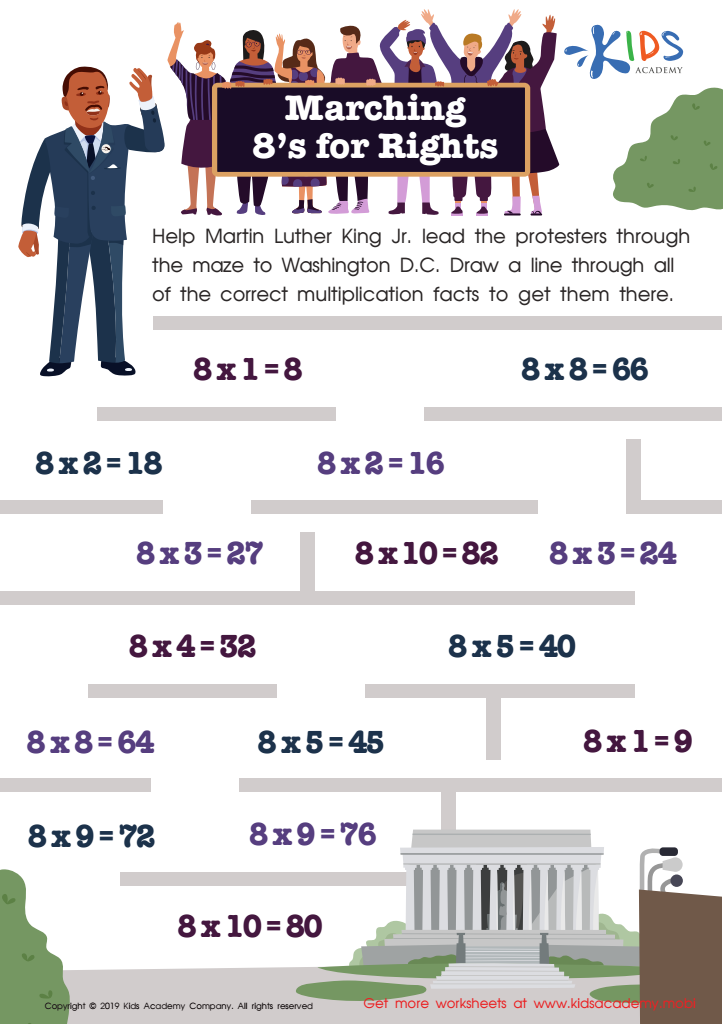
Encourage your students to explore MLK's history! This worksheet provides the perfect opportunity. Help them understand his contributions by having them "march" MLK from the starting point to Washington D.C. Have them draw a line through the correct multiplication facts to get there. It's an enjoyable way for kindergartners to learn about a key part of history.
Marching 8’s for Rights Worksheet
Worksheet
Place Value Worksheet: Thousands
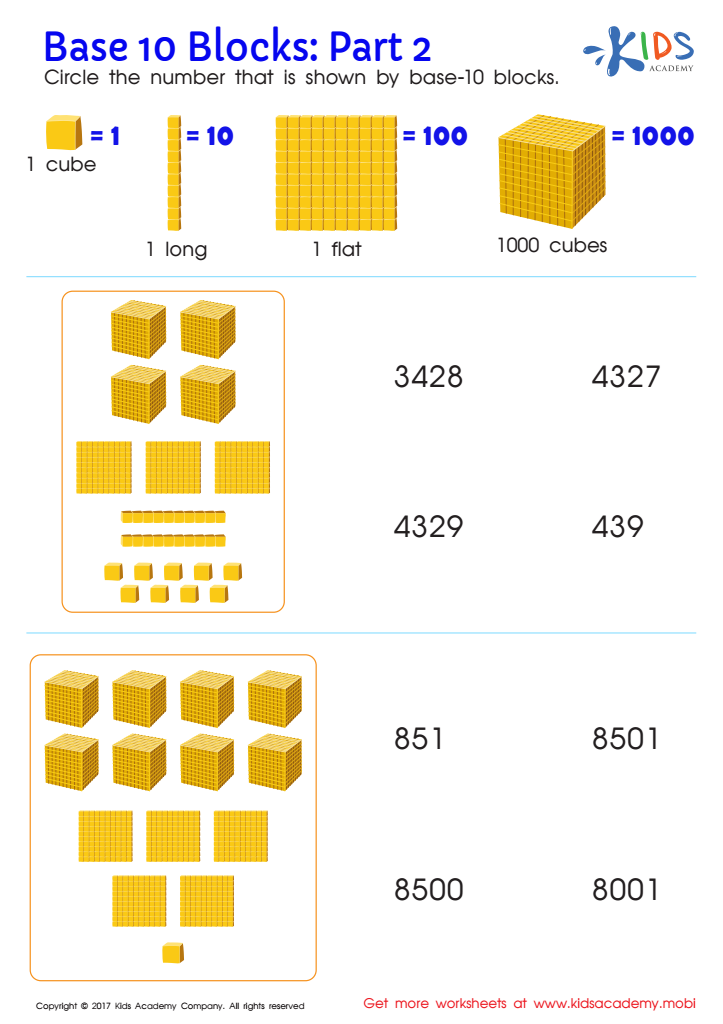
Help your third grader master place value with this free thousands worksheet! Numbers up to ten thousand become easier to understand with Base Blocks. Increase your child's number sense while having fun!
Place Value Worksheet: Thousands
Worksheet
Join Kids Academy for Free
Who is primarily going to use this learning content?







Parents and teachers should prioritize Number Recognition Extra Challenge for Grade 3 students because it lays the foundation for key mathematical skills that are essential for future learning. In third grade, children encounter more complex math concepts involving addition, subtraction, multiplication, and division. Strong number recognition enables students to quickly identify and understand numbers, follow mathematical operations, and solve problems efficiently.
Number recognition also enhances students’ confidence in math, reducing anxiety and encouraging a positive attitude toward the subject. This confidence is crucial as learners progress into higher mathematics, where foundational number skills play a significant role in success.
Moreover, this extra challenge not only boosts mathematical abilities but also promotes critical thinking and cognitive development. Engaging students in number recognition exercises can lead to improved memory skills and greater attention to detail, benefitting them academically across all subjects.
Additionally, by emphasizing number recognition, parents and teachers can create a solid partnership in their child's education, reinforcing learning both at school and at home. Ultimately, investing in comprehensive number recognition skills enriches a child's mathematical understanding and sets the stage for lifelong learning in both mathematics and everyday life.