Understanding plurals Extra Challenge Writing Worksheets
5 filtered results
-
From - To
Enhance your child's understanding of plurals with our "Understanding Plurals Extra Challenge Writing Worksheets." These engaging worksheets are designed to provide an extra challenge for students who are eager to master plural forms. Covering a variety of rules and exceptions, our activities encourage critical thinking and creative writing skills. Each worksheet presents fun exercises that reinforce concepts while keeping learning enjoyable. Perfect for classroom use or at-home practice, these resources help children confidently recognize and use plurals correctly. Discover the joy of learning as your child navigates through different plural forms, making language fun and accessible!
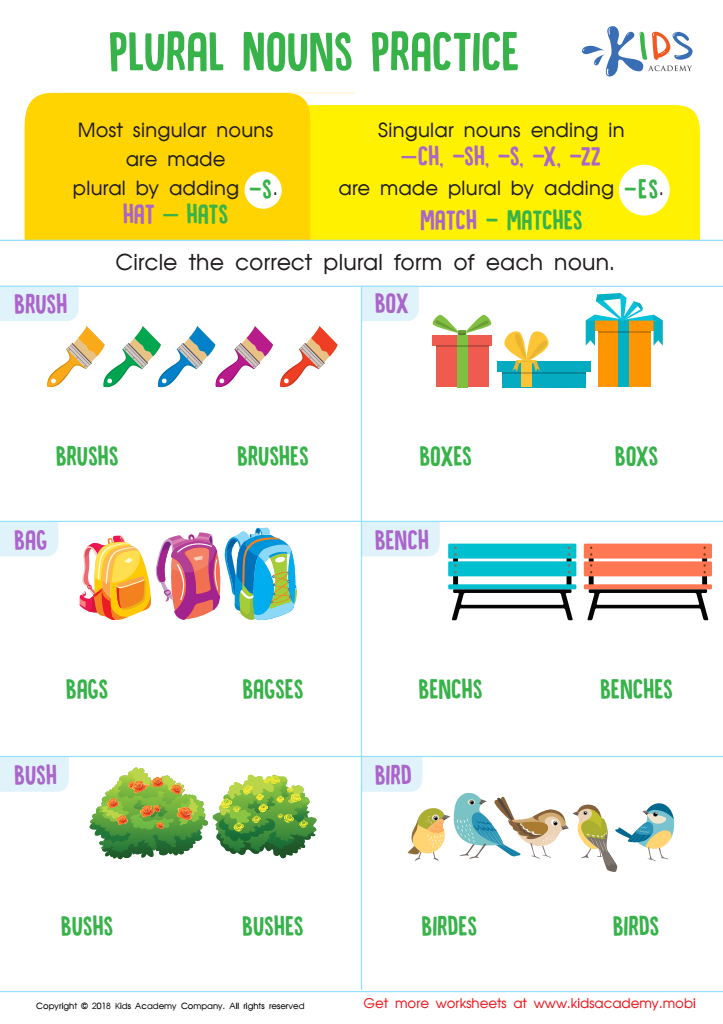
Plural Nouns Practice Worksheet
 Assign to My Students
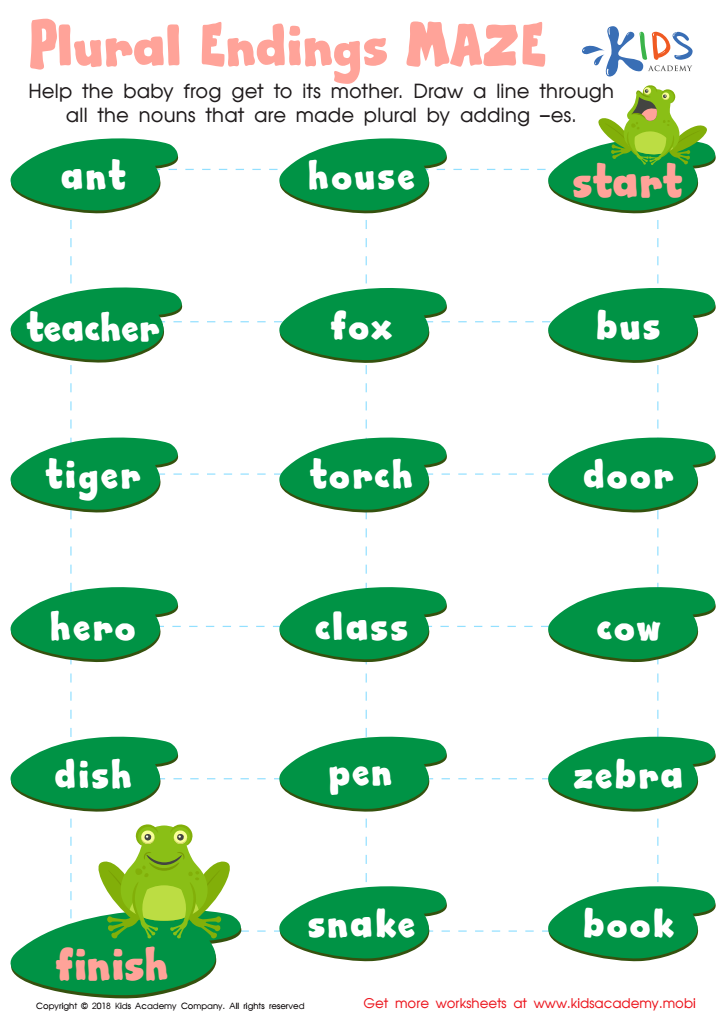
Plural Endings Maze Worksheet
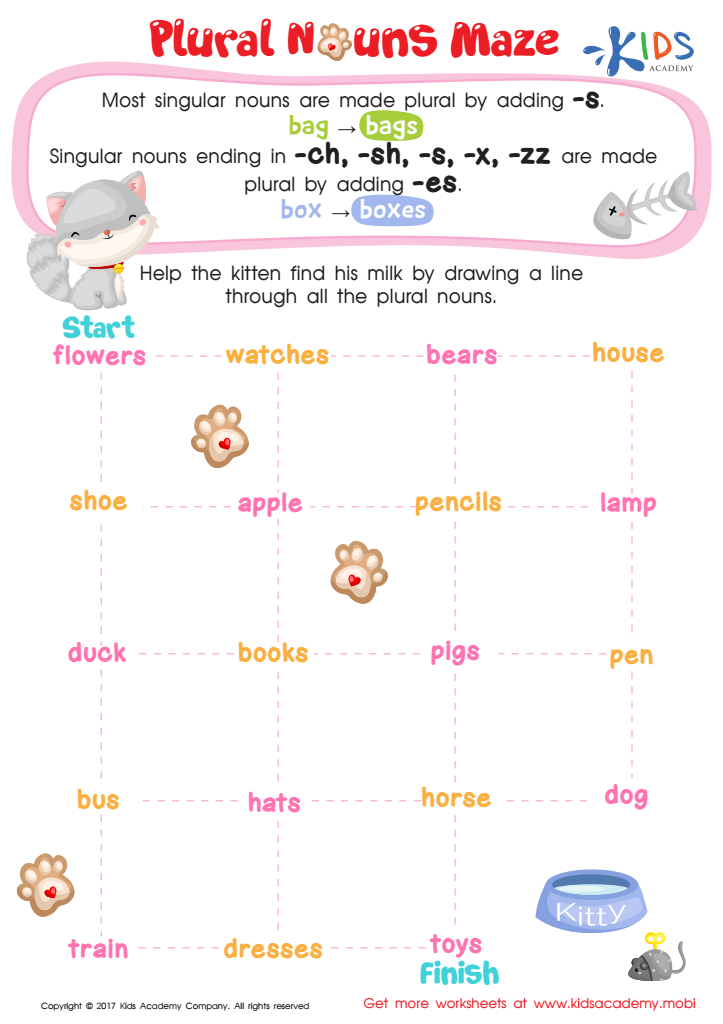
Plural Nouns Maze Worksheet
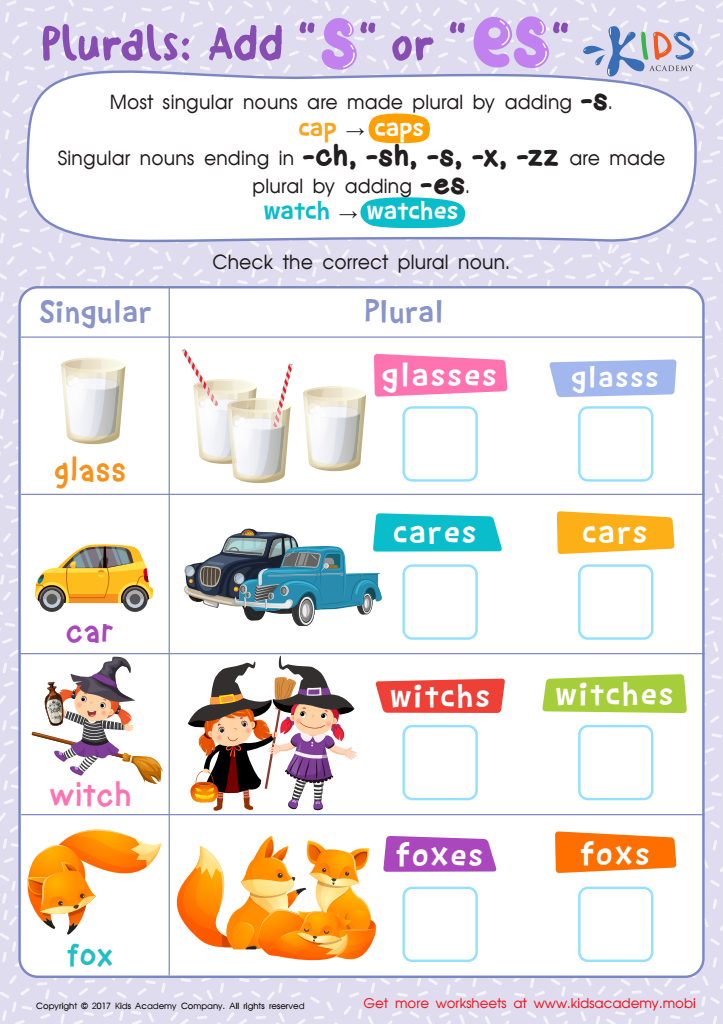
Plurals: "–es" or "–es"? Worksheet
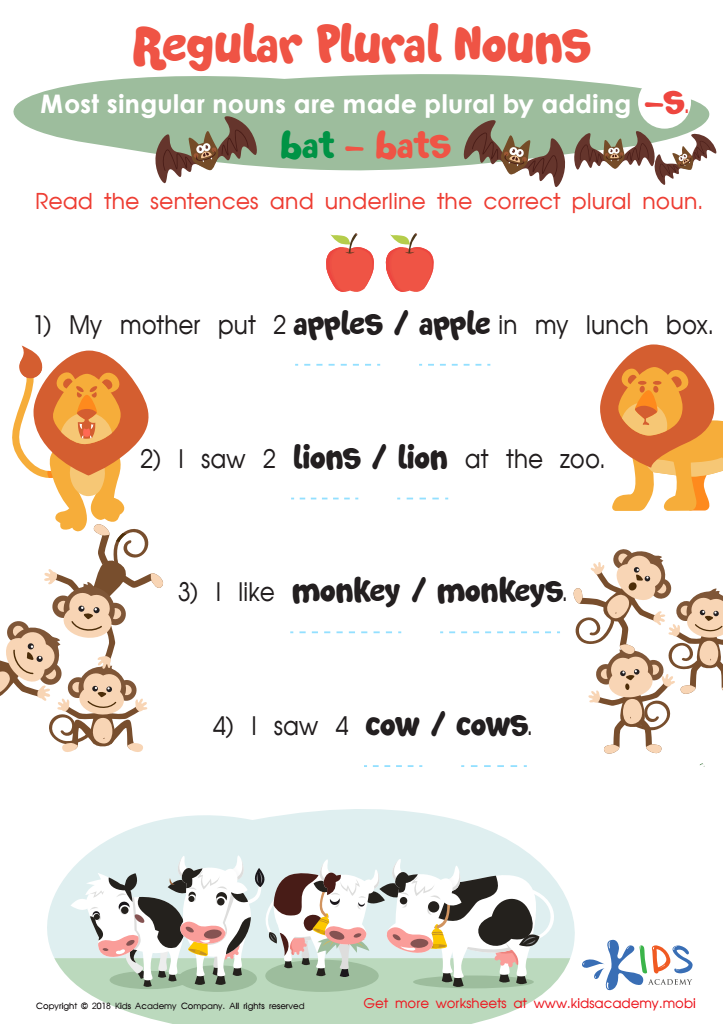
Regular Plural Nouns Worksheet







Understanding plurals is crucial for parents and teachers because it lays the foundational bricks for literacy and effective communication. Plurals refer to words that indicate more than one item, which is a fundamental aspect of language comprehension. When children learn to understand and use plurals effectively, they enhance their vocabulary and articulation, enabling them to express themselves clearly and confidently.
For young learners, grasping the concept of plurals can also bolster attention to detail and critical thinking. It teaches them about patterns in language, such as traditional plural formations (like adding ‘-s’ or ‘-es’) and irregular forms. This knowledge not only aids in reading and writing but fosters interpretation skills as children encounter diverse texts.
Furthermore, during early stages of development, support from parents and teachers can promote a love for language. Engaging children in activities—such as plural scavenger hunts or interactive games—makes learning fun and memorable. By emphasizing plurals, educators and parents are equipping children with crucial language skills that benefit their overall academic journey, helping to cultivate proficient communicators who can engage with their world more fully. In conclusion, an understanding of plurals is an essential step in a child’s linguistic and cognitive development.