Lowercase identification Kindergarten Alphabet Worksheets
5 filtered results
-
From - To
Explore our engaging Lowercase Identification Kindergarten Alphabet Worksheets designed to make learning fun! These printable resources help young learners recognize and differentiate lowercase letters through a variety of interactive activities. Kids will strengthen their letter identification skills with tracing, matching, and coloring tasks that boost confidence and enhance fine motor skills. Perfect for classroom or home use, our worksheets cater to different learning styles and keep children motivated. Empower your kindergarteners on their literacy journey with these essential worksheets, paving the way for reading and writing success! Download and print today to support your child's educational growth and early literacy development.
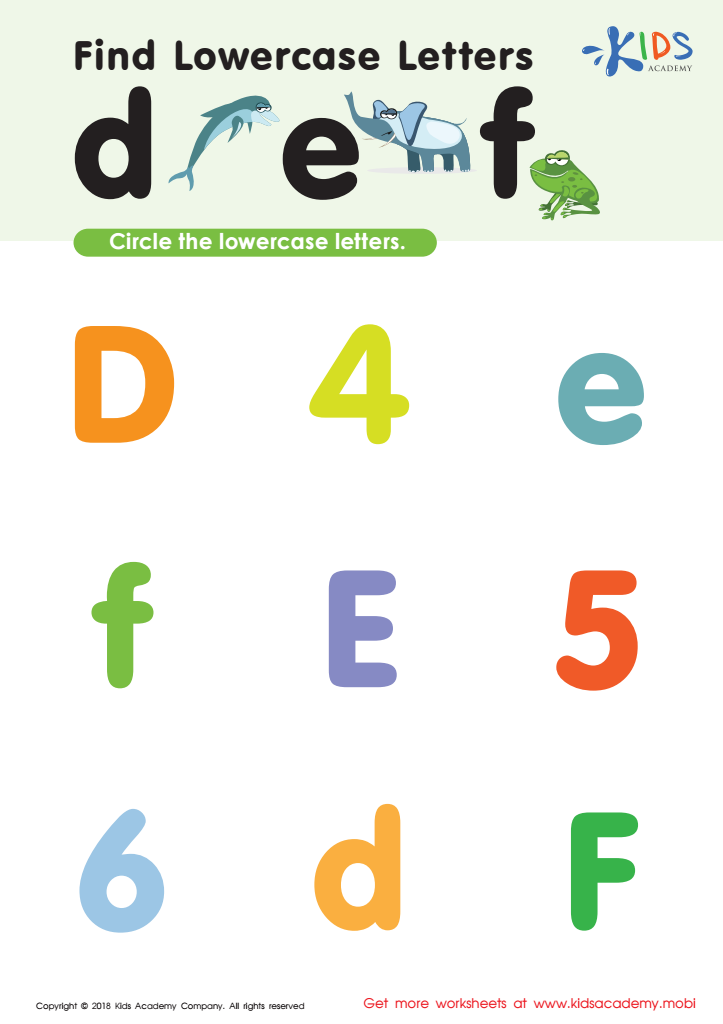
Find Lowercase Letters d e f Worksheet
 Assign to My Students
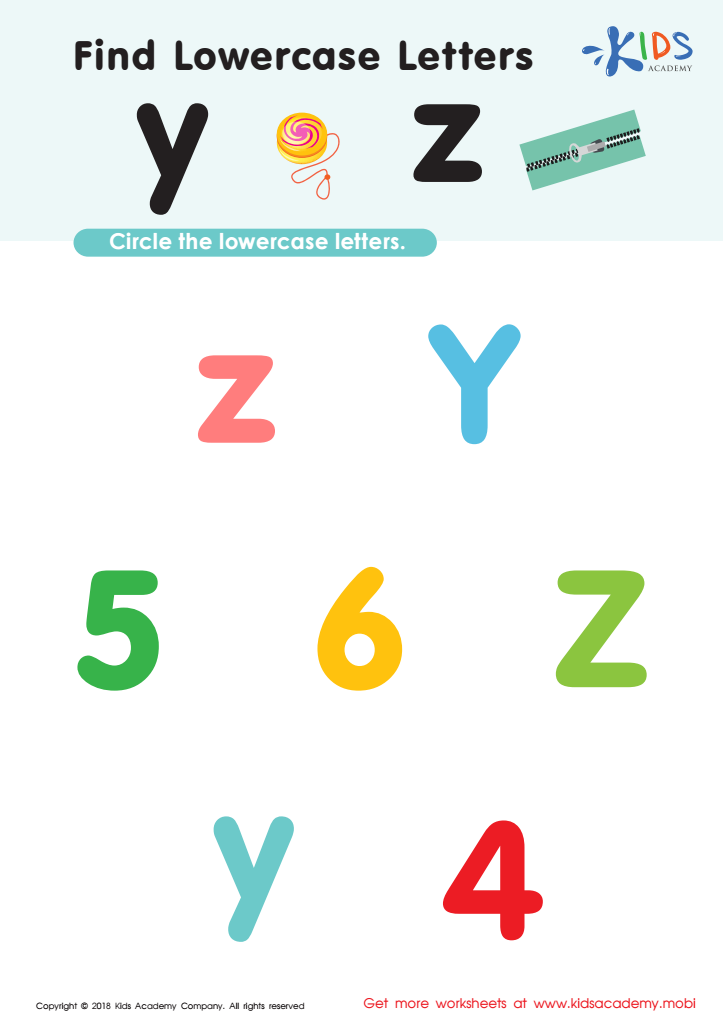
Find Lowercase Letters y z Worksheet
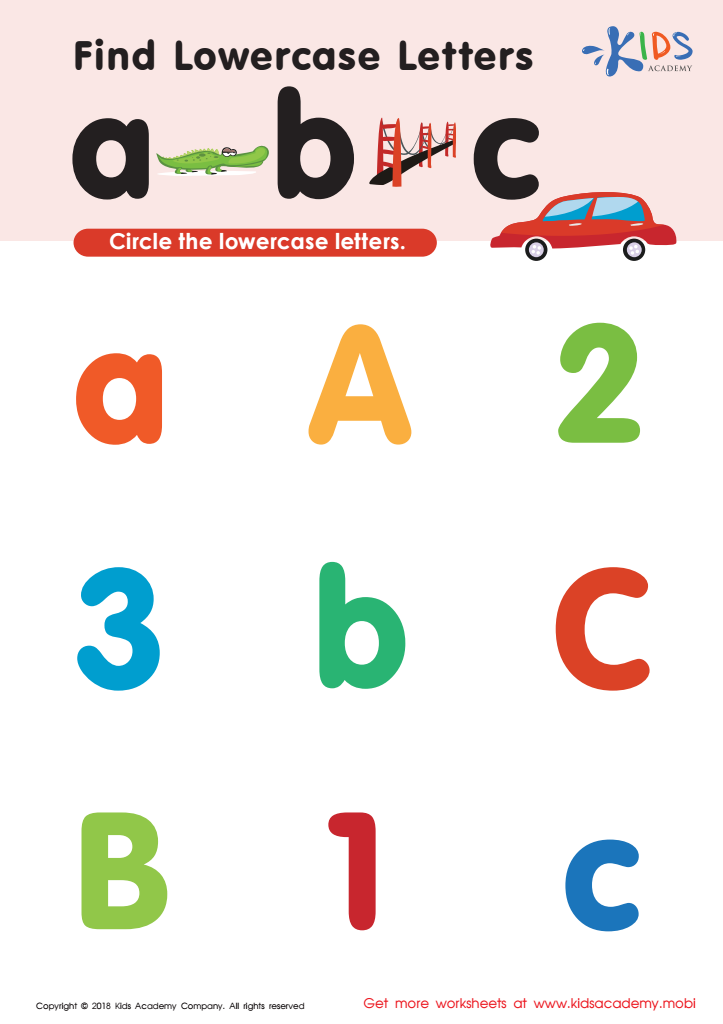
Find lowercase letters a b c Worksheet
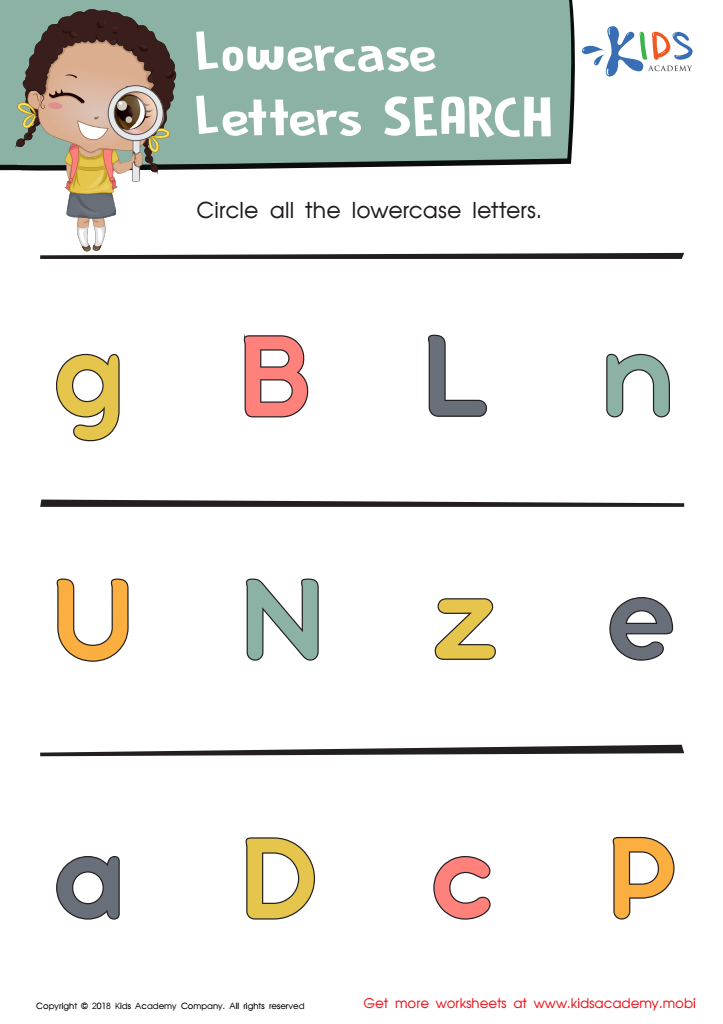
Lowercase Letters Search: Assessment Worksheet
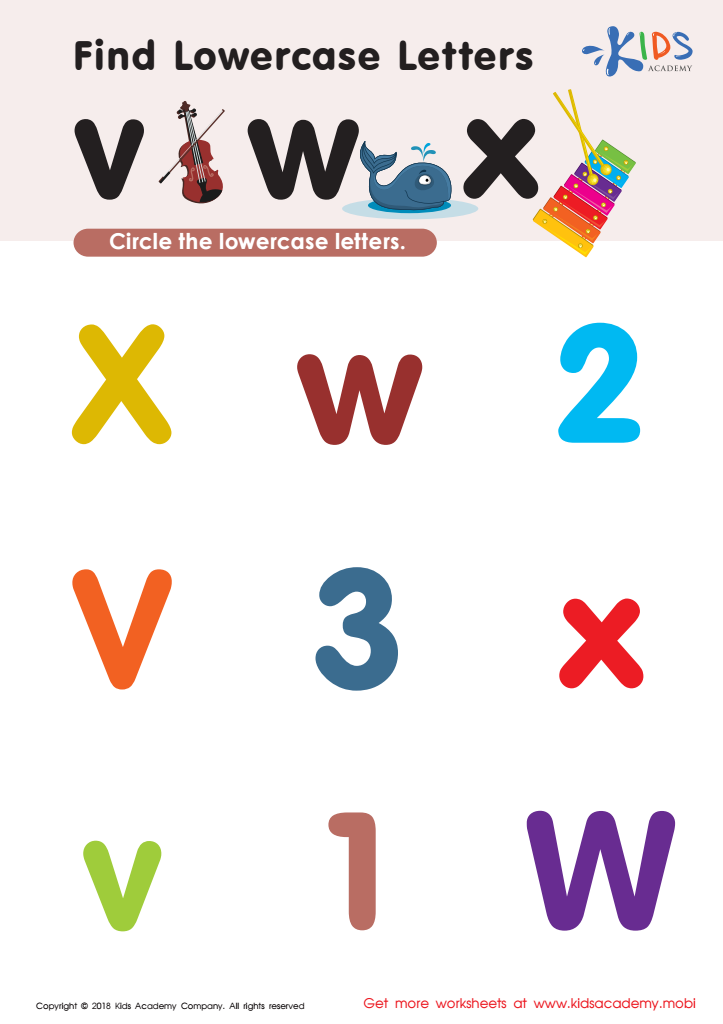
Find Lowercase Letters v w x Worksheet








Lowercase letter identification is a fundamental skill for kindergarteners that serves as a cornerstone for literacy development. Parents and teachers should emphasize the importance of recognizing lowercase letters for several reasons. Firstly, children encounter lowercase letters far more frequently in everyday texts than uppercase letters. Most books, signs, and labels use lowercase letters, making their identification crucial for reading comprehension and fluency.
Additionally, understanding lowercase letters lays the groundwork for writing skills. Young learners need to know how to form letters correctly, and distinguishing between upper and lowercase provides clarity in proper writing conventions. This identification also enhances phonemic awareness, allowing students to better connect sounds with their corresponding letters, which is a vital component of learning to read.
Beyond academics, recognizing lowercase letters contributes to children’s confidence as they engage with written materials. It fosters a love for reading, as they can independently explore books and texts. By prioritizing lowercase letter identification, parents and teachers promote not only literacy but also critical cognitive and motor skills essential for lifelong learning. In fostering these early skills, we empower students to succeed in their educational journeys and beyond.