Letter recognition Kindergarten Coloring Pages Worksheets
3 filtered results
Difficulty Level
Grade
Age
-
From - To
Subject
Activity
Standards
Introducing our engaging "Letter Recognition Kindergarten Coloring Pages Worksheets"! Designed to inspire creativity while enhancing foundational literacy skills, these colorful worksheets blend fun and learning seamlessly. Each page features vibrant illustrations, encouraging children to identify and color letters, fostering their recognition and phonemic awareness. Perfect for home or classroom use, our worksheets aid in developing fine motor skills and vocabulary. With a variety of letters and playful themes, your little learners will enjoy exploring the alphabet in a captivating way. Dive into this exciting educational resource and watch as your child's confidence in letter recognition flourishes while they engage in creative coloring!
Favorites
With answer key
Interactive
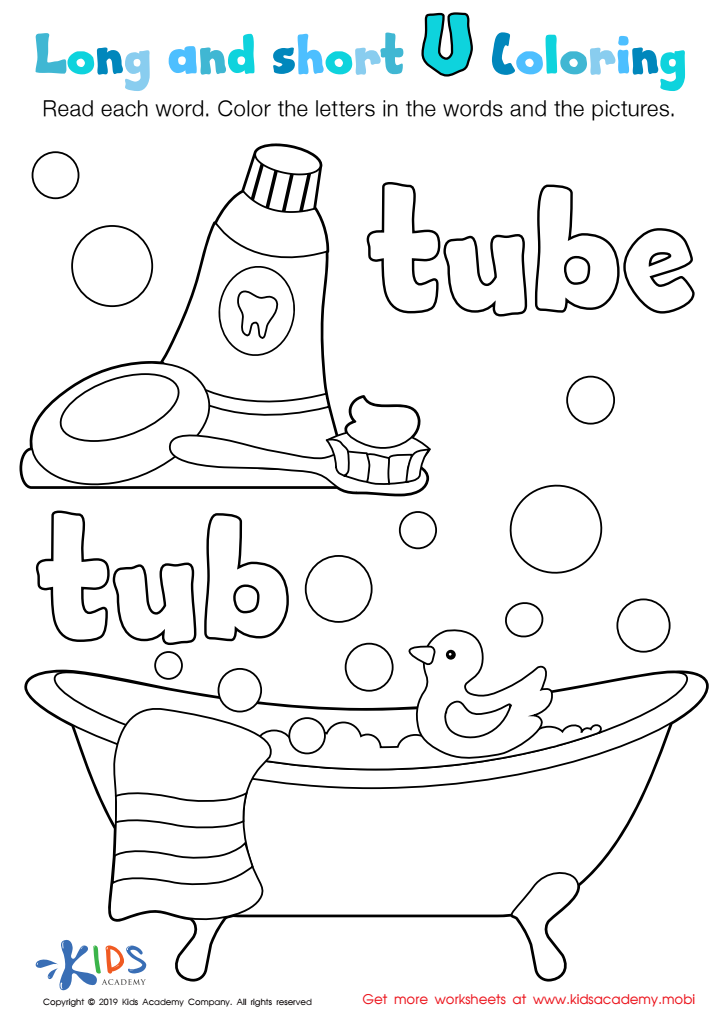
Long and Short U Worksheet
Revised: Spice up your lesson on long and short vowels with this fun printout! Kids read the words "tube" and "tub," then reinforce the sound by coloring in the words and pictures. It's a great way to make phonics class enjoyable!
Download (PDF)
 Assign to My Students
Assign to My Students
Long and Short U Worksheet
Worksheet
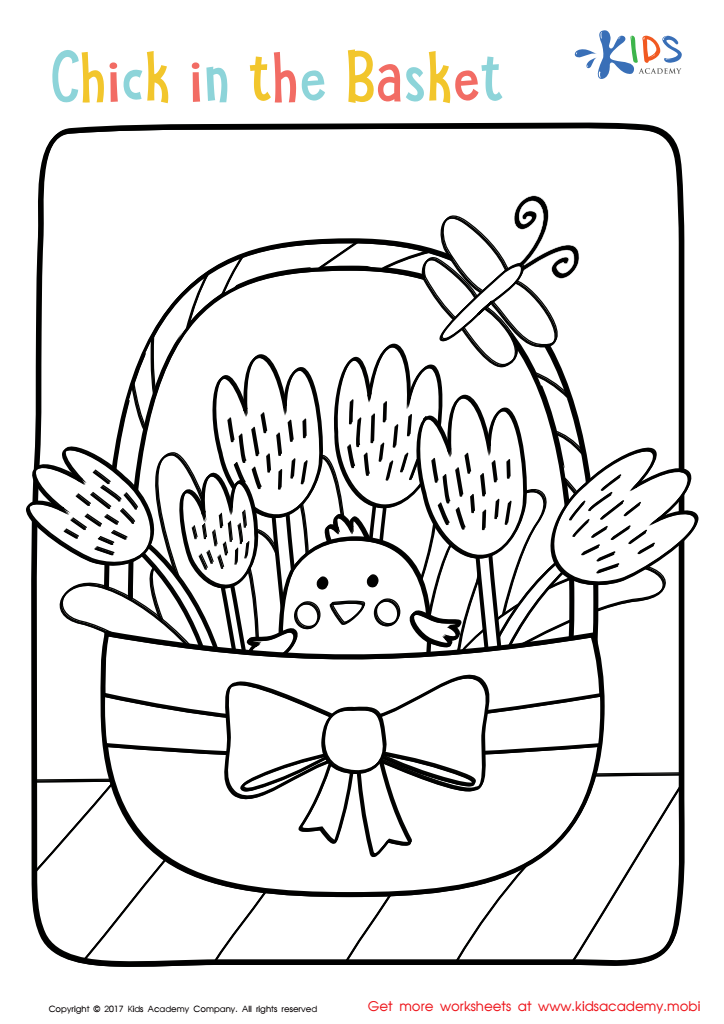
Easter: Chick in the Basket Worksheet
Kids love Easter morning when they wake up to a basket full of goodies! Let them get creative and learn something new with this Easter chick coloring page! It's perfect to use while they wait for the Easter bunny, and talk about the symbolism of chicks and baskets. They'll have fun learning and creating a wonderful image to decorate!
Download (PDF)
Assign to My Students
Assign to My Students
Easter: Chick in the Basket Worksheet
Worksheet
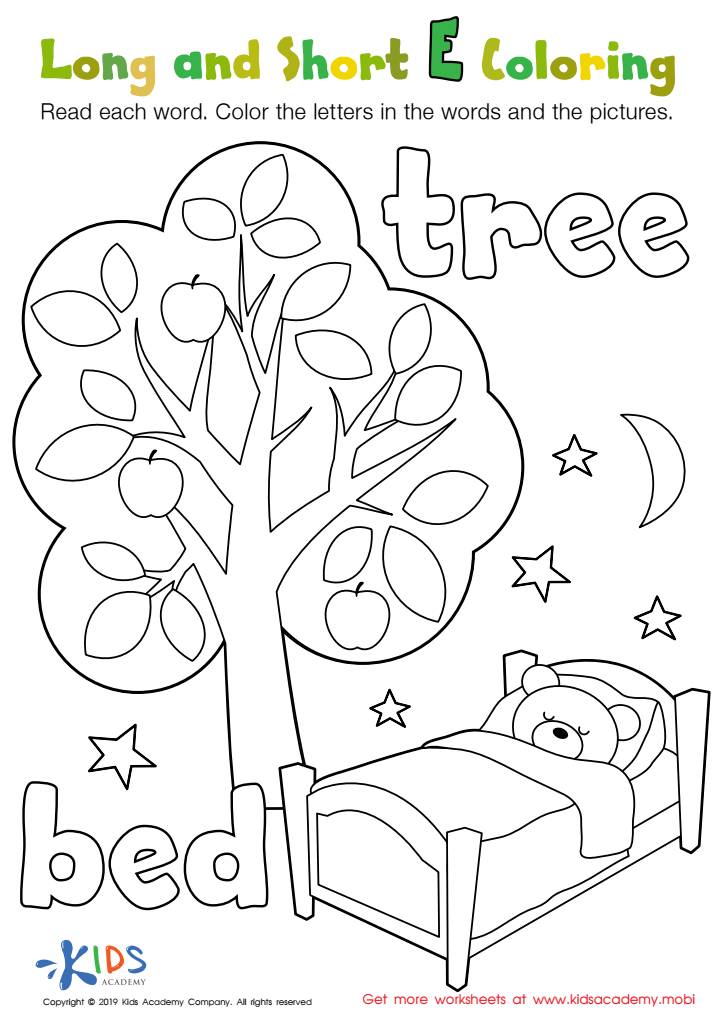
Long and Short E Worksheet
This fun printout makes learning phonics enjoyable for Grade 3 students. Get them to read the words “tree” and “bed” to recognize the different sounds of the letter “E”. After hearing the words they can color the words and the pictures to understand differences between long and short vowels.
Download (PDF)
Assign to My Students
Assign to My Students
Long and Short E Worksheet
Worksheet
Join Kids Academy for Free
Who is primarily going to use this learning content?





Letter recognition is a foundational skill for early literacy development, and utilizing kindergarten coloring pages enhances this learning process for young children. Parents and teachers should prioritize these resources for several reasons.
Firstly, coloring pages make the learning experience engaging and enjoyable. When children color letters, they are not just seeing them passively; they are interacting with them. This hands-on approach reinforces memory retention, making it easier for kids to recognize and recall letters in other contexts, such as in reading.
Moreover, these coloring activities can act as a bridge between fine motor skills and literacy. By gripping crayons or markers, children practice the essential hand movements needed for writing, which promotes better handwriting as they progress in school.
Additionally, these pages can be used for collaborative learning moments between parents and their children or teachers and students. Discussing colors, shapes, and letters during coloring sessions fosters communication and reinforces the learning objective.
In summary, incorporating letter recognition kindergarten coloring pages into children's learning routines not only aids in literacy but also supports fine motor skill development and encourages meaningful interactions, making it a valuable tool for parents and educators alike.