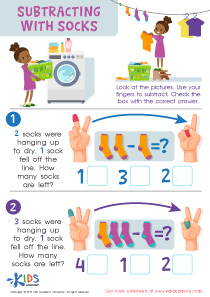
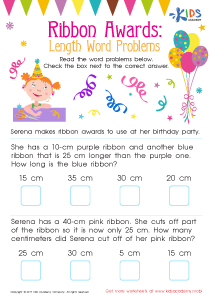
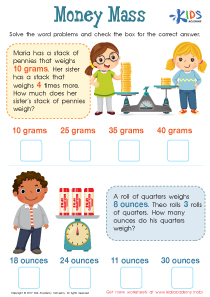
Number comprehension Kindergarten Addition and Subtraction Word Problems Worksheets
6 filtered results
-
From - To
Boost your child's number comprehension skills with our Kindergarten Addition and Subtraction Word Problems Worksheets. Perfectly designed for young learners, our worksheets turn solving math problems into fun and engaging activities. Each worksheet provides simple, relatable scenarios that help kids easily grasp addition and subtraction concepts. By practicing with these worksheets, your kindergartener will build confidence in solving word problems and strengthen their foundational math skills. Dive into interactive problem-solving exercises that combine education with excitement, helping your child reach important milestones in their learning journey. Excellent resource for teachers and parents alike!
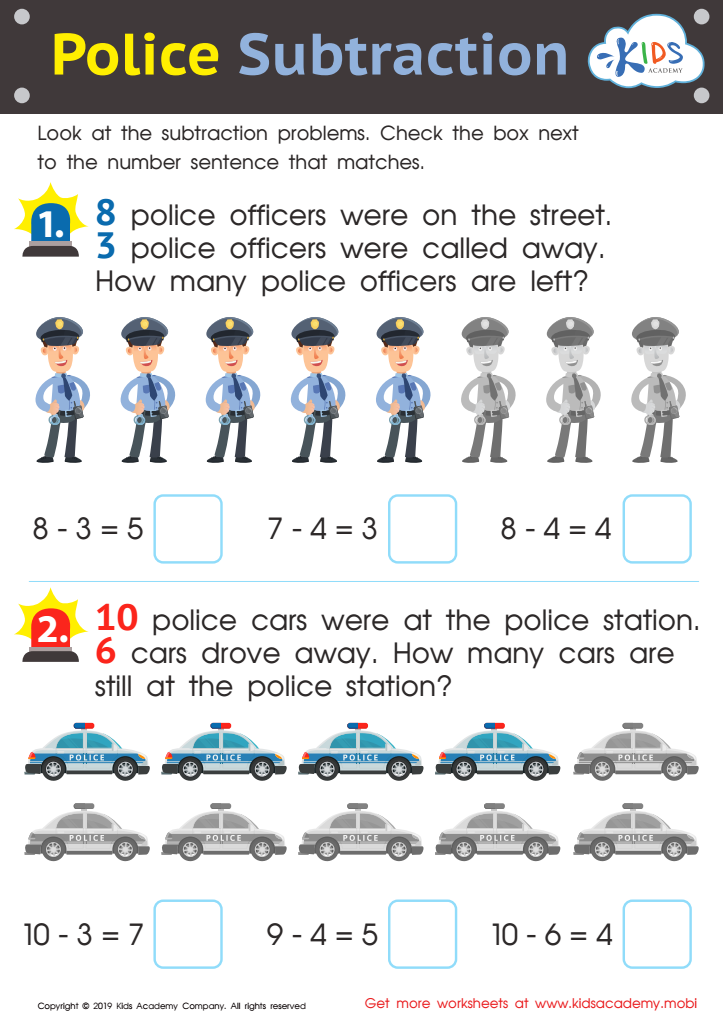
Police Subtraction Worksheet
 Assign to My Students
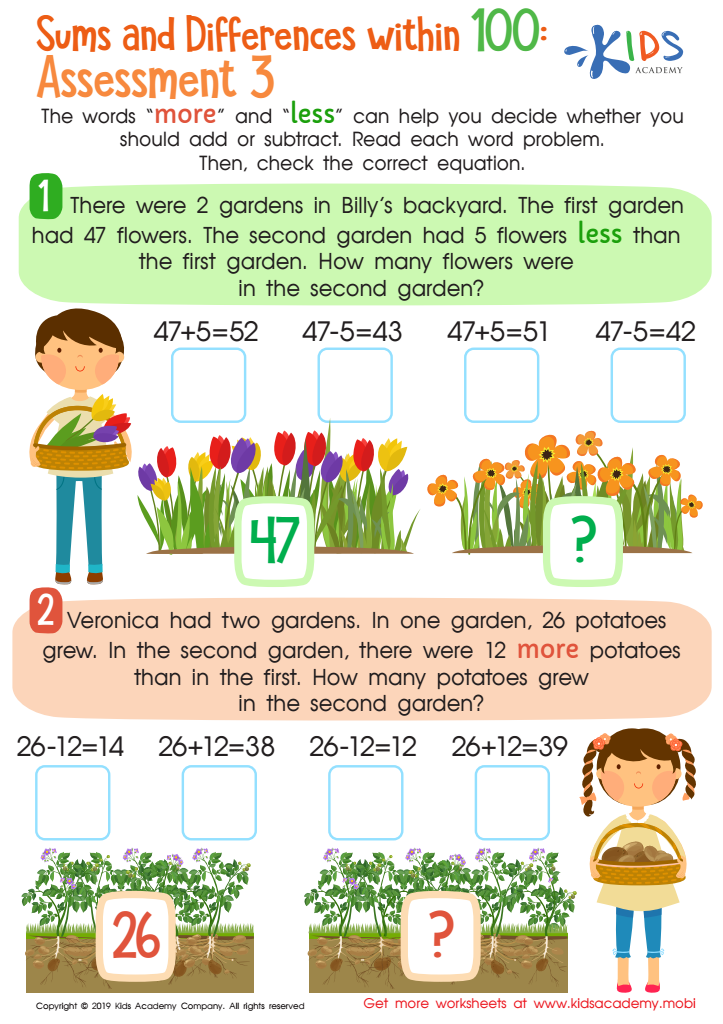
Sums and Differences Within 1 - Assessment 1 Worksheet
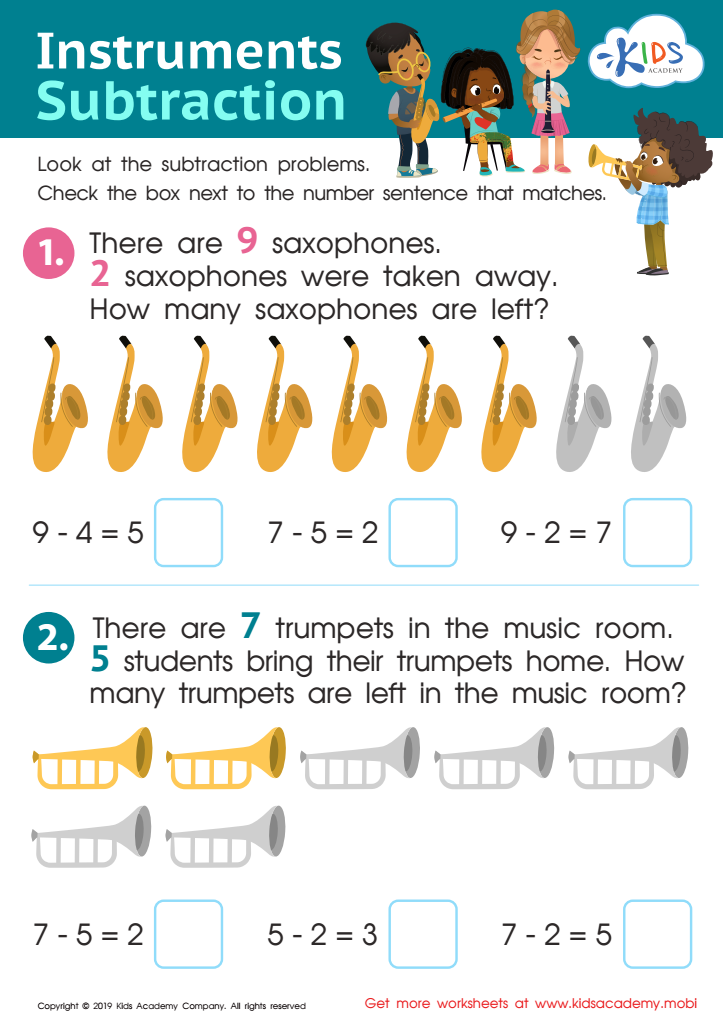
Instrument Subtraction Worksheet
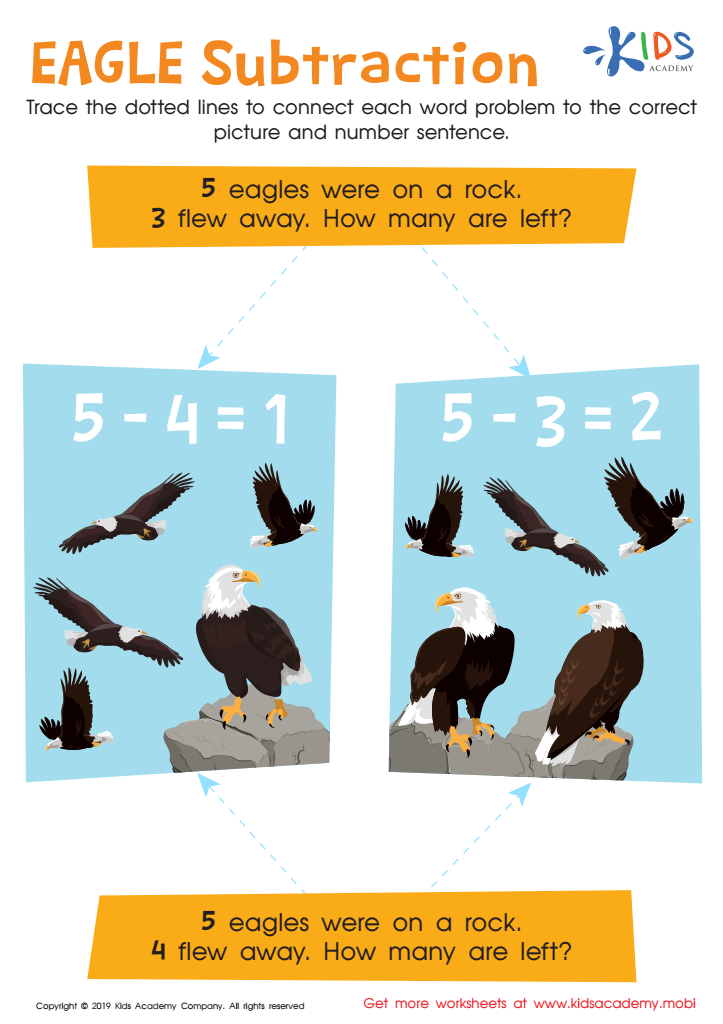
Eagle Subtraction Worksheet
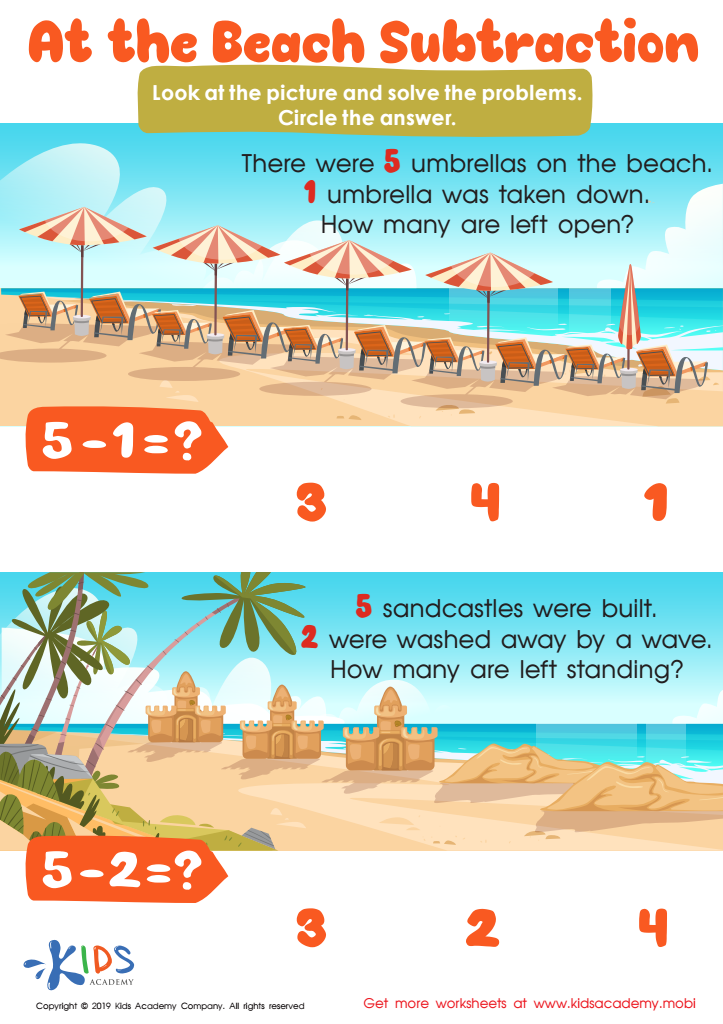
At the Beach Subtraction Worksheet
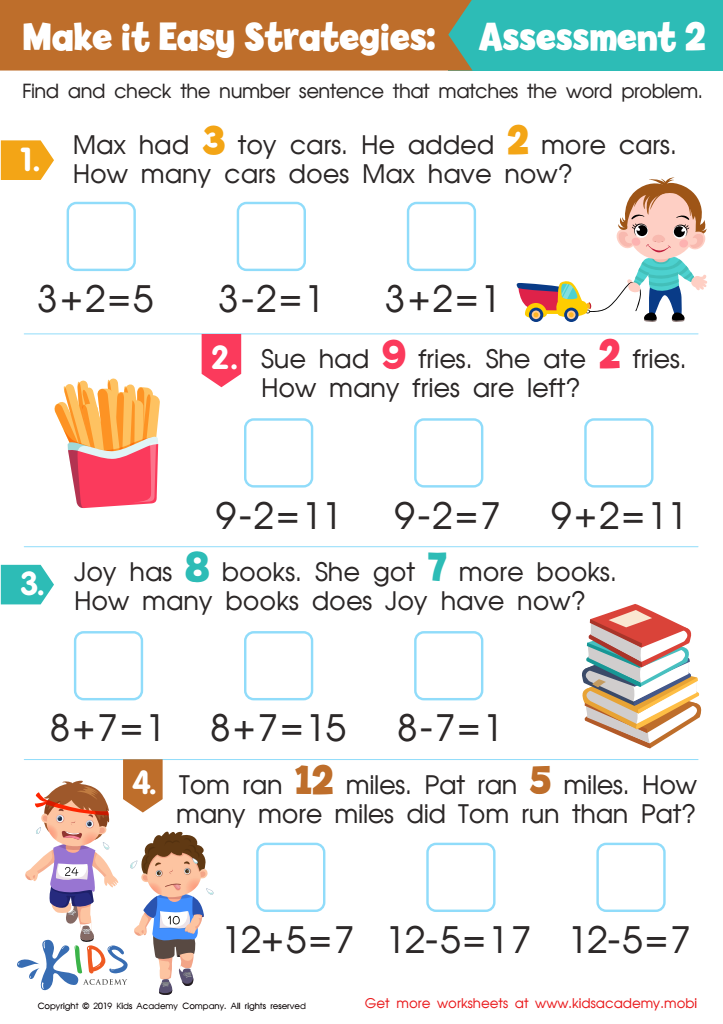
Make it Easy Strategies: Assessment 2 Worksheet








Parents and teachers should care about number comprehension in kindergarten addition and subtraction word problems because these foundational skills are pivotal in young learners' overall mathematical development. Early exposure to these concepts helps children make sense of numbers and their relationships, paving the way for future success in more complex mathematics.
Understanding addition and subtraction in the context of word problems nurtures critical thinking and problem-solving abilities. It moves beyond rote memorization, encouraging students to apply mathematical concepts to real-world situations. This fosters a deeper understanding and retention of math principles.
Moreover, proficiency in these skills at an early age builds confidence in children. When they succeed in solving age-appropriate math problems, it boosts their self-esteem and promotes a positive attitude towards mathematics, which can help prevent the development of math anxiety as they advance in their education.
Furthermore, these experiences lay the groundwork for essential life skills, such as analytical thinking and logical reasoning, which are applicable far beyond the classroom. Parents and teachers play a crucial role in guiding and supporting children through these early learning stages, setting the stage for their future academic and personal success.