
Fine Motor Skills Kindergarten Counting Worksheets
6 filtered results
Difficulty Level
Grade
Age
-
From - To
Subject
Activity
Standards
Enhance your child's fine motor skills while boosting their counting abilities with our engaging Fine Motor Skills Kindergarten Counting Worksheets. Specifically designed for young learners, these worksheets provide a fun and interactive way to practice counting from 1 to 20 through various activities, including tracing, coloring, and numerical exercises. As children maneuver with scissors, crayons, and pencils, they develop dexterity and hand-eye coordination, vital for early writing skills. Perfect for at-home or classroom use, our worksheets cater to diverse learning styles, making math enjoyable and accessible. Discover the joy of learning through play with our thoughtfully crafted printables!
Favorites
With answer key
Interactive
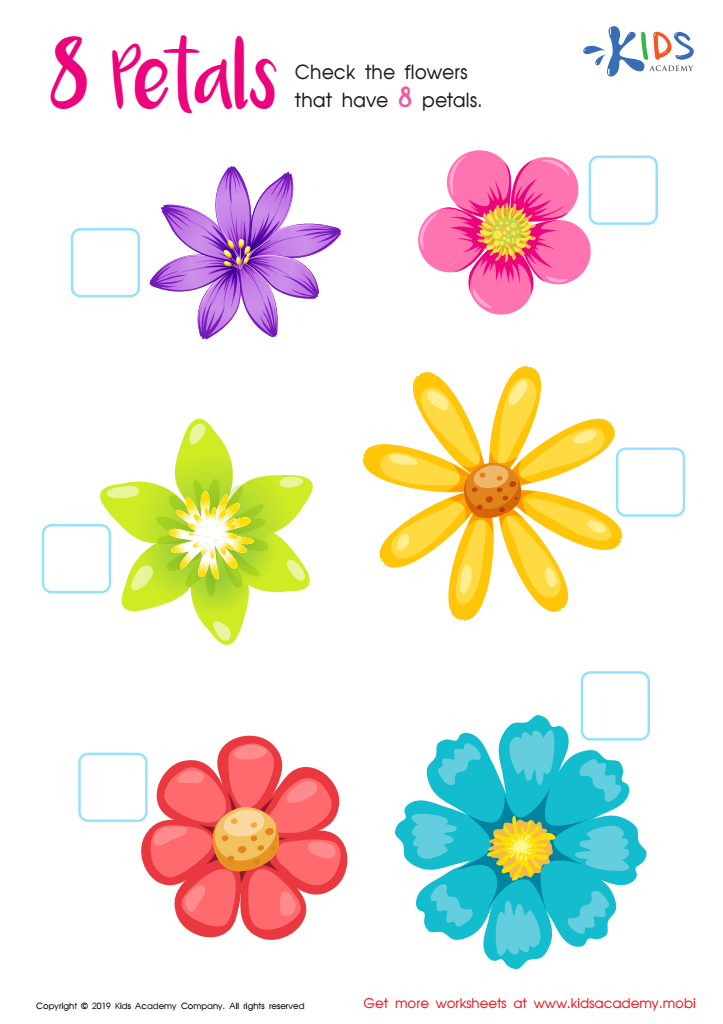
8 Petals Worksheet
Help your children master counting with this fun worksheet. It's filled with colorful flowers and they must count the petals and check the flowers with 8 petals. It's a great way to practice their counting skills and have some fun too!
 Assign to My Students
8 Petals Worksheet
Worksheet


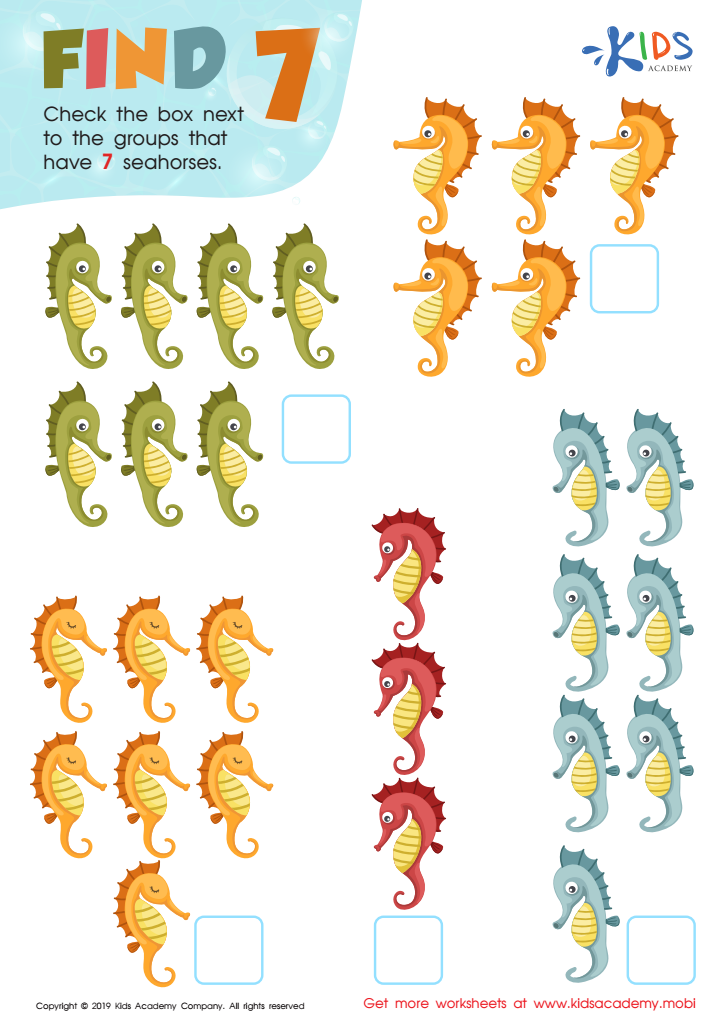
Find 7 Worksheet
Counting seahorses in groups of 7 is fun and educational with this free worksheet. Kids practice counting, one-to-one number representation, and check off the correct answers, all while admiring the brightly colored seahorses. A great way to make learning enjoyable!
Find 7 Worksheet
Worksheet
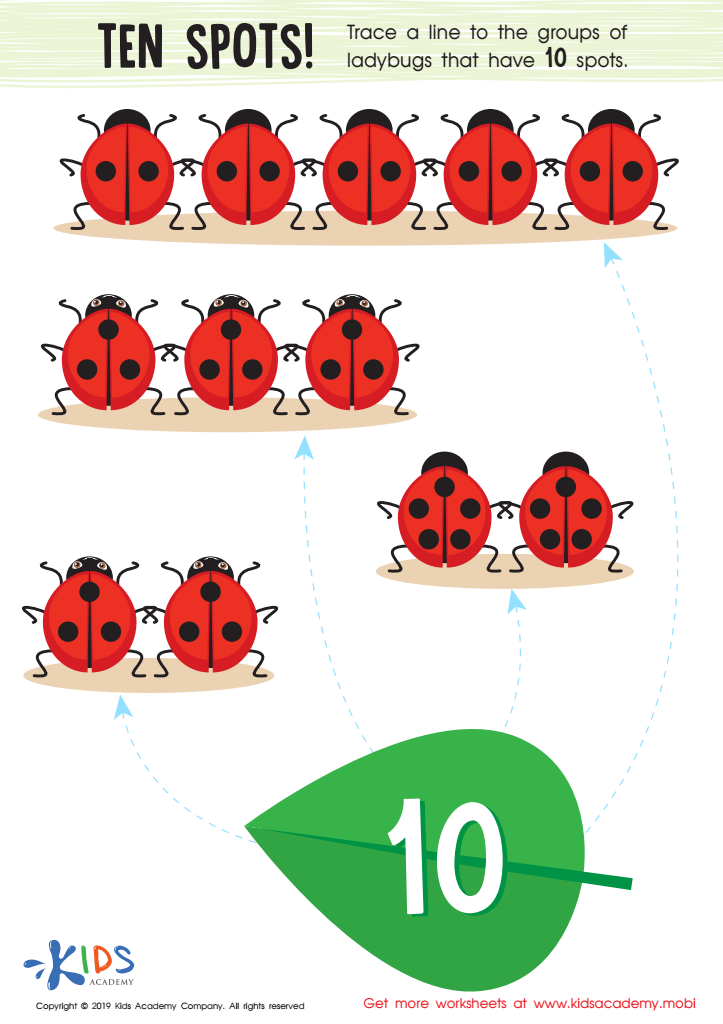
Ten Spots Worksheet
Kids love ladybugs! Ask them to tell you what stands out most--the spots. Show them a picture and help them count the spots. Trace a line to the group with 10 spots for a fun counting lesson.
Ten Spots Worksheet
Worksheet
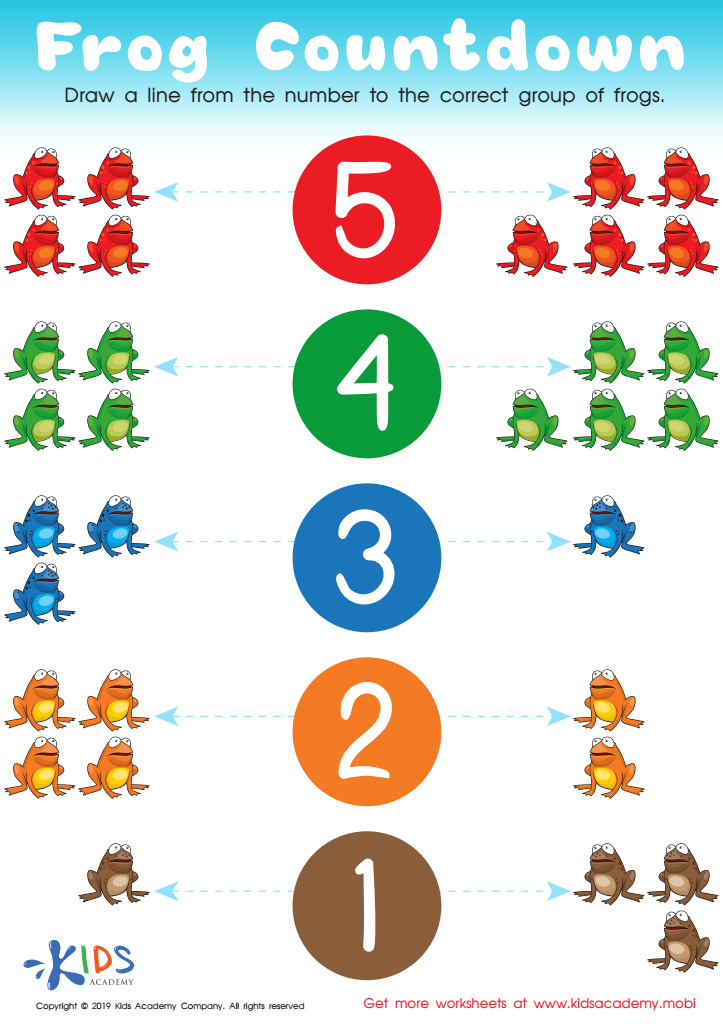
Frog Countdown Worksheet
Make learning fun for kids with traceable printouts! This exercise has kids counting frogs and drawing a line to match the number. Expand their knowledge with activities like this, beyond the basics they learn in school. Help them explore new ways of learning and make it enjoyable.
Frog Countdown Worksheet
Worksheet
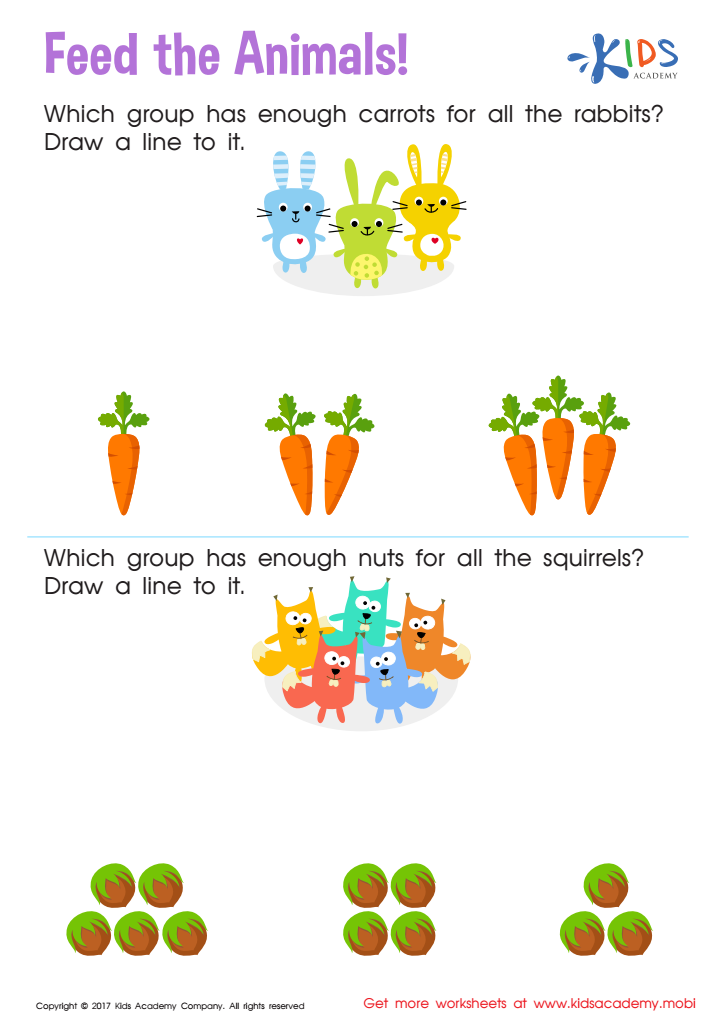
Count and Match: Feed the Animals Worksheet
Learning and growing involves more than just numbers, phonics and comparison. This Feed the Animals worksheet helps kids to exercise their reasoning skills. They must work out how many rabbits and carrots there are, and then repeat the process for the squirrels. This encourages problem solving and counting skills.
Count and Match: Feed the Animals Worksheet
Worksheet
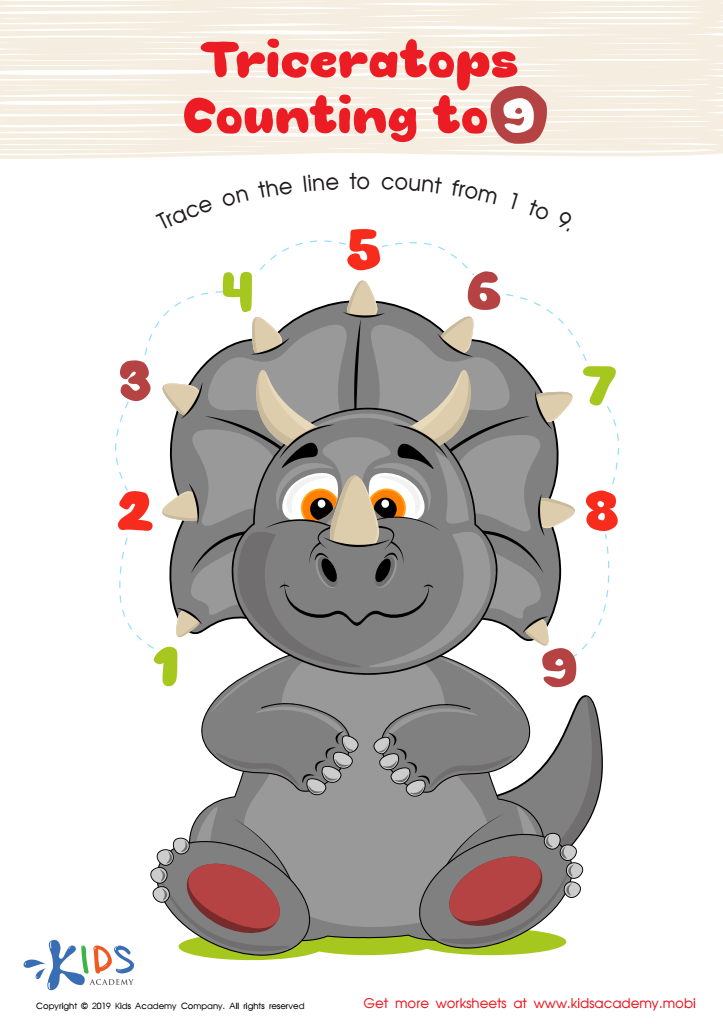
Triceratops Counting to 9 Worksheet
This little triceratops is here to help kids learn to count! Dinosaurs lived long before us and we've never seen one alive, but through research, we know a lot about them. Let the dinosaur help trace on the line from 1 to 9 for a fun counting practice.
Triceratops Counting to 9 Worksheet
Worksheet
Join Kids Academy for Free
Who is primarily going to use this learning content?


%20(1).jpg)





Fine motor skills are essential for children as they develop a range of abilities that support their academic and everyday tasks. In kindergarten, counting often involves various activities that require fine motor coordination, such as handling counting tokens, using manipulatives, or writing numbers. When children improve their fine motor skills, they enhance their ability to grasp, manipulate, and control objects, which in turn boosts their confidence in numbers and counting.
Moreover, fine motor skills lay the foundation for later academic success. As children learn to count, they also engage in spatial awareness, problem-solving, and critical thinking—all vital components of early mathematics. Engaging in fine motor activities encourages focus and patience, qualities necessary for tackling more complex tasks in the future.
Teachers and parents play a critical role in fostering these skills through interactive play, crafting, or using educational games that require engagement of hands and fingers. By emphasizing fine motor skills alongside counting, they help create well-rounded learners who develop the physical coordination needed for writing and other academic activities.
In summary, emphasizing fine motor skills during counting activities benefits young learners, preparing them for success both in and out of the classroom. Parents and teachers should prioritize this holistic approach to early education.








