
Hand-eye Coordination Kindergarten Geometry Worksheets
3 filtered results
Difficulty Level
Grade
Age
-
From - To
Subject
Activity
Standards
Boost your child's learning with our Hand-eye Coordination Kindergarten Geometry Worksheets! Designed to enhance fine motor skills and spatial awareness, these engaging worksheets provide a fun way for young learners to explore geometric shapes and improve hand-eye coordination simultaneously. Each activity incorporates colorful visuals and interactive tasks, making geometry an exciting subject for preschoolers. As children trace, identify, and manipulate shapes, they develop essential skills that support their overall academic growth. Perfect for classroom use or home practice, our worksheets offer a hands-on approach to learning geometry while fostering creativity and confidence in your little ones. Start their educational journey today!
Favorites
With answer key
Interactive
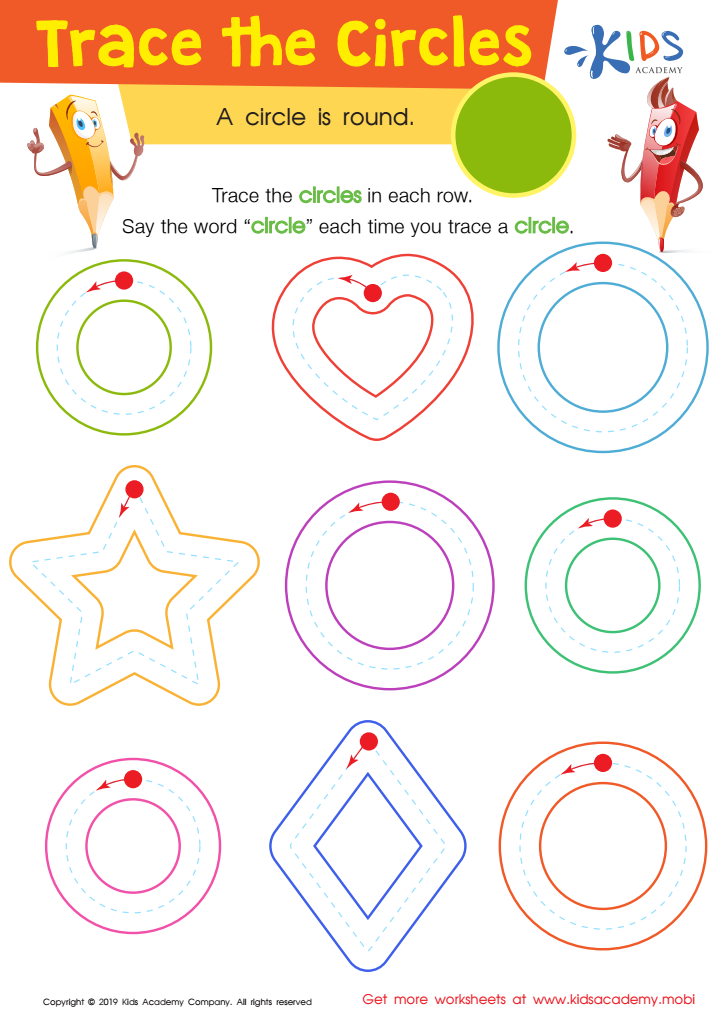
Trace The Circles Worksheet
Preschoolers and kindergarteners love learning shapes! This worksheet provides practice in naming and tracing circles. Students say "circle" each time they trace one. It's a fun way to help kids learn math vocabulary and develop fine motor skills. Enjoy this printable and get ready to master circles!
 Assign to My Students
Trace The Circles Worksheet
Worksheet







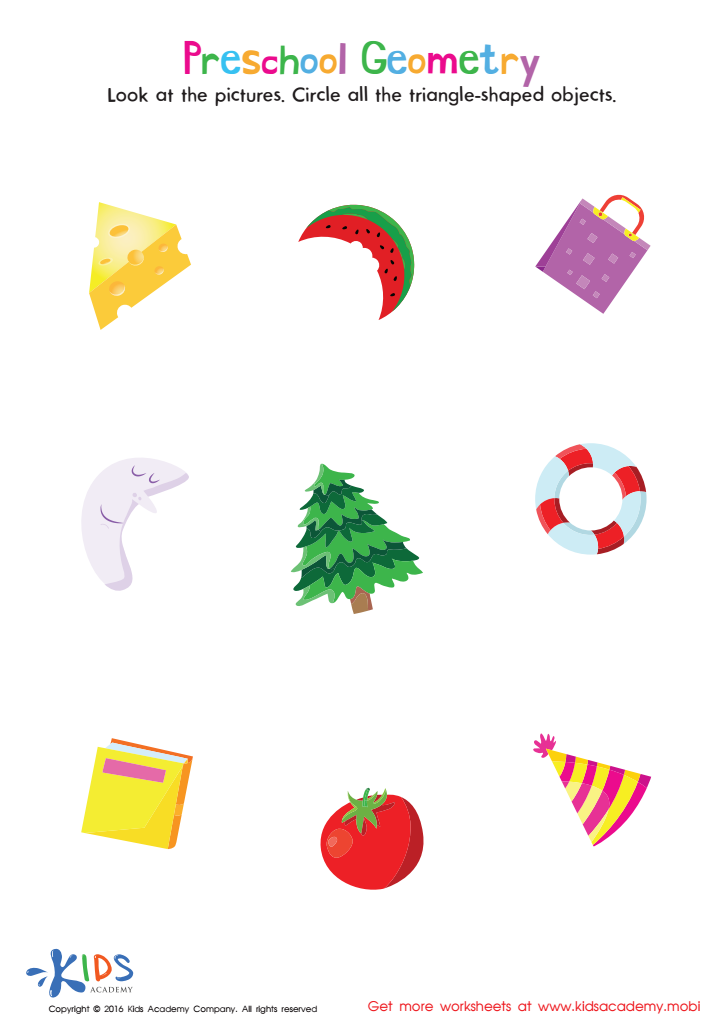
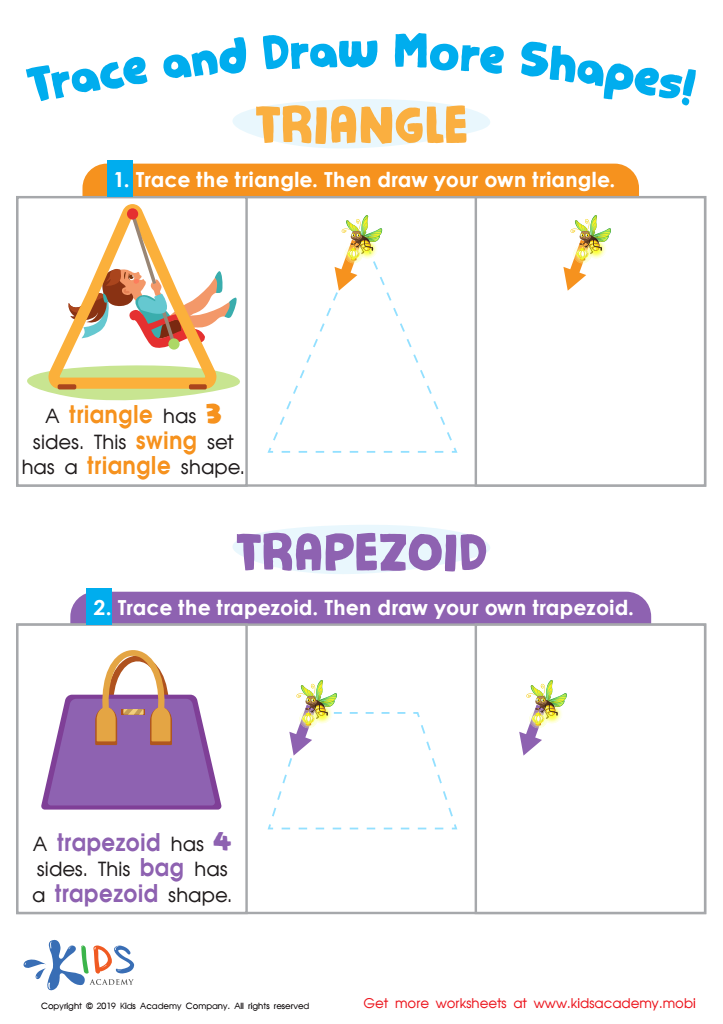
Trace and Draw More Shapes Worksheet
Help your kids with more learning! Look at images in the worksheet, read facts about the shapes, then help your kids trace and draw. This reinforces that learning is never done; use this simple worksheet to help your kids with school homework and more!
Trace and Draw More Shapes Worksheet
Worksheet
Join Kids Academy for Free
Who is primarily going to use this learning content?








Hand-eye coordination is a foundational skill that plays a critical role in a child’s early development, particularly in the realm of geometry. In kindergarten, children are beginning to understand shapes, spatial relationships, and basic geometric principles. Strong hand-eye coordination enhances their ability to interact with physical objects, making it easier to manipulate shapes, complete puzzles, and engage in drawing and crafting activities.
When parents and teachers focus on developing this skill, they equip children with the necessary tools to grasp geometry concepts more effectively. Good hand-eye coordination aids in visual perception, helping children recognize and differentiate between various shapes and sizes, which are crucial for problem-solving in mathematics later in life. Moreover, engaging activities like building blocks, tracing shapes, and interactive games not only boost physical dexterity but also foster cognitive development and critical thinking.
By caring about hand-eye coordination within the context of geometry, parents and teachers can create an environment that encourages exploration and learning. This engagement builds a solid foundation for future academic success and instills a love for learning, helping children become confident and competent learners in their educational journey.








