Understanding quantity Kindergarten Numbers Worksheets
4 filtered results
-
From - To
Helping young learners grasp the concept of quantity is essential for early math development. Our 'Understanding Quantity Kindergarten Numbers Worksheets' provide engaging and interactive activities tailored for young minds. These worksheets feature colorful visuals and fun exercises that allow children to compare and count quantities effectively. With a focus on visual learning, kids will enjoy identifying larger and smaller groups, fostering their foundational math skills. Perfect for both classroom and home use, these resources encourage hands-on learning and critical thinking. Whatever the setting, these worksheets lay the groundwork for counting, number recognition, and ultimately, a solid mathematical understanding in future studies.
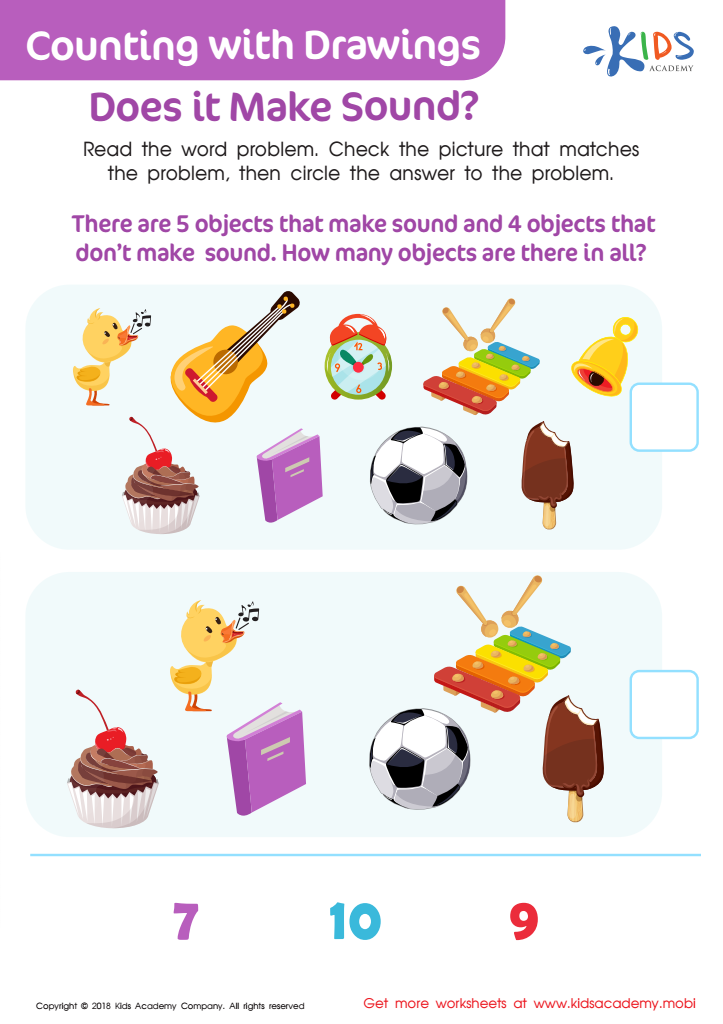
Counting With Drawings. Does It Make Sound? Worksheet
 Assign to My Students
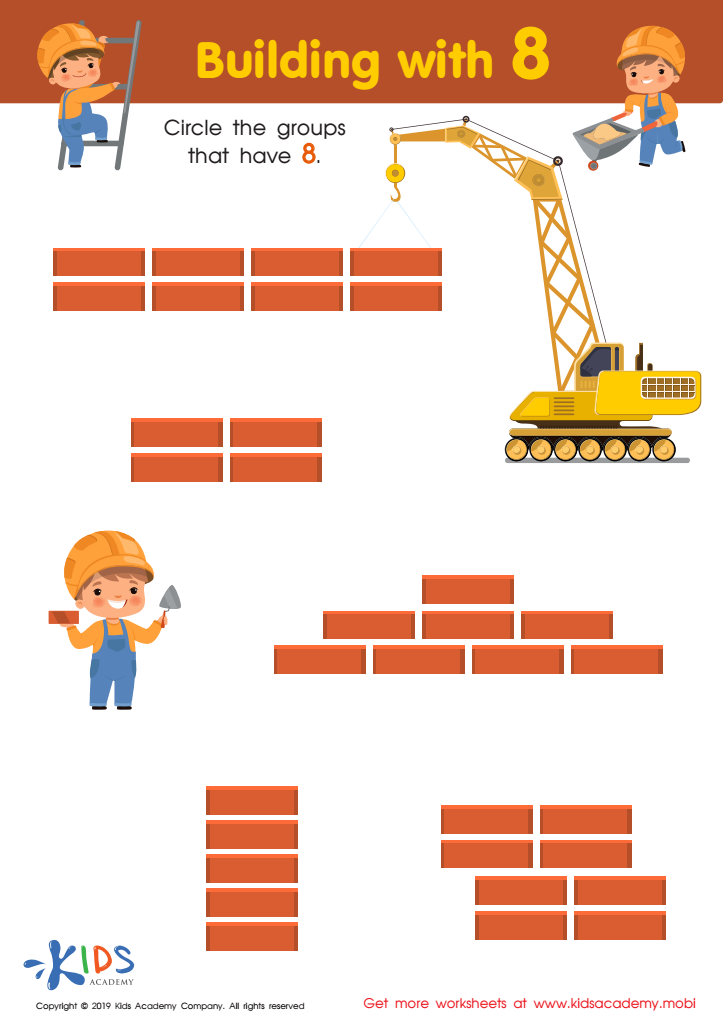
Building with 8 Worksheet
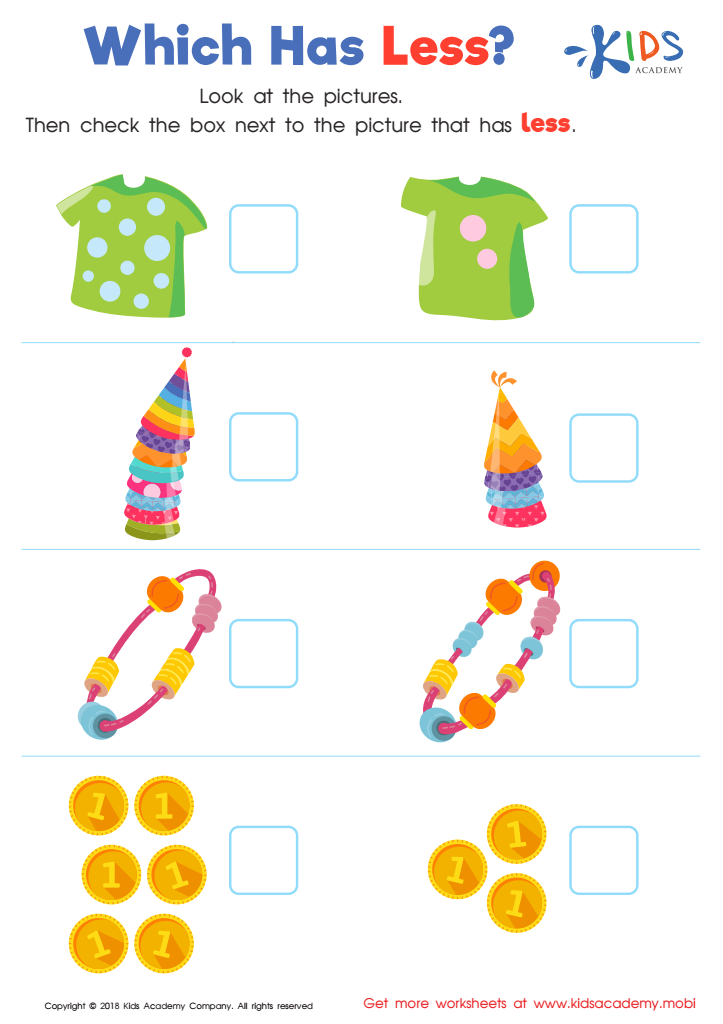
Which Has Less? Worksheet
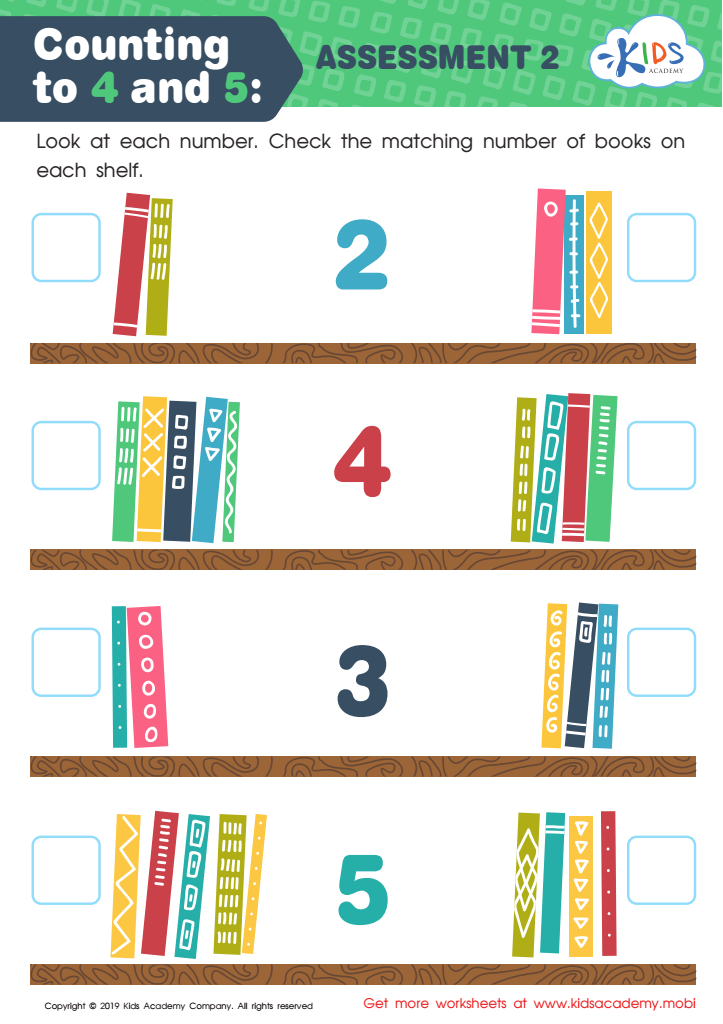
Counting to 4 and 5: Assessment 2 Worksheet








Understanding quantity and numbers is foundational for young learners in kindergarten. Parents and teachers should prioritize this skill because it forms the basis for all future math knowledge. When children grasp the concept of quantity, they develop critical thinking skills that are essential not just in mathematics, but across all subjects.
Mastering numbers help children learn to count, recognize patterns, and make comparisons, leading to a strong understanding of mathematical relationships. This foundation is crucial as it impacts their ability to solve problems and develop reasoning skills as they progress through school.
Furthermore, learning about quantity promotes confidence and curiosity in children. When they understand numerical concepts, they become more engaged in learning and exploring the world around them. It leads to a greater willingness to participate in discussions about math, encouraging social and cognitive development.
Additionally, early exposure to quantity understanding enables children to relate to real-life situations, such as sharing, measuring, and budgeting, which are essential skills for life. By fostering an environment that emphasizes the importance of numbers from a young age, parents and teachers contribute to children's overall academic success and personal growth, setting a positive trajectory for their education.








