
Basic Counting Kindergarten Math Worksheets
3 filtered results
Difficulty Level
Grade
Age
-
From - To
Subject
Activity
Standards
Discover our engaging "Basic Counting Kindergarten Math Worksheets" designed to make learning fun and effective for your little ones. Tailored for preschool and kindergarten students, these printable worksheets cover fundamental counting skills, offering a variety of activities such as number tracing, counting objects, and number matching. Each colorful and interactive worksheet helps reinforce early numerical understanding, promoting confidence and enthusiasm in young learners. Utilize our resources at home or in the classroom to build a strong mathematical foundation essential for future success. Explore endless opportunities for your child's growth with our expertly crafted counting worksheets!
Favorites
With answer key
Interactive
 Assign to My Students
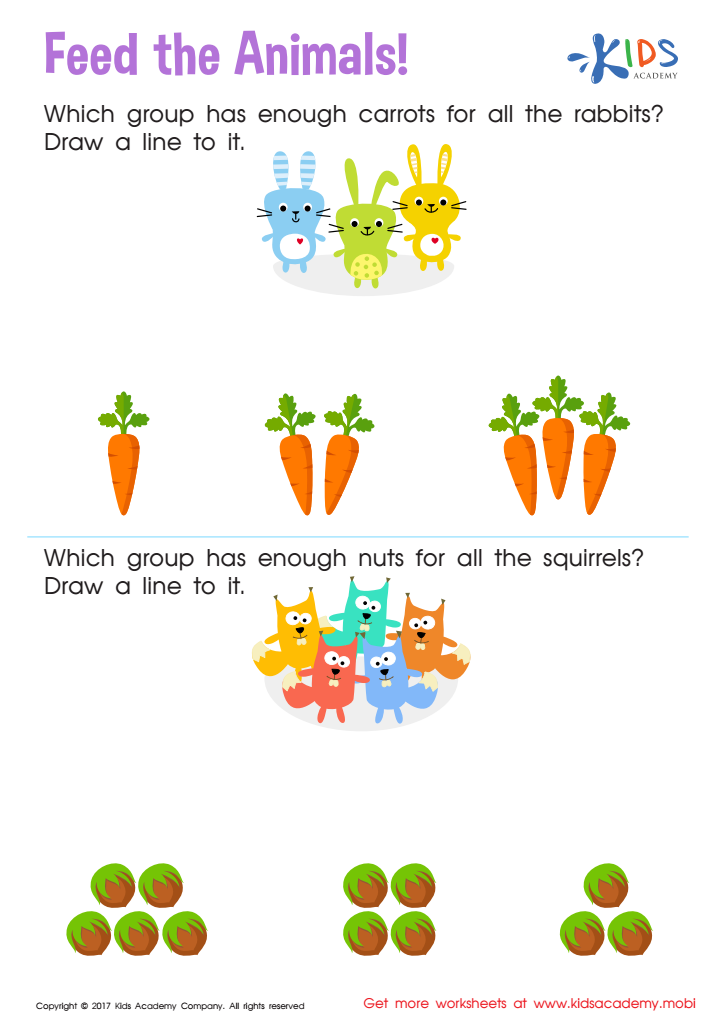
Count and Match: Feed the Animals Worksheet
Learning and growing involves more than just numbers, phonics and comparison. This Feed the Animals worksheet helps kids to exercise their reasoning skills. They must work out how many rabbits and carrots there are, and then repeat the process for the squirrels. This encourages problem solving and counting skills.
Count and Match: Feed the Animals Worksheet
Worksheet
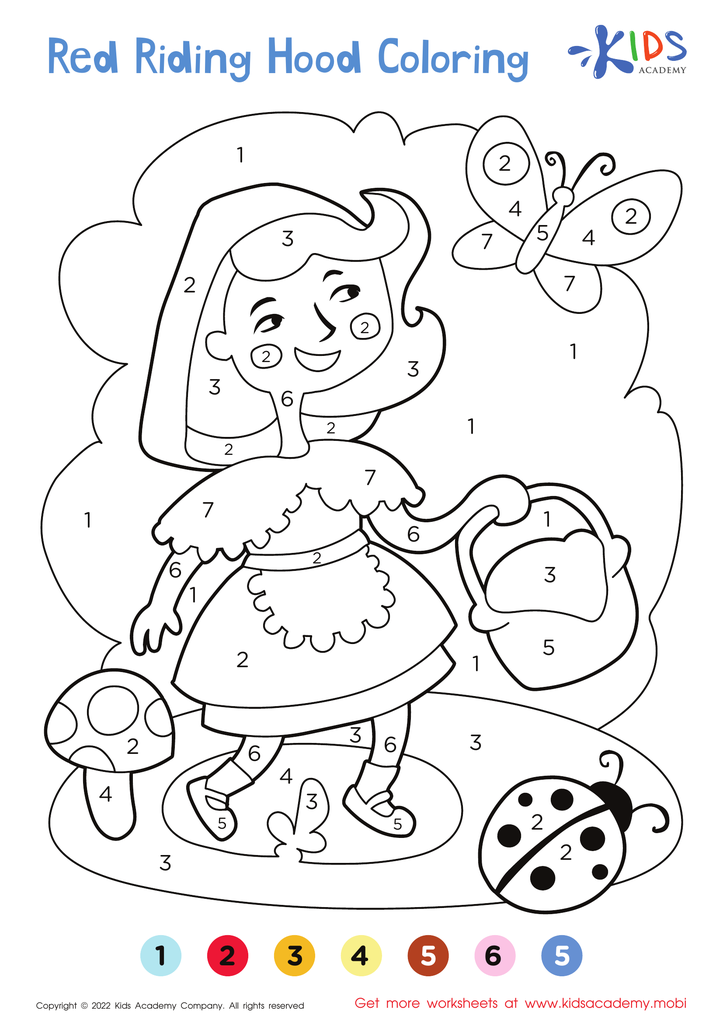
Little Red Riding Hood – Coloring by Numbers
Download this free PDF page and enjoy coloring Little Red Riding Hood. It's an easy and fun activity that everyone can do - just follow the numbers! Get your colored pencils ready and have a blast. 80 words.
Little Red Riding Hood – Coloring by Numbers
Worksheet
Join Kids Academy for Free
Who is primarily going to use this learning content?







Basic Counting in Kindergarten is foundational for a child's future success in mathematics and beyond. Firstly, it establishes the groundwork for all number-related concepts, helping children understand quantities, sequencing, and the concept of more or less. Integrating counting skills early on enhances cognitive development by fostering critical thinking and problem-solving abilities.
Secondly, mastering basic counting builds confidence. When children can count proficiently, they feel more courageous tackling more complex math concepts. This confidence spills over into other subject areas and social interactions, cultivating a well-rounded personality and a positive learning attitude.
In addition, basic counting bolsters language development. When children count objects out loud, they practice number words and sentence structures, enhancing their verbal skills and comprehension. Teachers and parents imbibing these skills promote enriched vocabulary and communication skills.
Recognizing and valuing the importance of basic counting encourages sustained parental and teacher engagement. This involvement fosters a more nurturing and conducive learning environment where children feel supported and are more likely to develop a lifelong love of learning.
Intentionally focusing on counting skills also aids early detection of learning challenges, allowing timely intervention and support. Thus, integrating and prioritizing basic counting in kindergarten is pivotal to a child’s holistic educational foundation.








