Problem-Solving Skills Kindergarten Math Worksheets - Page 4
74 filtered results
-
From - To
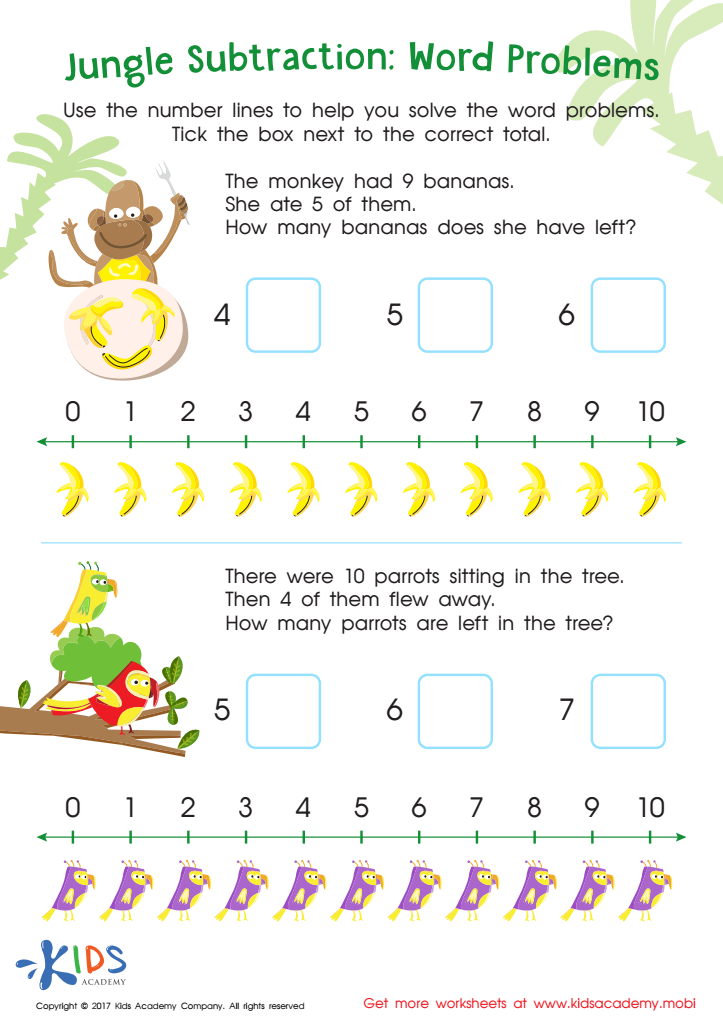
Jungle Subtraction Word Problems Substraction Worksheet
 Assign to My Students
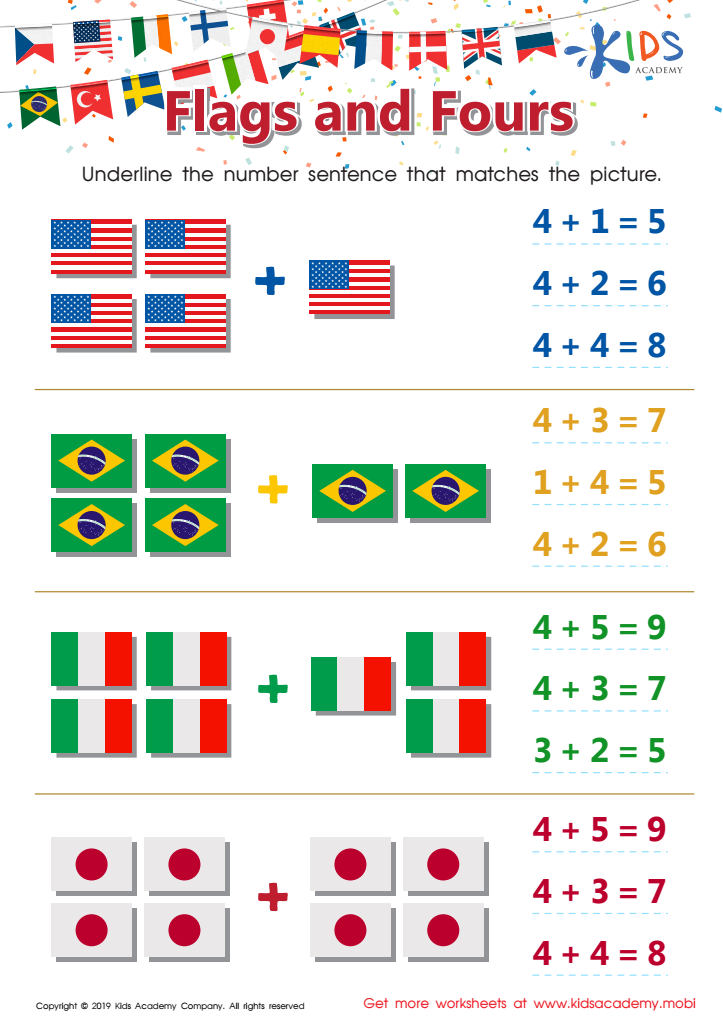
Flags and Fours Worksheet







Problem-solving skills in kindergarten math are crucial as they lay the foundation for a child's future academic success and practical life. Fostering problem-solving abilities helps children develop critical thinking, enabling them to approach challenges logically and efficiently. Encouraging these skills in early grades ensures that children learn to analyze situations, explore various solutions, and choose the most effective one, which is a vital life skill extending beyond math.
For parents and teachers, focusing on problem-solving in kindergarten math not only strengthens a child's understanding of mathematical concepts but also promotes confidence. When young learners see themselves solving problems independently or through collaboration, they become more enthusiastic and open to tackling new challenges, cultivating a growth mindset. This positive attitude is crucial for persistence, as it teaches children that efforts and strategies can improve their abilities, creating a solid groundwork for lifelong learning.
Additionally, integrating problem-solving in early math education helps children improve in other areas, such as reading comprehension and social skills. Engaging in group problem-solving activities allows children to communicate ideas, listen to peers, and accept different viewpoints. Therefore, emphasizing problem-solving skills in kindergarten is a powerful way to nurture well-rounded individuals ready for both academic success and everyday life.








