Spatial reasoning Kindergarten Math Worksheets
7 filtered results
-
From - To
Discover our engaging Kindergarten Spatial Reasoning Math Worksheets, designed to enhance your child's early learning. These worksheets foster important cognitive skills by guiding young learners through activities on shape recognition, pattern understanding, and spatial awareness. Each colorful worksheet is crafted to make learning fun and interactive, offering a variety of exercises that challenge and develop critical thinking. Ideal for classroom or home use, our spatial reasoning worksheets help build a strong foundation in math, setting your child up for future success. Boost your kindergartner’s confidence in math with Kids Academy’s expert-designed resources today!
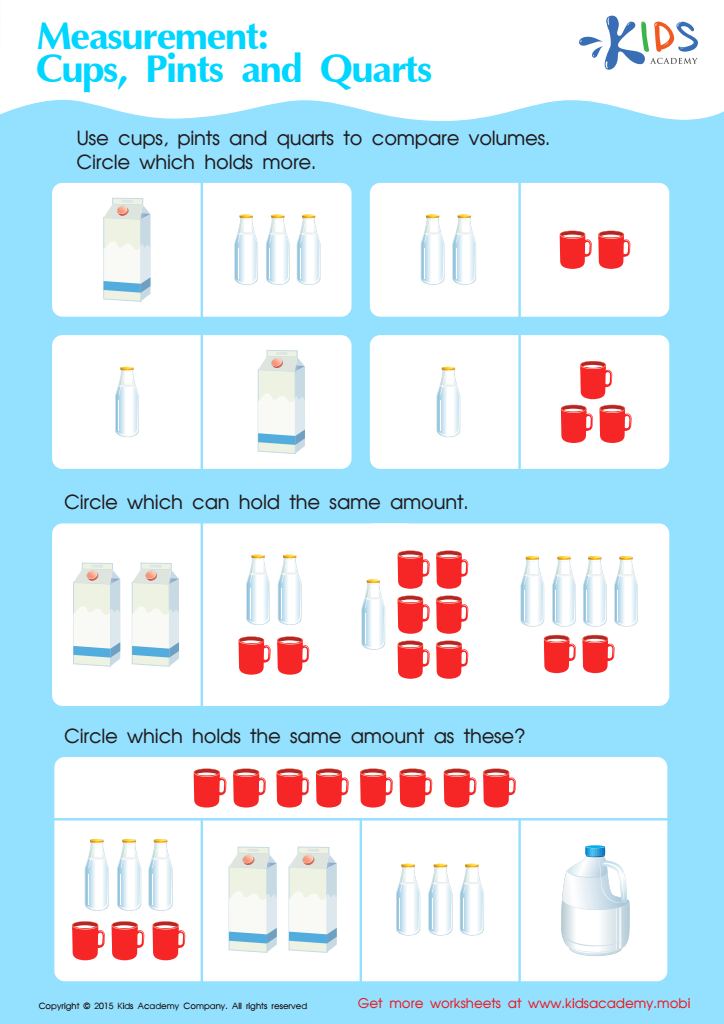
Measurement: Compare Volumes Worksheet
 Assign to My Students
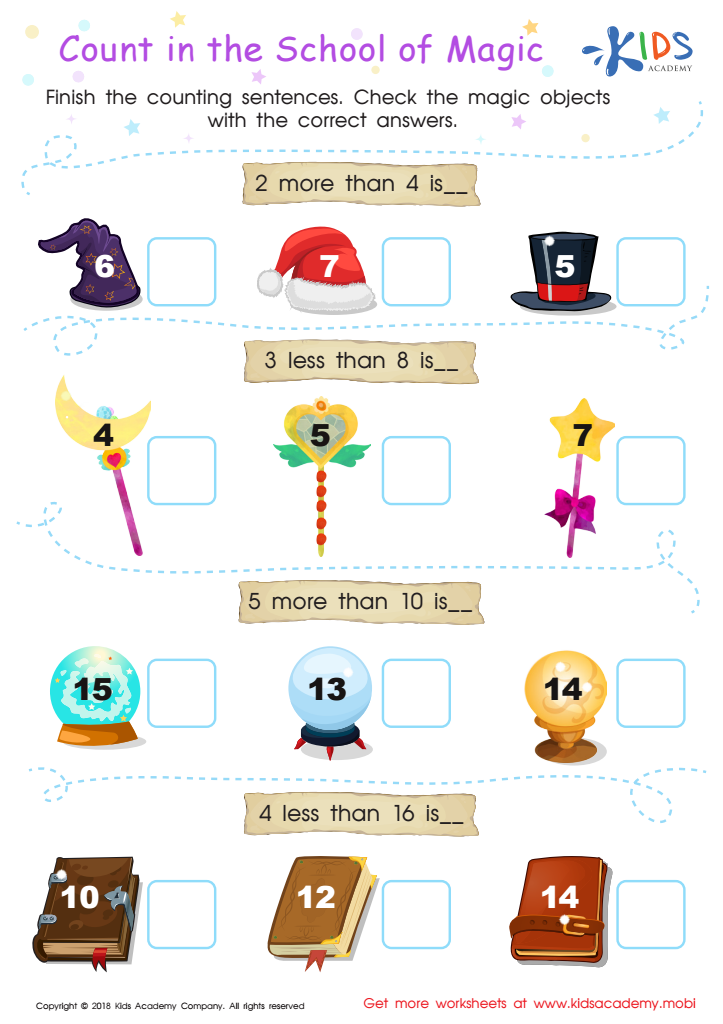
Count in the School of Magic Worksheet
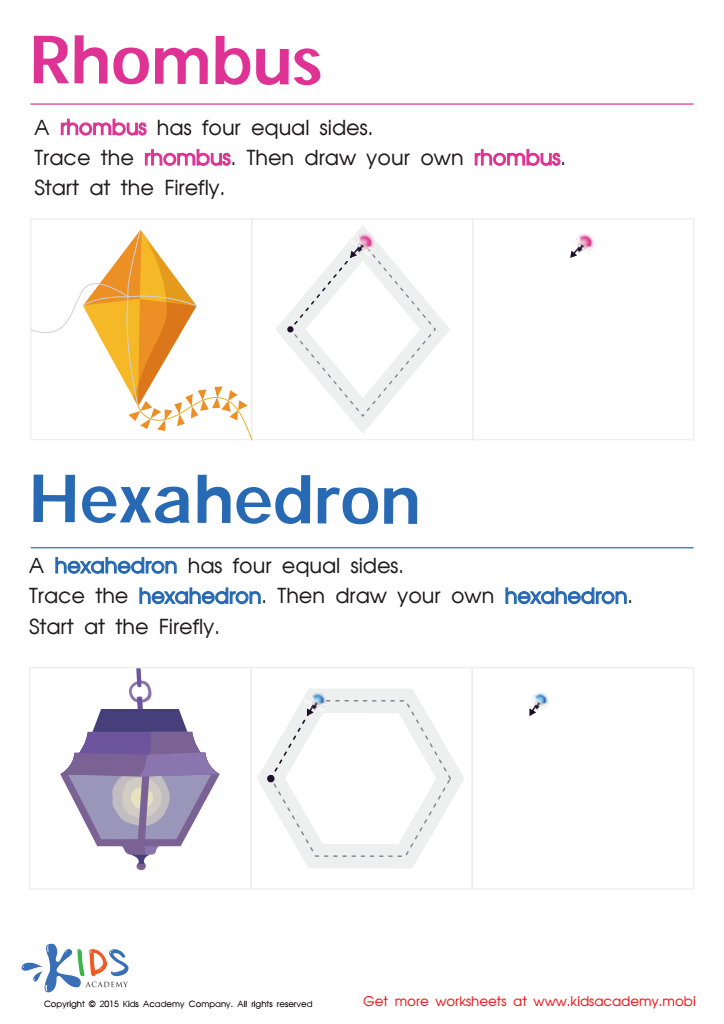
Draw a Rhombus And a Hexahedron Printable
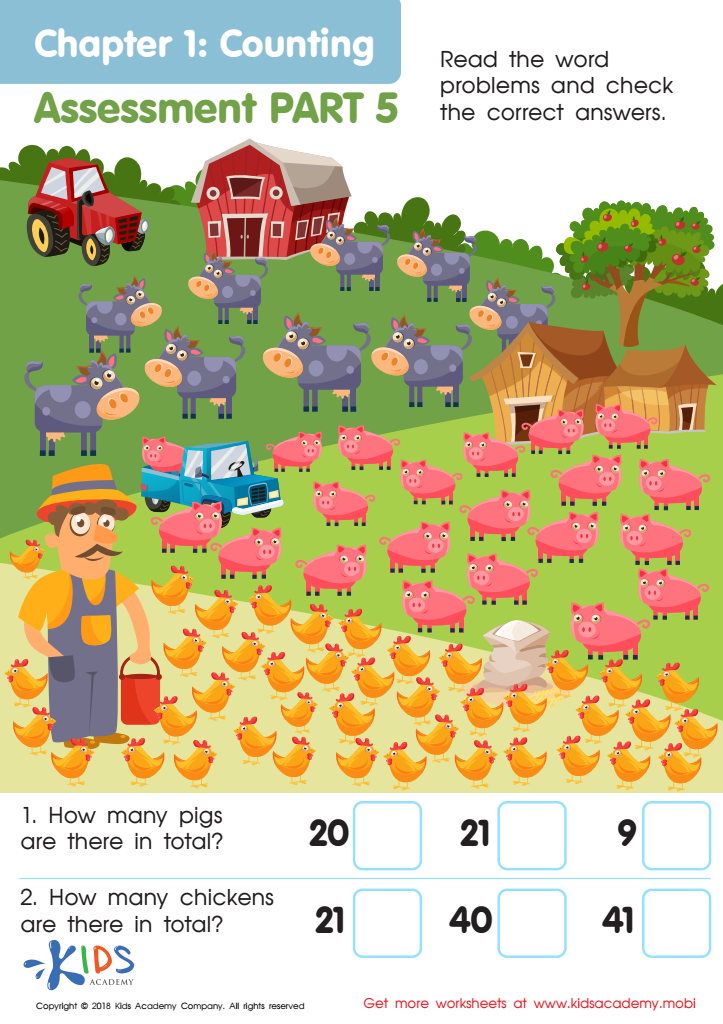
Counting: Assessment 5 Worksheet
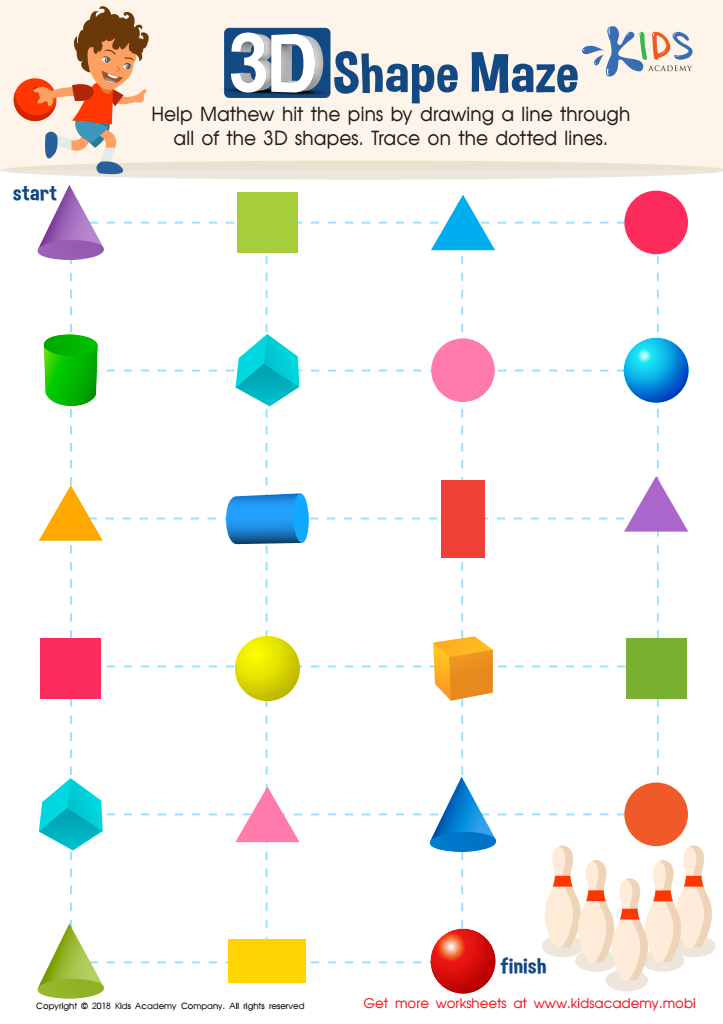
Shapes Maze Geometry Worksheet
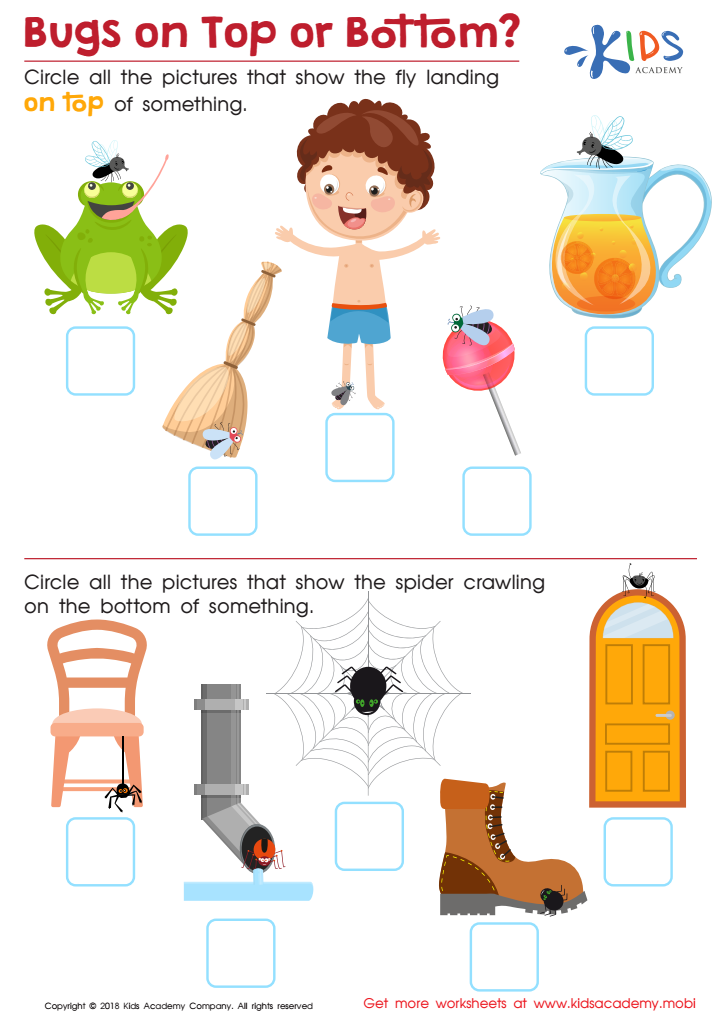
Bugs on Top or Bottom? Worksheet
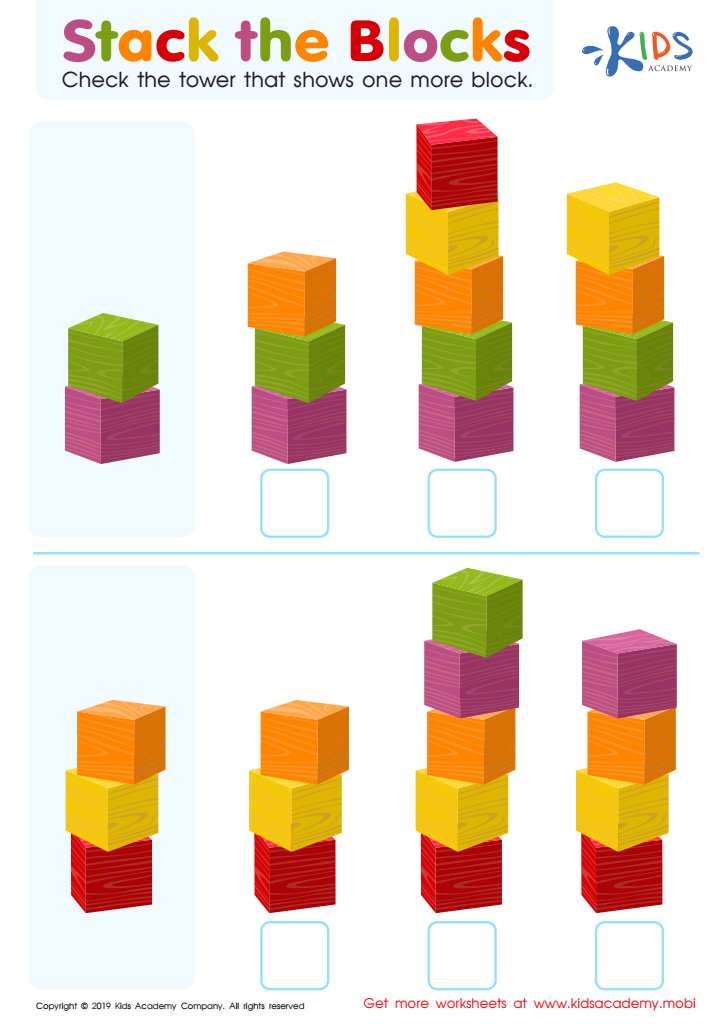
Stack the Blocks Worksheet






Spatial reasoning is the ability to understand and manipulate objects and shapes in one's mind. In the context of Kindergarten Math, developing strong spatial reasoning skills is crucial for young children's overall cognitive development and can significantly influence their future academic success.
Firstly, spatial reasoning is foundational for understanding mathematical concepts. Kindergarteners who are adept in spatial skills can easily grasp concepts of shapes, sizes, patterns, and spatial relationships, which are integral to their early math curriculum. This forms the groundwork for more complex mathematical thinking required in later grades, such as geometry, algebra, and calculus.
Secondly, spatial reasoning is also linked to problem-solving skills. When children play with blocks, solve puzzles, or draw, they are not just having fun; they are enhancing their ability to think critically, visualize scenarios, and approach problems creatively. These skills are highly transferable and benefit children in various subjects beyond math, such as science and engineering.
Parents and teachers should care deeply about fostering spatial reasoning in kindergarten because children with well-developed spatial skills are more likely to excel in school. Through guided play, intentional teaching, and providing diverse spatially engaging activities, adults can support children’s academic and personal growth, setting a solid foundation for lifelong learning and success.








