Understanding currency Kindergarten Math Worksheets
3 filtered results
-
From - To
Discover our engaging "Understanding Currency" kindergarten math worksheets designed to introduce young learners to the basics of money. With colorful illustrations and interactive activities, these worksheets help children recognize different coins and their values. Students will practice counting, matching, and sorting currency in a fun and educational way, enabling them to grasp essential math skills and real-life concepts of money management. Ideal for enhancing classroom learning or at-home practice, our worksheets provide a fantastic foundation for future financial literacy. Encourage your child's curiosity and confidence in math with these valuable resources tailored for early learners. Printable and ready to use!
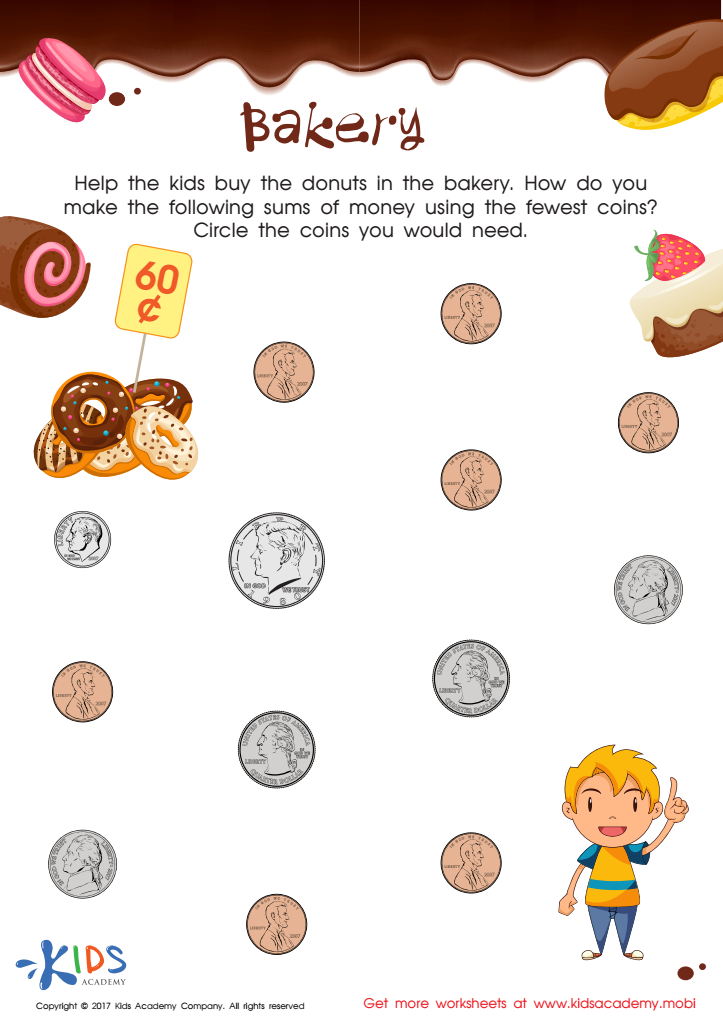
Counting Coins Worksheet
 Assign to My Students
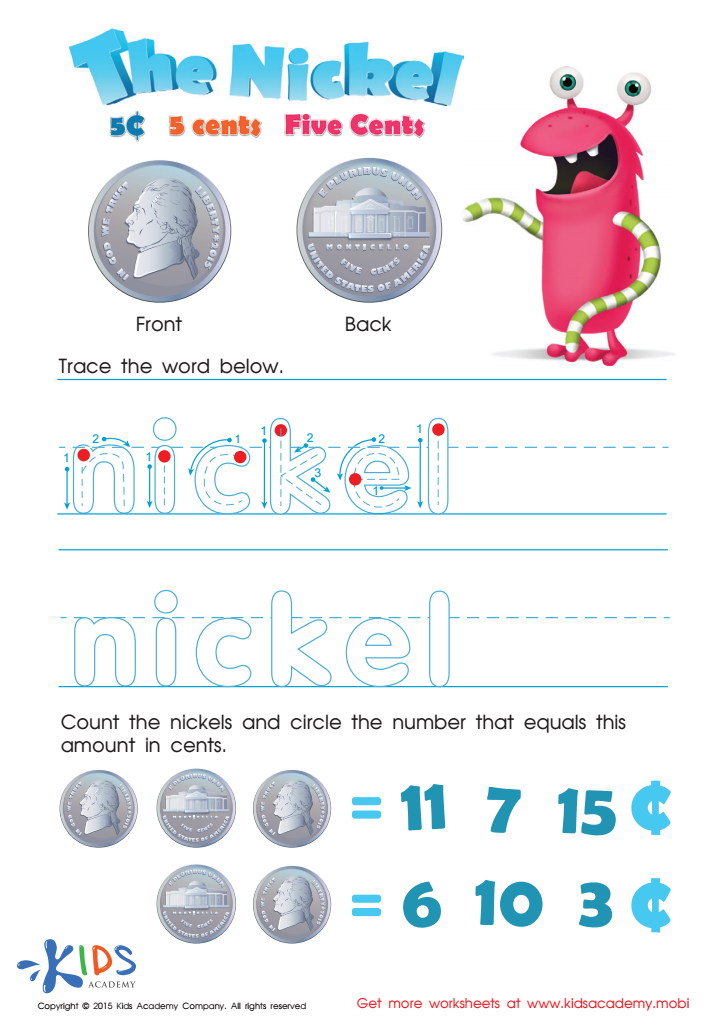
Five Cents or the Nickel Money Worksheet
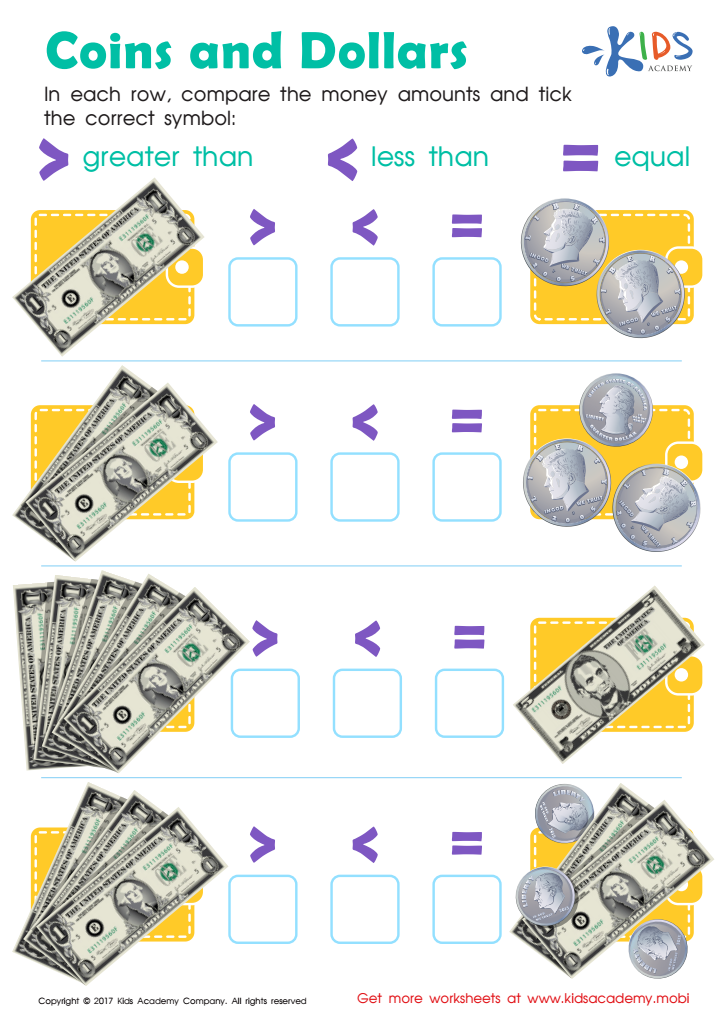
Money: Coins Dollars Printable







Understanding currency in kindergarten math is crucial for both parents and teachers because it lays the foundation for essential life skills. At this stage, children start to grasp the concept of money—recognizing different denominations, understanding their value, and learning how to count and use them. By integrating currency into math lessons, teachers can foster critical thinking, problem-solving, and real-world applications.
For parents, helping children understand currency cultivates financial literacy, a skill that is increasingly important in today's economy. Learning about money management at an early age can instill responsible spending habits and the value of saving.
In the classroom, math activities involving currency can enhance engagement and motivation. Hands-on experiences, such as using play money for simple transactions, allow children to practice counting and develop a sense of number relationships in an enjoyable context.
Furthermore, discussing currency helps promote social skills as children collaborate during group activities, explaining their thinking and building communication skills. Understanding currency not only makes math concepts more relatable but also prepares children for future financial challenges, making it a vital area of focus for educators and caregivers alike. By supporting this early learning, adults invest in the long-term success of their children.








