Matching skills Kindergarten Matching Worksheets
4 filtered results
-
From - To
Explore our engaging Kindergarten Matching Worksheets designed to enhance your child's matching skills! These interactive resources offer fun and educational activities that encourage young learners to identify and pair sets of images, letters, numbers, and shapes. Our worksheets support cognitive development by fostering observational skills and attention to detail. Perfect for classroom or home learning, they promote essential early math skills while keeping children entertained. With colorful illustrations and varied challenges, these worksheets cater to diverse learning styles and help build confidence in preschoolers. Get ready to inspire little minds through captivating matching games and ignite their love for learning!
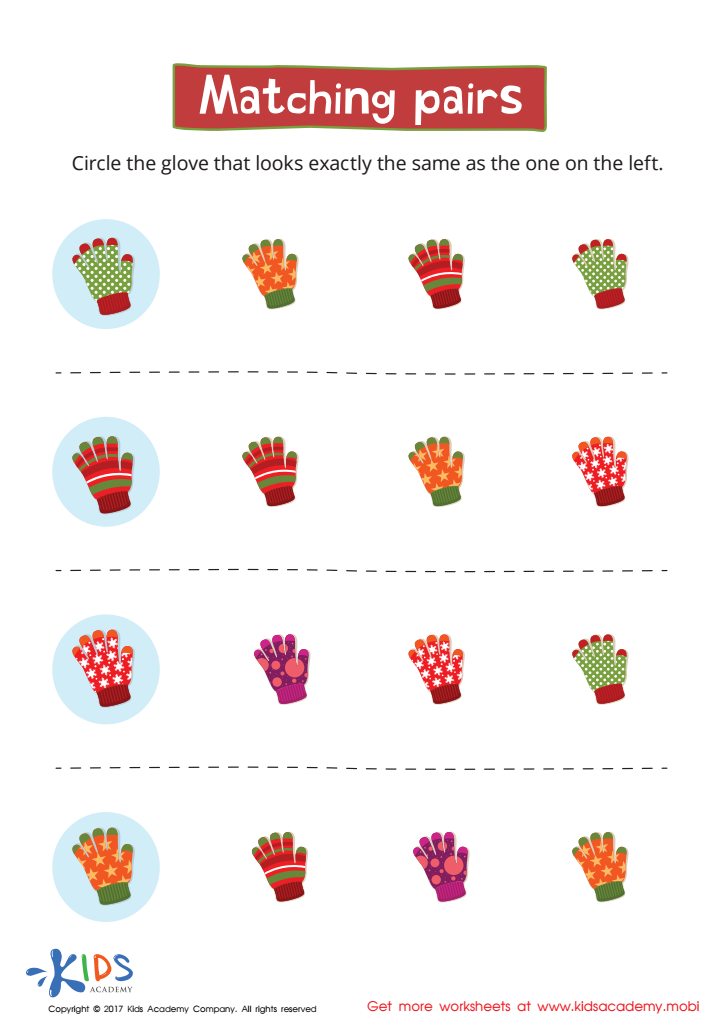
Matching: Matching Pairs Worksheet
 Assign to My Students
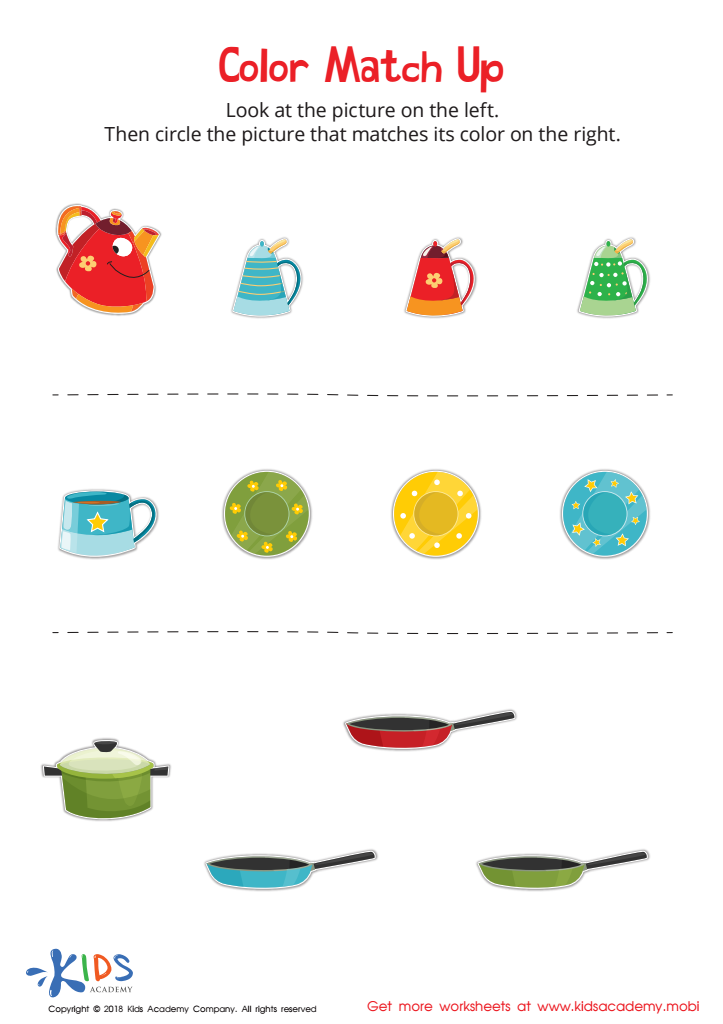
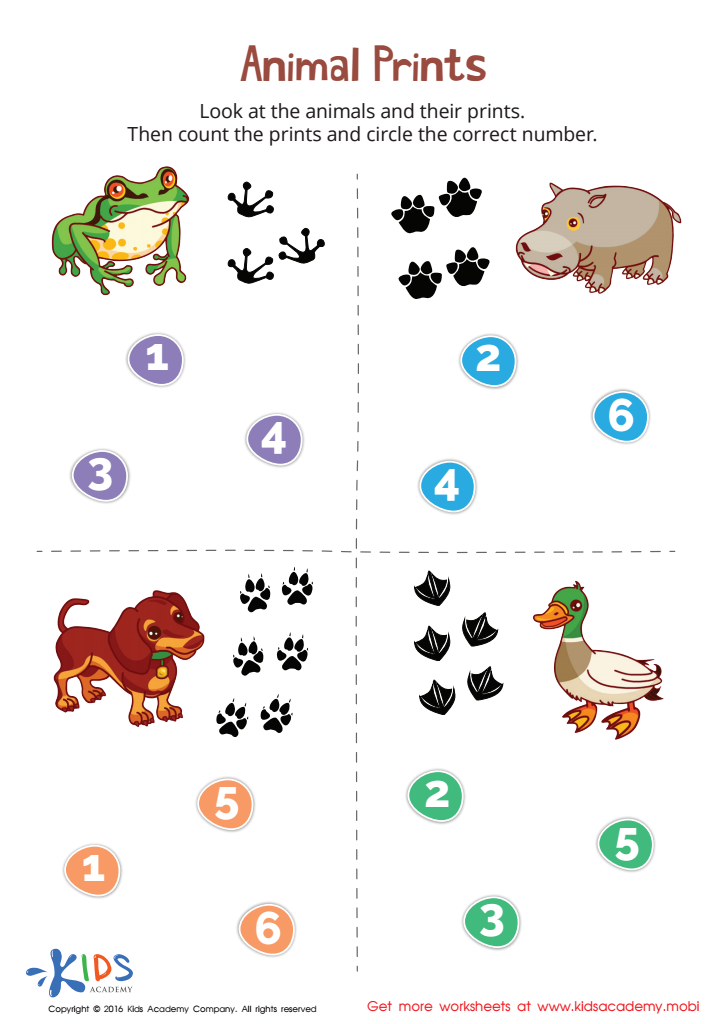
Animal Prints Match-Up Worksheet
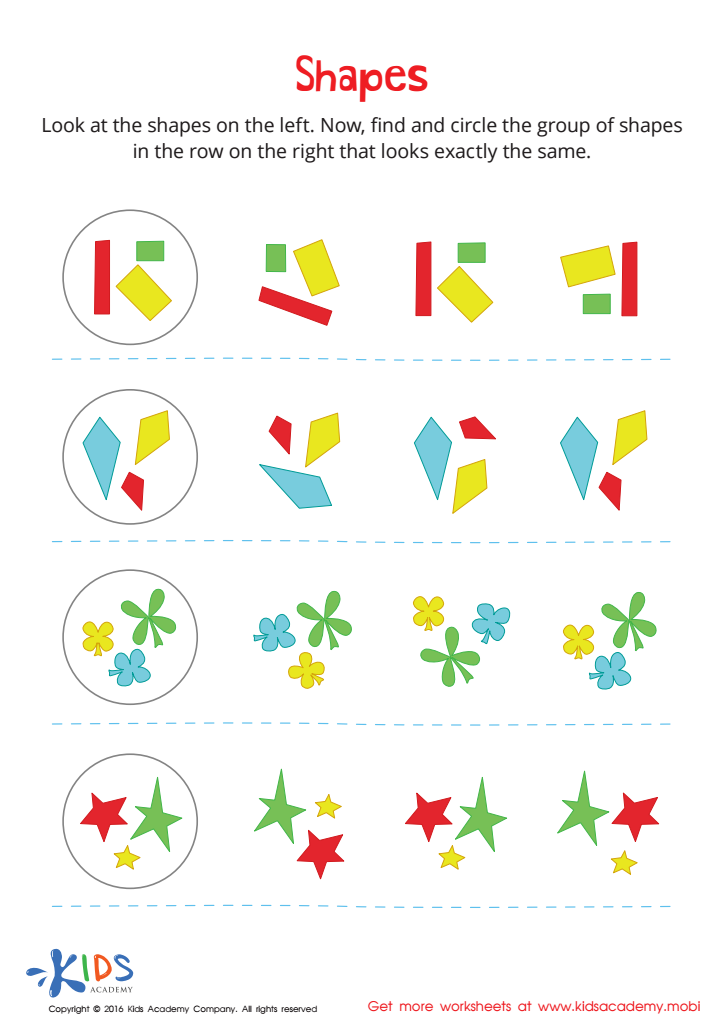
Shapes Worksheet








Matching skills in Kindergarten are crucial for early childhood development as they lay the foundation for critical thinking and cognitive skills. When children engage in match-related activities, they learn to identify similarities and differences, which enhances their observational skills. This ability to categorize and sort objects underpins mathematical concepts like counting and problem-solving.
Moreover, matching games can improve memory and attention spans. Children often use these skills in various subjects, making them contextually relevant in learning. As they recognize patterns and make connections, they enhance their reasoning capabilities, preparing them for more complex academic tasks in primary education.
Socially, matching activities foster collaboration among peers. Collaborating to find matching pairs can develop communication skills and encourage teamwork, both essential for social-emotional development.
For parents and teachers, prioritizing matching activities offers an opportunity to promote holistic learning while making it engaging and enjoyable. These skills not only aid academic success but also build confidence in young learners, making them excited about exploration and discovery in the classroom and beyond. Encouraging matching skills lays a solid foundation for lifelong learning habits, thus becoming a crucial part of early childhood education.








