Comparing object weights Kindergarten Measurement Worksheets
3 filtered results
-
From - To
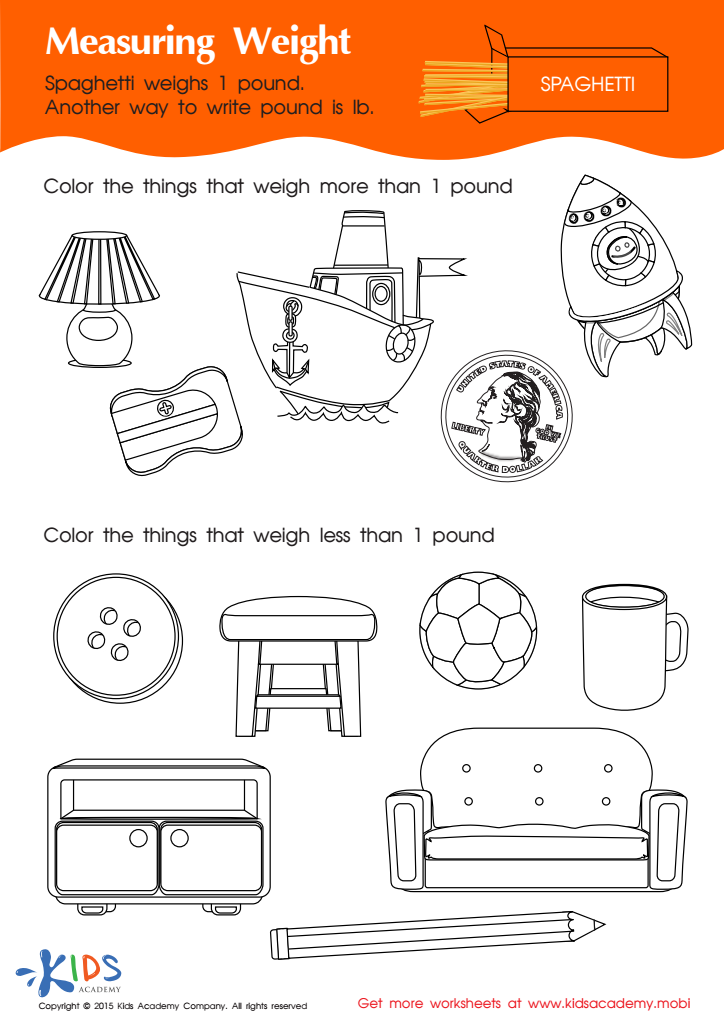
Enhance your Kindergarteners' learning with our engaging "Comparing Object Weights" Measurement Worksheets! Designed to introduce young learners to the concept of weight, these worksheets provide interactive activities that encourage hands-on exploration. Children will compare various objects, developing their critical thinking and observational skills. Each worksheet is thoughtfully crafted to make learning fun, with colorful illustrations and simple prompts that guide students in understanding heavier and lighter objects. Perfect for teachers and parents alike, these resources aim to build a strong mathematical foundation while promoting numeracy in early education. Download your worksheets today and watch your students thrive in their measurement skills!
 Assign to My Students
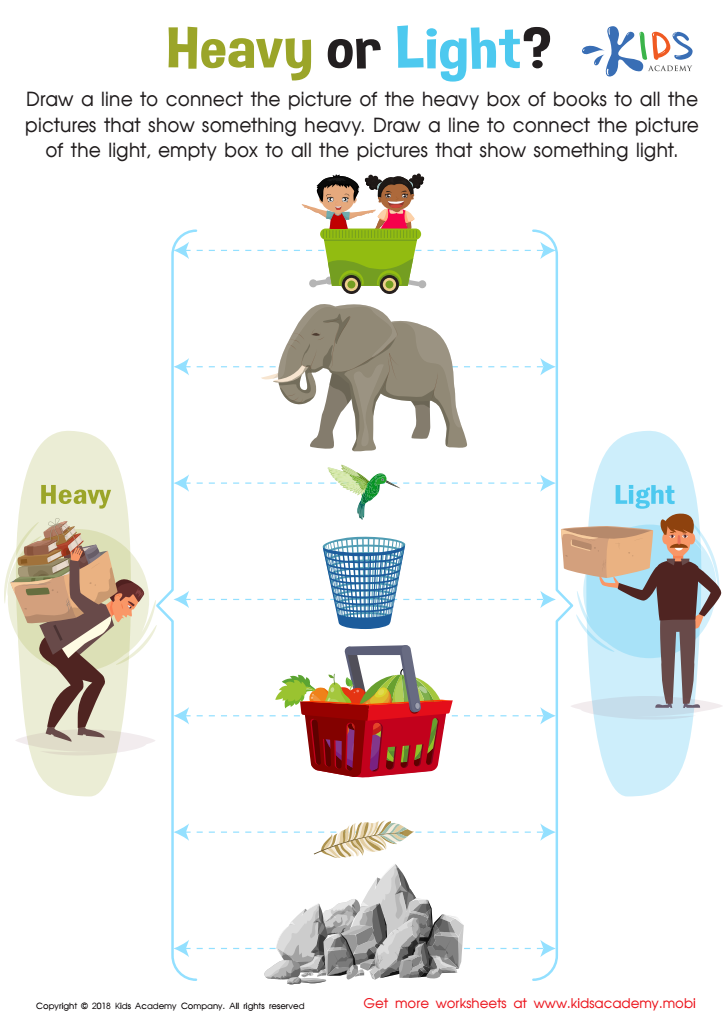
Heavy or Light? Worksheet
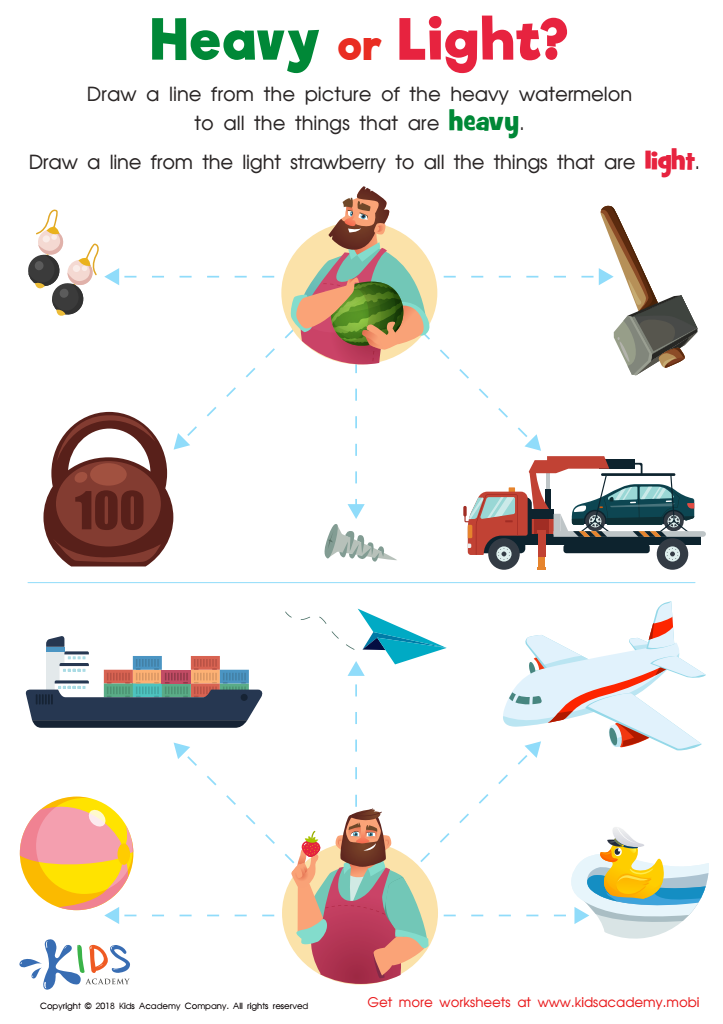
Heavy or Light? Worksheet







Comparing object weights is a fundamental concept in early childhood education, particularly in kindergarten measurement activities. The ability to understand weight not only enhances children’s cognitive skills but also develops their critical thinking and problem-solving abilities. Engaging in weight comparison helps young learners make meaningful connections between abstract concepts and real-world applications.
Parents and teachers should care about this process because it lays the groundwork for scientific inquiry. By allowing children to explore and compare weights of various objects, they develop essential skills such as observation, articulation of thoughts, and collaboration with peers. This hands-on learning encourages curiosity, as children often want to know why some objects feel heavier or lighter than others.
Additionally, weight comparison activities foster early mathematical skills, such as understanding more than, less than, and equal to. This experience is not only academically enriching but also helps children build reasoning skills that are vital for future learning. Ultimately, engaging in weight comparison fosters a love for learning, encourages question-asking, and supports the holistic development of young learners. Parents and teachers, therefore, play a crucial role in facilitating these learning experiences that shape children’s understanding of the world around them.








