Counting skills Kindergarten Science Worksheets
6 filtered results
Difficulty Level
Grade
Age
-
From - To
Subject
Activity
Standards
Enhance your child’s learning experience with our Counting Skills Kindergarten Science Worksheets! Designed to blend foundational math skills with exciting scientific concepts, these worksheets engage young learners through fun activities. Children will explore counting through themes like animals, plants, and the environment, sparking curiosity and creativity. Each worksheet features colorful illustrations and easy-to-follow tasks, making it perfect for classroom use or engaging at-home learning. Promote essential skills in number recognition, one-to-one correspondence, and simple addition while fostering a love for science. Empower your kindergarten students with these interactive and enjoyable worksheets to ensure a strong foundation in counting and observation!
Favorites
With answer key
Interactive
Robot Printable
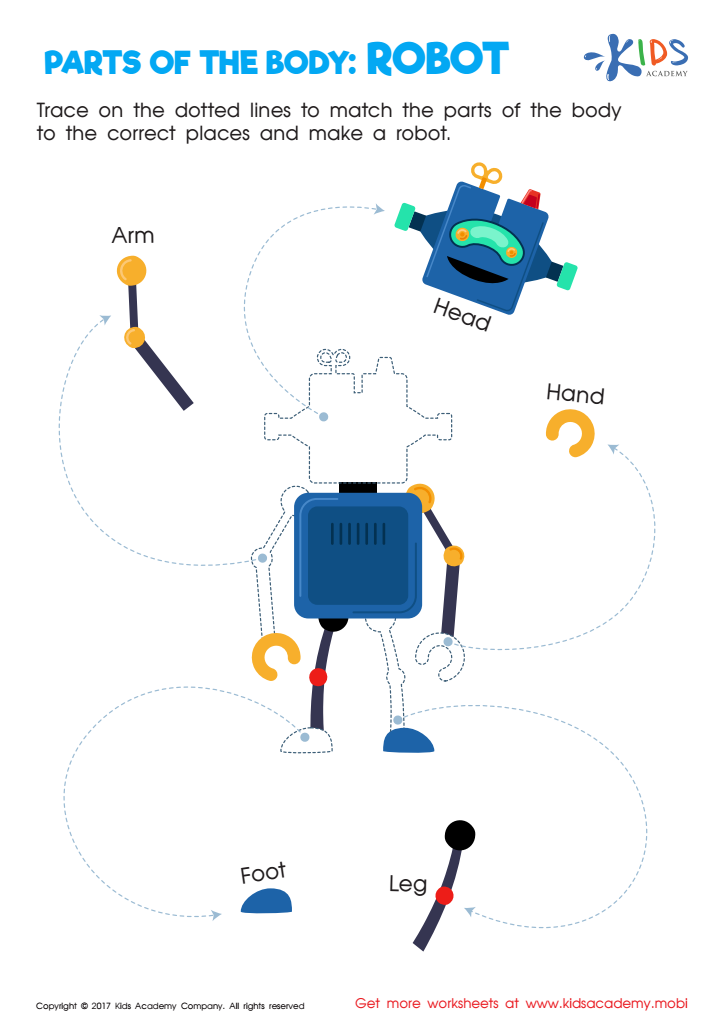
Introduce your child to a fun robot and help her hone her matching skills with this parts of the body worksheet! Your child will trace dotted lines to match the robot's body parts to the right place, helping her focus, use abstract thinking and reason better. This worksheet is sure to get your child excited and help her build essential skills for future success!
 Assign to My Students
Robot Printable
Worksheet
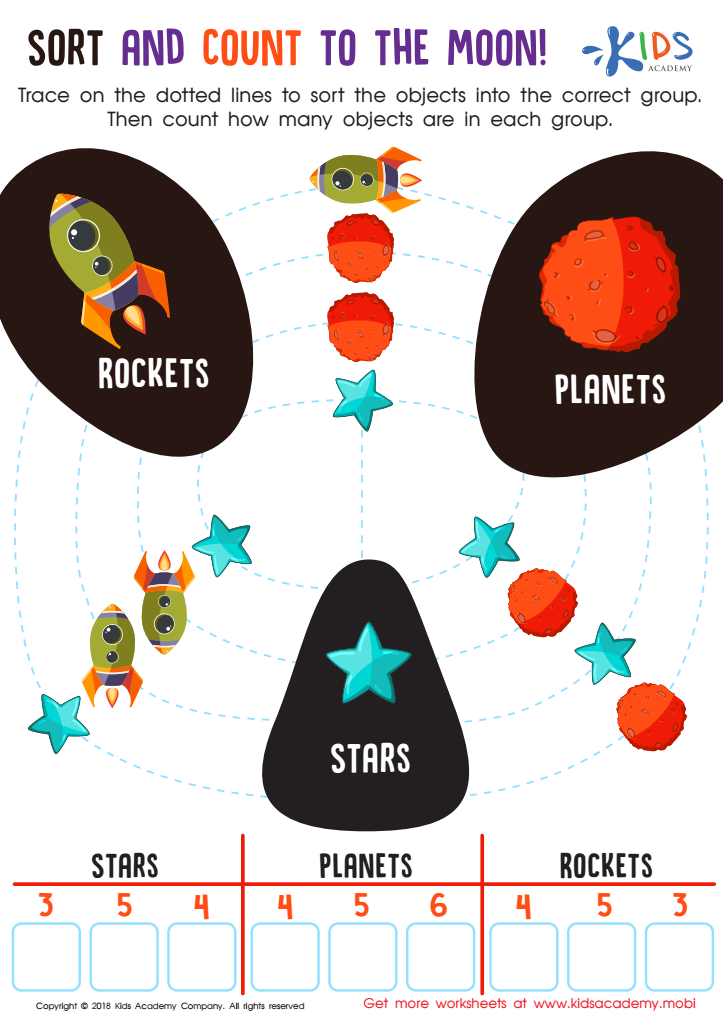
Sort and Count to the Moon Worksheet
Little space explorers will love counting, sorting and strengthening number sense with this galactic worksheet! They'll use traceable lines to sort pictures of stars, planets and rockets into categories according to properties. After sorting, they'll count each item and fill in the boxes. Bold pictures make it fun and build critical thinking skills.
Sort and Count to the Moon Worksheet
Worksheet
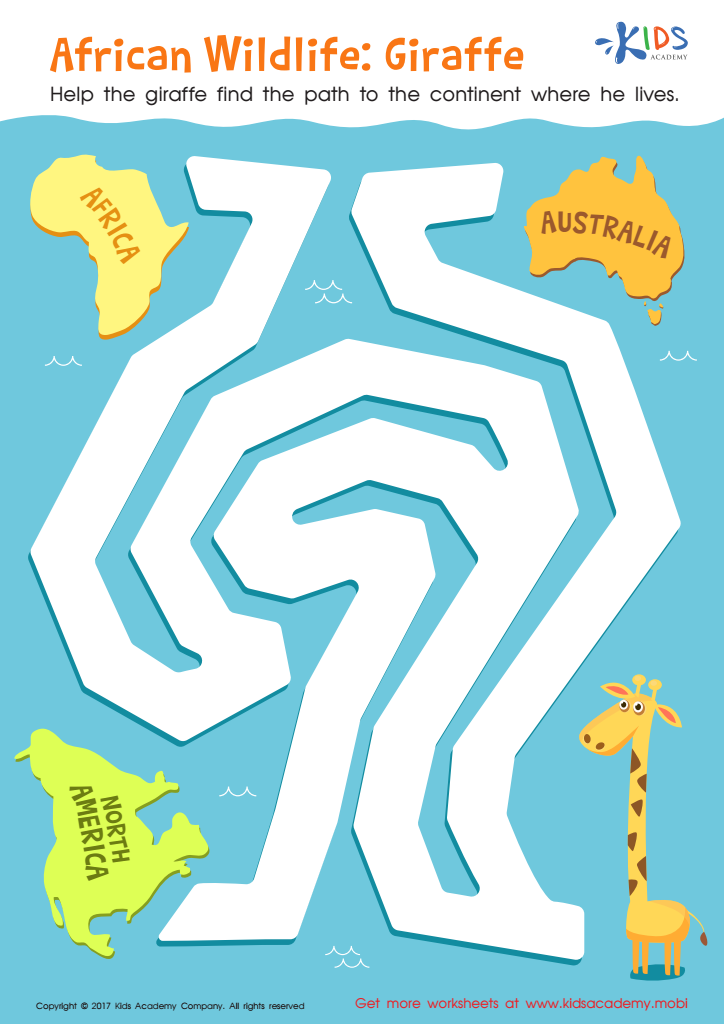
African Wildlife: Giraffe Worksheet
Help the giraffe get home! This African wildlife giraffe worksheet will boost your child's logical reasoning skills while they complete a maze to help the giraffe navigate choppy waters. Learn about different continents and their unique climates, practice problem solving and expand knowledge of the world and its habitats. Perfect for inspiring little learners!
African Wildlife: Giraffe Worksheet
Worksheet
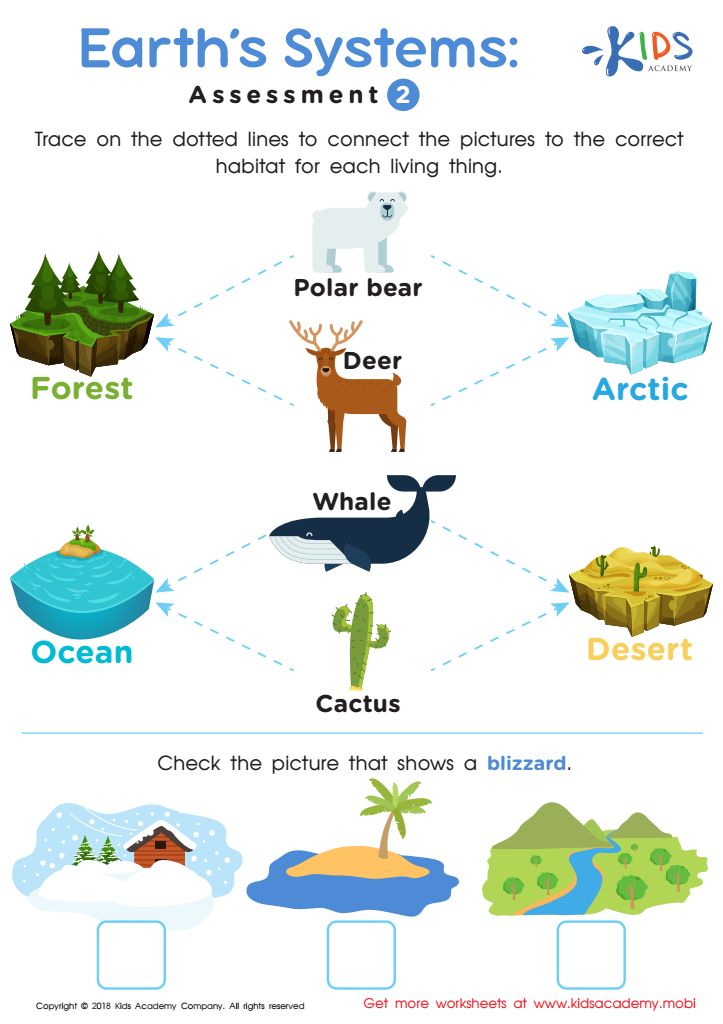
Earth's Systems: Assessment 2
Kids will love this free printable worksheet to assess their knowledge of habitats and the living creatures found in them. They'll trace the dotted lines to connect the pictures of plants and animals to their respective habitat and identify the type of weather depicted. No, polar bears don't live in the ocean, but they do like to swim in icy waters! With this fun activity, your little learner will master earth science basics.
Earth's Systems: Assessment 2
Worksheet
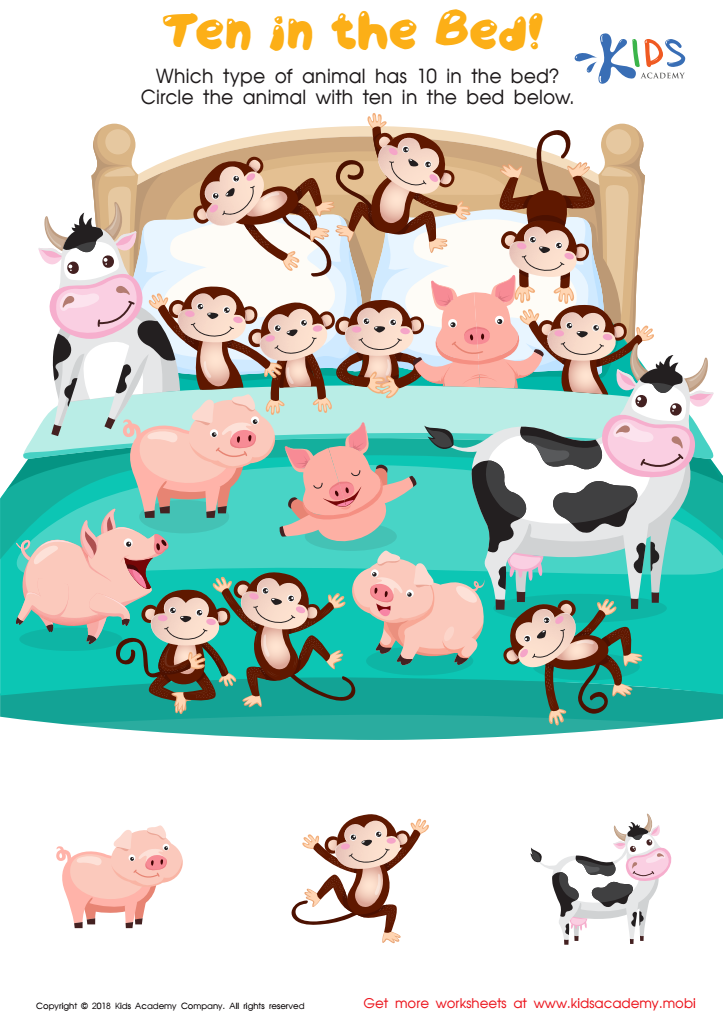
Ten in the Bed Worksheet
This fun worksheet has your kids counting and sorting friendly animal faces in a bed of ten! It's a great way for them to practice their mental math skills, like adding and multiplying more efficiently. Plus, it brings a new meaning to the classic song "Monkeys Jumping on the Bed"!
Ten in the Bed Worksheet
Worksheet
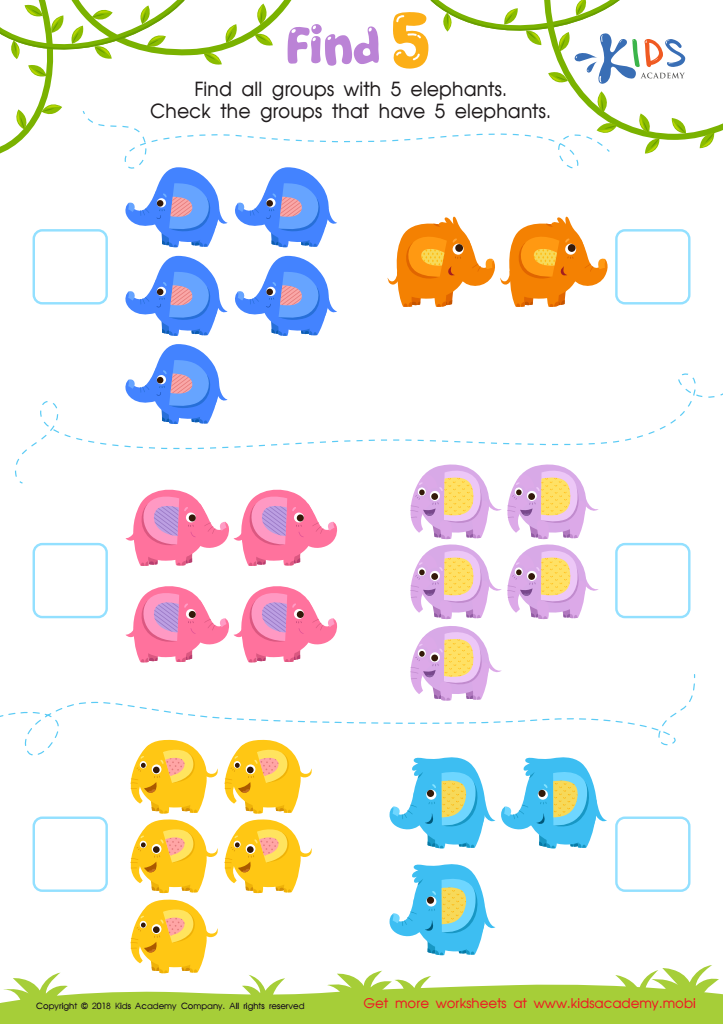
Find 5 Worksheet
Kids will love these cheery elephants that help them discover grouping and counting by fives. It's a great way to start learning addition and multiplication, while also developing fine motor skills. Download the free PDF and let the fun begin.
Find 5 Worksheet
Worksheet
Join Kids Academy for Free
Who is primarily going to use this learning content?



.jpg)

.jpg)


Counting skills are foundational for children's overall development and are particularly essential in Kindergarten Science. Firstly, counting helps children understand number concepts, paving the way for critical mathematical skills. When children learn to count, they develop the ability to quantify objects, compare sizes, and solve simple problems, which are all vital in scientific exploration.
In science, counting is often used to observe and measure variables. Kids might count the number of leaves on a plant or track the number of raindrops during an experiment, facilitating a hands-on learning experience that solidifies their understanding. This practice nurtures curiosity and analytical thinking.
Furthermore, when parents or teachers invest in building counting skills, they enhance a child's confidence. Children who feel competent in numbers are more likely to engage in STEM activities, laying the groundwork for future academic success in Science, Technology, Engineering, and Mathematics.
Moreover, strong counting skills can aid in developing important cognitive abilities like critical thinking and problem-solving. By recognizing the importance of counting in Kindergarten science education, caregivers can ensure that children are better prepared for the complexities of later education and real-world situations. Encouraging counting is an investment in their long-term intellectual and emotional growth.