Sentence construction Kindergarten Grammar Worksheets
4 filtered results
Difficulty Level
Grade
Age
-
From - To
Subject
Activity
Standards
Enhance your kindergarteners’ writing skills with our engaging Sentence Construction Grammar Worksheets! These thoughtfully designed worksheets help young learners master the fundamentals of sentence building. Each activity encourages creativity and comprehension, guiding kids to form complete sentences using age-appropriate vocabulary and structures. Students will enjoy practice in identifying subjects and predicates, expanding their sentences, and understanding punctuation. Perfect for classroom or at-home learning, our worksheets support early literacy development by making grammar fun and interactive. Boost your child’s confidence in writing and communication by exploring our collection of easy-to-follow, curriculum-aligned resources today! Ideal for educators seeking effective teaching tools!
Favorites
With answer key
Interactive
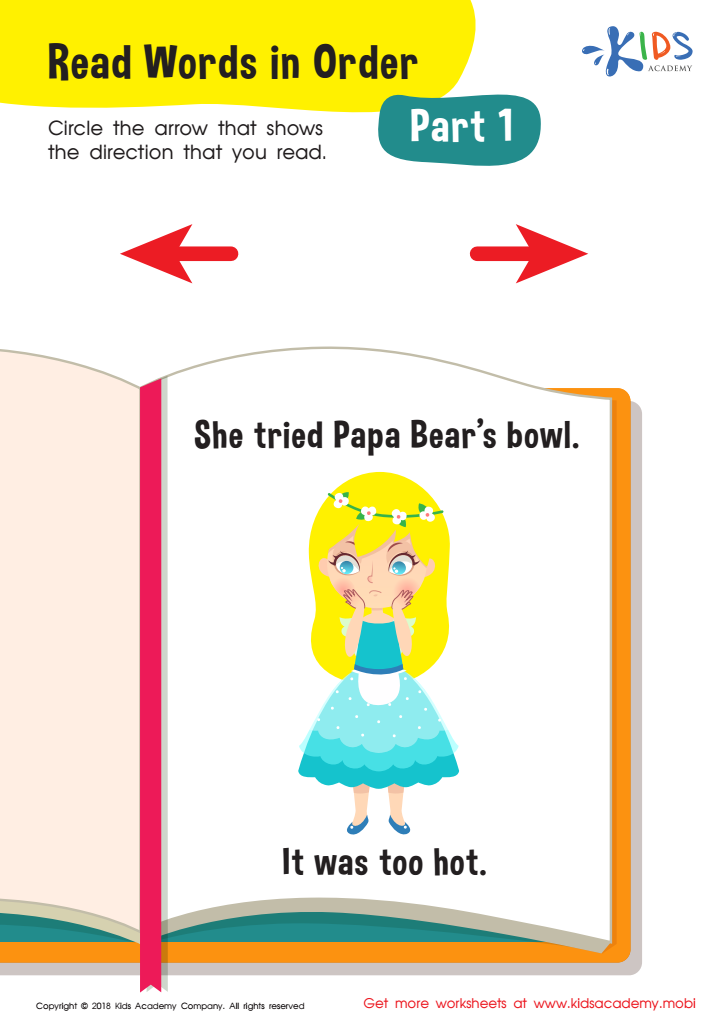
Read Words Order Part 1 Worksheet
Is your child just starting out with reading or having trouble? This worksheet is perfect! It'll help them learn the right way to read. Ask them to circle the arrow that shows the right direction to read. With this exercise, your child can overcome some of their reading challenges.
 Assign to My Students
Read Words Order Part 1 Worksheet
Worksheet
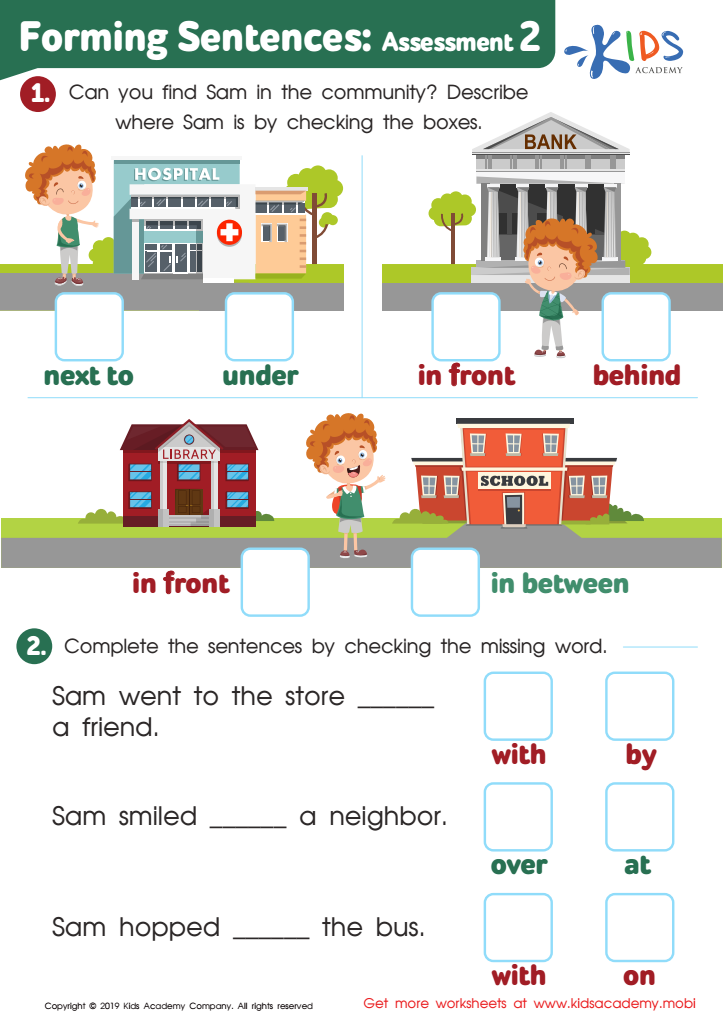
Forming Sentences: Assessment 2 Worksheet
A community is an area with different people, buildings and professionals. Ask students to list buildings in their area, then help find Sam. Describe where he is and check the boxes in the worksheet. At the bottom, help complete the sentences by checking the missing word.
Forming Sentences: Assessment 2 Worksheet
Worksheet
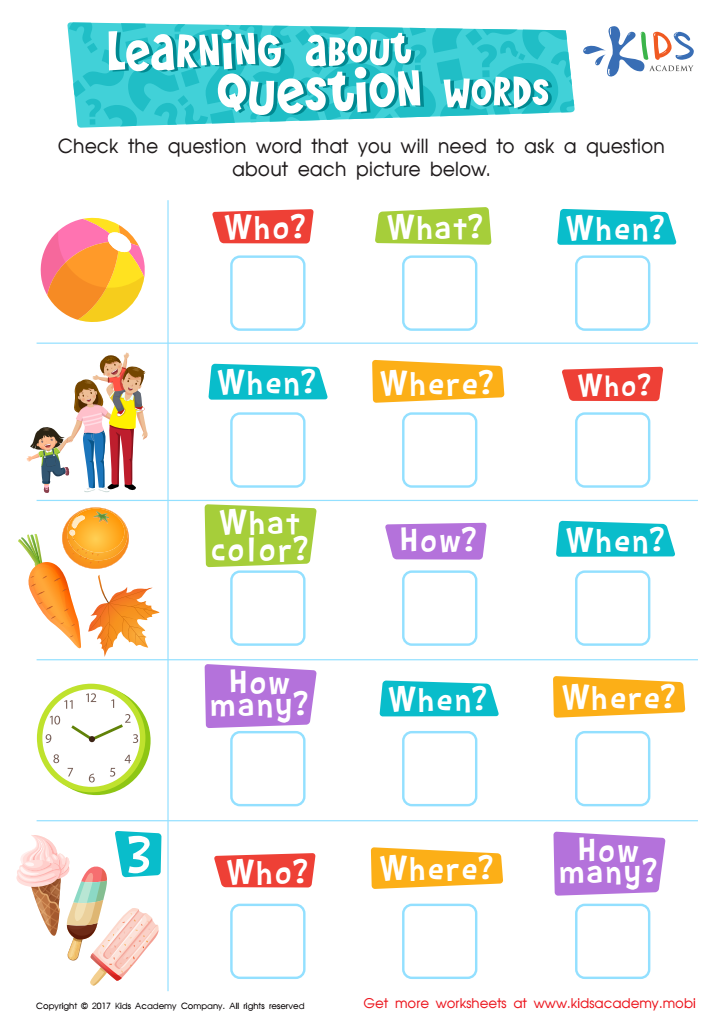
Learning about Question Words Worksheet
Learning language can be difficult, but this free printable worksheet will help! Have your child look at the picture and name it. Then help them choose the right question word to ask something about it. For example, when looking at a beach ball, you can't ask "Who?" Instead, look through the list to select the right word. It's a great way to learn language basics!
Learning about Question Words Worksheet
Worksheet
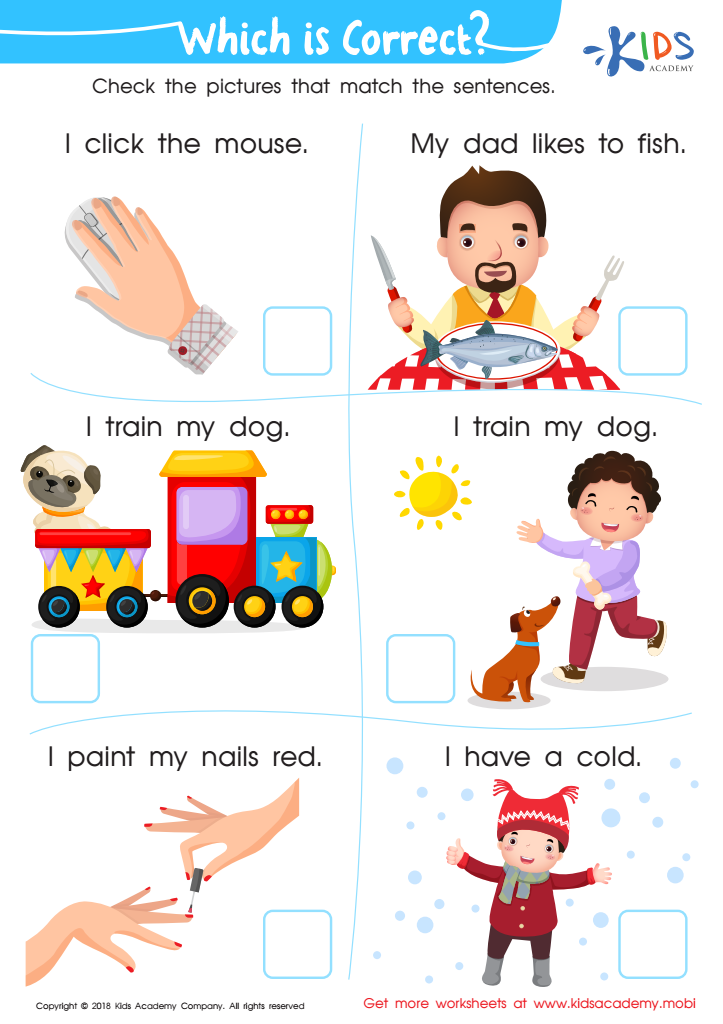
Which Is Correct? Worksheet
Go over the exercise with your students. Ask them to read the sentences and explain what they mean. Check the pictures that correspond to the sentences. For example, what does "My dad likes to fish" mean? Test their understanding with the worksheet.
Which Is Correct? Worksheet
Worksheet
Join Kids Academy for Free
Who is primarily going to use this learning content?





.jpg)
Sentence construction is a fundamental aspect of early literacy and language development, making it crucial for parents and teachers to prioritize in kindergarten. At this stage, children are developing the foundational skills necessary for effective communication, which includes understanding how to structure sentences.
When children grasp sentence construction, they become more confident in expressing their thoughts and ideas. This skill not only enhances their verbal communication but also sets the groundwork for reading and writing. Learning to form sentences helps children comprehend how words interact within a sentence, reinforcing their understanding of grammar and vocabulary.
Teachers and parents can foster these skills through interactive activities, such as storytelling or sentence-building games, enhancing engagement and making learning enjoyable. Furthermore, a solid foundation in sentence construction contributes to improved academic performance as students progress through school.
Ultimately, cultivating strong sentence construction abilities in kindergarten prepares young learners for academic success and effective communication in their personal lives. By prioritizing this crucial skill, parents and teachers ensure children develop the tools they need for lifelong learning and positive social interactions. A focus on grammar in these formative years can have lasting benefits well beyond the classroom.