Punctuation understanding Kindergarten Punctuation Worksheets
3 filtered results
-
From - To
Welcome to our Punctuation Understanding Kindergarten Punctuation Worksheets! Designed for young learners, these engaging worksheets help children grasp the basics of punctuation through fun exercises and activities. With a focus on essential punctuation marks like periods, commas, and question marks, our worksheets guide kindergartners in developing their writing and reading skills. Each activity encourages creativity while reinforcing comprehension of punctuation's role in clear communication. Perfect for classroom or home learning, these resources are tailored to make punctuation enjoyable and accessible for every student. Unlock your child’s potential by nurturing their understanding of fundamental writing conventions today!
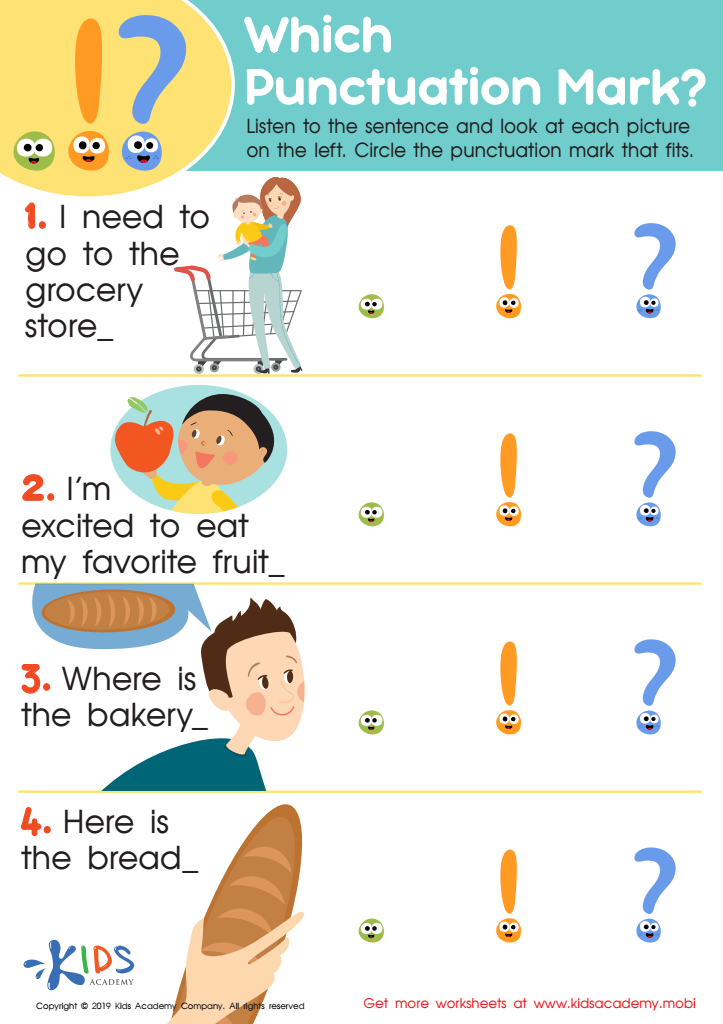
Which Punctuation Mark Worksheet
 Assign to My Students
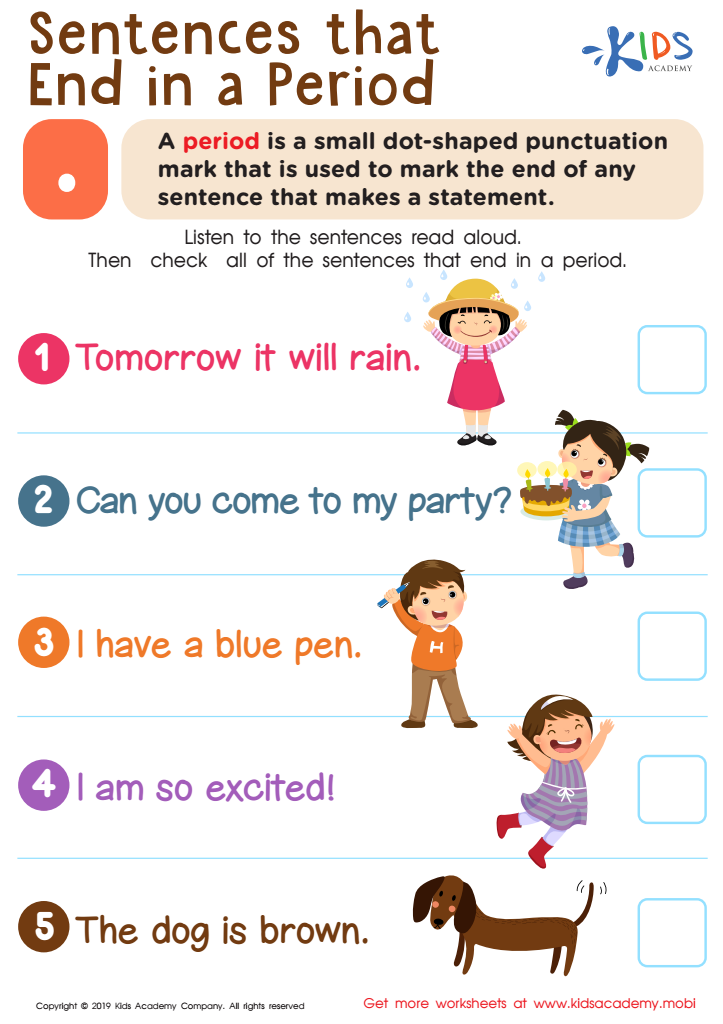
Sentences That End in a Period Worksheet
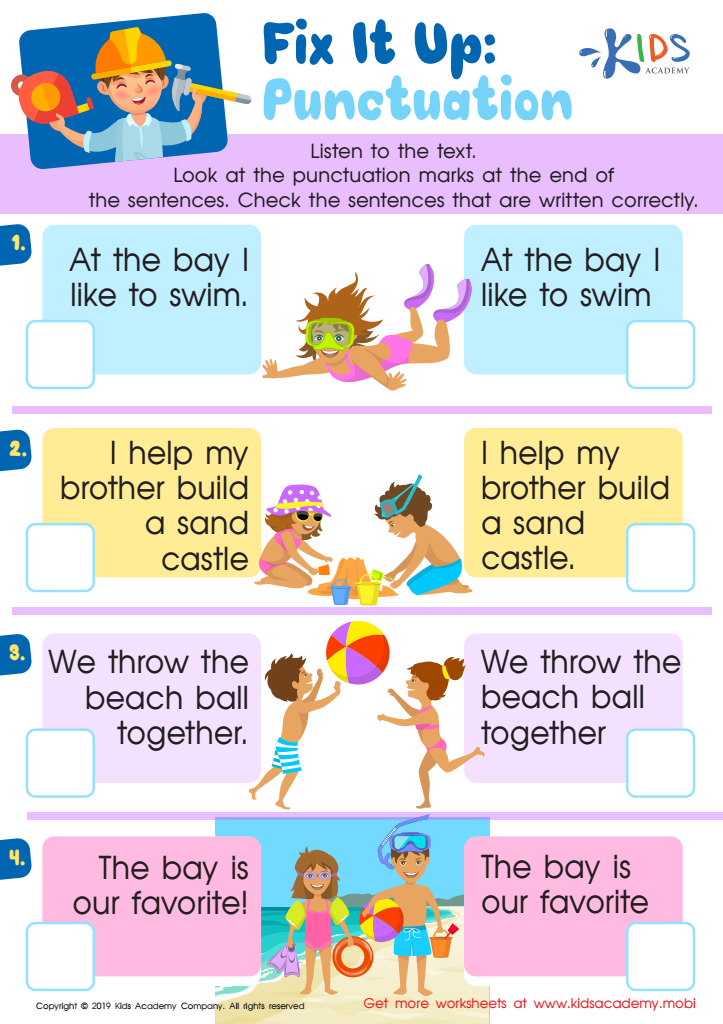
Fix Punctuation Worksheet




Punctuation understanding is essential in kindergarten as it lays the foundation for effective communication and literacy skills. For parents and teachers, emphasizing punctuation helps children grasp the basic structure of written language, enabling them to express their thoughts and emotions clearly. A solid grasp of punctuation marks—like periods, question marks, and exclamation points—helps children understand the nuances of sentences. For instance, the difference between "Let's eat, Grandma!" and "Let's eat Grandma!" can shift meaning dramatically, showcasing how punctuation can alter interpretation.
Moreover, early exposure to punctuation fosters good reading habits; children learn to pause and change tone based on punctuation cues, enhancing their comprehension and fluency. When parents and teachers integrate punctuation into daily activities, such as reading aloud and writing exercises, they create engaging opportunities for skill development. Parents can make it a fun learning experience through games and storytelling, while teachers can incorporate structured lessons and hands-on activities.
Ultimately, caring about punctuation understanding nurtures overall literacy, boosts children's confidence in their writing, and sets them up for future academic success. This essential focus early on empowers young learners, making them effective communicators and enthusiastic readers as they progress through school.