Descriptive writing Worksheets for Kids
1 filtered results
Difficulty Level
Grade
Age
-
From - To
Subject
Activity
Standards
Descriptive writing worksheets are essential for students to improve their descriptive skills. These worksheets offer a structured platform for practice, helping students learn techniques and enhance creativity by describing objects, places, or scenarios. Worksheets allow self-paced learning and encourage students to explore their writing style, with exercises prompting imaginative thinking. They provide space to refine vocabulary and sentence structure, fostering proficiency in writing. Beneficial not just in education, descriptive writing is crucial for journalism, advertising, and creative fields, helping to convey ideas vividly and captivate audiences.
Favorites
With answer key
Interactive
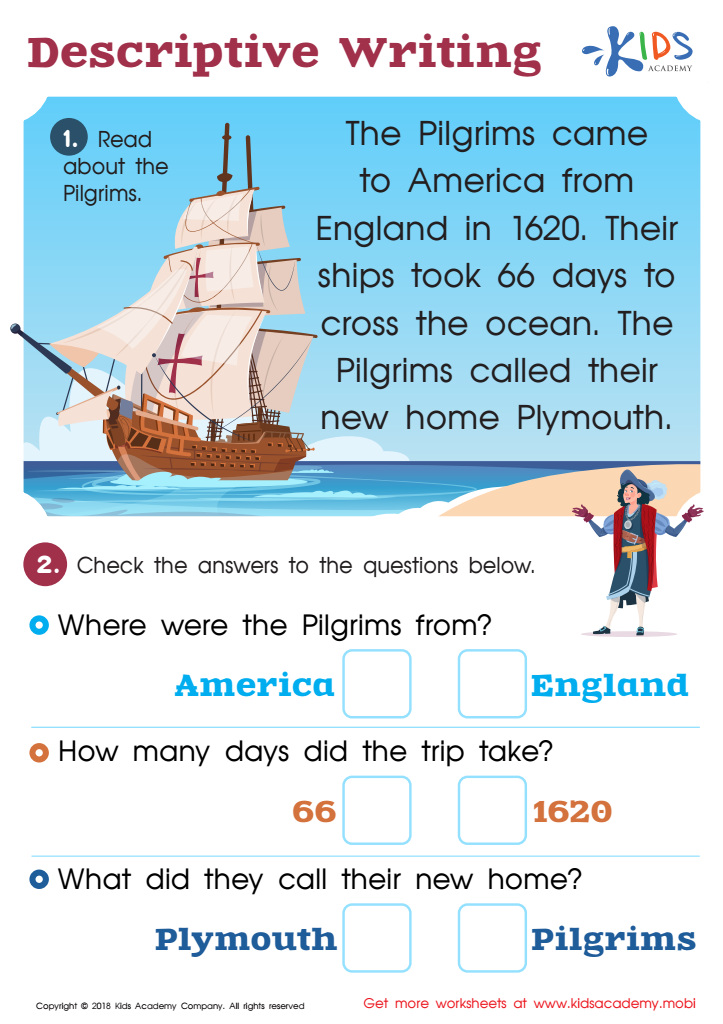
Descriptive Writing Worksheet: Part 1
Kids, let's learn about the Pilgrims! Read this short text about their voyage to America, then answer the questions at the bottom. Writing is an art: expressing emotions in artful words and sentences. Some writing informs, others describe. Here, discover the Pilgrims' journey!
 Assign to My Students
Descriptive Writing Worksheet: Part 1
Worksheet
Question/Answer

How does the mastery of the Descriptive writing skill affect a student's performance at an early age?
The mastery of descriptive writing at an early age significantly enhances a student's ability to express ideas vividly and creatively, enriching their communication and storytelling skills. This proficiency fosters better comprehension and retention of information, encourages critical thinking, and improves overall academic performance. It also boosts confidence in writing, which is pivotal across various subjects and future educational pursuits.
How to test a Grade 2 student’s Descriptive writing skills?
To test a Grade 2 student's descriptive writing skills, provide a simple picture or object and ask them to write a few sentences describing it. Focus on assessing their use of adjectives, ability to convey sensory details (sight, sound, touch, taste, smell), and sentence structure. Evaluate their creativity and how well they paint a picture with words for the reader.
What are some effective activities to train students’ Descriptive writing skill when teaching them about Reading Non-Fiction?
Effective activities for training students in descriptive writing within a non-fiction context include: analyzing richly described excerpts from non-fiction texts, creating vivid written descriptions of real-life objects or events, and practicing show-not-tell techniques by describing emotions or experiences without naming them.
Join Kids Academy for Free
Who is primarily going to use this learning content?