Improving inference skills Worksheets for Kids
1 filtered results
-
From - To
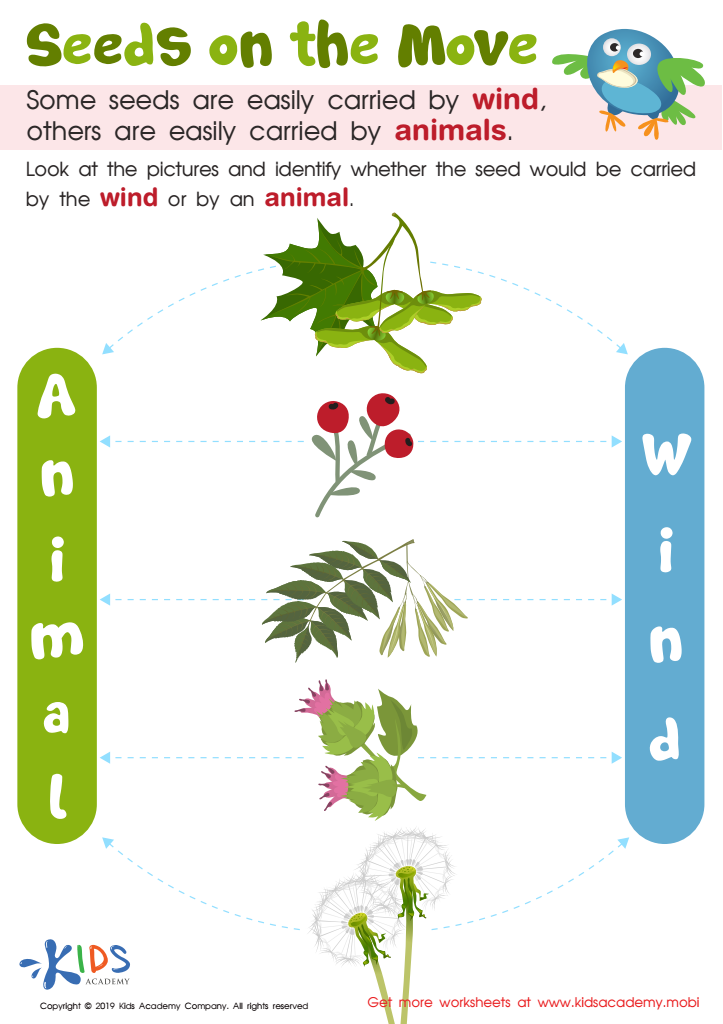
Seeds on the Move Worksheet
 Assign to My Students
Question/Answer

How to train the Improving inference skill in Grade 2 students learning about Plants and Animals?
To train improving inference skills in Grade 2 students learning about plants and animals, engage them in activities like predicting plant or animal growth stages, comparing habitats, and deducing animals' dietary habits based on their teeth or beaks. Use storybooks, real-life observations, and interactive games that encourage them to draw conclusions from provided information or visuals.
How does the mastery of the Improving inference skill affect a student's performance at an early age?
Mastery of the improving inference skill at an early age significantly enhances a student's reading comprehension, critical thinking, and problem-solving abilities. It aids in their understanding of texts and real-world situations by allowing them to make connections beyond the explicit information presented. This ability positively impacts their academic performance across subjects and fosters a deeper engagement with learning materials.
What are some effective activities to train students’ Improving inference skill when teaching them about Plants and Animals?
To train students in improving their inference skill in the context of plants and animals, engage them in activities like analyzing contrasting habitats and predicting species adaptations, utilizing mystery specimens for students to infer characteristics and categorize, creating food web scenarios to deduce predator-prey relationships, and interpreting growth patterns from plant rings or animal growth marks to infer environmental conditions.