Inference making practice Worksheets for Kids
1 filtered results
-
From - To
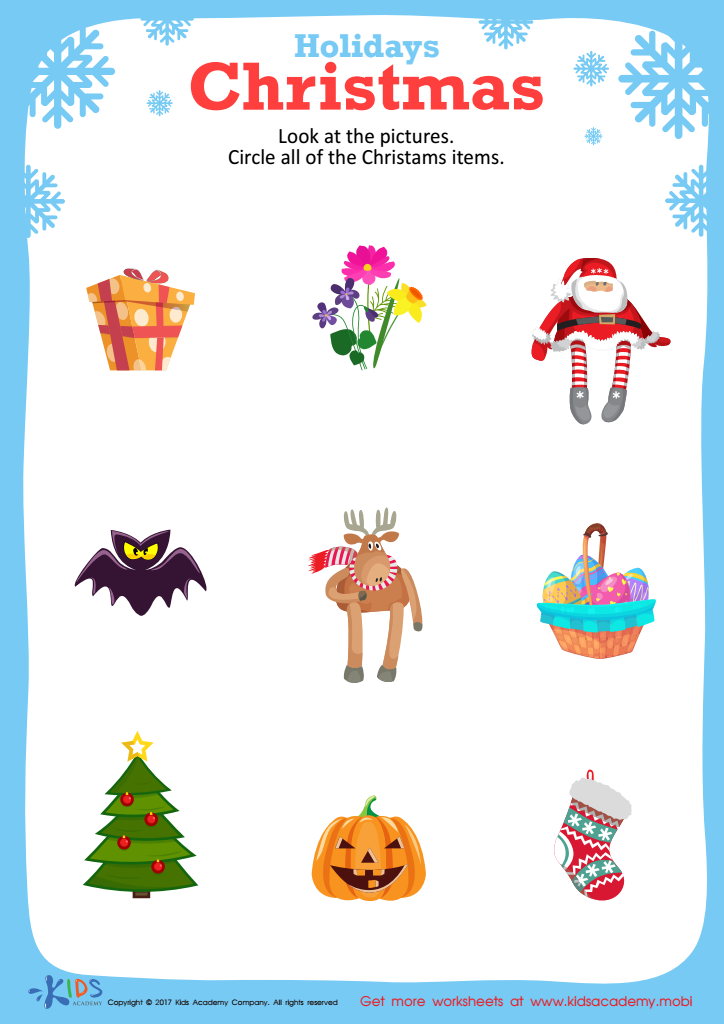
Christmas Holiday Worksheet
 Assign to My Students
Question/Answer

Why is the Inference making practice skill important for Kindergarten students?
The inference-making practice skill is important for Kindergarten students because it enhances their reading comprehension, critical thinking, and problem-solving abilities. By learning how to make inferences, they are able to understand texts and situations beyond literal information, fostering creativity and deeper learning.
What are some effective activities to train students’ Inference making practice skill when teaching them about History?
To train students' inference-making skills in history, employ activities like analyzing primary source documents, engaging in Socratic seminars around historical texts, creating timelines based on events' causes and effects, role-playing historical figures to explore perspectives, and encouraging hypothesis development about historical outcomes. These activities foster critical thinking, deepen understanding, and enhance students' ability to draw conclusions from historical evidence.
How to test a Kindergarten student’s Inference making practice skills?
To test a Kindergarten student's inference-making practice skills, use picture books or visual story cards. Ask the student to predict what happens next or explain why a character feels a certain way based on visual cues. Observe their ability to make logical connections and draw conclusions from the images or simple text, assessing their reasoning and comprehension.