Letter "O" identification Worksheets for Kids
1 filtered results
-
From - To
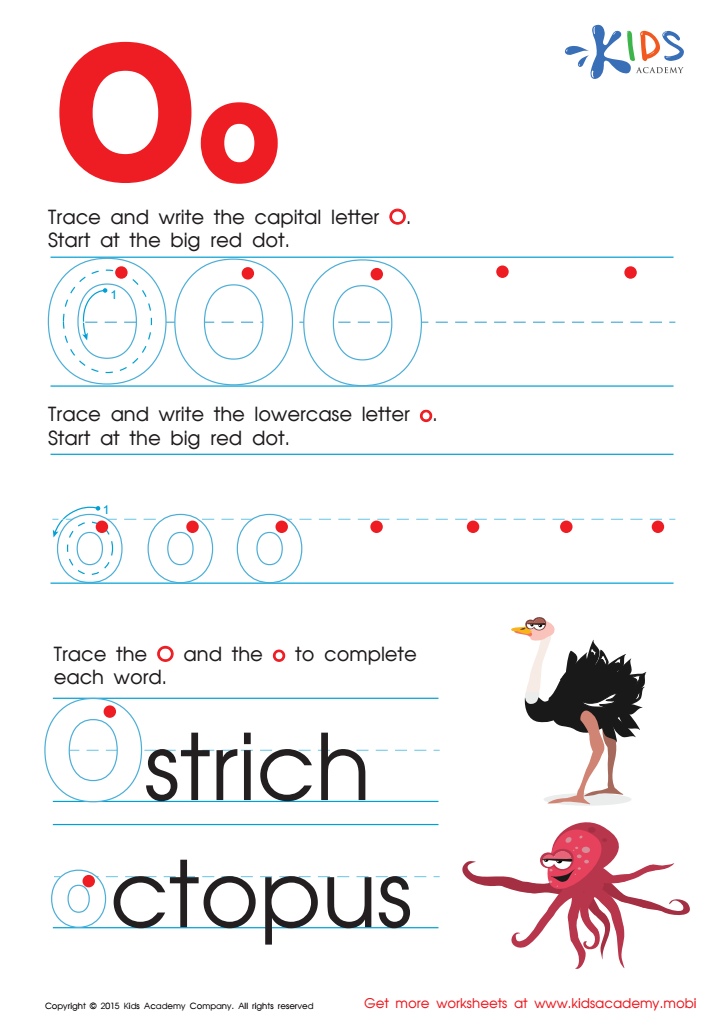
Letter O Tracing Page
 Assign to My Students
Question/Answer

Why is the Letter "O" identification skill important for Kindergarten students?
The Letter "O" identification skill is crucial for Kindergarten students as it lays the foundation for reading and writing. Recognizing and understanding the letter "O" helps children distinguish it from other letters, learn its sound, and form words. This skill is essential for literacy development, enabling students to build vocabulary, improve spelling, and foster early reading abilities.
What are some effective activities to train students’ Letter "O" identification skill when teaching them about ABC Order?
To enhance students' letter "O" identification skills in ABC order, employ activities such as: 1. **Letter Sorting:** Mix cards of various letters; have students find and sort "O" from the rest. 2. **Flashcards:** Use "O" flashcards alongside others for quick identification games. 3. **Alphabet Puzzles:** Incorporate puzzles focusing on sequencing letters where "O" needs to be placed correctly. 4.
How does the mastery of the Letter "O" identification skill affect a student's performance at an early age?
Mastery of the letter "O" identification skill at an early age significantly impacts a student's performance by enhancing their letter recognition, which is crucial for reading and spelling skills development. It boosts their confidence, encourages learning participation, and lays a foundation for literacy, as recognizing individual letters is a fundamental step in understanding the alphabet and word formation.




.jpg)