Pawns identification Worksheets for Kids
1 filtered results
-
From - To
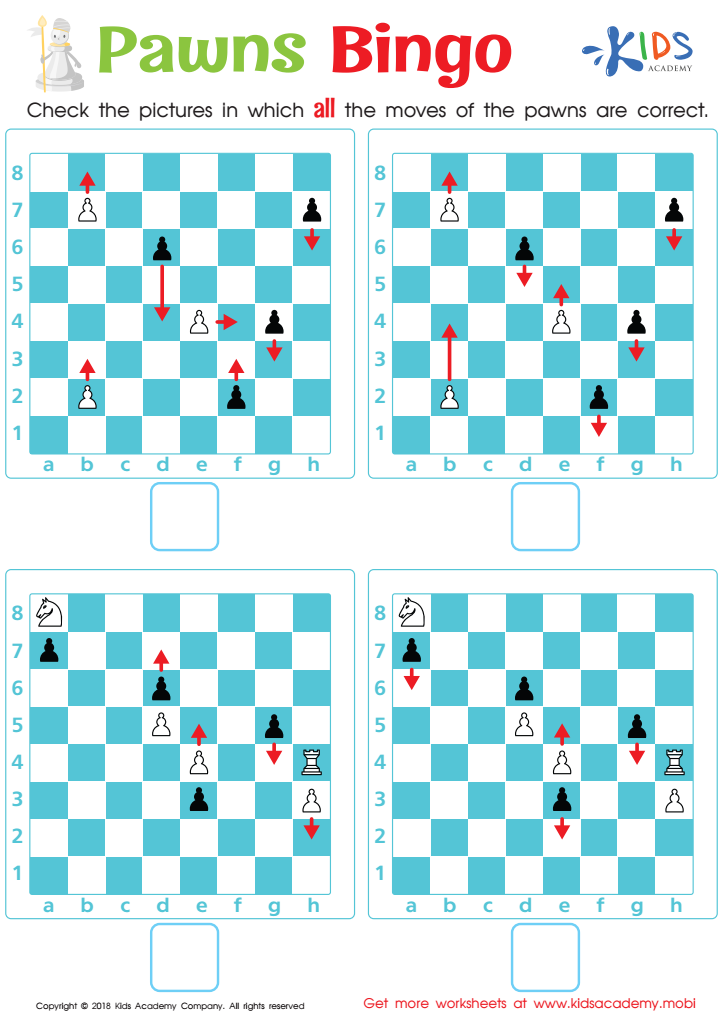
Pawns Bingo Worksheet
 Assign to My Students
Question/Answer

How does the mastery of the Pawns identification skill affect a student's performance at an early age?
Mastery of the Pawns identification skill at an early age significantly enhances a student's performance by improving their cognitive abilities, strategic thinking, and problem-solving skills. This foundational chess skill fosters concentration, memory, and analytical thinking, which are transferable to academic learning and other areas of life, leading to overall better performance and development.
Why is the Pawns identification skill important for Grade 1 students?
The Pawns identification skill is crucial for Grade 1 students as it lays the foundational understanding of chess, fostering critical thinking and strategic planning from a young age. Recognizing pawns aids in grasping basic chess rules and strategies, enhancing cognitive development, problem-solving skills, and patience, which are valuable in both academic learning and personal growth.
How to train the Pawns identification skill in Grade 1 students learning about Chess?
To train Grade 1 students in pawn identification, use physical chess pieces and a chessboard. Begin by showing them the pawn pieces, explaining their role and movements. Engage them in hands-on activities like setting up pawns on the board, identifying pawns among other chess pieces, and moving pawns correctly. Incorporate games and puzzles focused on pawns to reinforce learning.