Understanding alliteration Worksheets for Kids
1 filtered results
-
From - To
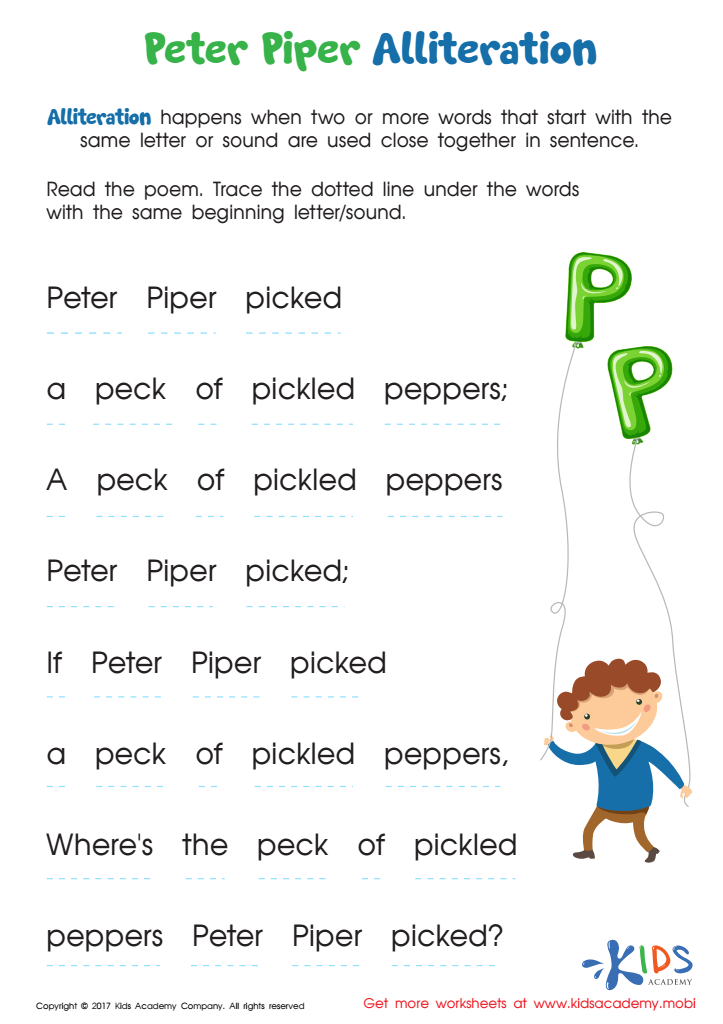
Peter Piper Alliteration Worksheet
 Assign to My Students
Question/Answer

How to train the Understanding alliteration skill in Grade 3 students learning about Beginning Sounds?
To train Grade 3 students in understanding alliteration with beginning sounds, start by reading aloud poems or sentences packed with alliteration. Then, engage them in identifying and circling alliterative words in sentences. Finally, encourage them to create their own alliterative sentences using a specific letter, guiding them to focus on the sound rather than the letter itself.
How to test a Grade 3 student’s Understanding alliteration skills?
To test a Grade 3 student's understanding of alliteration, ask them to identify and create sentences containing alliteration. Start by reading sentences or poems that contain alliteration and have them point out the alliterative phrases. Then, challenge them to write their own sentences or short poems using alliteration, focusing on a specific letter or sound.
What are some effective activities to train students’ Understanding alliteration skill when teaching them about Beginning Sounds?
To train students in understanding alliteration and beginning sounds, engage them in activities like creating tongue twisters using a specific letter, playing alliteration matching games where they match words with the same beginning sound, and reading alliteration-focused books or poems aloud. These interactive activities enhance their ability to recognize and produce alliterative phrases, enriching their phonemic awareness.