Basic geometry knowledge 2D Shapes Worksheets
3 filtered results
-
From - To
Explore our engaging Basic Geometry Knowledge 2D Shapes Worksheets, designed for young learners to master essential concepts in geometry. These worksheets provide a fun and interactive way for kids to identify, classify, and describe various 2D shapes such as circles, squares, triangles, and rectangles. Each activity encourages critical thinking and creativity, ensuring a strong foundation in geometric principles. Perfect for classroom use or at-home learning, our resources cater to diverse skill levels to accommodate every learner's needs. With vibrant visuals and clear instructions, these worksheets make geometry accessible and enjoyable for early grade students, fostering a love for math from an early age!
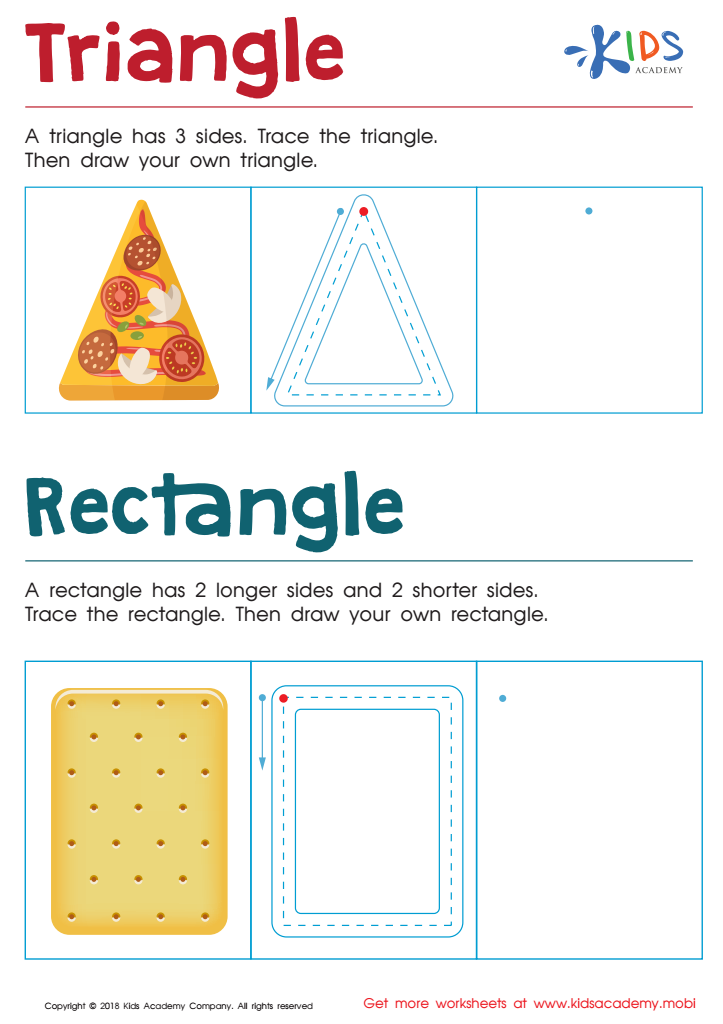
Triangle Rectangle Worksheet
 Assign to My Students


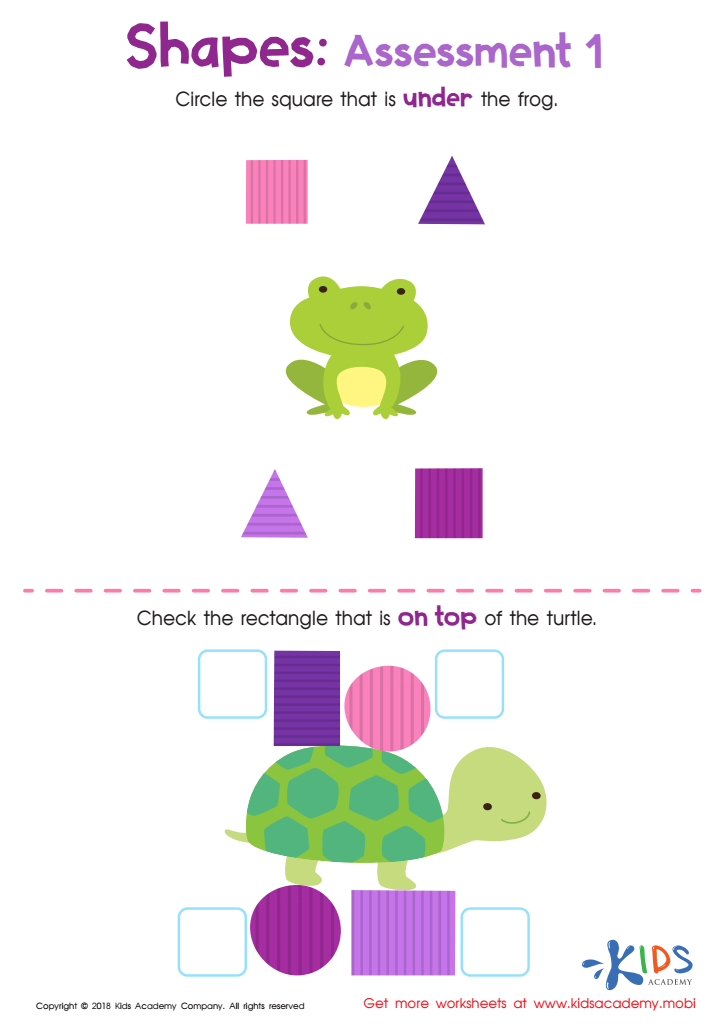
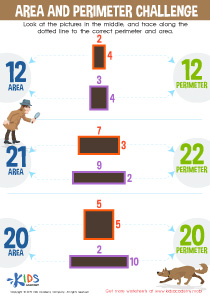
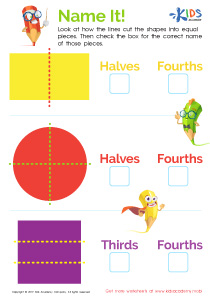
Geometry – Assessment 1 Worksheet
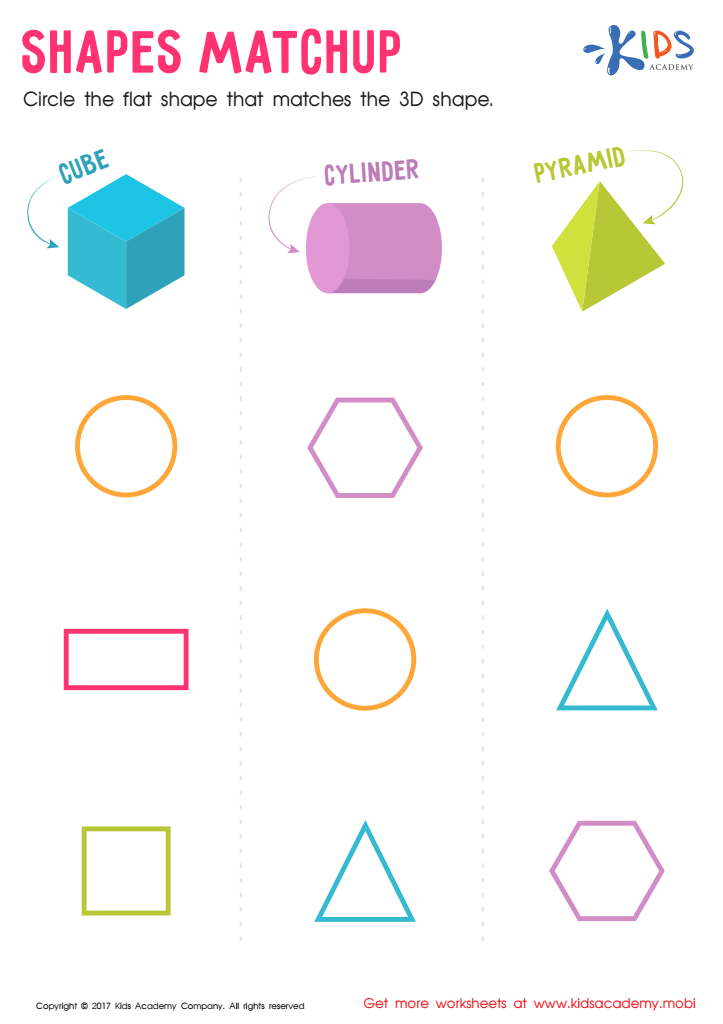
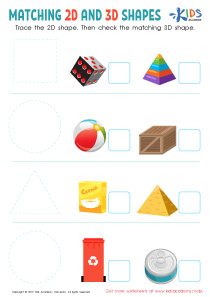
Shapes Matchup Worksheet








Understanding basic geometry, particularly 2D shapes, is crucial for children’s cognitive development and everyday life skills. First, recognizing and understanding shapes such as squares, circles, and triangles lays the groundwork for higher-level math concepts. Early familiarity helps children identify relationships and patterns, enhancing their spatial awareness and problem-solving abilities.
In everyday situations, shape recognition fosters critical life skills. For instance, understanding shapes aids in organizing information and enhances children's ability to describe the world around them. Whether it’s identifying shapes in art, assembling puzzles, or navigating spaces, geometry is integral to a child’s functioning in various contexts.
Moreover, knowledge of 2D shapes supports creative expression and enhances fine motor skills through activities like drawing and crafting. Parents and teachers can use these experiences to integrate learning into fun, real-life applications.
Lastly, early engagement with geometry cultivates a positive attitude towards math, setting the stage for lifelong learning. By appreciating the significance of basic geometry, both parents and teachers can foster an enriching environment that nurtures children's potential and prepares them for future academic success.