Understanding quadrilaterals 2D Shapes Worksheets
4 filtered results
-
From - To
Explore our engaging "Understanding Quadrilaterals 2D Shapes Worksheets" designed to help young learners grasp the fundamentals of quadrilaterals. These interactive worksheets encourage students to identify, categorize, and analyze various four-sided shapes, including squares, rectangles, trapezoids, and rhombuses. By utilizing visually appealing diagrams and hands-on activities, children will develop essential math skills while having fun. The worksheets are suitable for classroom use or home practice, aiming to enhance spatial awareness and geometric reasoning. Perfect for early-grade educators looking to reinforce shape recognition and properties, these resources support a comprehensive understanding of quadrilaterals in a playful learning environment.
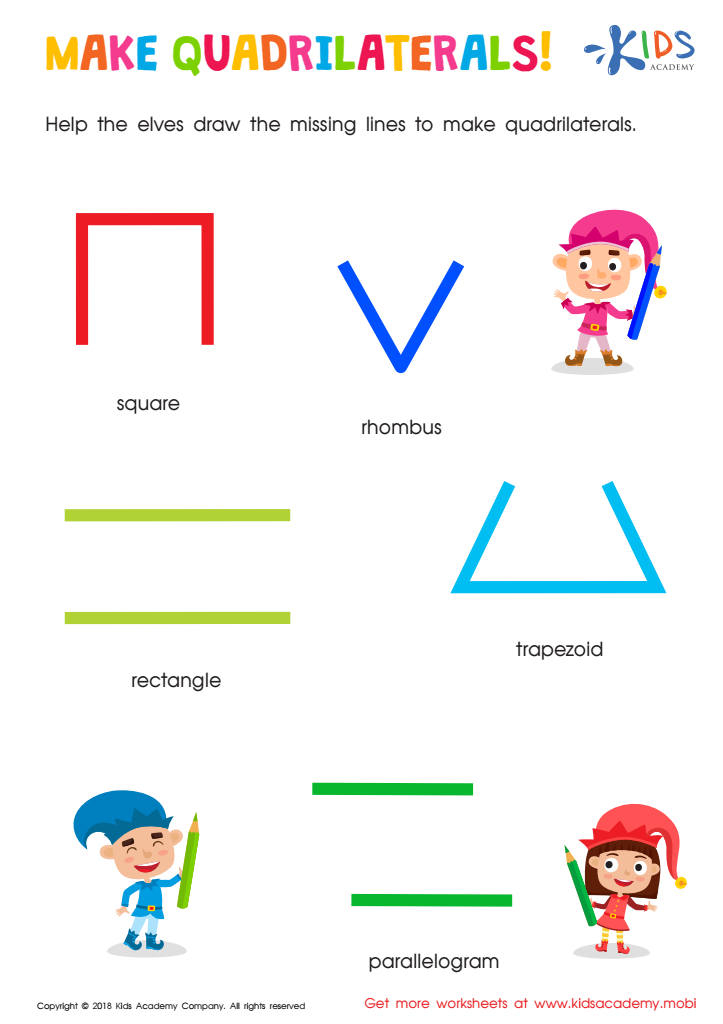
Make Quadrilaterals Worksheet
 Assign to My Students











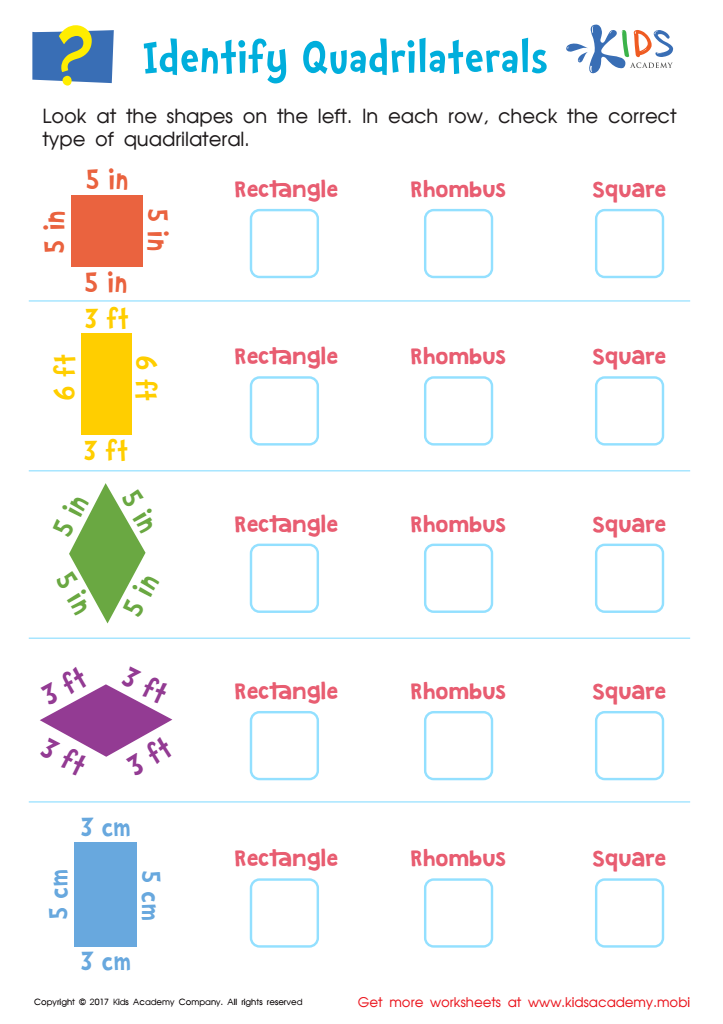
Identify Quadrilaterals Worksheet
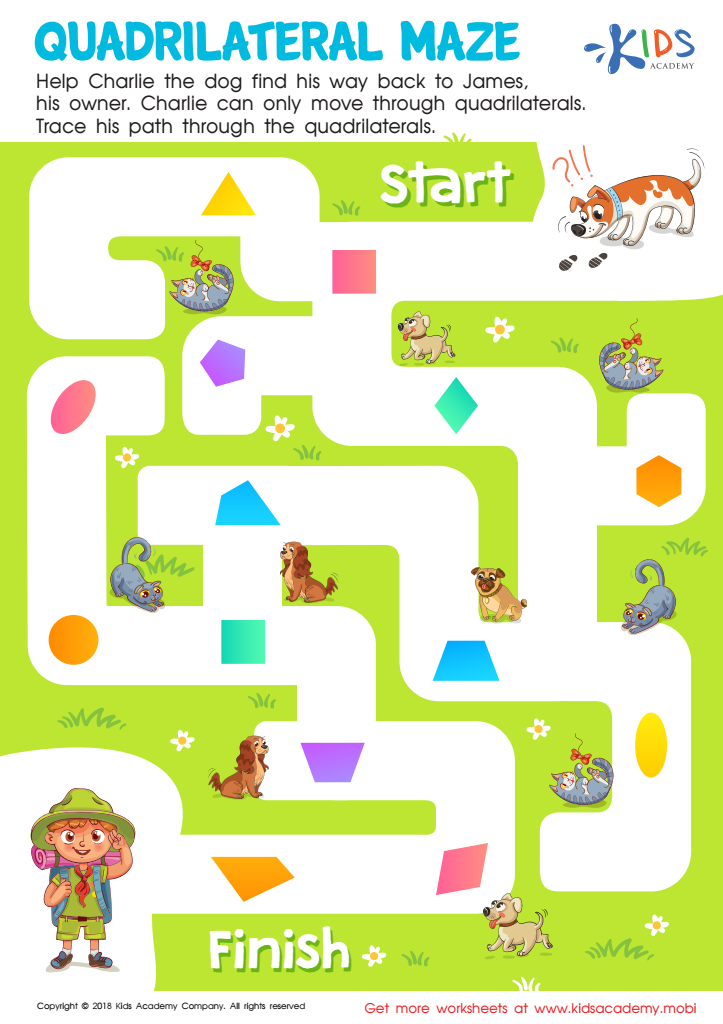
Quadrilateral Maze Worksheet
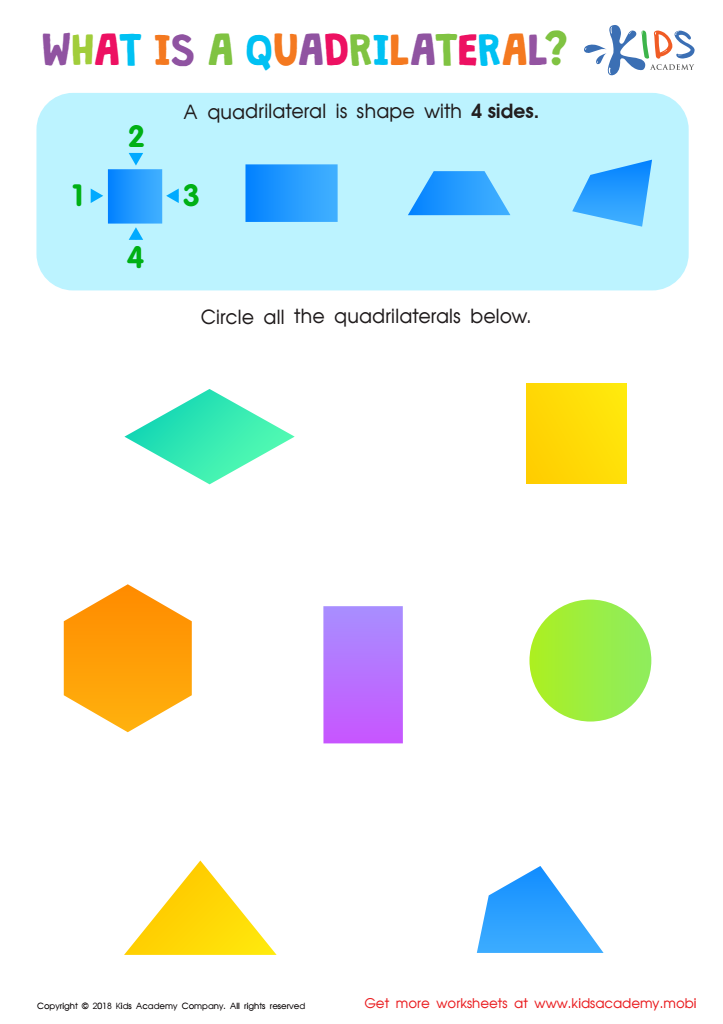
What Is a Quadrilateral? Worksheet








Understanding quadrilaterals and 2D shapes is essential for parents and teachers because these concepts form the foundation of geometric knowledge that children will build upon throughout their education and daily lives. Recognizing and analyzing quadrilaterals—such as squares, rectangles, rhombuses, parallelograms, and trapezoids—helps students develop critical thinking and problem-solving skills. These shapes appear frequently in real-world contexts, including architecture, art, and nature, making this knowledge practically relevant.
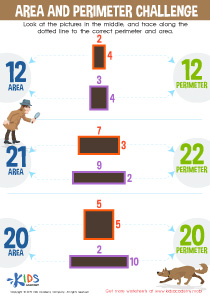
Moreover, understanding these shapes promotes spatial awareness, an important aspect of cognitive development in early learners. For example, identifying how shapes fit together and relate to one another enhances children's abilities to engage with more complex mathematical concepts like area and perimeter in later grades.
Parents and teachers play a vital role in supporting this learning by incorporating discussions about shapes into everyday situations—such as measuring items or recognizing shapes in the environment. Encouraging hands-on activities, including drawing or building shapes, can also engage students more deeply. Ultimately, a solid grasp of quadrilaterals and 2D shapes not only strengthens math skills but also fosters confidence and enthusiasm for learning, contributing to overall intellectual growth.