Recognizing Patterns Adding 2-digit Numbers Worksheets
3 filtered results
-
From - To
Unlock your child’s potential with our Recognizing Patterns Adding 2-Digit Numbers Worksheets! Perfect for young learners, these engaging worksheets help develop essential math skills by focusing on the patterns in 2-digit addition problems. Each activity is designed to make learning enjoyable and effective, strengthening their ability to spot numerical patterns. Ideal for reinforcing classroom lessons or extra home practice, our worksheets support mastery of fundamental math concepts, boost confidence, and pave the way for future math success. Get started now and watch as your child’s understanding and love for math flourish!
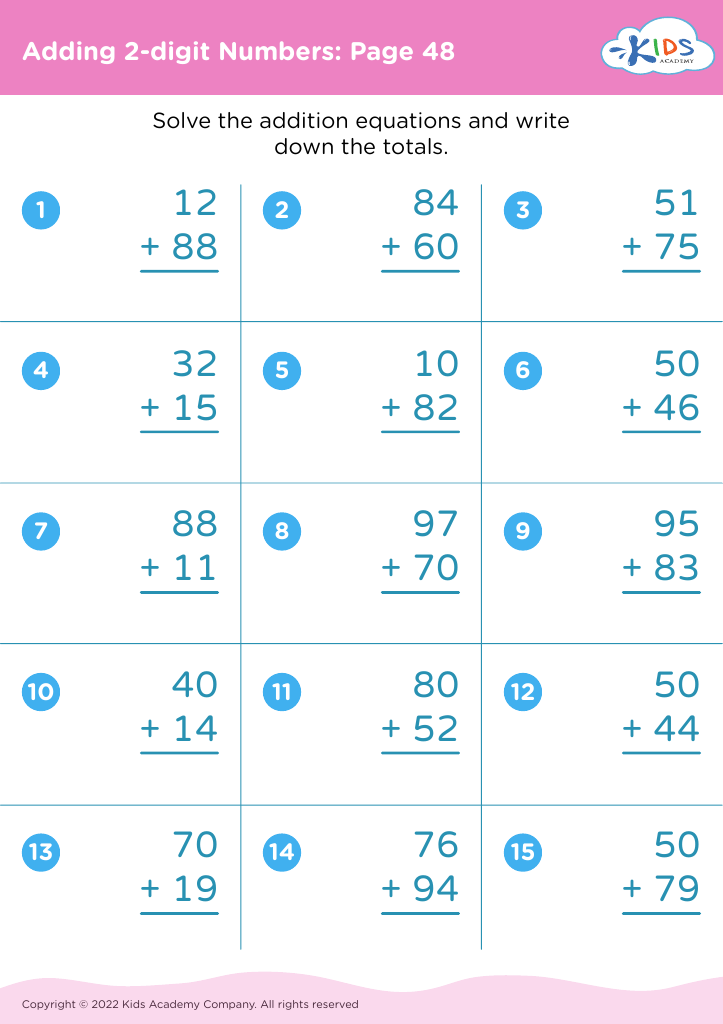
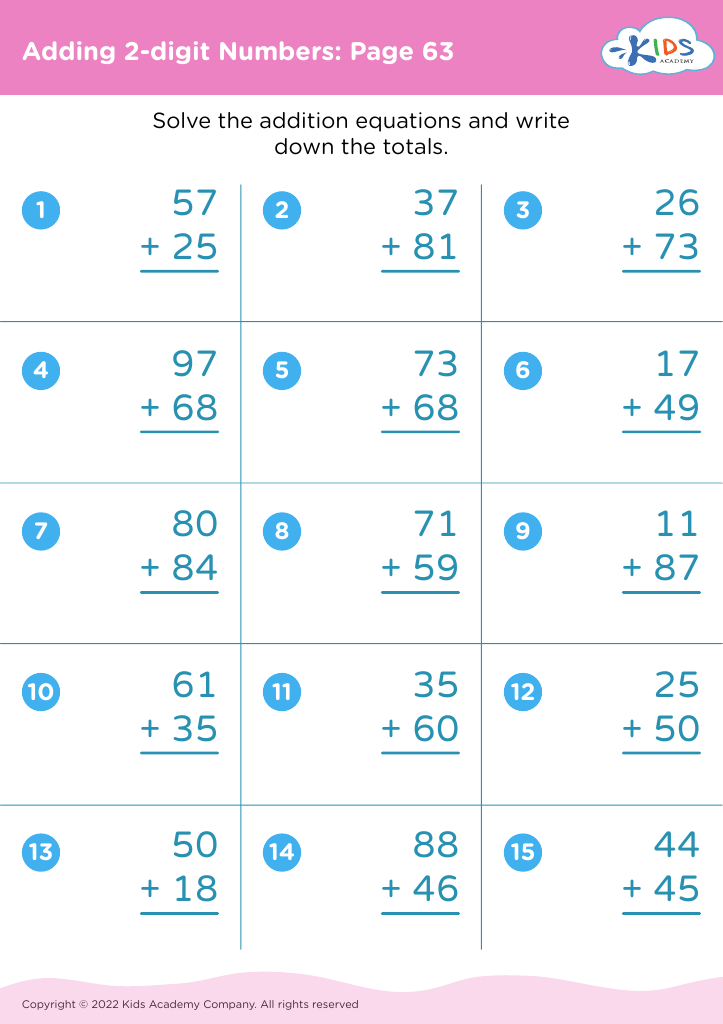
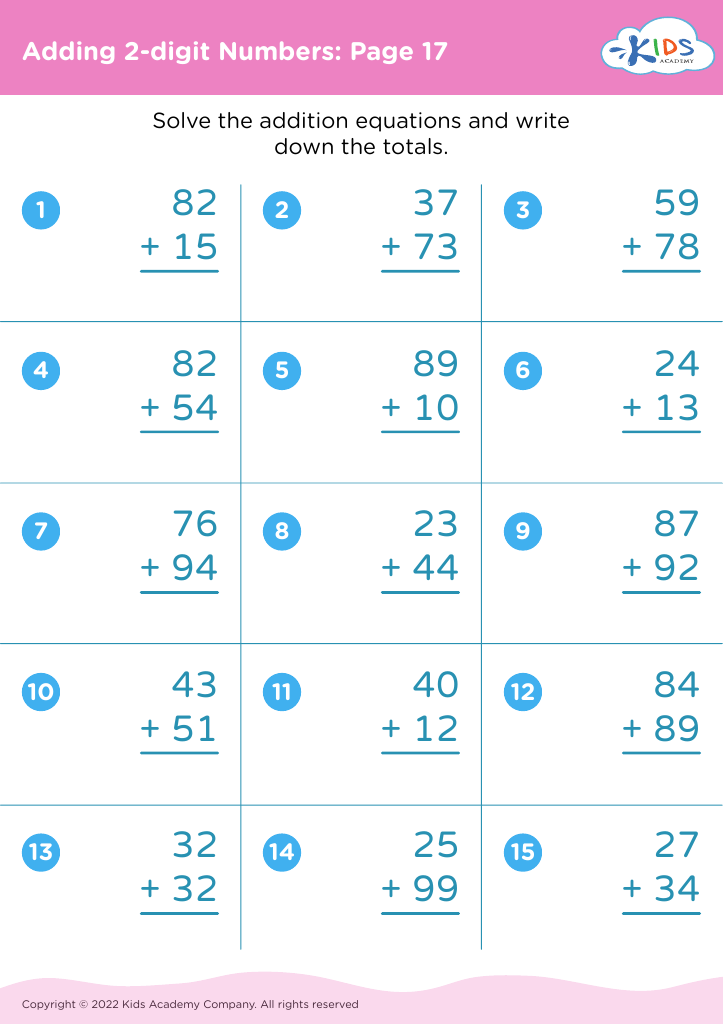








Recognizing patterns in adding 2-digit numbers is fundamental for young learners as it builds a crucial foundation for advanced mathematical thinking. When children grasp these patterns, they gain a deeper understanding of number relationships, which aids in mental math and problem-solving skills. For instance, identifying that adding multiples of 10 results in decade jumps, like 23 + 10 = 33 and 45 + 20 = 65, allows children to see consistency and predict outcomes more easily.
These patterns also reinforce key concepts such as place value and regrouping. Understanding that the units and tens places play specific roles helps students handle more complex operations with confidence. For instance, recognizing that in adding 26 and 49, the sum of the units (6 + 9) and wrangling with any resulting carryover demystifies the process bit by bit.
Furthermore, pattern recognition enhances cognitive and critical thinking, which are beneficial beyond mathematics. It encourages logical reasoning and the ability to make connections across different disciplines. For teachers and parents, fostering this skill means setting students up for academic success, making future learning more accessible. When students see math as a set of manageable, predictable patterns rather than a series of isolated operations and numbers, their confidence and competence in tackling mathematical challenges significantly improve.








