Animal recognition Adding at the Zoo Worksheets - Page 2
43 filtered results
-
From - To
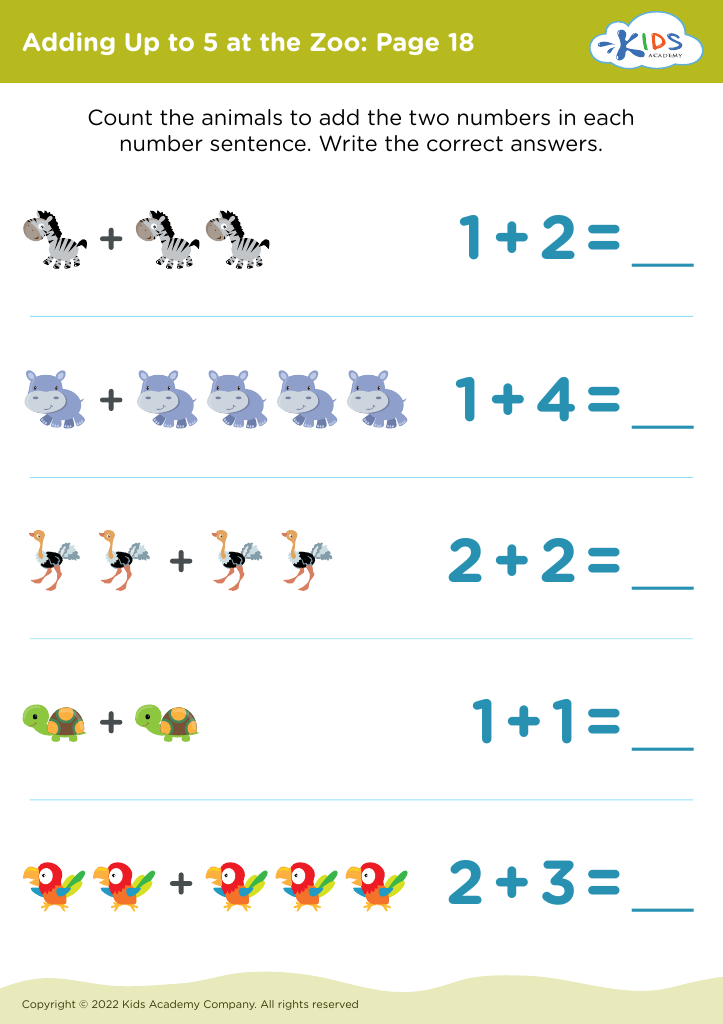
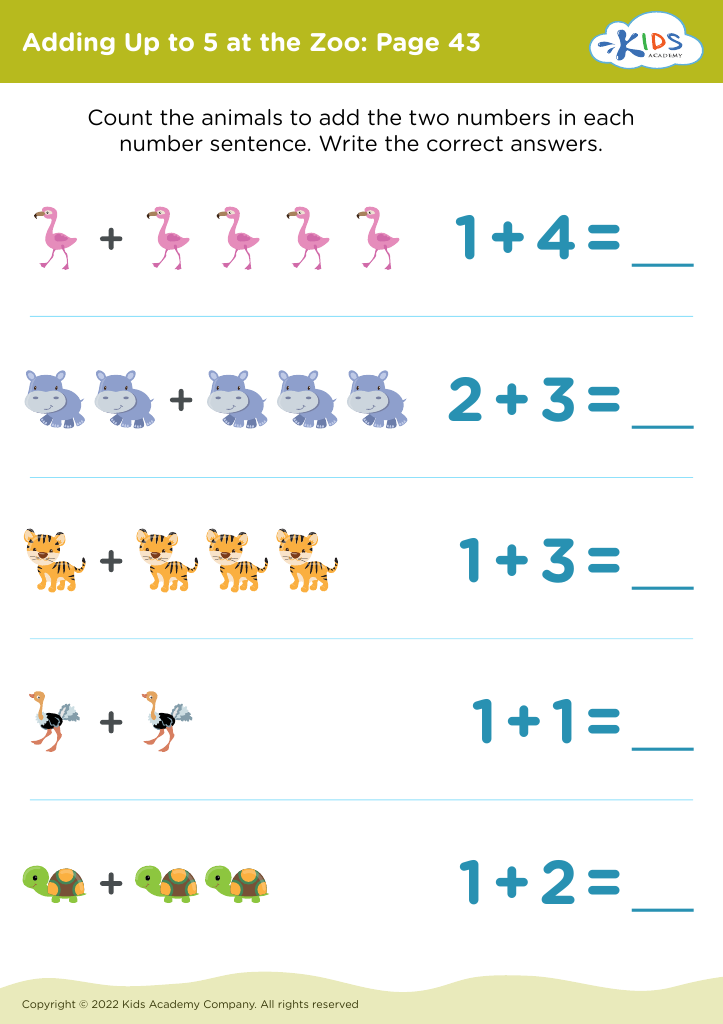
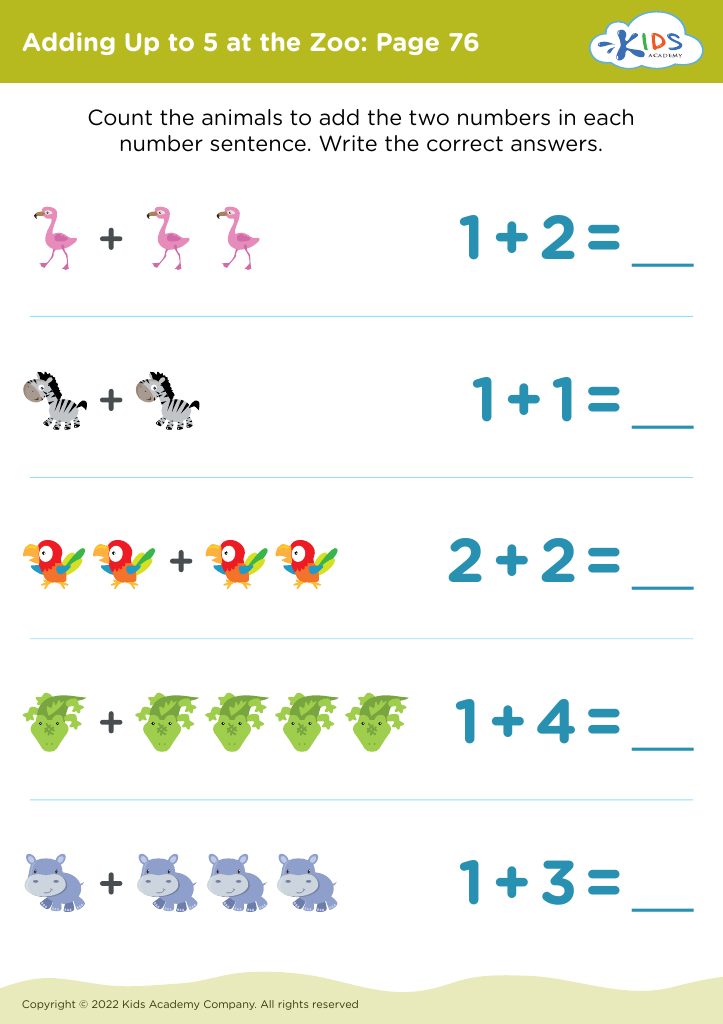
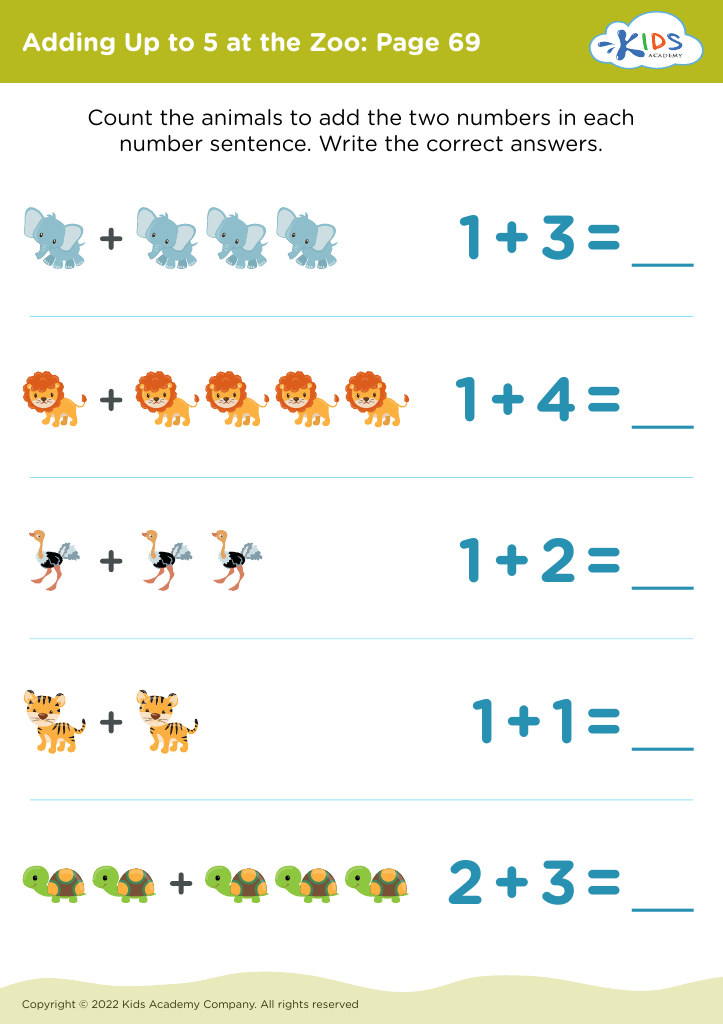
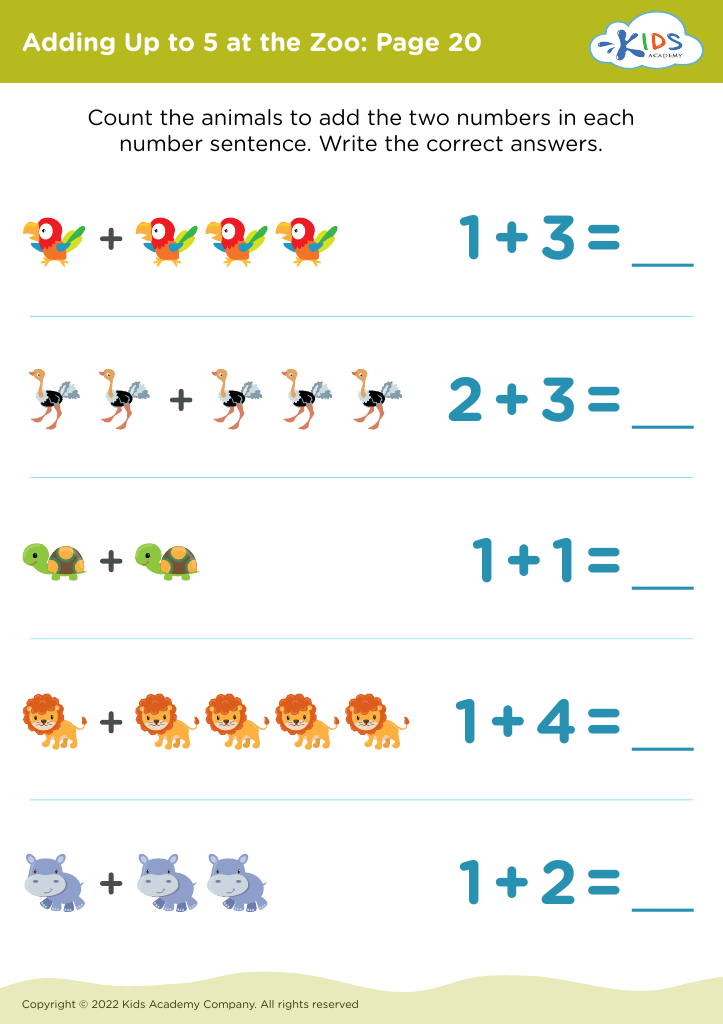
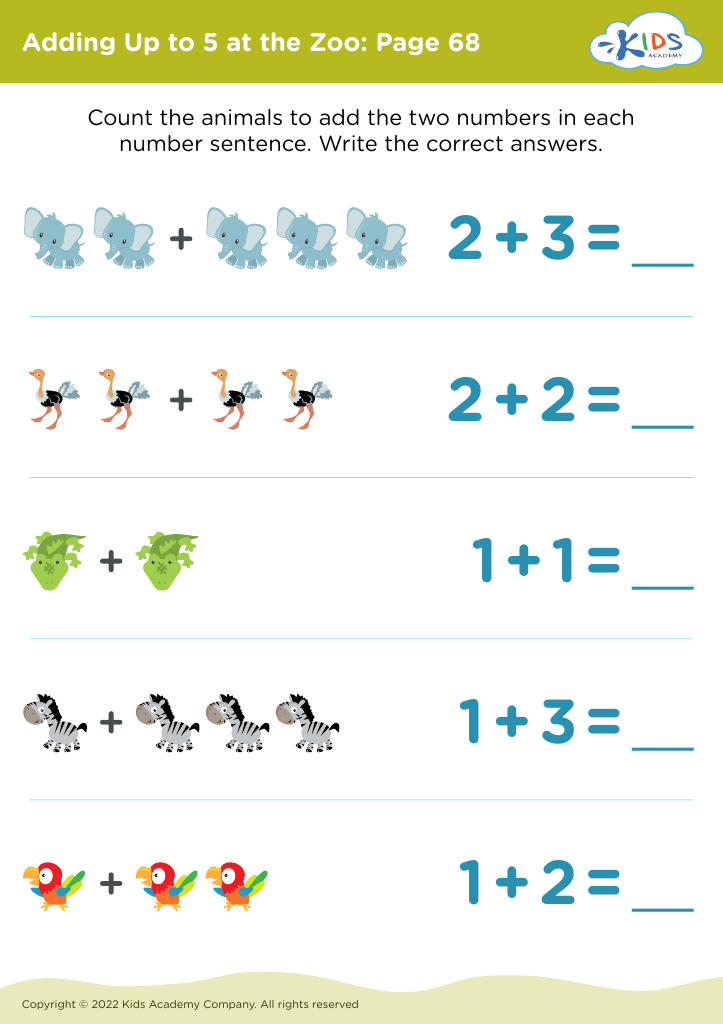
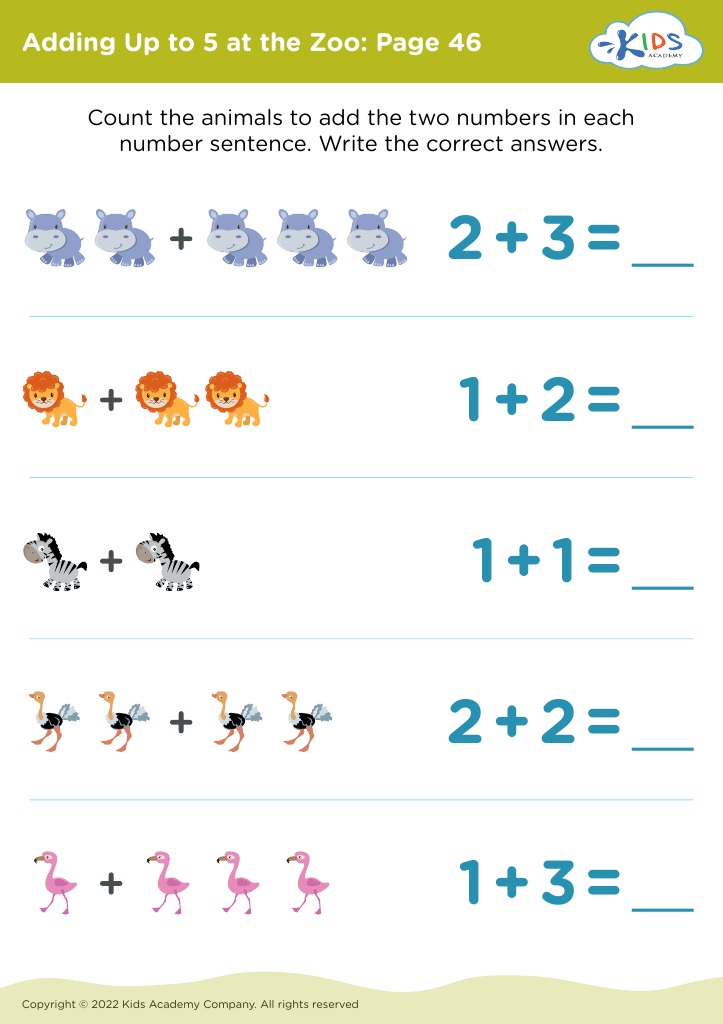
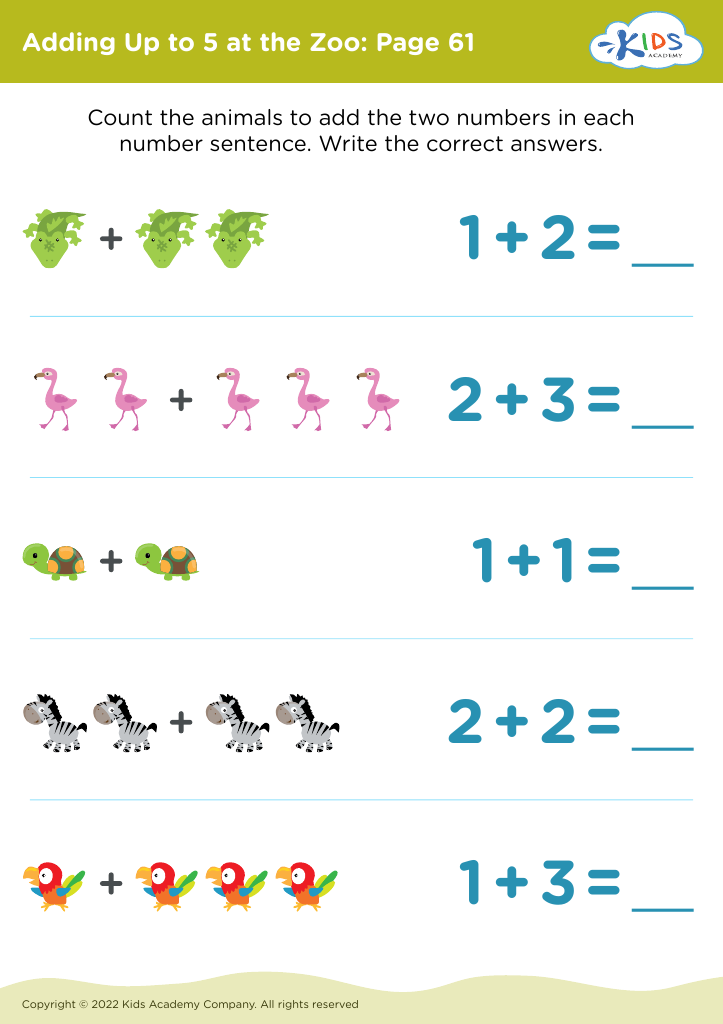
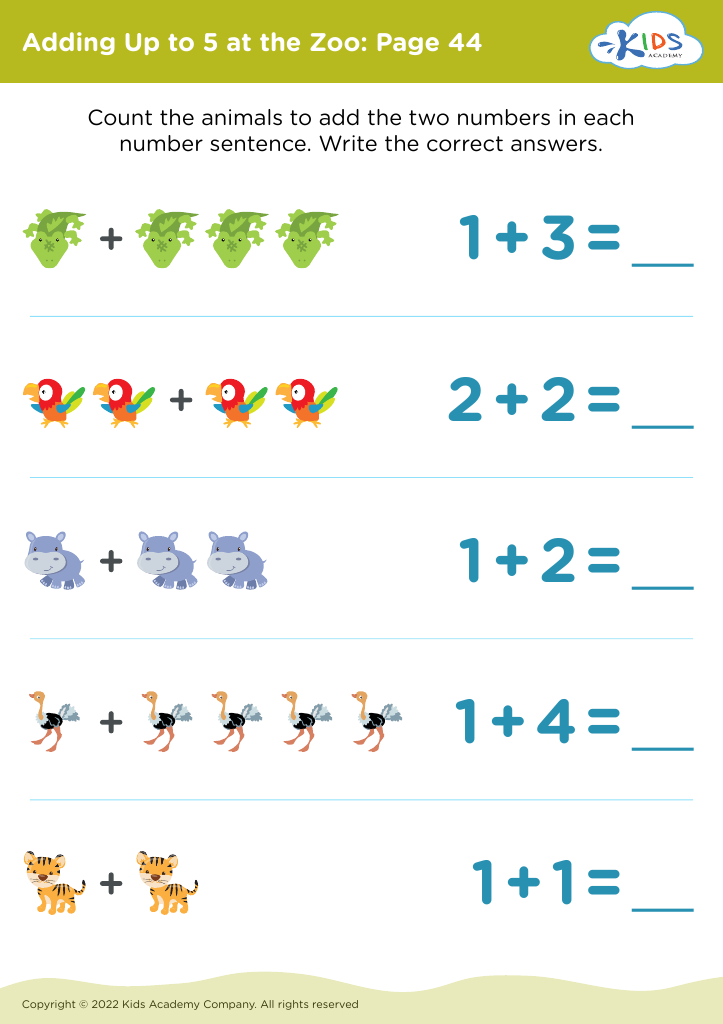
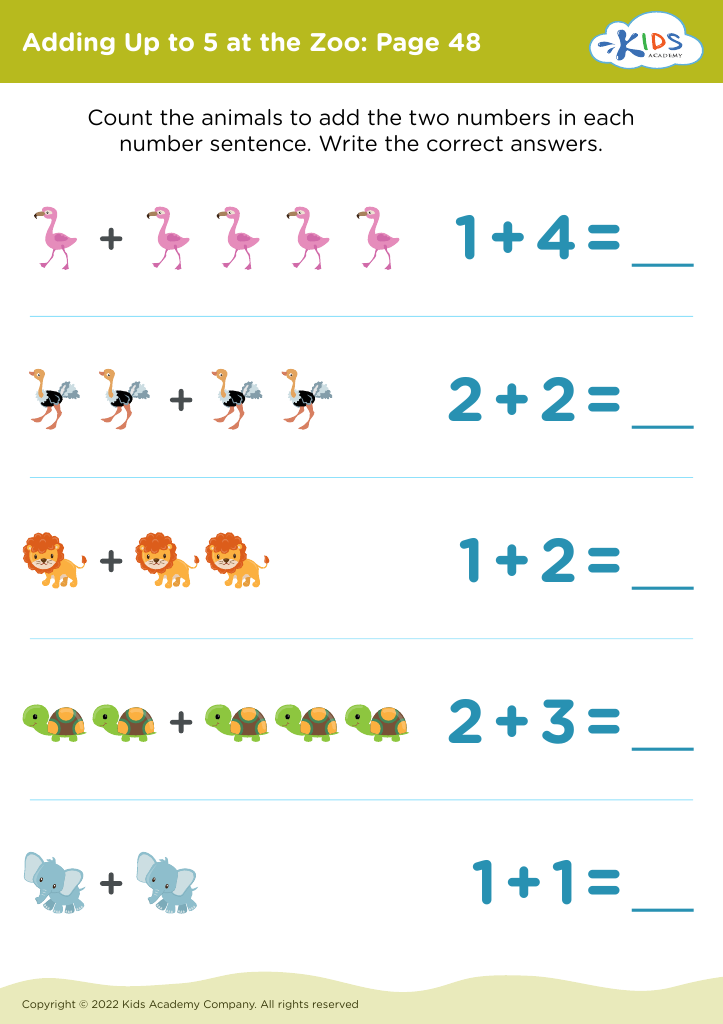
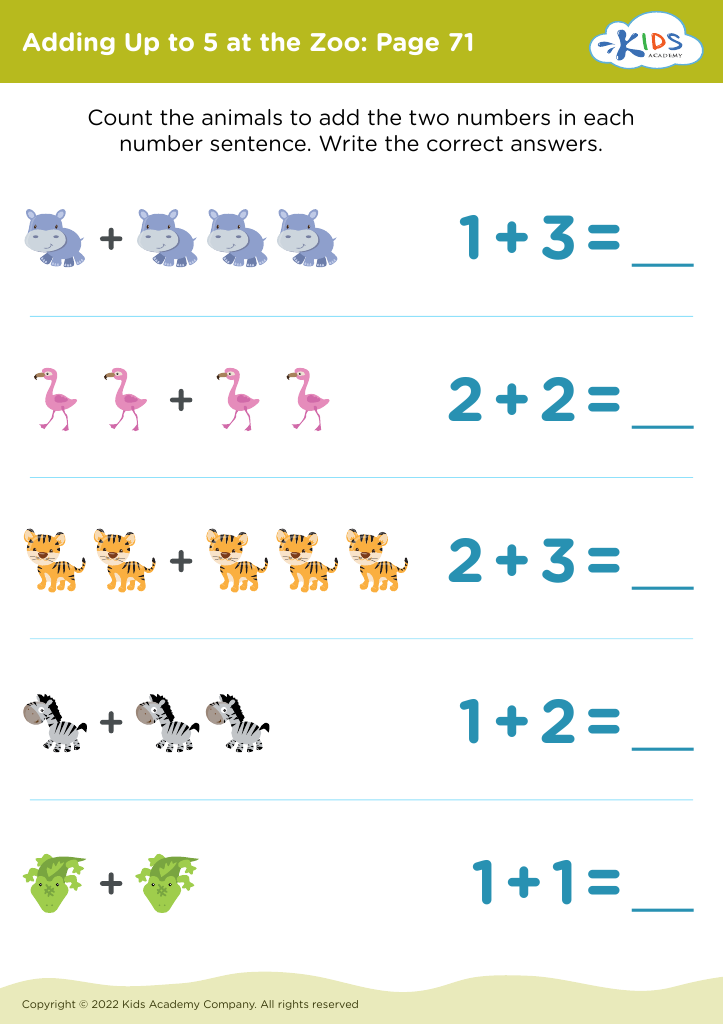
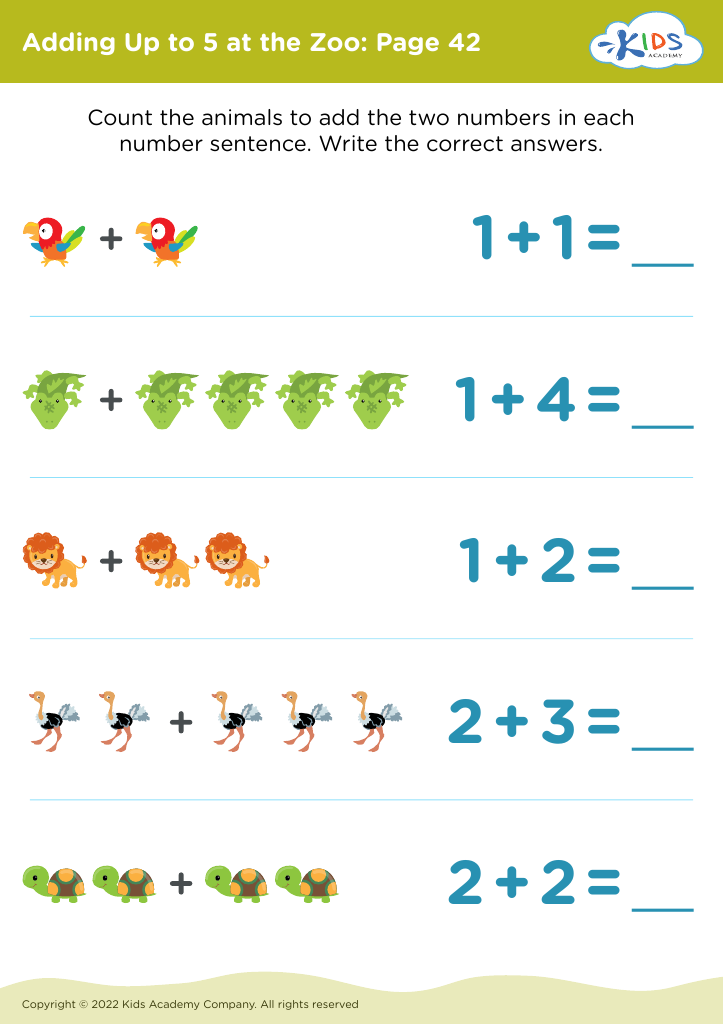
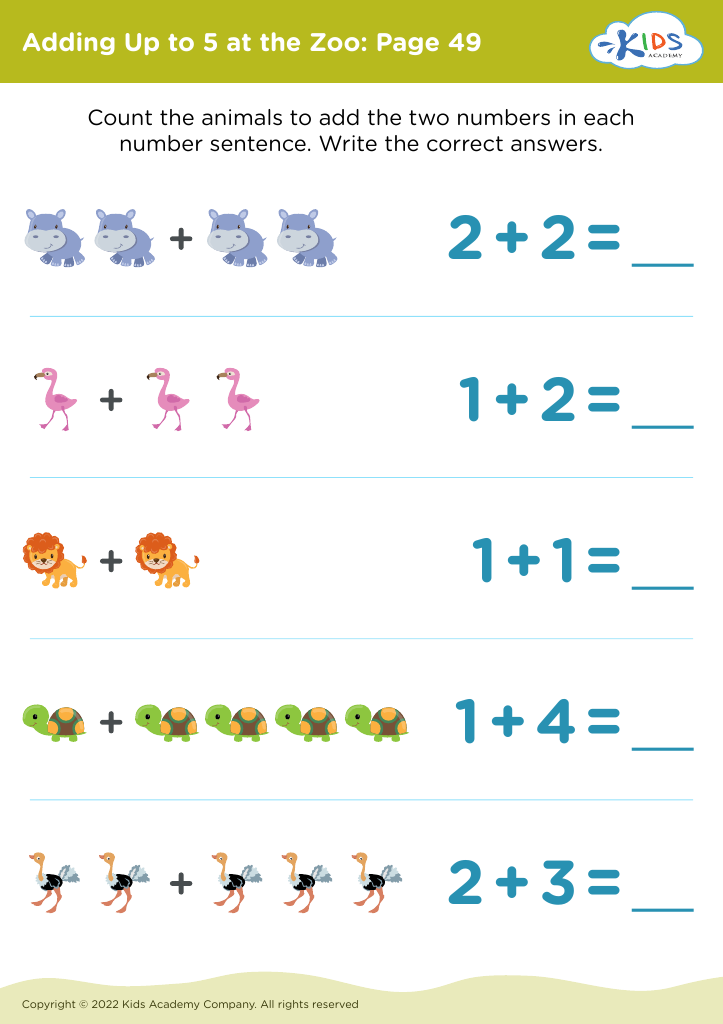
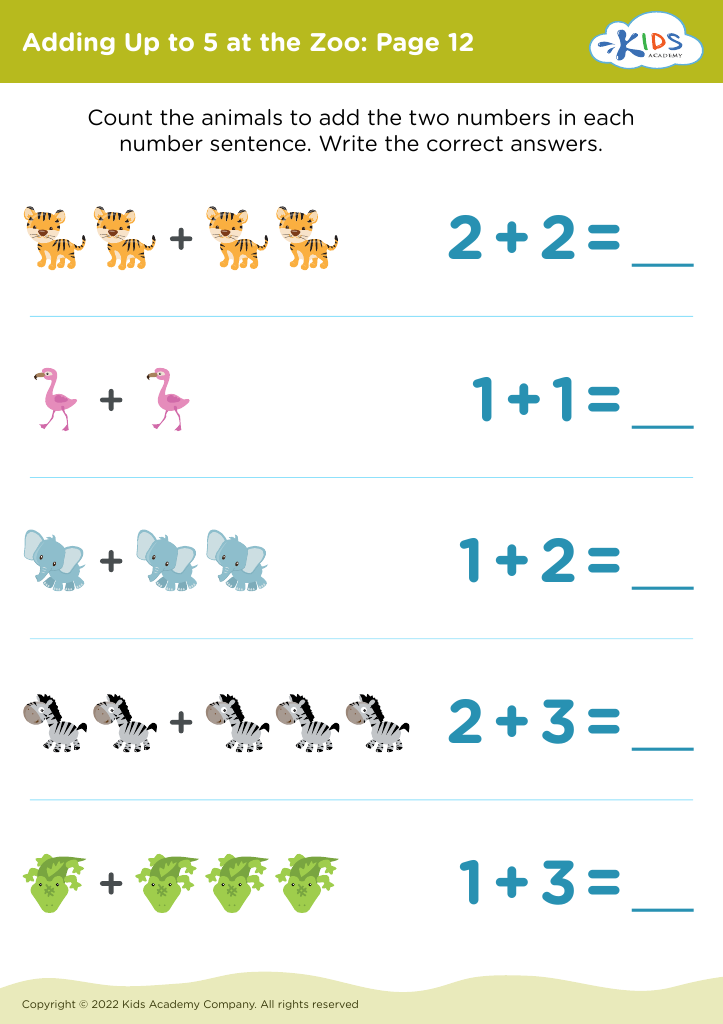
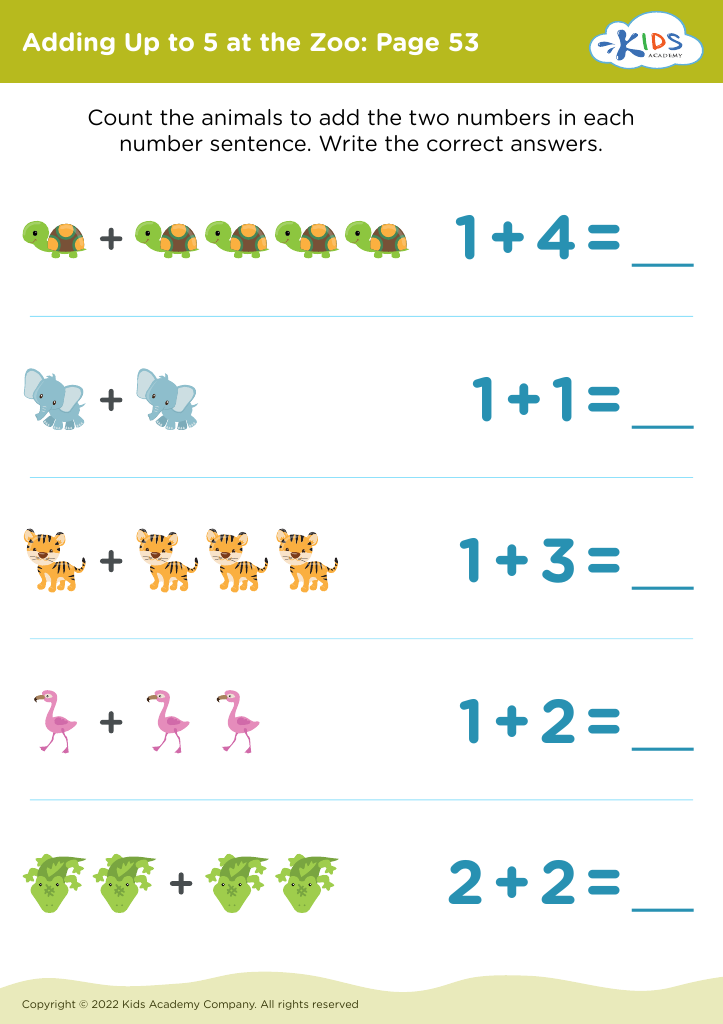
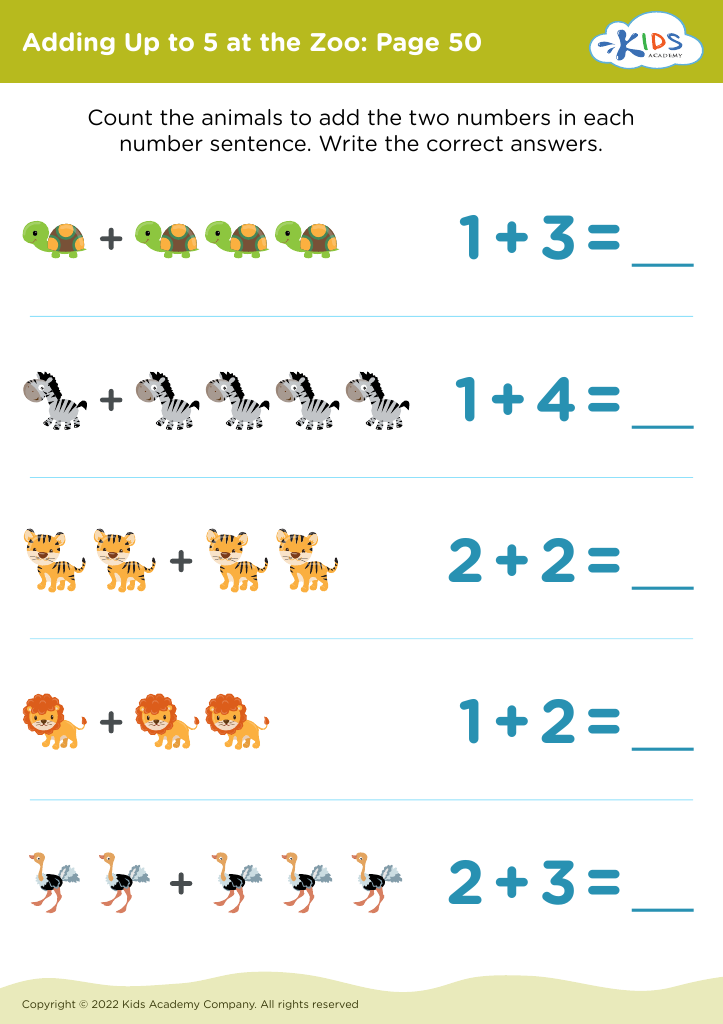
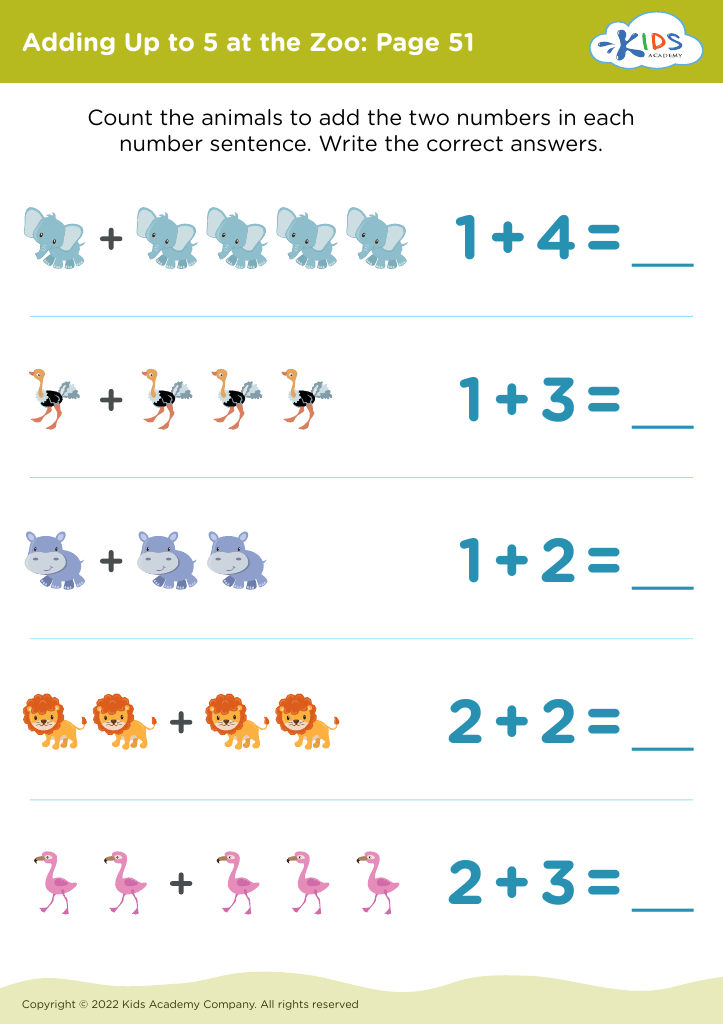
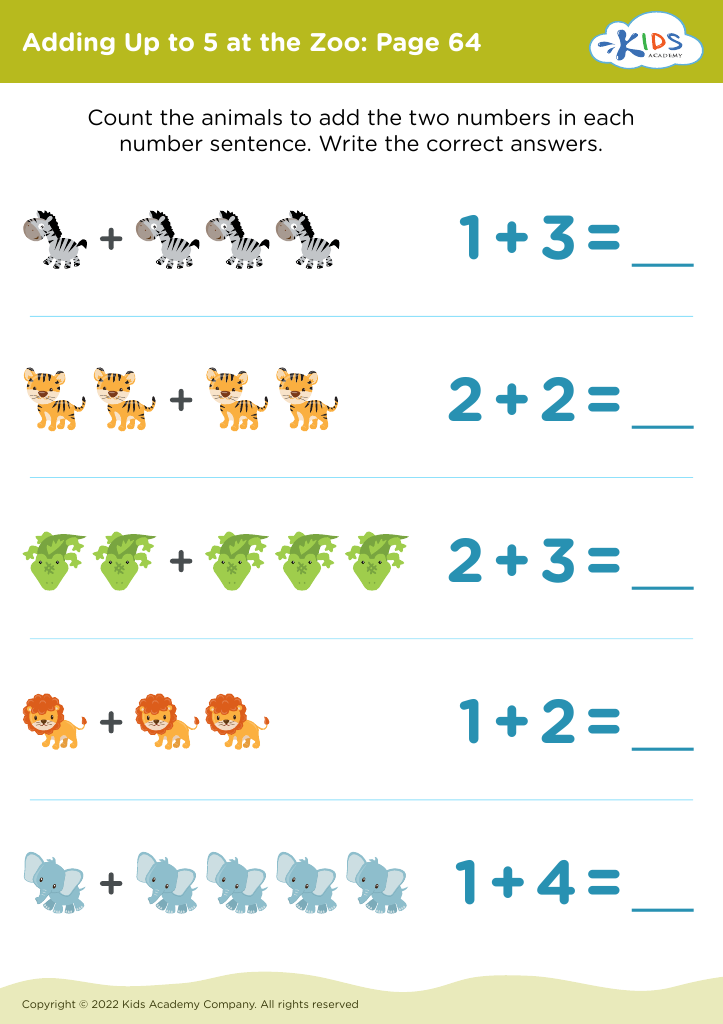
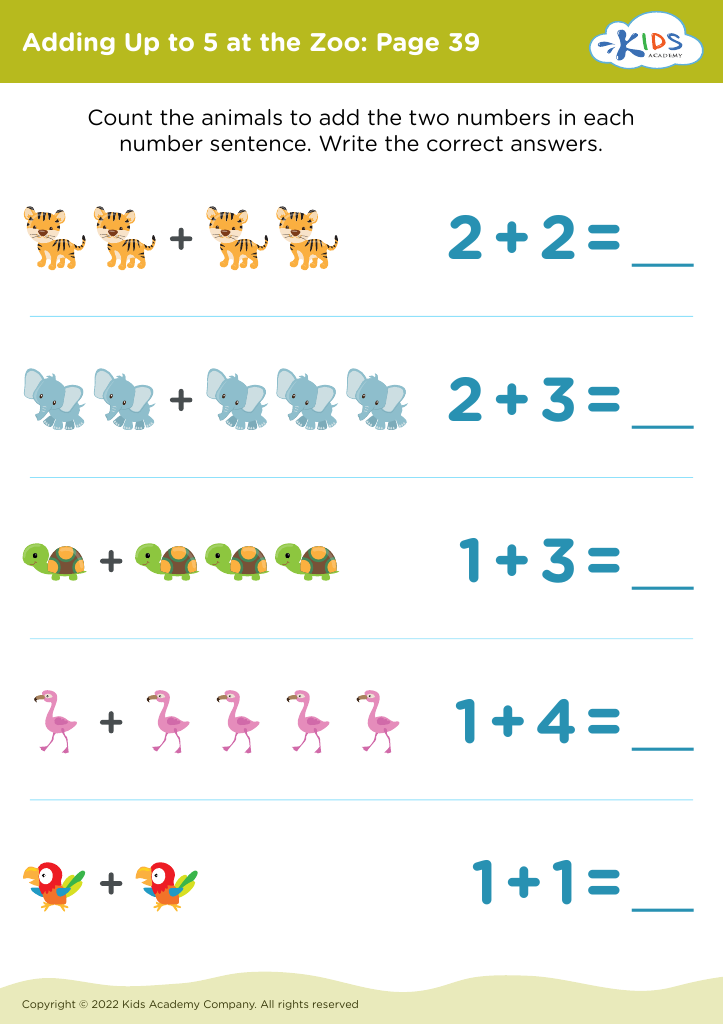



Animal recognition at the zoo plays a vital role in children's education and development, making it essential for parents and teachers to care about this experience. First, recognizing animals helps enhance children’s observational skills and cognitive abilities as they learn to identify various species, understand their characteristics, and appreciate biodiversity. This knowledge connects them to the natural world, fostering curiosity and a sense of wonder about different life forms.
Moreover, animal recognition can serve as a foundation for important lessons about ecology and conservation. By helping children recognize various animals and discussing their roles in ecosystems, parents and teachers can instill a sense of responsibility toward protecting wildlife and habitats. This understanding can inspire a lifelong commitment to environmental stewardship.
Additionally, visiting zoos provides a unique opportunity for social learning. Interacting with peers and educators regarding animal identification boosts communication and collaboration skills, fostering a sense of community while nurturing empathy towards living creatures. In summary, animal recognition at the zoo is not just about naming animals; it constitutes an important educational experience that combines cognitive, emotional, and social development, ultimately shaping responsible and environmentally-conscious future citizens.