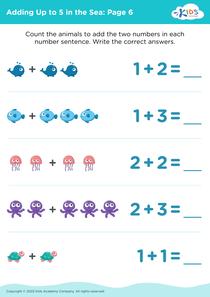
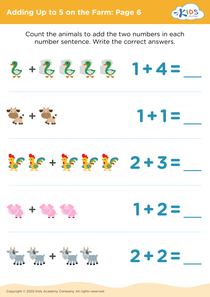
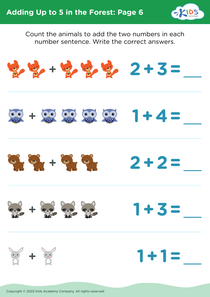
Basic addition practice Adding at the Zoo Worksheets
3 filtered results
-
From - To
Explore "Basic Addition Practice: Adding at the Zoo Worksheets" to make learning math fun for your young ones! These engaging and colorful worksheets transport children to a virtual zoo filled with adorable animals, where they will practice basic addition. Ideal for kindergarten and first-grade students, these worksheets help develop foundational math skills while keeping kids captivated through interactive challenges. With clear instructions and delightful zoo-themed illustrations, your little learners will enjoy every moment of their educational adventure. Download now to make addition as exciting as a trip to the zoo!
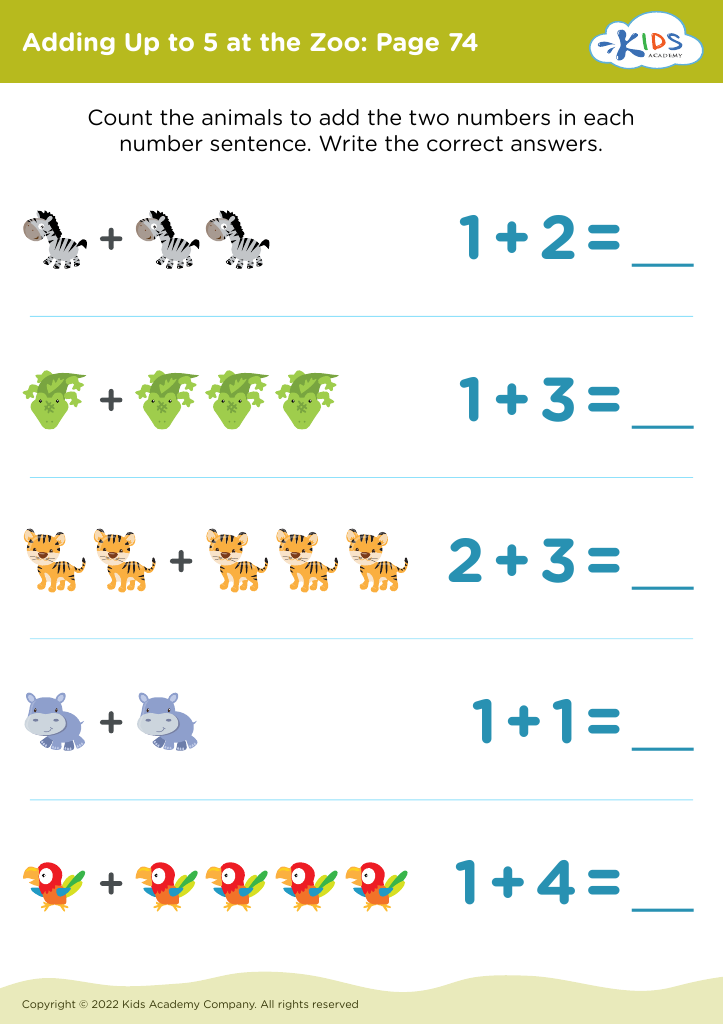
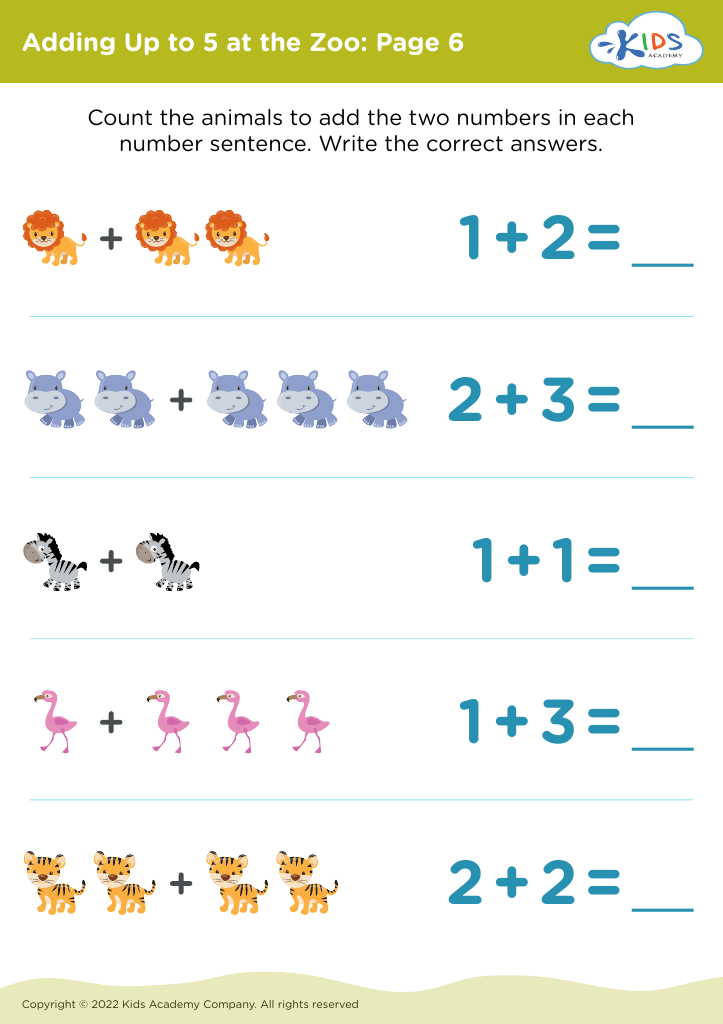
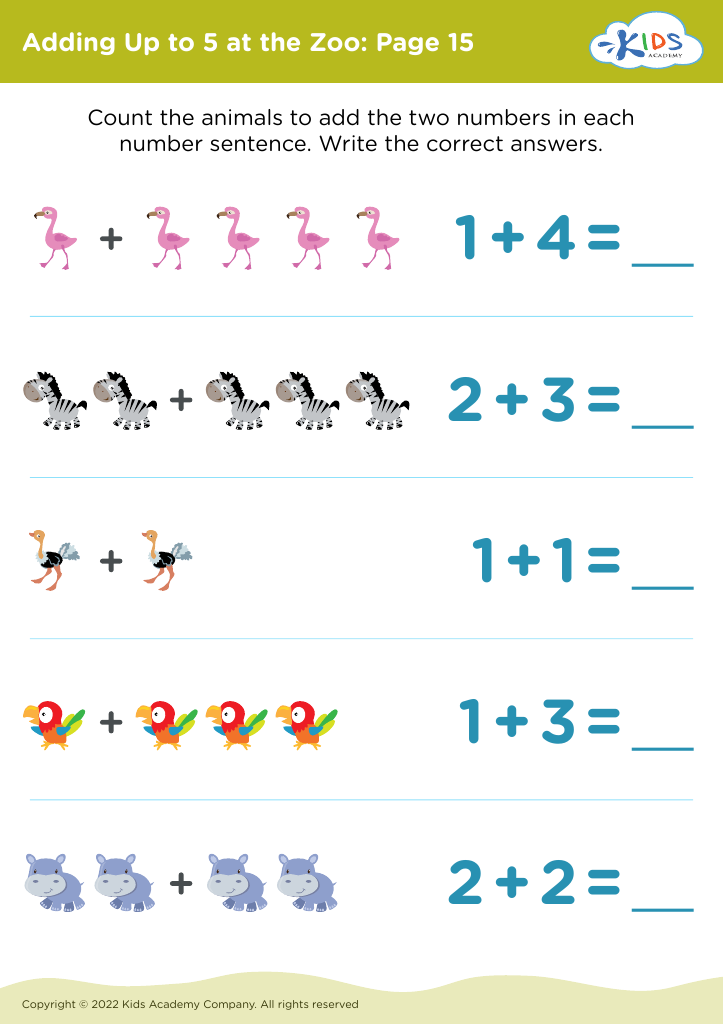



Parents and teachers should value basic addition practice through interactive and engaging ways like "Adding at the Zoo", as it lays a strong mathematical foundation for young learners. Early exposure to addition not only builds numerical fluency but also enhances problem-solving skills and logical thinking. Incorporating an engaging theme such as a zoo keeps children interested and makes learning enjoyable. When learning is fun, children are more likely to participate actively and retain information better.
Using relatable, concrete scenarios like counting animals helps children understand abstract mathematical concepts more intuitively. As they visualize adding lions or giraffes, they begin to see addition as a practical and useful skill in everyday situations. This connection between fun and education encourages a positive attitude towards math, reducing anxiety and fostering a lifelong interest in the subject.
Furthermore, such activities offer opportunities for collaboration, social interaction, and communication among peers, fostering both academic and social development. In summary, making addition practice joyful and contextually meaningful through themes like "Adding at the Zoo" helps cultivate a love for math and equips children with essential knowledge and skills to succeed in future mathematical learning.